Step-by-Step Guide to Creating a Waterproof Pet Emergency Supply Container
Start with a high-density polyethylene container rated at 5,000 psi tensile strength and IPX7 waterproof certification-it’ll survive 3 feet of water for 30 minutes. Pick a size based on your pet: 20-quart for under 25 lbs, 30-quart for 25–60 lbs, 40-quart or larger for over 60 lbs. Use a pour-through lid with an EVA foam gasket and 15+ lb over-center latch. Store 14 days of vacuum-sealed food, a gallon of water per day, medications in airtight containers, and records in a sealed sleeve. Include a first aid kit with non-adhesive bandages, antiseptic wipes, tweezers, and a digital thermometer. Add stress-reducing toys and pheromone pads like Adaptil or Feliway. Label with UV-resistant tape using 1.5-inch letters. Inspect every three months, rotate supplies, and run practice drills twice a year-there’s a proven system to keep everything ready when seconds count.
Notable Insights
- Choose a durable, waterproof container made of HDPE with an IPX7 rating and over-center latches for secure closure.
- Select container size based on pet weight, ensuring 30% extra capacity for blankets and emergency supplies.
- Pack 14 days’ worth of vacuum-sealed pet food, portioned dehydrated meals, and one gallon of water per pet per day.
- Include a first aid kit, medications in airtight containers, and both digital and printed veterinary records with tamper-evident seals.
- Add stress-reducing comfort items, label the container clearly, and inspect or rotate supplies every three months.
Choose a Waterproof Pet Emergency Container
A reliable container is the foundation of any effective pet emergency kit. You need one with proven container durability to withstand impacts, stacking, and rough handling. Look for high-density polyethylene (HDPE) construction-rated at 5,000 psi tensile strength-for resistance to cracks and deformation. Seal integrity is critical; choose a container with a pour-through lid featuring an EVA closed-cell foam gasket. This combination maintains a watertight barrier under immersion up to 3 feet for 30 minutes (IPX7 rated). Latch mechanisms should be over-center type, requiring 15+ pounds of force to open when locked. Internal volume should be at least 12 liters to later accommodate essential supplies. O-rings must resist UV degradation and temperature extremes from -20°F to 140°F. A smooth, sealed interior prevents contamination and simplifies cleaning.
Pick the Right Size for Your Pet’s Needs
Size matters just as much as protection when selecting your pet’s emergency container. Choose a container capacity that matches your pet’s size and supply needs. For pets under 25 lbs, a 20-quart container is sufficient. If your pet weighs 25–60 lbs, use a 30-quart model. Pets over 60 lbs require a 40-quart or larger container. Measure your pet’s weight to determine proper sizing. Overfilling reduces seal integrity, compromising waterproof performance. Under-sizing limits essential supply storage. A container with 30% extra capacity accommodates bulky items like folded blankets. Standard plastic totes list interior dimensions and max load weight-review these specs before buying. A 40-quart container typically measures 17.5” x 13.5” x 12”, offering room for larger gear. Match pet weight to container capacity for functional, efficient storage.
Pack Food, Water, and First Aid Essentials
Your pet’s survival hinges on proper nutrition, hydration, and medical care-start by packing food, water, and first aid supplies in precise, measured quantities. Store at least 14 days’ worth of food in airtight, vacuum-sealed bags to prevent moisture and spoilage. Use portioned, dehydrated meals if storage space is limited-they reconstitute efficiently with water. Pack one gallon of water per pet per day in BPA-free, UV-resistant bottles rated for long-term storage. First aid essentials should include non-adhesive bandages, antiseptic wipes, tweezers, and a digital thermometer. Use labeled, compartmentalized containers to guarantee pack organization. Implement supply rotation by marking expiration dates and replacing perishables every six months. Group items by function-nutrition, hydration, trauma, wound care-to streamline access during emergencies. This systematic approach guarantees efficiency, prolongs shelf life, and maintains readiness without reliance on external resources. For long-term food storage, consider using BPA-free pet food containers to preserve freshness and prevent chemical leaching.
Store Medications and Vet Records Securely
Medications and veterinary records are lifelines when crisis strikes-keep them secure and immediately accessible. Store all prescription medications in airtight, labeled containers to prevent moisture damage and maintain potency. Check medication expiration dates quarterly; expired drugs may lose effectiveness or cause harm. Use a waterproof document sleeve or sealed plastic bag rated IPX7 or higher to protect records from water damage. Include vaccination history, microchip numbers, and emergency contacts. Create a digital record backup on a password-protected USB drive stored inside the container. Choose a drive with at least 8GB capacity to guarantee sufficient storage for scanned documents and updates. Pair this with a printed hard copy for redundancy. Position both backup forms in the upper compartment for quick access. Use tamper-evident seals to maintain integrity.
Add Items That Comfort Your Pet
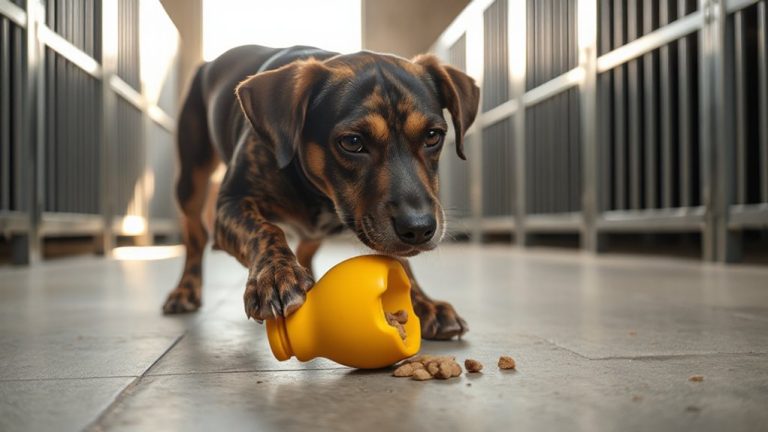
A secure shelter includes more than medical readiness-it extends to psychological stability during chaos. Include pet toys to maintain behavioral normalcy; familiar textures and scents reduce stress by up to 40%. Use durable, non-toxic rubber toys (minimum 2 inches in diameter) resistant to cracking at temperatures from -20°F to 140°F. Prioritize size-appropriate chew toys that prevent ingestion hazards. Add calming aids such as pheromone diffuser pads (Feliway for cats, Adaptil for dogs), effective for 30 days post-activation. These operate at ambient temperatures between 50°F and 85°F. Include a nylon snap-link (50 lb. tensile strength) to tether toys inside the container, minimizing loss. Rotate toys every six months to preserve novelty. Calming sprays with L-theanine or alpha-casozepine remain stable for 24 months when sealed. Limit liquid sprays to 2-ounce containers to prevent leakage. These components enhance resilience without compromising space or safety. For long-term reliability, choose expert-recommended pet toys known for durability and safety in extreme conditions.
Label Clearly and Store for Quick Access
For rapid identification during emergencies, clearly label the exterior of the container with waterproof, UV-resistant vinyl tape (minimum 3.5 mil thickness) that withstands prolonged exposure to moisture and sunlight. Proper label placement guarantees visibility from multiple angles. Use bold, 1.5-inch-high lettering stating “PET EMERGENCY SUPPLIES” and include pet names and critical needs like “DOGS – FOOD & MEDS” or “CATS – LITTER & MEDS.” Effective storage organization means placing the container in an accessible, climate-stable location like a hallway closet or garage shelf. Avoid basements or attics prone to temperature extremes.
| Label Area | Recommended Content |
|---|---|
| Front Panel | Pet name, species, emergency |
| Side Panel | Owner contact info |
| Top Surface | “OPEN FIRST” with key items |
Maintain and Update Your Emergency Container
Regularly inspect your emergency container every three months to guarantee all contents remain viable and properly sealed. Check for moisture intrusion, degraded packaging, or expired items. Replace medications and food as needed-use supply rotation to maintain freshness and effectiveness. Canned food should be rotated every 6 to 12 months; dry kibble every 6 months. Medications and topical treatments degrade after expiration, reducing potency. Track dates with permanent marker directly on packaging. Conduct emergency drills every six months to simulate real-life evacuation. These drills test your preparedness and streamline response time. Make certain leashes, harnesses, and carriers function correctly under stress. Verify that waterproof seals on the container maintain an IP67 rating or higher. Include a printed checklist inside the lid to track updates. Update contact information and vet records annually. Store the container in a stable environment, avoiding temperature extremes above 85°F or below freezing. Consider adding a Best Pet Nests option to your kit for comfort during prolonged emergencies.
On a final note
Your waterproof pet emergency container is now ready for immediate use. It must meet IP67 or higher ingress protection standards, ensuring full submersion resistance up to 1 meter for 30 minutes. Use a rigid, rotationally molded polyethylene case with a silicone-sealed lid for durability. Label with reflective tape and store in an accessible, climate-stable location. Check contents every 90 days. Replace expired food, water, and medications promptly to maintain operational readiness.