How to Create a Safe Exercise Plan to Complement Dietary Changes for Dogs
Match your dog’s exercise to their diet and breed needs by feeding 2–4 hours before activity to prevent bloat. Start with 5–10 minute walks if they’re older or inactive, increasing duration by 10% weekly. For joint issues, use hydrotherapy or controlled 15–20 minute sessions on soft surfaces. Avoid exercise within 90 minutes of eating, especially in deep-chested breeds. Adjust workouts as weight drops-begin with 20-minute walks, progress to 45-minute mixed sessions. Your vet should monitor progress every 4–6 weeks using weight data and lab work, helping refine both diet and exercise over time.
Notable Insights
- Match exercise type and duration to your dog’s breed, age, and current fitness level to support dietary changes safely.
- Feed meals 2–4 hours before exercise to prevent bloat, especially in large, deep-chested breeds.
- Start with short, low-impact walks for overweight or senior dogs, gradually increasing duration by 10% weekly.
- Use hydrotherapy or controlled leash walking to reduce joint stress while maintaining activity during weight loss.
- Monitor progress with vet check-ins every 4–6 weeks, adjusting exercise as weight loss phases advance.
Match Exercise to Your Dog’s New Diet
While adjusting your dog’s diet, you’ll need to align their exercise routine with their new nutritional plan to avoid energy imbalances. Exercise timing directly affects metabolic processing; feed your dog two to four hours before activity to prevent bloat and guarantee proper fuel availability. Immediate post-meal exercise increases gastric torsion risk, especially in large breeds. Match activity level to caloric intake-high-protein, low-carb diets support endurance, while high-fat diets require moderate, sustained exertion for efficient oxidation. Puppies and active breeds need 30–60 minutes of structured aerobic activity twice daily. Sedentary or senior dogs require 15–20 minutes of low-impact walking once or twice daily. Rapid increases in activity level without dietary adjustment can cause hypoglycemia or muscle fatigue. Use heart rate monitors for dogs if available; target 160–200 bpm during peak activity, depending on breed and size. Consistent exercise timing improves metabolic rhythm and nutrient utilization.
Start Slow If Your Dog Is Older or Has Health Issues
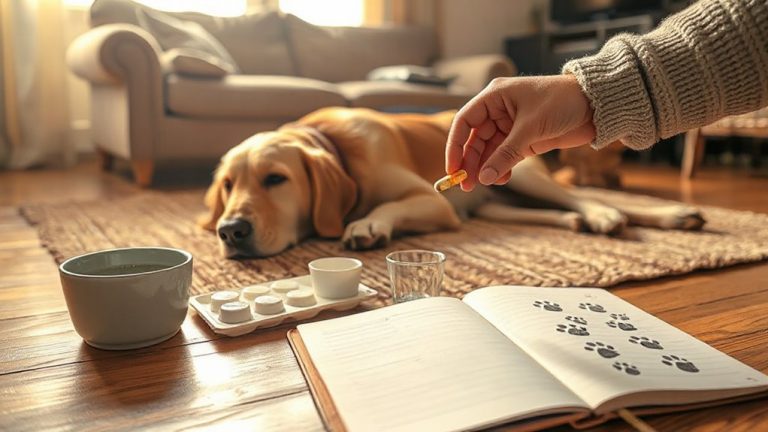
A gradual approach is essential when starting an exercise program for older dogs or those with preexisting health conditions. Start slow to avoid strain and let your dog adapt safely. Begin with five- to ten-minute walks at a low intensity, two to three times daily. Monitor heart rate, which should stay below 160 bpm for most adult dogs. Over two to four weeks, gradually increase duration by 10% weekly to build stamina. Use a leash to control pace and prevent overexertion. Rest days are critical-include at least one off day per week to support recovery. Avoid sudden movements or steep inclines. Track progress with a journal, noting energy levels, lameness, or labored breathing. This measured method improves cardiovascular efficiency and joint mobility without increasing injury risk. Consistency over intensity delivers ideal results.
Try Low-Impact Activities for Dogs With Joint Pain
Low-impact activities are ideal for dogs experiencing joint pain, especially if you’ve already eased into a routine with short, controlled walks. These movements reduce stress on arthritic joints while maintaining mobility. Hydrotherapy sessions, such as underwater treadmill exercises, utilize buoyancy to decrease joint load by up to 60%, improving range of motion. Water resistance also enhances muscle activation without impact. Best session duration is 15–20 minutes, 2–3 times weekly, under professional supervision. Controlled walking remains essential-use a harness and leash to limit torque on hips and knees. Maintain a pace of 0.5–1.0 meters per second over even terrain. Surface choices matter: grass or packed dirt reduces joint strain versus concrete. Avoid inclines steeper than 5%. These strategies preserve joint function, slow degeneration, and support musculoskeletal health during dietary adjustments. Consistency guarantees measurable improvements in gait symmetry and weight distribution within four to six weeks.
Avoid Exercise Right After Eating to Prevent Bloat
You should wait at least 90 minutes after your dog eats before allowing vigorous activity to reduce the risk of gastric dilatation-volvulus (GDV), commonly known as bloat. Post meal rest is critical, especially for large, deep-chested breeds like Great Danes or Standard Poodles, which are genetically predisposed to GDV. During this window, avoid running, jumping, or intense play. The stomach expands after eating, and sudden movement can cause it to twist, cutting off blood flow. Proper activity timing helps prevent this life-threatening condition. Wait until digestion stabilizes-typically 1.5 to 2 hours-before off-leash exercise. Water intake should also be moderated immediately after meals. Feeding one large meal increases GDV risk by 148%; split feeding reduces it. Follow strict post meal rest protocols. Adjust activity timing based on meal size and breed susceptibility. Prevention through scheduling is more effective than treatment.
Adjust Workouts as Your Dog’s Weight Changes
As your dog’s weight shifts over time, so too must the intensity and duration of their exercise routine to prevent joint stress and cardiovascular strain. Exercise progression should match fat loss and muscle development. Activity scaling guarantees safety and effectiveness as your dog becomes fitter.
| Weight Loss Phase | Recommended Activity |
|---|---|
| Initial (0–10% loss) | 20-min walk, twice daily |
| Mid (10–20% loss) | 30-min walk, add gentle hills |
| Maintenance | 45-min mixed pace, incl. trotting |
Increase session length before intensity. Monitor joint response-no limping or reluctance. Use a harness to reduce neck strain. Adjust every 4–6 weeks based on body condition score. Overexertion risks injury, especially in larger breeds. Activity scaling isn’t optional; it’s essential for sustainable health. Track progress with weekly weigh-ins and gait checks.
Work With Your Vet After Diet or Exercise Changes
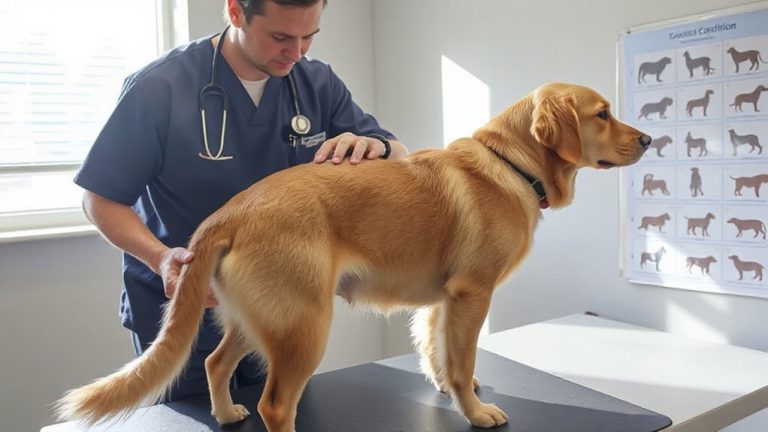
What happens after you adjust your dog’s diet or exercise routine? You must monitor the effects systematically. Regular vet visits are essential for identifying underlying health responses to these changes. Your vet can detect early signs of metabolic shifts, joint stress, or cardiovascular strain. Progress tracking allows you to record weight, body condition score, energy levels, and exercise tolerance weekly. Use a standardized chart to log data, including exact walk duration, distance covered, and intensity level. Share these records during vet visits to guide clinical assessments. Lab work, such as lipid panels or glucose tests, may be recommended every 4–6 weeks. Adjustments to protein intake or exercise duration should only follow professional evaluation. Collaboration guarantees safety and effectiveness. Never implement long-term changes without veterinary approval. Your dog’s physiological response is unique-precision matters.
On a final note
Start exercise gradually to match your dog’s dietary adjustments. Sudden activity increases can strain metabolism and joints. Use low-impact options like swimming or 10–15 minute leash walks twice daily for overweight or arthritic dogs. Wait at least two hours after meals to reduce bloat risk, especially in deep-chested breeds. Reassess every 4–6 weeks: for every 10 pounds lost, reduce exercise duration by 10% to prevent overexertion. Always consult your vet before major changes.