Why Regular Weigh-Ins Are Critical for Tracking Progress in Pet Weight Loss
Regular weigh-ins help you catch health issues early, since sudden weight shifts can signal problems like kidney or heart disease. Weigh your pet weekly using a digital scale calibrated to 0.1 pounds, ideally in the morning before food. Track trends: steady loss means fat reduction, while rapid drops may indicate dehydration. A 5% weight loss in two weeks with lethargy needs fast action. Adjust diet or exercise if no change occurs for three weeks. Immediate vet care is critical with over 10% loss, poor coat, or weakness. Patterns over time reveal true progress-you’ll discover how small changes impact long-term outcomes.
Notable Insights
- Regular weekly weigh-ins detect subtle weight changes that reflect true progress or underlying health issues.
- Tracking weight helps distinguish between fat loss and fluid fluctuations, ensuring accurate assessment of weight loss plans.
- Consistent morning weigh-ins on calibrated scales reduce variability and improve data reliability over time.
- Sudden or rapid weight loss can signal medical problems, making early detection through monitoring crucial.
- Lack of weight change for three weeks prompts timely diet or exercise adjustments to maintain progress.
How Weight Changes Signal Pet Health Issues
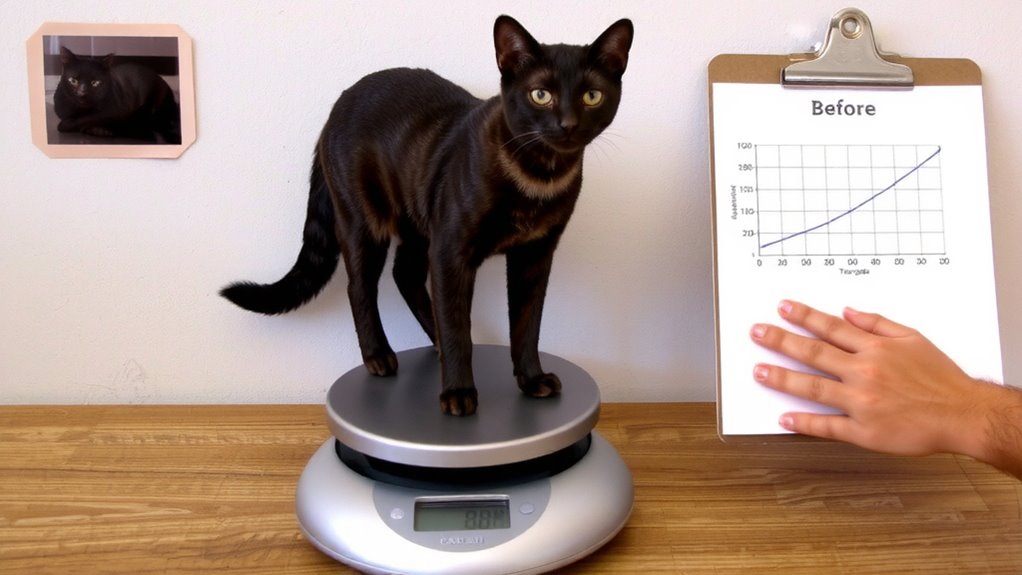
While sudden shifts in your pet’s weight might seem minor, they often signal underlying health conditions that require attention. Rapid weight loss or gain can impair organ function, particularly in the liver, kidneys, and heart. Decreased hydration levels often accompany these changes, reducing blood volume and compromising circulation. A drop of just 5% in body weight due to fluid loss indicates mild dehydration, while 10–12% can be life-threatening. Chronic shifts disrupt electrolyte balance, affecting nerve and muscle function. Weight variability may reflect endocrine disorders like hyperthyroidism or diabetes. Early detection through consistent monitoring allows intervention before severe physiological decline occurs. You should interpret weight trends alongside clinical signs, including appetite, coat condition, and urination patterns. Abnormal fluctuations demand veterinary assessment, including blood work and urinalysis, to evaluate organ function and hydration levels. These metrics provide critical data for accurate diagnosis and effective treatment planning.
How Often to Weigh Your Pet at Home
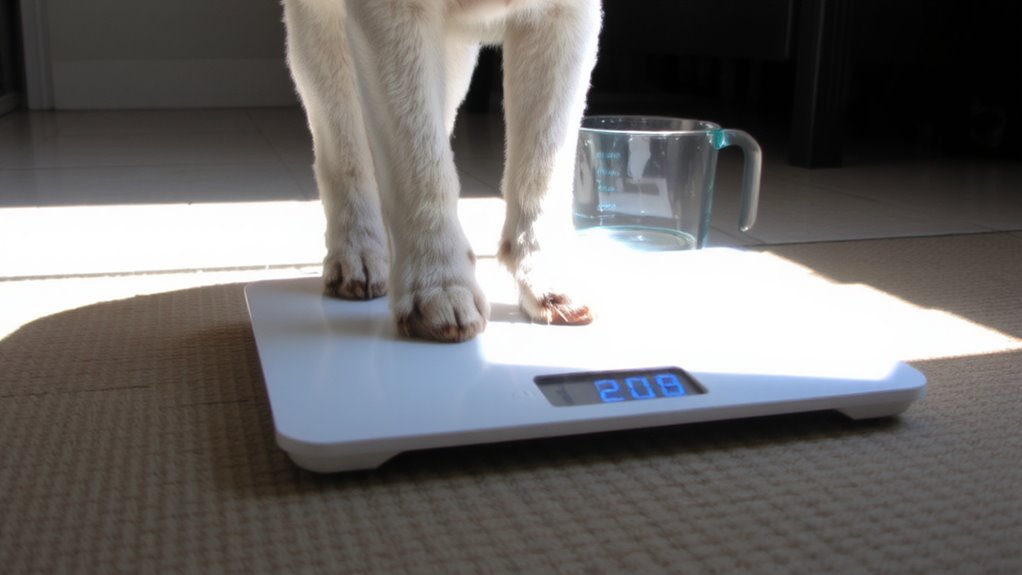
You should weigh your pet at home once a week to track weight loss progress accurately. This weighing frequency guarantees consistent data without overreacting to daily fluctuations. Use a digital scale calibrated to 0.1-pound increments for precise measurements. Home monitoring allows you to detect subtle changes that might be missed during occasional vet visits. Weigh your pet at the same time of day, preferably in the morning before feeding, to maintain consistency. For cats and small dogs, use a carrier: weigh the empty carrier first, then subtract its weight from the total. Larger dogs can stand directly on the scale. Record each result in a log or app to maintain an accurate timeline. Consistent home monitoring supports effective long-term management and enhances communication with your veterinarian.
What Your Pet’s Weight Trends Are Telling You
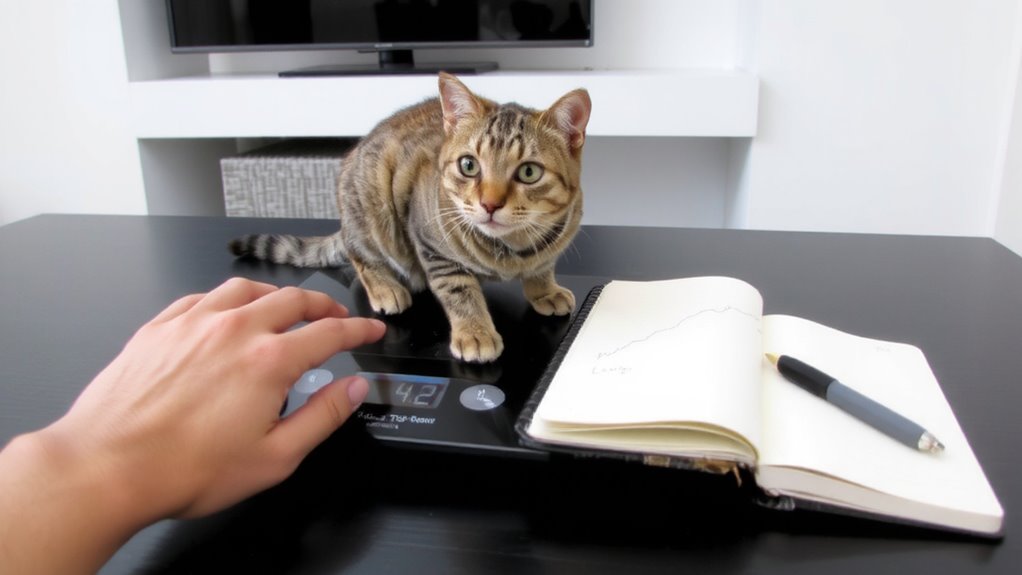
Your pet’s weekly weight measurements are more than just numbers-they’re data points that reveal the effectiveness of the current weight loss plan. Consistent declines suggest fat loss, but plateaus or spikes may reflect changes in body composition or hydration levels. Rapid drops can indicate water loss, not fat reduction, while slow, steady decreases are ideal for sustainable weight management.
| Week | Weight (lbs) | Trend Analysis |
|---|---|---|
| 1 | 50.0 | Baseline |
| 2 | 49.5 | Healthy loss (~1%) |
| 3 | 49.5 | Plateau; monitor hydration |
| 4 | 50.2 | Gain; assess body composition |
Track trends over time to differentiate between true progress and temporary fluctuations caused by hydration levels or muscle gain.
When to Adjust Food and Exercise After a Weigh-In
How do you know when it’s time to tweak your pet’s diet or activity routine after a weigh-in? If your pet’s weight hasn’t changed for three consecutive weeks, it’s time to adjust. Start by revising meal timing-switching from two free-fed meals to measured portions at 12-hour intervals can improve metabolic response. Reduce daily caloric intake by 5–10% if weight loss stalls. Simultaneously, assess activity level. Increase structured exercise: dogs need 30–60 minutes of brisk walking daily; cats benefit from three 10-minute play sessions using laser pointers or feather toys. Use a pet activity tracker to monitor intensity and duration. Adjustments should be incremental and re-evaluated every two weeks. Consistent weigh-ins every 2–4 weeks guarantee changes are effective. Never drop calories below resting energy requirements-this risks malnutrition.
When to Call the Vet Based on Weight Changes
What should you do when the scale reveals unexpected changes during your pet’s weight loss journey? Unexplained weight loss or lack of progress warrants immediate attention. Contact your vet if you notice sudden lethargy or unusual thirst, as these may indicate underlying conditions like diabetes or renal disease. Rapid weight loss exceeding 3% of body weight weekly in dogs or 0.5% daily in cats is medically concerning.
| Weight Change | Symptom Cluster | Recommended Action |
|---|---|---|
| >5% in 2 weeks | Sudden lethargy | Vet assessment within 24 hours |
| No change for 4 weeks | Unusual thirst | Schedule diagnostic bloodwork |
| >10% total loss | Poor coat, weakness | Immediate veterinary intervention |
| Fluctuations ±3% weekly | Increased urination | Evaluate metabolic health |
| Rapid gain after loss | Appetite shifts | Reassess diet and rule out Cushing’s |
On a final note
You must track your pet’s weight weekly to detect meaningful changes. Scales with 0.1-pound increments provide precise data. A 5% drop in body weight over time signals progress; sudden losses beyond 10% warrant vet review. Consistent weighing reveals trends invisible day-to-day. Adjust calories by 10–15% only after confirmed, steady gains or losses. Use digital scales calibrated monthly. Weight is the most objective marker of your pet’s metabolic and overall health.