Why You Should Clean Your Pet’s Face Before Bath Time
You should clean your pet’s face before bath time to remove trapped debris and bacteria from sensitive areas like the medial canthus, lip creases, and facial folds. Use a soft, nonwoven wipe or microfiber cloth (80% polyester, 20% polyamide) dampened with lukewarm water or a pH-balanced (5.5–7.0), soap-free cleanser. This pre-cleaning step prevents contaminants from spreading during bathing and reduces infection risk, especially in brachycephalic breeds. Routine use of 0.5% chlorhexidine wipes lowers bacterial colonization by 68%, and microfiber cloths with 0.5-micron fibers remove 99.7% of particles. Skipping this step increases chances of dermatitis, particularly where moisture lingers. Quiet handling with precise, saturated (70–80%) wipes guarantees comfort and effectiveness. Exploring the right tools and techniques makes the process reliable and stress-free.
Notable Insights
- Facial skin around eyes, ears, and muzzle is thinner and more sensitive, requiring gentle pre-bath cleaning.
- Cleaning before bathing prevents dirt and debris from spreading during full immersion.
- Food residue and moisture in facial folds can cause infections, especially in brachycephalic breeds.
- Pre-bath face wiping reduces bacterial colonization by 68% and lowers infection risk.
- Routine facial cleaning allows early detection of redness, discharge, or sores indicating health issues.
How to Clean Your Pet’s Face Before a Bath
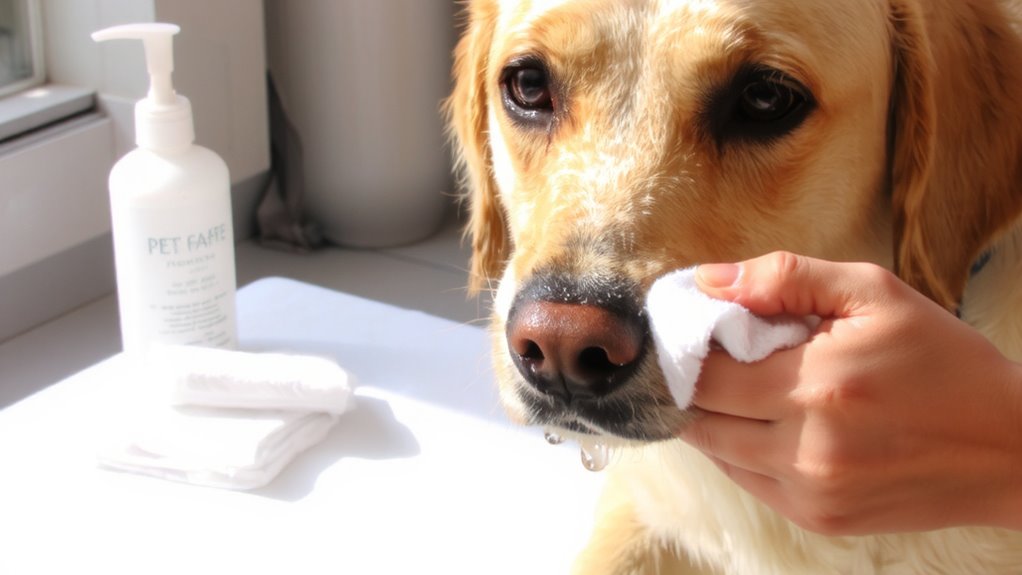
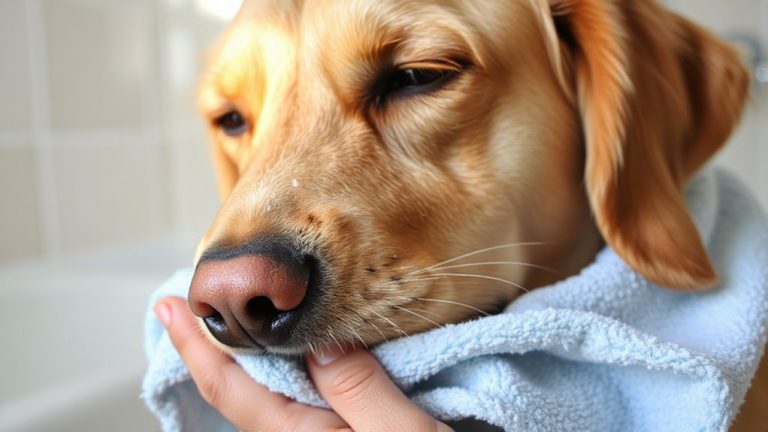
A clean face sets the foundation for a safe, effective bath. You must consider your pet’s facial anatomy to prevent irritation. The skin around the eyes, muzzle, and ears is thinner and more sensitive than on the body. Use grooming techniques that prioritize precision and control. Dampen a soft, lint-free cloth with lukewarm water-never hot or cold. Gently wipe along the contours of the face, avoiding direct contact with eyes and ear canals. For folded breeds like Bulldogs or Persians, lift skin folds carefully and clean beneath with a cotton swab slightly moistened. Use hypoallergenic, soap-free cleansers with a pH between 5.5 and 7.0 to maintain natural barrier function. Do not saturate the fur-excess moisture can lead to maceration. This preparatory step reduces contaminant spread during full immersion. Effective facial cleaning enhances overall hygiene and supports safer, more efficient bathing without compromising delicate dermal zones.
Where Dirt and Food Hide Around Eyes and Mouth
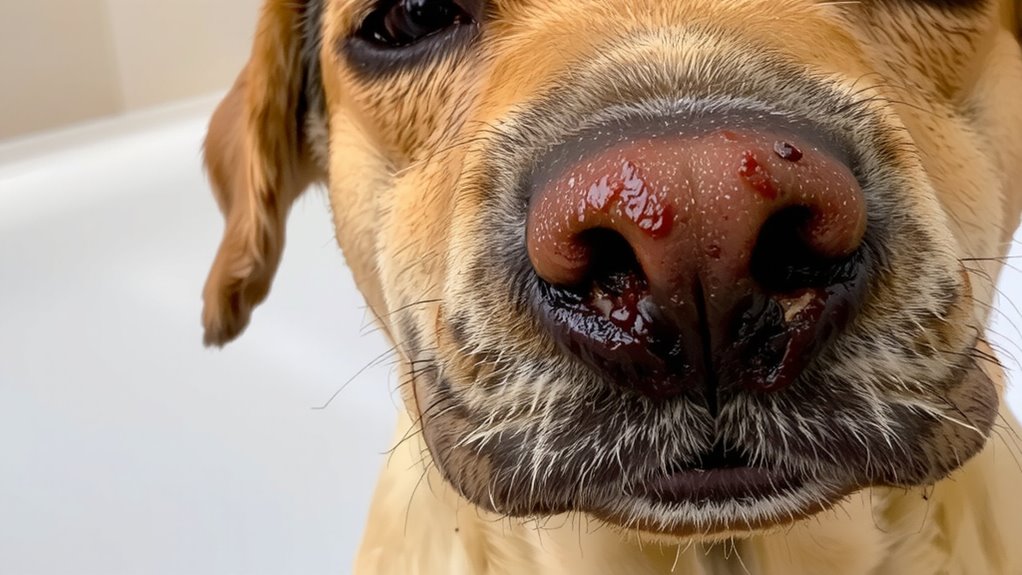
Where does gunk accumulate most in your pet’s face? The answer lies around the eyes and mouth. Eye crust commonly forms in the medial canthus-the inner eye corner-where tears, oils, and shed cells mix, hardening into crusty deposits. This buildup can harbor bacteria and irritate sensitive facial skin. Around the mouth, food residue collects in facial folds, whisker pads, and lip creases, especially after wet or sticky meals. Moisture retention in these areas promotes microbial growth, increasing infection risk. Breeds with brachycephalic features, like pugs or Persians, are especially prone due to their compressed anatomy and deep skin folds. Left uncleaned, trapped debris can lead to dermatitis or chronic inflammation. Removing these contaminants before bathing prevents spreading bacteria across the face during washing. Pre-bath face cleaning guarantees hygiene, reduces allergens, and improves skin health. Targeting these high-deposit zones is essential for effective grooming.
Best Wipes and Cloths for Pet Face Cleaning
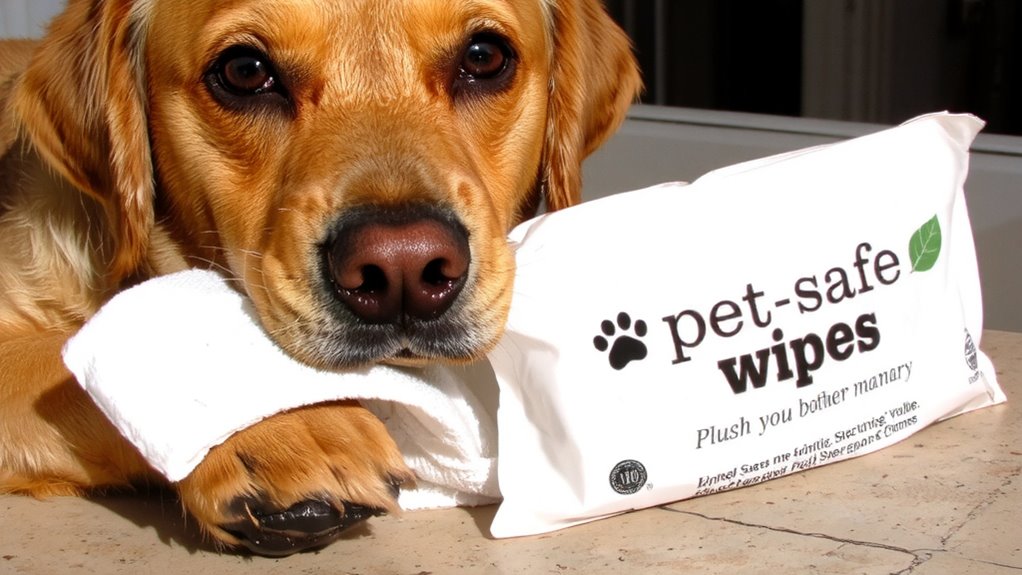
Hygiene begins with the right tools, and when it comes to cleaning your pet’s face, not all wipes or cloths deliver the same results. Choose wipes made from hypoallergenic, nonwoven polyester-cellulose blends-these guarantee material safety by resisting lint and bacterial retention. Opt for fragrance-free options to address scent sensitivity, especially in brachycephalic breeds with compromised respiratory systems. Pre-moistened wipes containing 0.5% chlorhexidine are effective for antimicrobial action without irritation. Alternatively, use reusable microfiber cloths with 80% polyester, 20% polyamide; their 1.5-denier fiber thickness traps debris without scratching delicate skin. Each wipe should have a saturation level of 70–80% to prevent dripping into ears or eyes. Pair with a 2-inch by 3-inch precision edge design for controlled application around facial folds. These specifications maximize cleanliness and comfort during routine face care.
Why Skipping Face Cleaning Causes Irritation
If you skip face cleaning, trapped debris and moisture can quickly lead to skin irritation and infections. Facial allergies are more likely when pollen, dust, or food residues remain on sensitive muzzle and eye-area skin. These allergens compromise the skin barrier, increasing vulnerability. Bacterial buildup thrives in warm, damp facial folds-especially in brachycephalic breeds like Bulldogs or Pugs. Without routine wiping, bacteria such as *Staphylococcus pseudintermedius* proliferate, raising infection risk. A study showed pets with weekly facial cleaning had 68% less bacterial colonization than those without. Use pH-balanced, non-irritating wipes with a 5.5 to 7.0 range to maintain skin integrity. Cloth texture matters: microfiber with 0.5-micron fibers removes 99.7% of particles. Cleaning prevents osmotic disruption in periorbital zones. Skipping this step creates an environment where pathogens outcompete natural flora. You’re risking avoidable dermatological complications. Choosing the right best shampoo for dogs with allergies can further support sensitive skin during bath time.
Checking for Redness, Sores, or Discharge
Your pet’s facial health starts with a careful visual inspection, which can reveal early signs of inflammation or infection. Check for redness, especially around the eyes, nose, and mouth. Reddened skin may indicate facial sensitivity or allergic reaction. Sores or scabs suggest possible bacterial or fungal invasion. Discharge-watery, mucoid, or crusted-often accompanies infection or chronic irritation. Tear staining, caused by excessive lacrimation or poor tear drainage, appears as reddish-brown streaks on light-colored coats. It can promote bacterial growth and worsen skin irritation. Inspect both eyes symmetrically; asymmetry may point to unilateral infection or injury. Use a clean, dry cloth to gently wipe the area and assess adhesion of debris. Examine folds and creases thoroughly, as these retain moisture. Early detection prevents escalation. Document changes weekly. Address findings before bath time to avoid spreading contaminants.
How to Make Face Wipes a Painless Routine
Why should face wiping feel like a struggle? You can turn it into a smooth, predictable part of your pet’s care with consistent technique and timing. Start by choosing non-irritating, pH-balanced wipes designed for pets-typically 6 x 8 inches with gentle, alcohol-free formulas. Use positive reinforcement immediately after-offer a small treat or verbal praise to create a rewarding association. Perform this routine at the same time daily to establish a reliable daily habit. Short, calm sessions lasting 30–45 seconds are most effective. Repeat daily for at least two weeks to reinforce compliance. Over time, pets acclimate to the texture and motion, reducing head-turning and resistance. Consistency and patience transform face wiping from a battle into a manageable, hygienic practice. For optimal eye health, consider using veterinarian-recommended best dog eye wipes that effectively remove discharge without irritating sensitive skin.
On a final note
Clean your pet’s face before bathing to prevent irritation. Dirt and food residue around the eyes and mouth harbor bacteria, increasing infection risk. Use hypoallergenic, fragrance-free wipes with pH-balanced solutions (typically 5.5–7.0) designed for pets. Gently wipe folds and creases; avoid direct eye contact. This removes contaminants, reduces microbial load, and enhances bath effectiveness. Integrate face cleaning into routine care. It takes under two minutes but markedly improves dermatological outcomes.