Understanding the Role of Thyroid Testing in Senior Cat Health Monitoring
Your senior cat should have thyroid tests annually because hyperthyroidism affects up to 80% of cats over 10. A simple blood draw measures total T4, typically 1–2 mL collected via jugular or cephalic vein. Normal T4 ranges from 0.8–4.0 µg/dL; values above 4.5 µg/dL strongly suggest disease. Left untreated, sustained T4 elevation increases metabolic rate by 20–40%, straining the heart and kidneys. Early detection means more treatment options and better long-term outcomes. You’ll find specific guidance on next steps just ahead.
Notable Insights
- Thyroid testing in senior cats detects hyperthyroidism early, a common condition in cats over 10 years of age.
- Early signs like weight loss and increased appetite often mimic aging, making regular testing crucial for accurate diagnosis.
- Blood tests measure total T4 levels, with values above 4.5 µg/dL strongly indicating hyperthyroidism in older cats.
- Hyperthyroidism strains the heart and kidneys, and untreated cases can lead to severe systemic complications.
- Treatment options like methimazole or radioactive iodine can effectively manage the disease when diagnosed early through routine screening.
Why Senior Cats Need Thyroid Testing
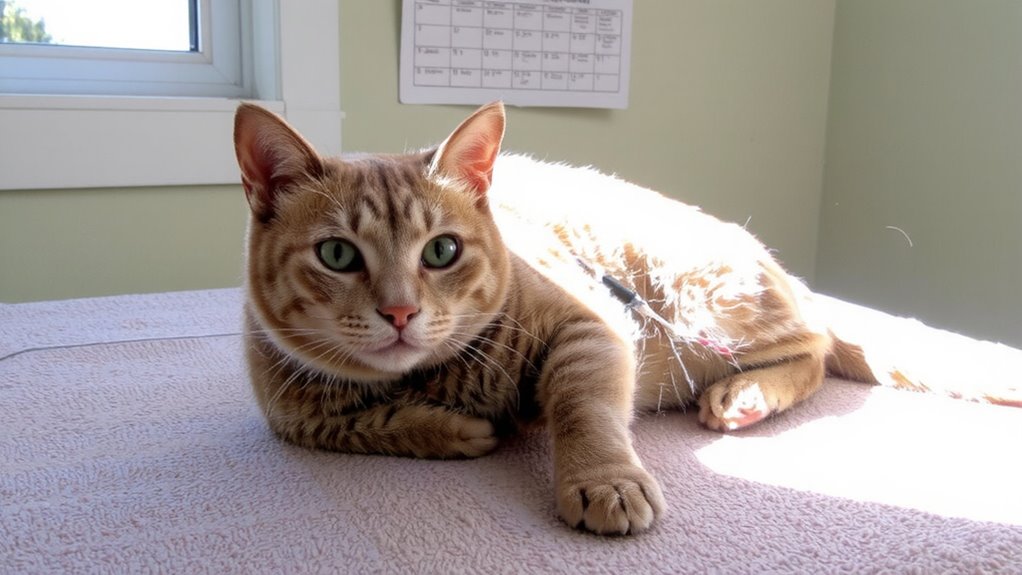
Although thyroid disease becomes increasingly common as cats age, early signs are often subtle and easily mistaken for normal aging. You need regular thyroid testing because unchecked hormone levels directly cause nutrition impact and organ strain. Hyperthyroidism increases metabolic rate, often by 20–40%, forcing the heart, liver, and kidneys to work harder. Left undetected, sustained T4 elevation above 4.0 µg/dL stresses myocardial tissue, raising systolic blood pressure beyond 175 mmHg in 80% of cases. This chronic organ strain can lead to secondary conditions like hypertrophic cardiomyopathy or azotemia. Proper testing-via total T4, free T4, and TSH assays-delivers precise hormonal baselines. Early detection allows dietary adjustments that mitigate nutrition impact, preserving lean body mass. Screening annually, or biannually in cats over 10, guarantees timely intervention. Diagnostic accuracy from validated chemiluminescent immunoassays supports effective treatment planning. You’re not just monitoring hormones-you’re protecting systemic function.
Early Signs of Hyperthyroidism in Cats
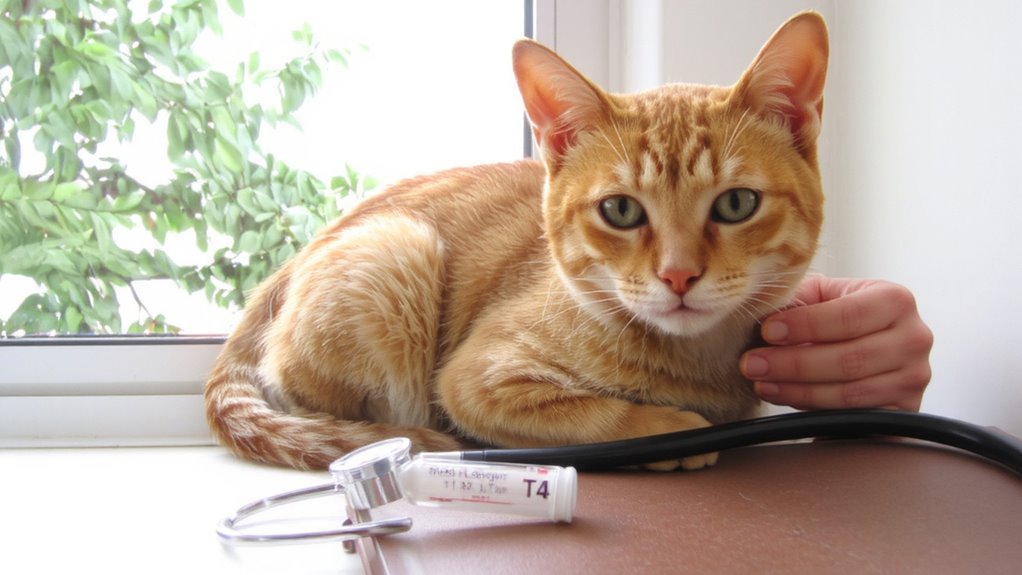
Many senior cats develop hyperthyroidism, and you’ll want to recognize the early signs before complications arise. Key indicators include weight loss despite an increased appetite, a hallmark metabolic imbalance caused by elevated thyroid hormones (T4). You may also observe restlessness, vomiting, or increased thirst. These clinical signs stem from an overstimulated metabolic rate affecting cardiac and gastrointestinal systems.
| Symptom | Frequency in Cats | Clinical Relevance |
|---|---|---|
| Weight loss | >80% | Due to elevated metabolic rate |
| Increased appetite | 70-85% | Despite caloric intake, weight drops |
| Hyperactivity | 60% | CNS stimulation from excess T4 |
| Tachycardia | 50-70% | Heart rate >200 bpm common |
| Poor coat condition | 50% | Reduced grooming due to restlessness |
Early detection improves outcomes markedly.
How Thyroid Testing Works at the Vet
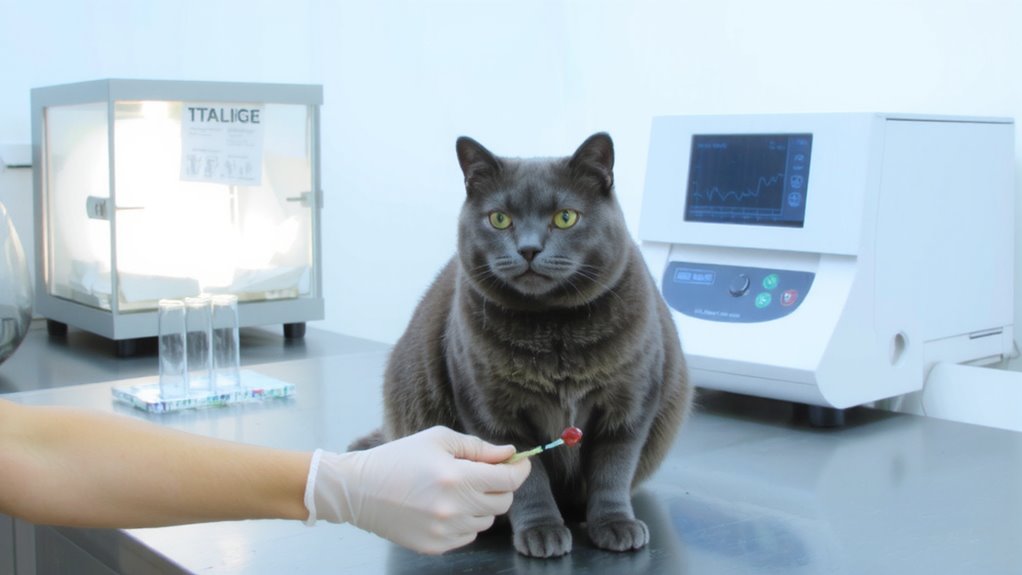
Why does your cat’s vet order a blood test to check the thyroid? They’re looking for hormone imbalances common in senior cats. The process starts with a quick blood draw, usually from your cat’s jugular or cephalic vein. A small sample-about 1 to 2 milliliters-is all that’s needed. Your vet uses a fine-gauge needle to minimize discomfort. Once collected, the sample goes to a lab for analysis. The lab measures total thyroxine (T4) levels, the primary thyroid hormone. Most diagnostic labs use chemiluminescent immunoassay techniques, which offer high sensitivity and precision. Reference ranges typically fall between 0.8 and 4.0 µg/dL, though values vary slightly by lab. Accurate results depend on proper sample handling and timely processing. This standardized method guarantees reliable data to guide next steps in your cat’s health plan.
What Thyroid Test Results Mean
When your cat’s thyroid test results come back, they’ll usually show total thyroxine (T4) levels in micrograms per deciliter (µg/dL). A normal T4 range for senior cats is typically 0.8–4.0 µg/dL. Values above this range often signal hyperthyroidism, commonly caused by benign thyroid adenomas. Elevated T4 levels indicate a hormone imbalance that accelerates metabolism. In some cases, thyroid inflammation can temporarily raise T4, mimicking hyperthyroidism. Your vet may order a free T4 test using equilibrium dialysis for confirmation. Low T4 doesn’t always mean hypothyroidism; it may reflect non-thyroidal illness or euthyroid sick syndrome. Consistent results above 4.5 µg/dL strongly suggest hyperthyroidism. Repeat testing may be needed if symptoms don’t match the numbers. Understanding these values helps identify underlying issues early.
Treatment Options for Hyperthyroid Cats
If your cat is diagnosed with hyperthyroidism, treatment options are available to manage the condition effectively and improve quality of life. Methimazole therapy is a common medical treatment that inhibits thyroid hormone synthesis. It’s administered orally, typically starting at 2.5–5 mg twice daily, and requires regular monitoring of serum T4 levels every 2–4 weeks initially. Side effects may include vomiting, lethargy, or facial excoriations. Radioactive iodine (I-131) therapy is a curative option that targets and destroys hyperfunctional thyroid tissue. It involves a single injection of 3–5 mCi I-131, with hospitalization for 3–7 days due to radiation safety protocols. Success rates exceed 95%, with most cats normalizing thyroid function within 3 months. Both treatments are effective, but radioactive iodine eliminates the need for daily medication. Your veterinarian will recommend the best option based on your cat’s health, age, and owner compliance.
On a final note
You should monitor your senior cat’s thyroid health annually. Thyroid testing involves a simple blood draw measuring total T4, free T4, and TSH levels. Results outside reference ranges-like T4 >4.0 µg/dL-indicate hyperthyroidism. Left untreated, it strains the heart and kidneys. Treatment options include methimazole (dosage: 1.25–5 mg/day), radioactive iodine therapy, or a prescription diet. Each has specific efficacy rates and monitoring requirements. Early detection improves long-term outcomes.