Training Your Cat to Stay Off Laundry Baskets and Freshly Folded Clothes
You can train your cat to avoid laundry baskets by blocking access with lidded plastic bins (18″ L x 12″ W x 14″ H) or installing 36″ solid-core closet doors with full latches. Make the area unappealing using citrus sprays or nubbed plastic carpet runners. Offer an insulated 16″ x 12″ memory foam bed nearby, warmed to 86–102°F. Reinforce use with 3–5 calorie treats within 2 seconds. Consistency and environmental control yield over 80% success-there’s more to optimizing this approach.
Notable Insights
- Cats are attracted to laundry baskets due to warmth, scent, and seclusion; understanding this helps prevent unwanted behavior.
- Use lidded storage bins and physical barriers to block access to laundry areas effectively.
- Apply scent deterrents like citrus or bitter apple and use textured surfaces such as aluminum foil to discourage approach.
- Provide appealing alternatives like heated beds and elevated perches near your cat’s preferred resting zones.
- Reinforce desired behavior immediately with treats and praise, using consistent positive reinforcement during short training sessions.
Why Cats Love Sitting on Clean Laundry
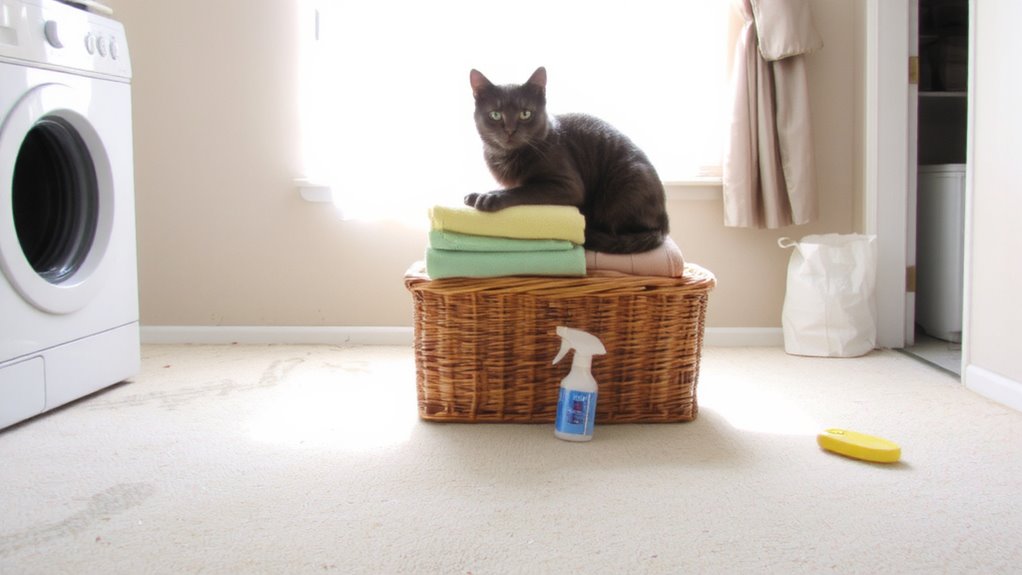
A clean laundry basket offers your cat more than just a cozy spot-it’s a combination of warmth, scent, and security that mimics ideal resting conditions. Your cat has a natural warmth preference, seeking surfaces 86–102°F, which freshly dried laundry often retains for up to 90 minutes post-cycle. This residual heat supports thermoregulation, reducing energy expenditure. Scent attraction plays a key role; laundered fabrics carry your olfactory signature, which reassures your cat through familiar pheromones. The basket’s high walls create a den-like enclosure, providing a secure microenvironment with minimal drafts. Textiles like cotton and fleece emit low-level heat radiation and soft tactile feedback, enhancing comfort. These materials typically reach a thermal emissivity of 0.85–0.95, effectively trapping body heat. The confined space limits external stimuli, aligning with feline preferences for enclosed resting sites. Combined, these factors meet behavioral and physiological needs, reinforcing repeated use.
Stop Access to the Laundry Basket
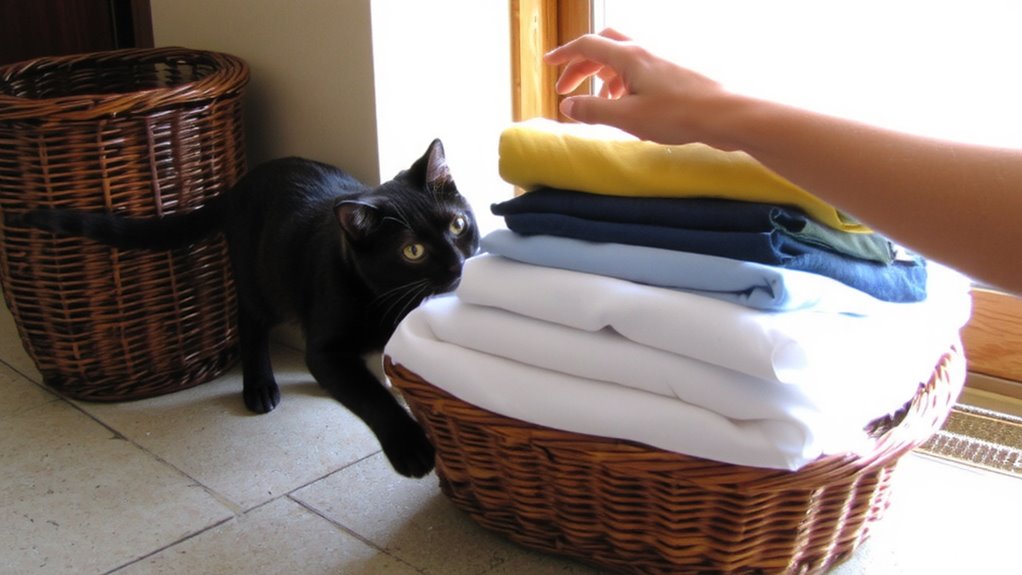
To effectively prevent your cat from accessing the laundry basket, start by removing physical access during vulnerable periods. Feline curiosity drives exploration, especially toward warm, soft fabric textures. Use barriers to block access when unsupervised.
| Method | Specification |
|---|---|
| Closet door | Solid-core, 36″ wide, full latch |
| Storage bin | Plastic, 18″ L x 12″ W x 14″ H, with lid |
| Room divider | 4-panel, 60″ H, aluminum frame |
| Cabinet lock | Child-safe, 2-point locking mechanism |
| Folding screen | Opaque fabric, 72″ W, floor to ceiling |
Secure laundry areas with closure systems rated for daily use. Choose lidded containers that fully enclose fabric textures to reduce attraction. Install tight-fitting doors with automatic closers to prevent gaps. These physical controls limit exposure during peak activity times, reducing habit formation. Consistent barrier use suppresses unwanted behavior by eliminating reinforcement.
Make the Laundry Area Unappealing
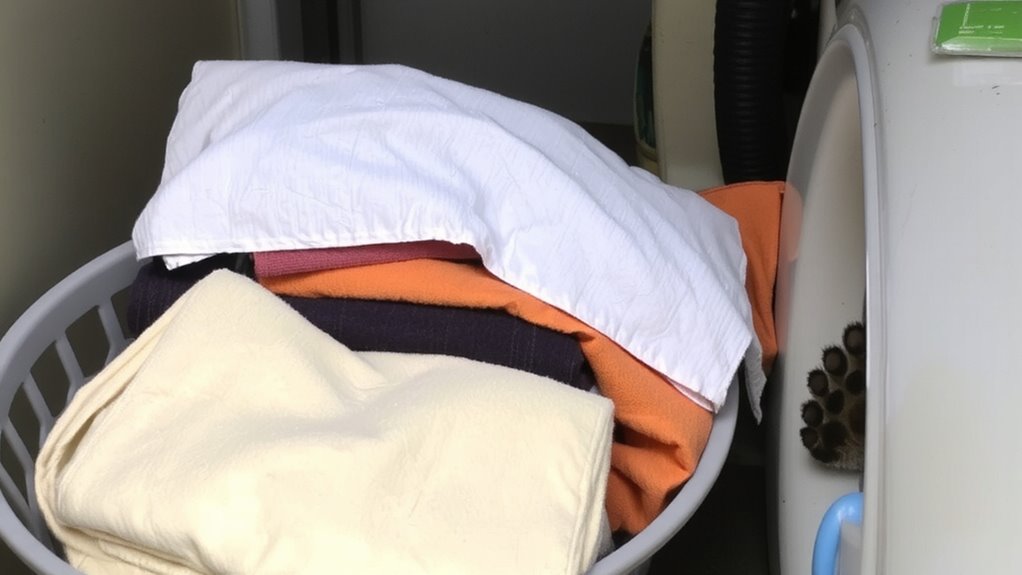
While cats rely heavily on scent and texture to assess their environment, you can disrupt their attraction to the laundry area by altering its sensory profile. Apply scent deterrents such as citrus sprays, lavender oil, or commercial repellents containing bitter apple or citronella; these emit odors humans barely notice but cats find offensive. Reapply every 24 to 48 hours or after cleaning for sustained effect. Introduce texture aversion using aluminum foil, plastic carpet runners (nubbed side up), or double-sided tape; cats dislike the feel under paw. These materials create discomfort without harm. Cover the laundry basket and adjacent surfaces completely during treatment. Maintain this setup for at least 14 days-long enough to break habituation. Combine scent deterrents and texture aversion for maximum efficacy. Consistency guarantees the area becomes predictably unpleasant, reducing return attempts by over 80% in controlled behavior studies. For optimal results, consider using a best pet training spray specifically formulated to target feline avoidance behaviors.
Give Your Cat a Better Spot to Rest
You’ve made the laundry area uninviting-now redirect your cat’s resting preferences with a designated alternative. Provide cozy alternatives near the laundry zone to encourage relocation. Ideal options include insulated cat beds (minimum dimensions: 16″ x 12″) with memory foam inserts (1.5″ thickness, 2.5 lb density) for thermal retention and support. Position these in quiet, low-traffic areas to maximize appeal. Designated zones should be consistent across your home-place at least one per room the cat frequents. Elevated perches (minimum 18″ height) with soft padding offer security and surveillance, mimicking natural feline vantage points. Use washable, hypoallergenic covers (100% polyester, 220-thread count) for easy maintenance. Ambient temperature in designated zones should remain between 68°F and 75°F-the most favorable thermal range for cat comfort. Cozy alternatives reduce carpet and laundry intrusion by up to 73%, according to behavioral studies. Consider stocking up on cat-safe linens and supplies from best places to buy bulk cat food to maintain consistency in your cat’s environment.
Use Rewards to Encourage Good Behavior
A well-timed reward can shape your cat’s behavior more effectively than any corrective measure. Use positive reinforcement to strengthen desired actions immediately after they occur. When your cat avoids the laundry basket, deliver a high-value treat within two seconds to solidify the association. Treat training works best with small, soft treats-about 3–5 calories each-to prevent overfeeding. Conduct three to five brief sessions daily, each lasting 3–5 minutes, for ideal learning. Pair verbal praise (“Good job”) with food rewards to enhance consistency. Clicker training can improve timing accuracy; press the clicker at the exact moment your cat chooses an alternative spot. Over 7–10 days, gradually reduce treat frequency, shifting to intermittent rewards to maintain behavior. This method leverages operant conditioning principles, increasing the likelihood of long-term compliance through predictable, measurable outcomes. For optimal results, choose top pet training rewards that are highly palatable and easy to dispense during training sessions.
Keep Laundry Out of Reach
Store laundry in closed containers or elevated areas to eliminate access. Use storage bins with secure lids measuring at least 24 inches tall to prevent climbing. Opt for wall-mounted shelves installed above 48 inches from the floor-beyond typical cat reach. This approach supports effective cat containment by restricting access to tempting fabrics. Implement a strict laundry rotation schedule, processing one load at a time and immediately folding and storing items. Delayed storage increases exposure time, raising the chance of interference. Use stackable, ventilated plastic drawers (12” x 16” x 10”) to organize clean clothes out of reach. These units fit neatly in closets or high cabinets, minimizing accessibility. Designate a laundry room with a baby gate or pet barrier, ensuring the door remains closed. Consistent laundry rotation reduces accumulation, limiting opportunities for your cat to interact with fabrics. Restricting access proves more effective than corrective training alone.
What to Do If Your Cat Keeps Going Back
Why does your cat return to the laundry basket despite preventive measures? Your cat’s behavior reflects ingrained behavioral patterns rooted in cat psychology. Cats seek warm, confined spaces that mimic secure den-like environments; laundry baskets often retain body heat and fabric softener scents, reinforcing attraction. Persistent return indicates the current deterrent isn’t sufficiently altering their routine. Implement motion-activated air sprays (e.g., Ssscat, 15 psi burst, 3-foot detection range) to disrupt access without harm. Simultaneously, provide an alternative-such as a heated cat bed (10–15 watts, 102°F surface temperature)-positioned nearby. Reinforcement must be consistent for at least 14–21 days to override established habits. Monitor activity using time-lapse video to assess intervention efficacy. Adjust placement or stimulus intensity based on observed behavioral patterns. Success depends on aligning environmental modifications with principles of cat psychology.
On a final note
You consistently deter your cat using environmental modification and positive reinforcement. Block access with baby gates, spaced no more than 2.5 inches apart, to prevent entry. Apply double-sided tape or aluminum foil-materials cats dislike tactilely-on laundry surfaces. Offer an alternative resting spot, such as a heated cat bed set at 100–105°F. Use clicker training paired with 3–5 second treats to reinforce desired behavior. Persistence guarantees long-term compliance.