How Veterinarians Assess Joint Health in Senior Cats During Routine Checkups
Your veterinarian assesses your senior cat’s joint health by observing gait for stiffness or lameness and checking weight distribution for asymmetry. They palpate joints to evaluate range of motion, detect swelling or crepitus, and identify pain through flinching or tension. Muscle atrophy and posture shifts help reveal chronic dysfunction. Grooming habits and activity changes provide supporting clues. X-rays may be used if signs persist, showing joint space narrowing or osteophytes-especially in high-risk breeds like Maine Coons. Early detection through this structured approach improves long-term outcomes.
Notable Insights
- Veterinarians observe gait abnormalities such as stiffness or lameness to detect joint discomfort.
- Joint palpation helps assess range of motion, swelling, heat, or crepitus in affected areas.
- Muscle atrophy, especially in limbs, is evaluated as a sign of chronic joint dysfunction.
- Posture changes and weight-shifting patterns reveal compensatory behaviors due to pain.
- Flinching, vocalizing, or tensing during handling indicates pain in specific joints.
Why Arthritis Is Common in Senior Cats
Arthritis isn’t just a dog problem-it’s a silent issue affecting nearly 90% of cats over 12 years old. You might not notice it, but your cat is likely experiencing joint degeneration. Age related wear is a primary cause, as cartilage loses elasticity and thins over time, reducing shock absorption in synovial joints. This wear increases friction, leading to inflammation and bony remodeling seen on radiographs. Genetic predisposition also plays a role; certain breeds like Maine Coons and Persians inherit higher risks for developmental joint abnormalities. These structural flaws accelerate degeneration. Synovial fluid volume decreases, impairing nutrient delivery to avascular cartilage. Over years, this cascade results in osteoarthritis-identified via joint space narrowing, osteophyte formation, and subchondral bone sclerosis on imaging. These changes are progressive and irreversible. Early recognition of radiographic and clinical signs allows timely management. You can’t reverse damage, but understanding these mechanisms helps you slow progression through targeted interventions.
How Behavior Changes Reveal Joint Pain at Home
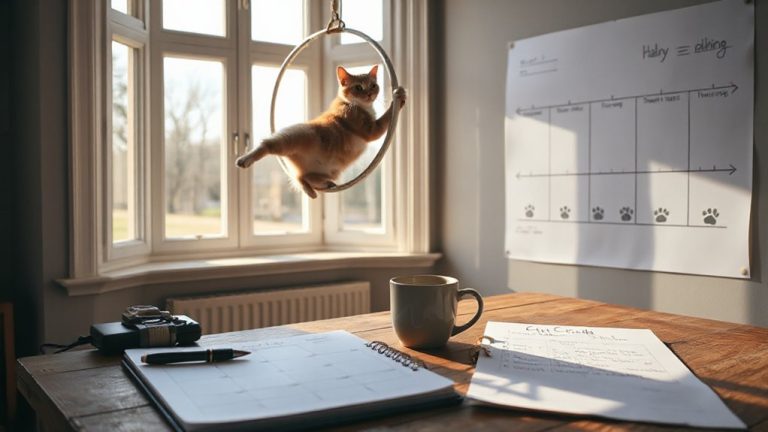
Why has your cat stopped jumping onto the windowsill? Reduced mobility from joint pain often causes cats to avoid elevated surfaces. You might notice your cat taking longer, more cautious steps or refusing to leap altogether. Changes in litter box habits are common; arthritic cats may eliminate outside the box due to difficulty climbing in, especially if the sides are high. A standard litter box with 5-inch walls can become inaccessible. Decreased grooming frequency is another key sign-pain limits the flexibility needed to reach certain areas. Matted fur or oily skin, particularly on the back or tail base, suggest self-care decline. These behaviors are measurable indicators. Tracking daily activity, elimination patterns, and grooming effort provides objective data. Observing these changes at home allows early recognition of discomfort, enabling timely veterinary intervention before severe degeneration occurs. Document specifics for the next checkup.
How Vets Check for Joint Pain During Exams
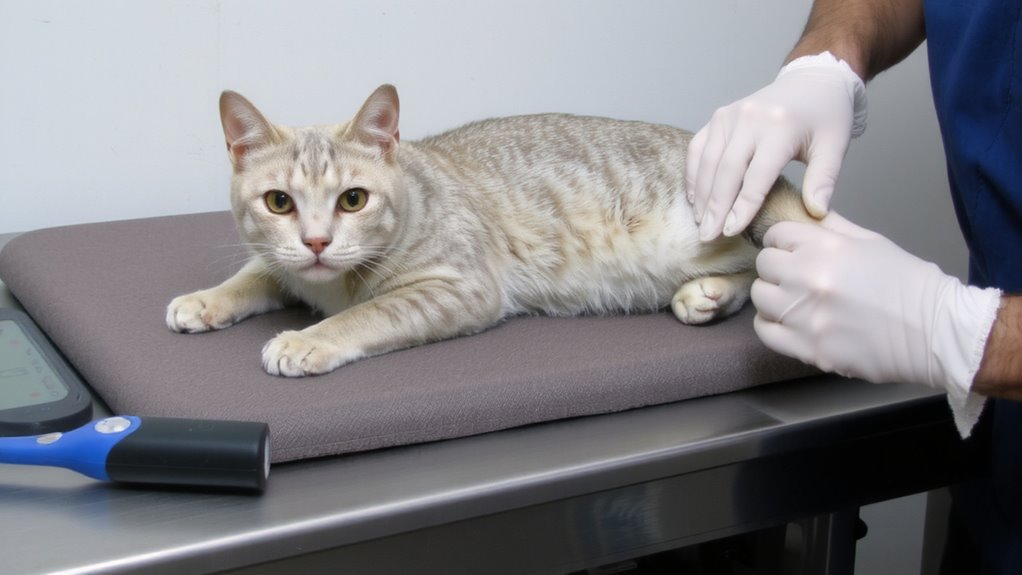
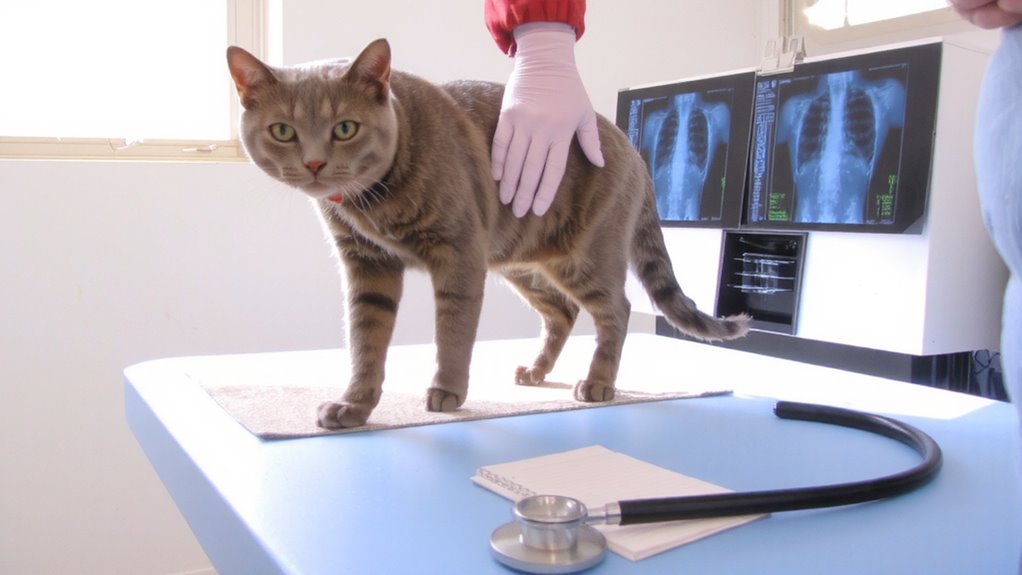
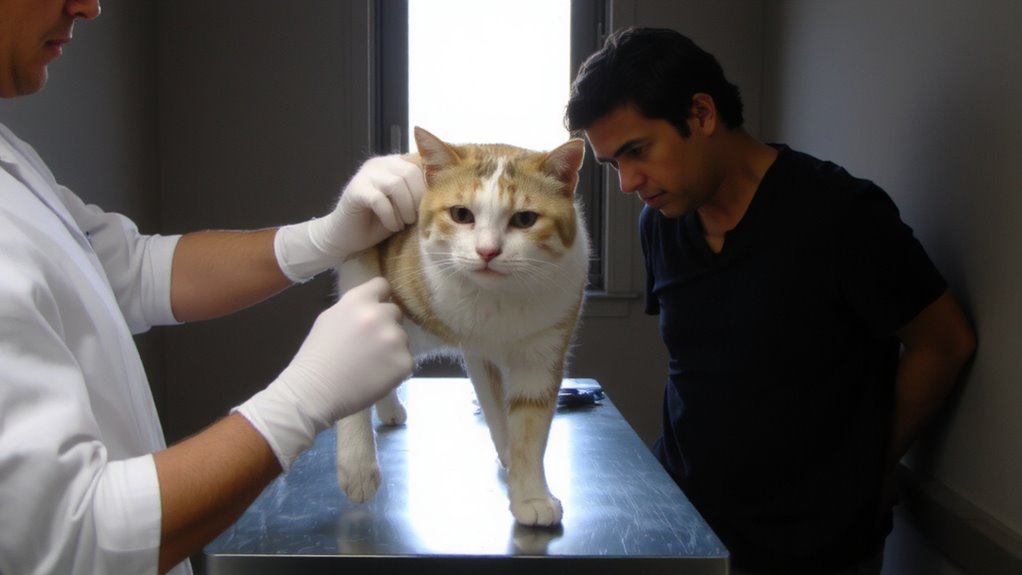
A thorough physical exam begins with observation as you carry your cat into the room. Your vet assesses gait observation immediately, noting stiffness or lameness. Subtle shifts in weight distribution or hesitation to jump signal discomfort. Once on the table, joint palpation begins-firm but gentle pressure applied to hips, knees, elbows, and spine. The vet evaluates range of motion and detects swelling, heat, or crepitus.
| Exam Focus | Clinical Significance |
|---|---|
| Gait observation | Identifies asymmetry or shortened stride |
| Joint palpation | Detects pain response during flexion |
| Muscle atrophy | Indicates chronic joint dysfunction |
| Posture shifts | Reveals compensatory weight bearing |
Behavior during handling-flinching, vocalizing, or tensing-further confirms discomfort. Each finding is documented for trend analysis. Early detection through these methods enables timely management. You’re a key partner, sharing home observations that shape clinical conclusions.
When X-Rays Help Diagnose Cat Arthritis
How clear is the picture when joint pain persists despite a normal exam? X-rays provide definitive joint imaging to uncover hidden issues. When physical assessment alone isn’t enough, radiographic evidence reveals structural changes typical of arthritis. You’ll see joint space narrowing, bone spurs (osteophytes), and increased density at joint margins. These signs confirm degenerative joint disease even when symptoms are subtle. Radiographs use low-dose ionizing radiation-safe for senior cats when shielded properly. Standard views include flexed lateral and ventrodorsal positions for hips, stifles, and elbows. Digital systems enhance image clarity and allow magnification up to 200% without distortion. Contrast studies aren’t usually needed. Early lesions may be missed on x-rays, so repeat imaging in six months can track progression. Radiographic evidence, combined with clinical findings, guides treatment. You rely on this objective data to make informed decisions about long-term joint health management.
How Vets Assess Mobility in Older Cats
Where do you start when joint discomfort isn’t obvious but your cat seems off? Vets begin with gait analysis, observing how your cat walks, turns, and shifts weight. They assess stride length, foot placement, and coordination, looking for irregularities. Subtle changes like shortened steps or a stiff posture suggest discomfort. A key focus is limb symmetry-comparing left and right limbs for consistent movement and loading. Asymmetry often signals compensatory behavior due to joint pain. Your vet may video record your cat’s movement to analyze patterns frame by frame. They might use pressure-sensitive walkways to measure weight distribution, detecting imbalances not visible to the naked eye. These tools provide objective data, improving diagnostic accuracy. You’ll be asked about activity changes at home, as indoor behavior complements clinical findings. Early detection through systematic mobility assessment helps maintain your cat’s function and quality of life over time.
How Vets Build Pain Management Plans for Senior Cats
Why does your senior cat seem reluctant to jump or groom itself thoroughly? Your cat may be experiencing joint pain, a common issue in older felines. Vets build personalized pain management plans to address this. They start with a thorough exam, noting reduced range of motion or signs of discomfort. Weight management is critical-each excess pound increases joint stress, worsening arthritis. A vet may recommend a calorie-controlled, high-protein diet to maintain muscle while reducing load. Laser therapy is often included; it uses wavelengths of 800–900 nm to reduce inflammation and stimulate cellular repair. Treatments last 5–10 minutes and typically require 6–8 sessions initially. Medications like NSAIDs may be prescribed long-term, with liver and kidney values monitored every 6 months. Environmental adjustments, like raised food bowls or orthopedic beds, complement medical strategies. The goal is consistent, measurable improvement in mobility and comfort.
On a final note
You can detect early signs of joint disease in senior cats by observing subtle behavior shifts. Vets identify pain through palpation, noting resistance or vocalization at specific joint angles. Radiographs confirm degenerative changes, like osteophyte formation or joint space narrowing. Assessments include orthopedic exams and gait analysis. Effective pain management combines NSAIDs, such as meloxicam at 0.05 mg/kg daily, with environmental modifications. Early intervention improves mobility and quality of life progressively.