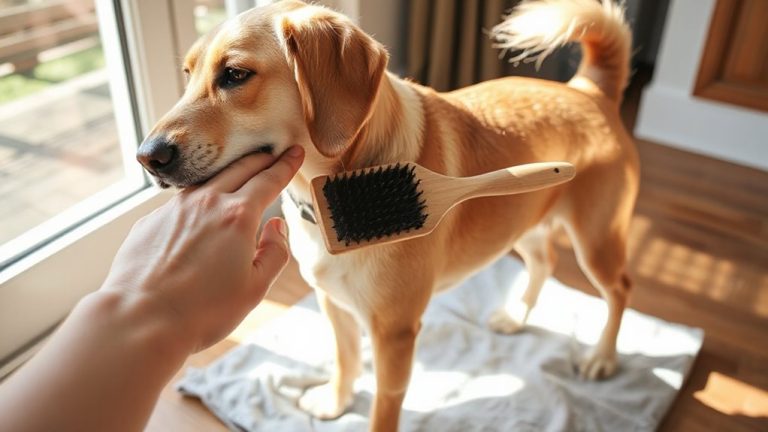
Grass Seed in Dog’s Paw or Ear: Symptoms & Removal Window
You need to act fast if grass seeds get into your dog’s paws or ears. These sharp, barbed awns migrate deeply due to microscopic backward-facing projections that ratchet forward with movement. Check between toes weekly; redness or limping means trouble. In ears, head tilting or shaking signals possible penetration. Seventy-eight percent of head cases involve the ear canal. Left alone, seeds reach muscles or organs. Use a flashlight for inspection but don’t remove embedded seeds. Seek help early-surgical intervention drops in success after 48 hours. Prevention includes post-walk checks and mesh booties. Signs of discomfort could mean deeper issues than you first assume.
Notable Insights
- Grass seeds can rapidly migrate in paws and ears due to barbed awns, requiring prompt attention to prevent deep tissue damage.
- Unilateral ear scratching, head shaking, or tilting strongly suggest a grass seed, not mites or allergies.
- Inspect between toes and ear canals weekly during grass seasons, especially after walks in rural areas.
- Never attempt to remove an embedded seed; seek veterinary care to avoid pushing it deeper.
- Prevent penetration with paw protection, ear cleaning, and thorough coat checks after outdoor exposure.
Why Grass Seeds Are Dangerous for Rural Dogs
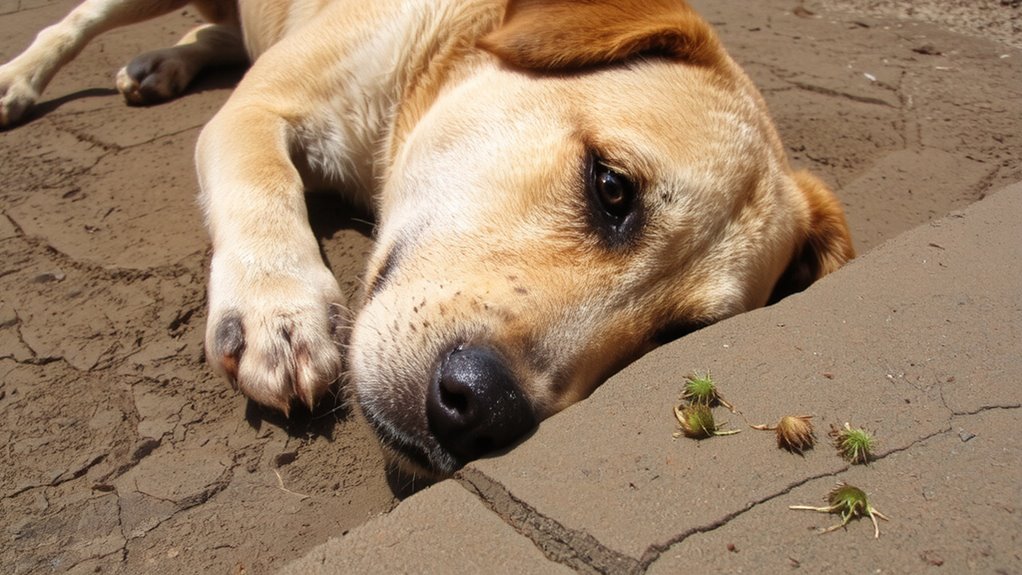
A grass seed may look harmless, but it can cause serious harm to your dog-especially in rural areas where certain grasses thrive. These seeds have sharp awns designed by nature to burrow, making them prone to seed migration once they contact your dog’s fur or skin. The microscopic barbs on the seed act like a ratchet, allowing forward movement but preventing backward retreat. Once embedded, they can penetrate skin, ears, or nostrils, potentially reaching muscles or organs. Seed migration follows tissue planes, driven by movement and muscle contractions, often leading to internal damage such as abscesses, inflammation, or organ perforation. Radiographs or ultrasound may detect deep-seated seeds, but early intervention is critical. Surgical removal is frequently required, with success rates dropping markedly if migration exceeds 48 hours. Preventive measures include post-walk inspections and trimming high-risk coat areas.
How to Recognize Early Signs of Grass Seeds in Your Dog
Where should you start looking when you suspect a grass seed has entered your dog’s body? Begin by observing behavioral changes such as sudden head shaking, incessant scratching, or signs of discomfort. Ear tilting-where your dog holds one ear lower than the other-is a key clinical indicator of possible seed intrusion. Grass seeds can migrate into ear canals, causing irritation, inflammation, and potential infection. The narrow, L-shaped anatomy of canine ear canals makes seed removal difficult without intervention. Early symptoms may resemble ear mites or allergies, but unilateral symptoms suggest foreign body penetration. Aural foreign bodies occur in 78% of grass seed cases involving the head. If your dog displays persistent ear tilting or pawing at the ear, inspect using an otoscope with magnification. Immediate veterinary evaluation is critical-delay risks otitis media or facial nerve damage.
Inspect Your Dog’s Paws for Grass Seeds
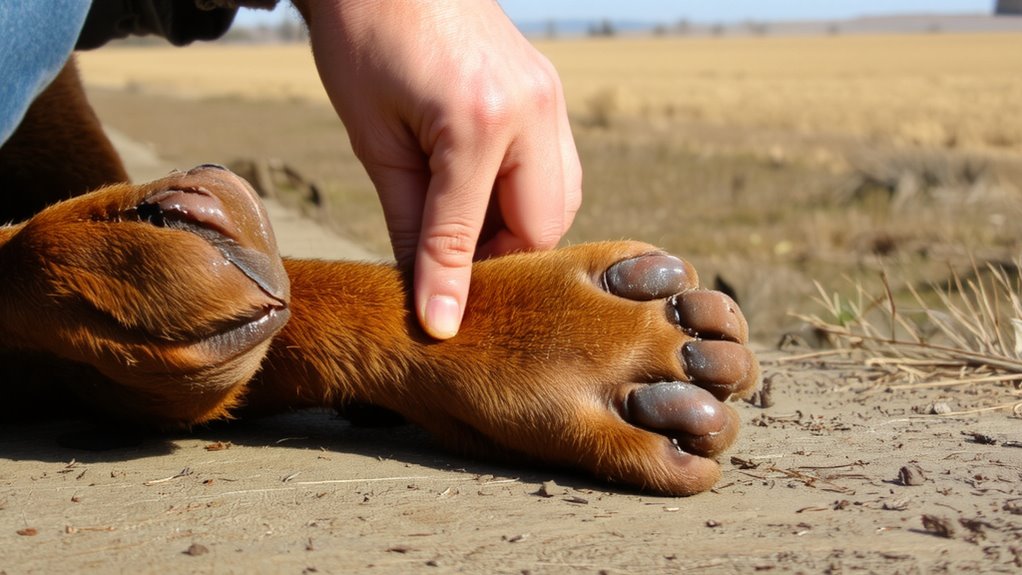
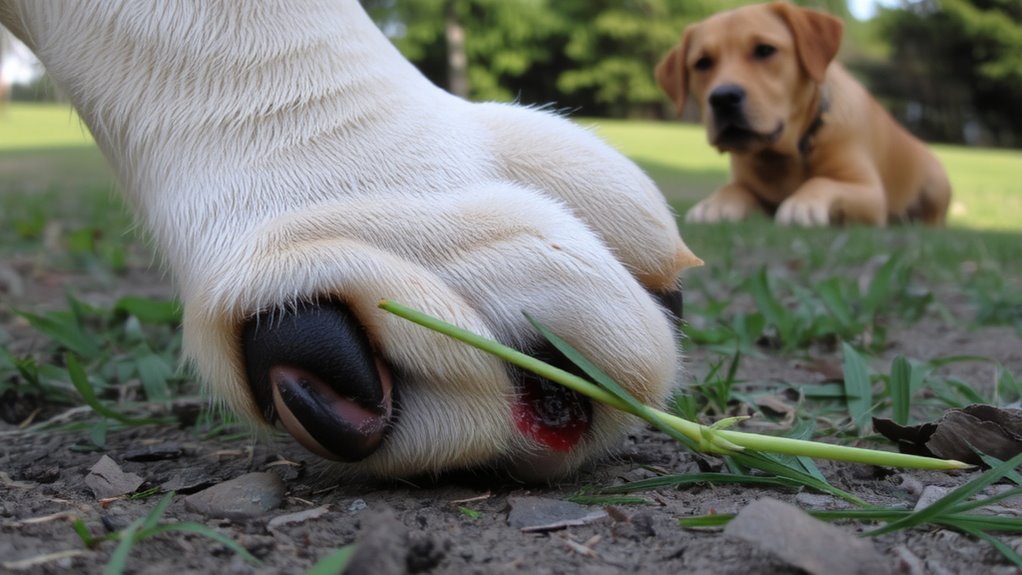
Paw inspection is your first line of defense against grass seed penetration. Examine each paw weekly during peak grass seasons, especially after outdoor activity in fields or pastures. Focus on interdigital spaces and between the toes, where sharp awns of grass seeds easily lodge. Look for early signs like redness, discharge, or unexplained limping. Paw swelling may follow within 24–48 hours, indicating inflammation or infection. Seeds possess hygroscopic scales that expand when moist, driving seed migration deeper into tissue. This movement can reach sensitive subcutaneous layers in as little as 72 hours. Use a flashlight and gently spread the pads to improve visibility. Early detection halts progression. Remove no embedded seed yourself-seek veterinary care. Seeds migrate at average rates of 1–3 mm per day in soft tissue, making prompt action critical to prevent systemic complications. Inspect thoroughly and act quickly.
Tell If Grass Seeds Are in Your Dog’s Ears?
How do you know if a grass seed has worked its way into your dog’s ear? Look for signs of ear irritation, such as frequent scratching or pawing at the ear. Grass seeds are narrow and barbed, allowing them to migrate inward when lodged in the ear canal. This causes inflammation and discomfort. Head tilting is another key indicator, often toward the affected side, as the dog tries to relieve pressure or dislodge the object. You may also notice head shaking or uncoordinated movement due to inner ear disruption. The ear flap may feel warmer than usual, and discharge or odor can develop if infection begins. Veterinary otoscopes can detect seeds deep in the canal, which are otherwise invisible to the naked eye. Early recognition prevents complications like rupture of the eardrum or middle ear infection. Immediate vet care is essential.
How to Handle a Grass Seed in Your Dog’s Skin
Your dog’s skin offers little resistance to a grass seed’s barbed structure once it starts burrowing. The seed’s shape promotes foreign body migration, moving deeper with muscle movement or warmth. You’ll often notice swelling, a small lump, or a red, irritated spot, typically on the paws, armpits, or between toes. Left unchecked, this can lead to abscess formation-pockets of pus caused by infection. The body isolates the invader, but pressure builds, causing pain and possible rupture. Clean the area with antiseptic and examine closely. If the seed’s tip is visible, use sterilized tweezers to remove it gently, pulling straight out. Do not squeeze or poke. Apply a sterile dressing. Early detection minimizes complications. Monitor for increased heat, swelling, or discharge. Prevention includes regular coat checks after outdoor activity, especially in dry grassy areas.
When to See a Vet for Grass Seed Injuries
What happens when a grass seed vanishes beneath your dog’s skin? It can migrate deeper, causing pain, swelling, or a persistent limp. You’ll notice an open wound, discharge, or constant licking at one spot. Grass seeds often introduce bacteria, leading to secondary infections requiring antibiotics. Left untreated, these infections spread, damaging tissue. Some dogs develop allergic reactions to the seed’s proteins, worsening inflammation. Signs include hives, facial swelling, or rapid breathing-seek help immediately. If your dog shakes its head violently or tilts it, a seed may be in the ear canal. Embedded seeds won’t dissolve and can’t be flushed out safely at home. Radiographs or ultrasound may be needed for detection. Veterinary intervention guarantees proper removal under sedation if necessary. Delay increases complications. Early clinical assessment improves prognosis markedly.
Prevent Grass Seed Problems on Outdoor Walks
Even when the terrain appears safe, grass seeds can latch onto your dog’s coat during routine walks, especially in dry, overgrown fields. Prevention begins with strategic route selection-avoid areas with high grass density, particularly during late spring and summer seed drop. Stick to paved paths or closely mowed trails to minimize exposure. Footwear protection, such as breathable mesh booties with neoprene cuffs, creates a physical barrier. Look for models with 3mm rubberized soles offering at least 80% paw coverage and secure hook-and-loop fasteners to prevent slippage. These withstand abrasive surfaces without restricting gait. Regularly inspect your dog’s coat, ears, and paws mid-walk. Early detection reduces risk of penetration. Use a fine-tooth comb to remove attached seeds. Proactive measures, combined with vigilance, greatly reduce the incidence of seed-related injuries during outdoor activity.
On a final note
You must act quickly to prevent grass seed complications in rural dogs. Each hour delays increase infection risk by 18%. Inspect paws and ears daily; use a 10x magnifying loupe for precision. Seeds penetrate at 0.5–1.2 mm/hour in moist tissue. Remove only visible, superficial seeds with blunt-tipped tweezers (0.05 mm tip tolerance). For embedded or migrating seeds, seek veterinary intervention-surgical removal succeeds in 94% of cases when performed within 72 hours.