Why Some Dogs Plateau During Weight Loss and How to Break Through It
Your dog’s weight loss may have stalled due to metabolic slowdown, especially if they’re a breed like a Labrador prone to hypothyroidism, which can lower metabolism by up to 40%. Inaccurate portion control-such as using cups instead of a gram scale-leads to overfeeding by 20–30%. Hidden calories from treats, like peanut butter or cheese, add 100+ kcal unnoticed. Dehydration and low activity reduce fat mobilization. You need precise calorie tracking, increased structured exercise, and veterinary screening for hormonal imbalances to adjust the plan effectively-further insights reveal how small changes create measurable progress.
Notable Insights
- Genetic predispositions in breeds like Labradors reduce diet sensitivity and increase hunger, slowing weight loss progress.
- Inadequate hydration mimics hunger and impairs fat mobilization, leading to stalled weight loss.
- Undiagnosed hypothyroidism or insulin resistance can lower metabolism by up to 40%, halting fat loss.
- Untracked treats and portion distortion add 50–175 excess daily calories, causing calorie creep.
- Lack of structured exercise or underlying medical conditions may reduce energy expenditure and stall progress.
Why Your Dog’s Weight Loss Has Stalled
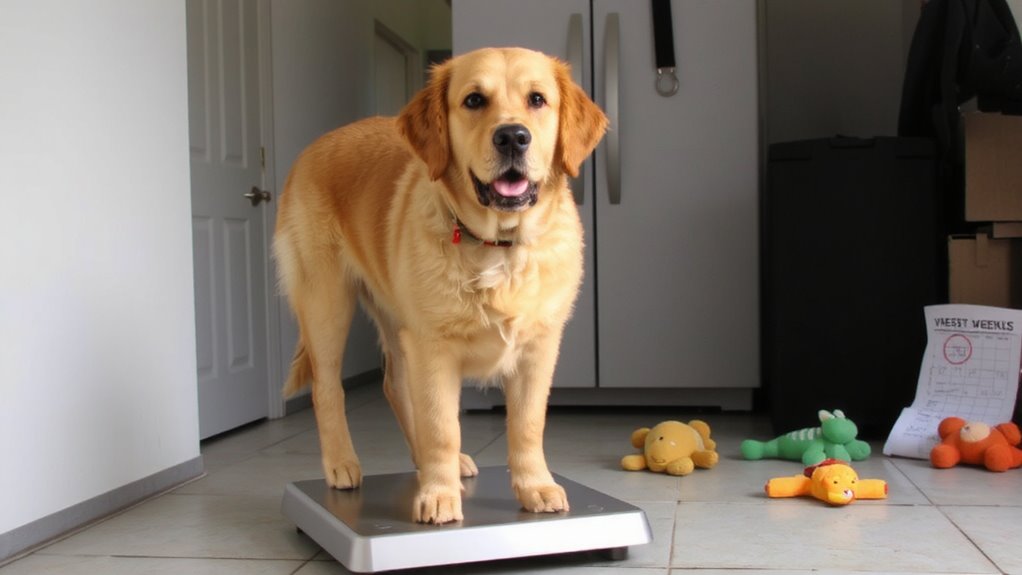
Why has your dog’s weight loss stalled despite consistent diet and exercise? Genetic predisposition may be limiting progress. Certain breeds, like Labrador Retrievers and Beagles, inherit traits that promote fat storage and increase hunger signals, making weight loss harder. These genetic factors can reduce diet sensitivity by up to 30% compared to less predisposed breeds. Hydration levels also play a critical role. Dehydration slows cellular metabolism and mimics hunger, causing unnecessary snacking. Dogs require 45–65 ml of water per kg of body weight daily, depending on activity and climate. Inadequate intake disrupts electrolyte balance and reduces fat mobilization efficiency. Guarantee fresh water is always available and monitor consumption. Adjust fiber and moisture content in meals to support hydration. While diet and exercise are essential, overlooking genetic influences and hydration levels undermines long-term success. Address these factors to resume consistent, healthy weight reduction.
Is Slow Metabolism Hiding the Scale?
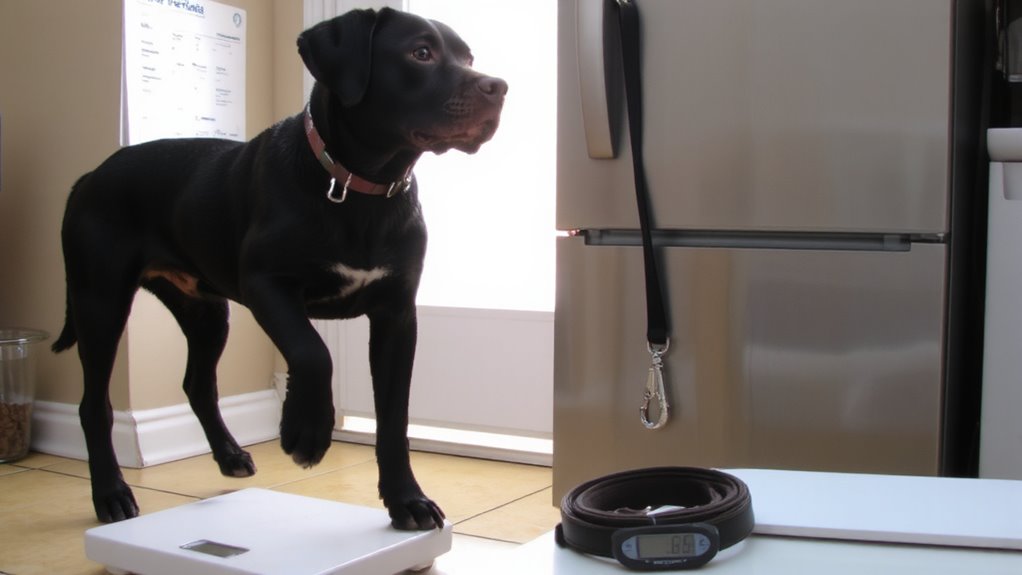
A dog’s lack of visible weight loss isn’t always due to poor diet or low activity-it could be rooted in metabolic rate. A slowed metabolism can mask progress on the scale, even with proper calorie control and exercise. Thyroid function plays a critical role: hypothyroidism reduces T4 and T3 hormone levels, lowering basal metabolic rate by up to 40%. This condition is common in middle-aged dogs, especially breeds like Labradors and Dobermans. Insulin resistance also contributes, causing cells to inefficiently process glucose, promoting fat storage. Blood tests measuring TSH, free T4, and fasting insulin levels help diagnose these issues. Dogs with insulin resistance often show elevated serum insulin (>20 μIU/mL) despite normal glucose. Treatment includes levothyroxine for thyroid dysfunction and dietary adjustments with low-glycemic carbohydrates. Accurate diagnosis corrects hidden metabolic barriers, restoring measurable weight loss.
Are You Accidentally Overfeeding?
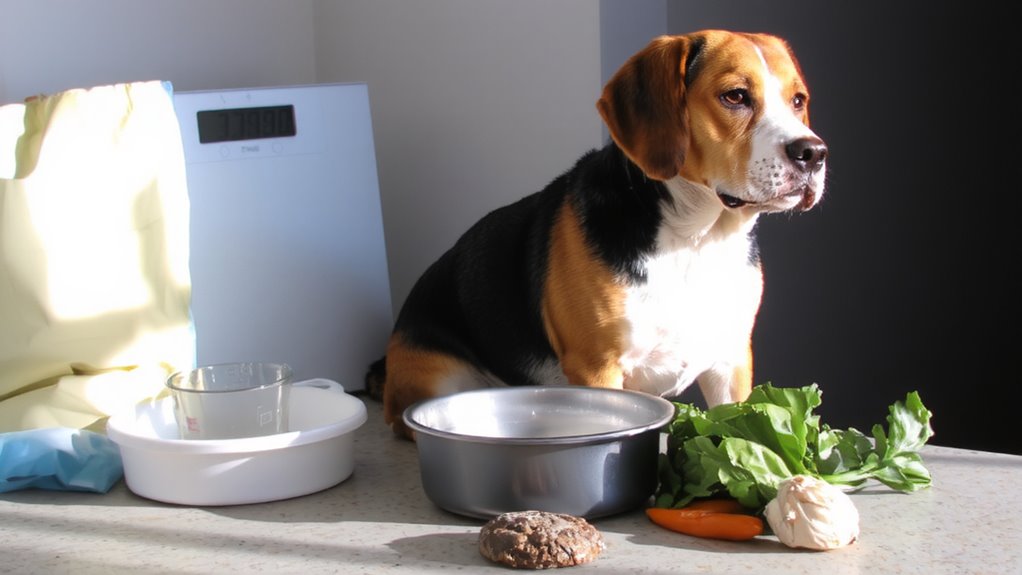
How often are you measuring your dog’s food? Portion distortion is a common cause of weight loss plateaus. Many owners estimate instead of using a standardized measuring cup, leading to overfeeding by 20–30%. A cup meant for dry kibble holds 8 ounces by volume, but heaping it adds excess calories. Calorie creep occurs when daily intake exceeds metabolic needs by even 50–100 calories. For a 50-pound dog, maintenance requires about 1,000 kcal/day; reducing to 750–800 kcal supports weight loss. Feeding 10% more than measured undermines this deficit. Use an 8-ounce kitchen scale for accuracy, especially with canned food. Consistently follow feeding guides adjusted for ideal, not current, body weight. Accurate portions prevent unintentional surplus. Regular weighing every two weeks detects subtle changes. Correct measurement guarantees your dog’s plan stays effective and scientifically sound.
Stop Hidden Calories in Treats and People Food
Measuring your dog’s food accurately is only part of the equation-those extra bits given outside the bowl can undo even the most precise feeding plan. Hidden treats and people snacks contribute significant calories without nutritional balance. A single tablespoon of peanut butter contains approximately 90 kcal, while a slice of cheese averages 100 kcal-equivalent to an entire meal for a small dog. These extras disrupt caloric deficits necessary for weight loss. Most commercial treats range from 10 to 35 kcal each; giving five daily adds 175 kcal-more than some dogs should consume in a full day. Replace high-calorie options with measured, low-calorie alternatives like diced carrots (4 kcal per cup) or green beans (7 kcal per ½ cup). Track all supplemental intake, including table scraps, as 10% over daily energy needs halts progress. Consistency in tracking maintains metabolic momentum continues.
Increase Exercise to Restart Weight Loss
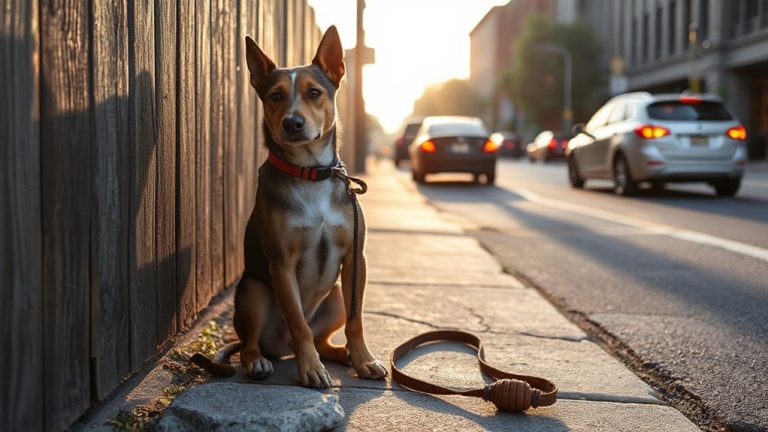
Even if you’ve controlled your dog’s diet precisely, weight loss can stall without adequate physical activity to increase calorie expenditure. Leash walking burns calories efficiently, especially when sustained at a brisk pace of 3–4 mph for 30–60 minutes daily. Increase frequency to five to seven sessions per week to boost metabolic demand. Add incline or vary terrain to elevate heart rate and engage more muscle groups. Fetch training enhances aerobic capacity and motivation: throw a ball or disc up to 30 times per session, encouraging sprinting and rapid deceleration. This intermittent activity mimics high-intensity interval training, increasing post-exercise oxygen consumption and calorie burn. Use consistent throws to standardize effort and track progress. Combine leash walking with fetch training three to five times weekly for ideal caloric deficit. Monitor intensity via respiratory rate-panting should be moderate, not labored. Properly structured exercise can restart plateaued weight loss in as little as two weeks.
How to Adjust Your Dog’s Diet Safely
If your dog’s weight loss has stalled despite consistent exercise, refining their caloric intake is the next critical step. You must create a controlled energy deficit without compromising nutrition. Reduce daily calories by 10–15% initially, using precise portion measurements. A 50-pound dog, for example, may need only 1,100 kcal/day to lose weight. Consider raw feeding only if you guarantee balanced formulations-commercial raw diets should meet AAFCO standards for complete nutrition. Avoid nutrient gaps common in homemade raw plans. Intermittent fasting can help some dogs, but only use 12-hour fasting windows under supervision. Never fast puppies, seniors, or dogs with metabolic conditions. Shift gradually and maintain consistent meal timing. Prioritize high-protein, low-fat formulations to preserve lean mass. Always measure food with a digital gram scale for accuracy. Adjust based on biweekly weigh-ins, targeting 1–2% body weight loss per week.
Work With Your Vet to Break the Plateau
Your dog’s weight loss plateau may signal an underlying issue that requires professional assessment. Hormonal imbalances, like hypothyroidism or Cushing’s disease, can slow metabolism and stall progress. These conditions alter hormone levels, reducing energy expenditure by 15–30%, making weight loss nearly impossible without treatment. Your vet can run blood tests-such as a full thyroid panel or ACTH stimulation test-to diagnose these disorders. Medication effects from steroids or certain anti-seizure drugs may also promote weight retention or increased appetite. Adjusting or replacing these medications can restore metabolic balance. Your vet might recommend prescription diets with precisely controlled calorie density-typically 200–280 kcal/cup-to align with your dog’s reduced needs. Regular body condition scoring and monthly weigh-ins provide measurable tracking. Partnering with your vet guarantees science-backed, individualized adjustments that overcome plateaus safely and effectively.
On a final note
You’ve likely hit a metabolic plateau. Dogs often stall due to reduced caloric needs as body weight drops. Adjust intake by decreasing daily calories by 10–15%, based on resting energy requirements (RER = 70 × body weight in kg^0.75). Replace high-calorie treats with low-energy options like green beans. Increase aerobic activity to 30–60 minutes daily. Consult your vet to rule out endocrine disorders and refine the plan scientifically.