Why You Should Never Use Human Makeup Remover on Pets
You should never use human makeup remover on pets because it contains isopropyl alcohol-often above 5%-which can cause vomiting, lethargy, and hypothermia in cats and small dogs. Their skin pH (6.2–7.5) differs markedly from humans (4.5–5.5), making it vulnerable to chemical disruption. Pet skin also absorbs substances faster due to thinner barriers and grooming habits. Ingredients like synthetic fragrances and essential oils increase risks of toxicity and irritation. Safer, pH-balanced alternatives exist. The full scope of risks and solutions becomes clear when examining each ingredient’s impact.
Notable Insights
- Human makeup removers contain alcohol and chemicals toxic to pets, risking irritation, vomiting, and lethargy.
- Pet skin has a different pH (6.2–7.5) than human skin (4.5–5.5), making human products disruptive to their skin barrier.
- Pets lick their fur, increasing the risk of ingesting harmful ingredients like fragrances and essential oils.
- Thinner pet skin absorbs chemicals faster, raising the danger of systemic toxicity from human skincare products.
- Safe alternatives exist, including pH-balanced, alcohol-free wipes formulated specifically for pets.
Why Human Makeup Remover Is Dangerous for Pets
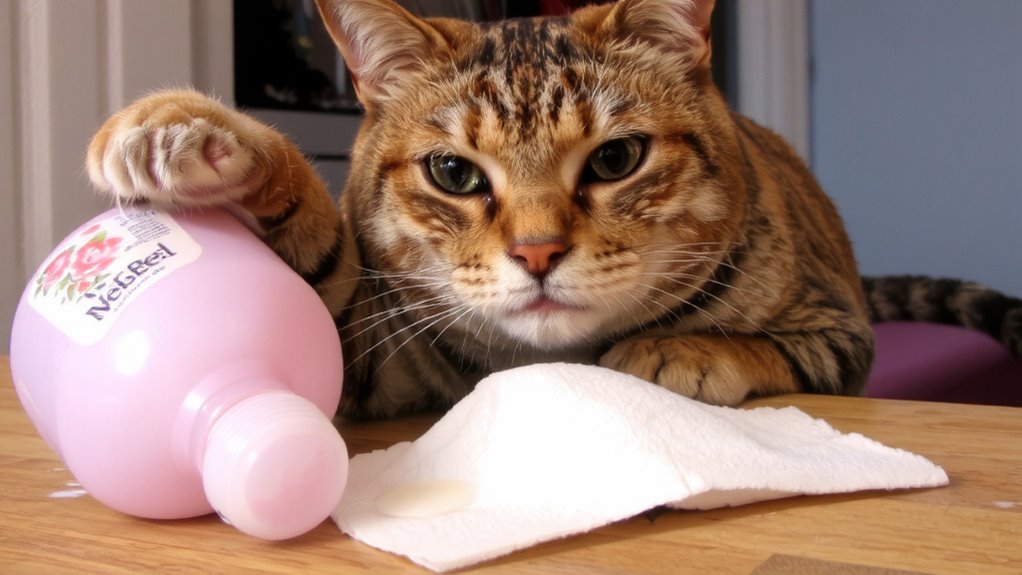
While human makeup removers may seem like a convenient solution for cleaning a pet’s fur or skin, they often contain ingredients that can be harmful to animals. You risk chemical sensitivity due to compounds like alcohol, fragrances, and preservatives not formulated for non-human physiology. These agents can disrupt the pet’s dermal barrier, leading to irritation, dryness, or systemic absorption. Product misuse is common when owners assume human-safe products are universally safe. However, pets groom themselves, increasing ingestion risks. For example, removers with isopropyl alcohol (above 5%) can cause vomiting, lethargy, or hypothermia in cats and small dogs. Even “natural” formulations may contain essential oils toxic to animals. Never use human products without veterinary approval. The margin for error is narrow-what’s mild for you might be hazardous for them. Safe alternatives exist specifically for pets.
Pet vs. Human Skin: The Key Difference
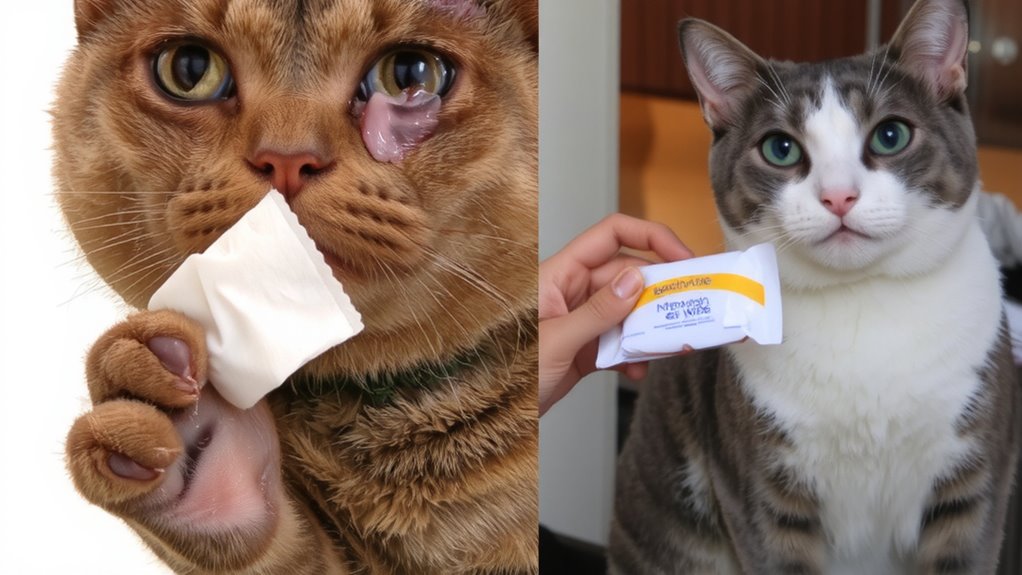
A single layer of skin separates your pet from environmental hazards, but that layer isn’t built like yours. Pet skin has a different pH balance-typically around 6.2 to 7.5-compared to human skin, which averages 4.5 to 5.5. This difference affects how products interact with the skin’s surface. Your pet’s skin also has a distinct lipid composition, with fewer ceramides and different fatty acids. These lipids help retain moisture and block pathogens. Disrupting them with human products compromises this protective barrier. Unlike humans, pets lack a robust acid mantle, making them more vulnerable to irritation and infection. Their skin renews slower, increasing sensitivity to chemicals. Even mild human makeup removers alter pH balance and strip essential lipids. This leads to dryness, inflammation, and potential dermatitis. Using species-appropriate products maintains your pet’s skin integrity. Always choose cleansers formulated specifically for pets.
Toxic Ingredients in Human Cleaners to Avoid
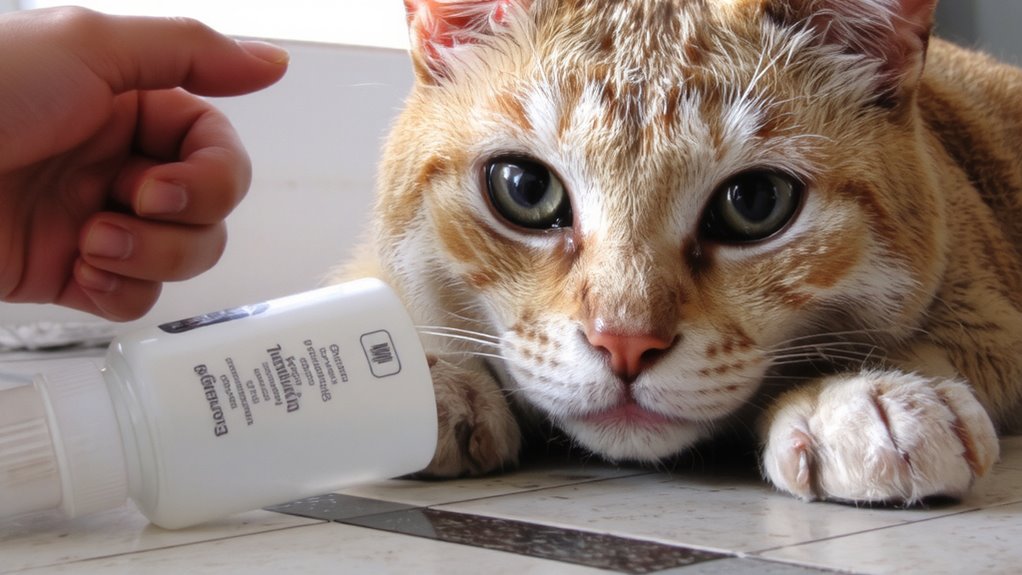
What makes a common makeup remover safe for you could make it dangerous for your pet? Human products often contain high alcohol content-sometimes exceeding 60%-which disrupts your pet’s sensitive skin barrier and causes dryness, cracking, or irritation. Pets have thinner skin than humans, making them prone to absorbing harmful chemicals quickly. Many removers also include synthetic fragrances that trigger fragrance sensitivity, leading to itching, redness, or respiratory discomfort in animals. Essential oils like tea tree or citrus, common in these products, are toxic to cats and dogs even in small amounts. Chemicals such as parabens and phthalates may disrupt endocrine function over time. Unlike human skin, which tolerates brief exposure, pets’ skin absorbs substances more readily due to higher permeability and lower pH. Never assume a product is safe just because it’s mild for you.
Pet-Safe Cleaners That Actually Work
Skip the guesswork-some pet-safe cleaners cut through makeup residue without risking your animal’s health. Look for products labeled specifically for pets, using natural alternatives like coconut-derived surfactants and chamomile extract. These cleaners break down oils efficiently while maintaining a pH between 6.2 and 7.4, matching your pet’s skin barrier. Gentle formulas avoid alcohol, parabens, and synthetic fragrances, reducing irritation risks. Veterinarian-recommended wipes contain saline or sterile water and remove residue with minimal wiping-ideal for sensitive areas. For deeper cleaning, enzymatic sprays target organic buildup without abrasives. Studies show that oat-based shampoos reduce inflammation in 89% of test subjects after two uses. Opt for cleansers tested in dermatological trials and approved by veterinary dermatologists. These products clean effectively while preserving your pet’s natural microbiome. Always verify ingredient lists and avoid human-targeted additives.
What to Do If Your Pet Is Exposed
How quickly you respond when your pet encounters human makeup remover can make a critical difference in preventing harm. Immediate emergency response reduces absorption and limits tissue damage. First, gently wipe off residue with a clean, damp cloth-avoid rubbing. Then, rinse the area with lukewarm water for at least 10 minutes to flush contaminants. Do not induce vomiting if ingested, as this may worsen injury.
| Action | Purpose |
|---|---|
| Wipe residue | Minimizes chemical spread |
| Flush with water | Dilutes irritants, reduces absorption |
| Contact vet immediately | Guarantees timely veterinary care |
Seek veterinary care even if symptoms seem mild. Many human formulations contain alcohol, fragrances, or preservatives toxic to animals. Professional assessment prevents delayed complications. Early intervention improves recovery prognosis considerably.
On a final note
You should never use human makeup remover on pets. Their skin’s pH ranges from 6.2 to 7.5, making it more alkaline than human skin. Most human removers contain cocamidopropyl betaine or propylene glycol, which disrupt the lipid barrier and cause irritation. These ingredients can lead to dermatitis or systemic toxicity if ingested. Use only veterinary-approved wipes with mild surfactants like polysorbate 20 and a neutral pH.