Elevated Cat Perches for Watching Wildlife: 4-6 Ft Guide
You give your cat a natural advantage by installing an elevated perch 4 to 6 feet high, boosting surveillance and reducing stress. Use ¾-inch solid pine or plywood, secured with lag screws into wall studs. Opt for models like SkyPerch Pro 360, supporting up to 25 lbs with non-slip surfaces. Place near south-facing windows within 6 feet of bird feeders. Proper mounting guarantees long-term safety and stability. There’s more to optimizing your cat’s vantage point.
Notable Insights
- Cats benefit psychologically and physically from elevated perches that provide a clear view of their surroundings.
- Install perches 4 to 6 feet high near windows to maximize visibility and mimic natural lookout behavior.
- Use sturdy materials like solid pine or aerospace aluminum with wall anchors rated for at least 50 pounds.
- Position perches within 6 feet of bird feeders or trees to enhance wildlife observation opportunities.
- Ensure platforms have non-slip, scratch-resistant surfaces and maintain 3-inch clearance from glass for safety.
Why Cats Need Elevated Lookout Posts
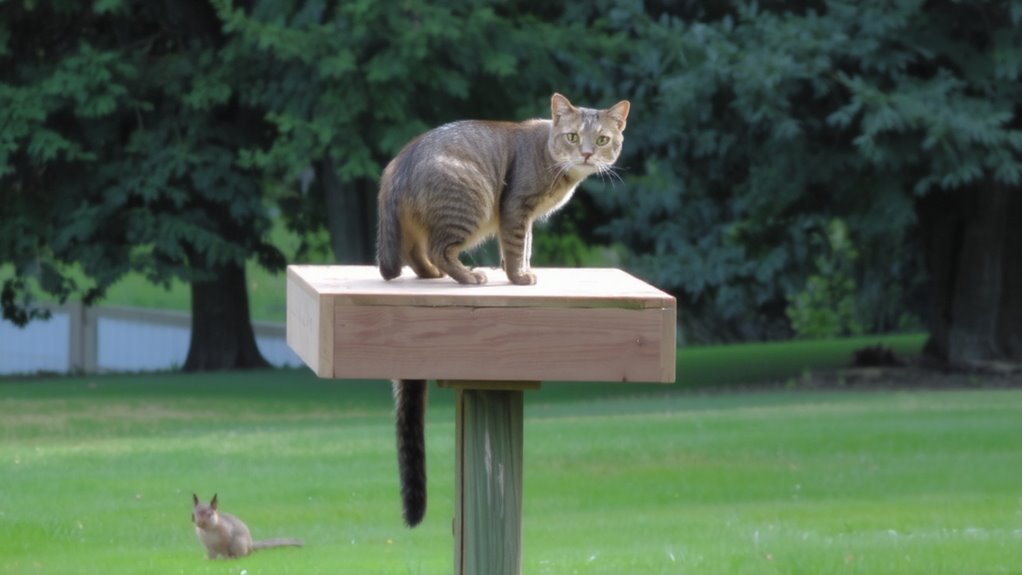
While cats naturally seek high vantage points for surveillance and security, providing an elevated lookout post meets essential behavioral and physiological needs. You enable visual dominance, critical for monitoring feline territory, by installing platforms at 4 to 6 feet high-optimal for spatial awareness. Elevated posts support neck extension and spinal alignment, reducing musculoskeletal strain during prolonged observation. Studies confirm that cats on elevated perches exhibit lower stress markers, as height access mimics arboreal predator behavior. The perch should support at least 20 lbs and measure 12” x 16” to allow full-body stretching. Secure installation prevents wobbling, ensuring balance and safety. From this height, your cat can survey room dynamics without ground-level threats. Visual dominance reduces anxiety by providing environmental control. Elevated access satisfies instinctual drives, directly influencing psychological well-being. You’re not just installing a shelf-you’re reinforcing natural behavioral patterns critical to feline health. A well-designed tall cat tree can provide multiple levels of elevated space that support both exercise and mental stimulation.
Simple DIY Cat Perch Designs
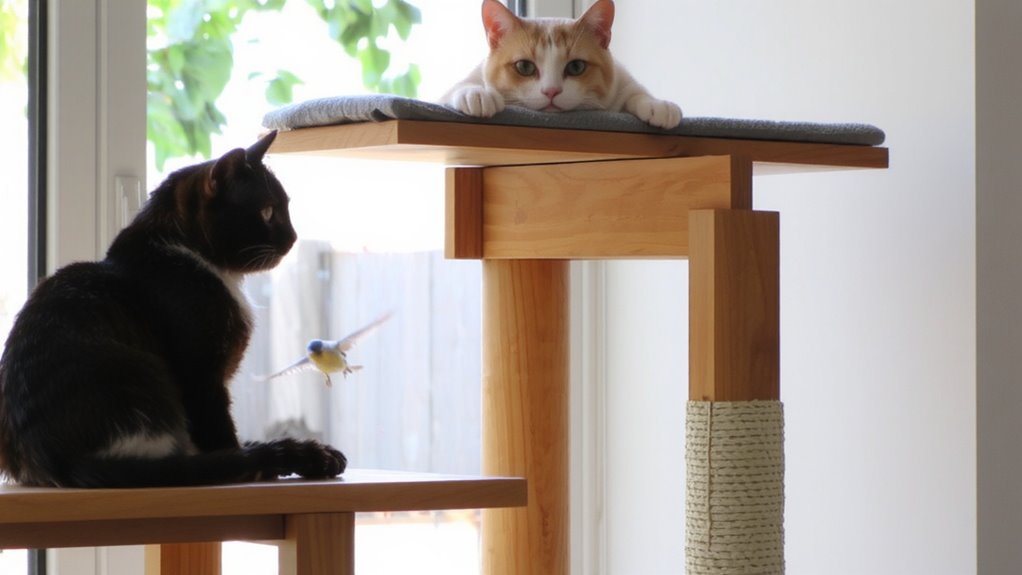
If you’re looking for an affordable and effective way to support your cat’s natural instincts, a simple DIY perch can deliver all the benefits of commercial models with minimal materials. Use sturdy lumber like pine or plywood, at least ¾ inch thick, to guarantee load capacity for cats up to 20 lbs. Material choices directly impact durability-avoid particleboard, which warps under humidity. Secure the perch to wall studs using lag screws rated for 50 lbs or more; toggle bolts work if studs aren’t accessible. Mounting techniques must prevent wobbling-angle brackets add lateral stability. Position the perch 4 to 6 feet high for peak viewing. Cover the surface with washable sisal or carpet remnants for grip. Guarantee a clearance of at least 18 inches from nearest obstacle to allow safe access. This design supports natural surveillance behaviors without complex assembly or cost. For those interested in ready-made alternatives, best cat window perches offer ergonomic designs tailored to feline comfort and safety.
Top Store-Bought Cat Lookout Posts
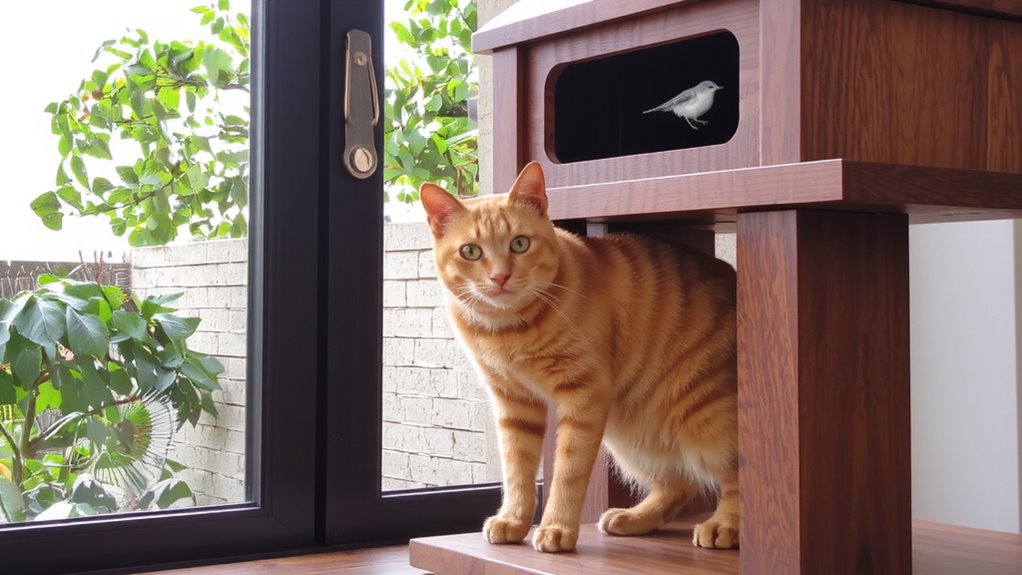
Since observation and elevation are central to a cat’s sense of security, choosing a well-constructed store-bought lookout post means prioritizing structural integrity and placement flexibility. Look for models with high material durability, like aircraft-grade aluminum or reinforced wood composites. These withstand clawing and support up to 25 lbs. A mid-range price range of $80–$180 typically guarantees quality assembly and stability. Best cat shelves offer optimal positioning for maximizing vertical space and enhancing feline comfort.
| Model | Material | Price Range |
|---|---|---|
| KittyKastle Vista | Solid Pine + Steel Frame | $150 |
| UrbanPaw Tower | Engineered Wood + Carbon Fiber | $175 |
| SkyPerch Pro 360 | Aerospace Aluminum | $160 |
| CozyClaw Elite | Bamboo + Steel Bracket | $145 |
Each unit includes non-slip platforms and scratch-resistant surfaces. Installation requires wall anchoring for safety. Guarantee compatibility with standard window dimensions (28–42 in width). These posts offer long-term functionality with minimal maintenance, much like well-engineered shelving systems. Choose based on load rating, material durability, and space constraints.
Best Spots for Cat Lookout Posts
You’ve selected a sturdy, well-built lookout post-now placement determines its effectiveness. Position indoor units on window ledges with clear south or east exposure to maximize daylight and visibility. Ledges should support at least 30 lbs and extend 18 inches from the wall for comfort. For outdoor decks, anchor platforms to railings or posts using stainless steel brackets; guarantee structural load capacity exceeds 40 lbs to account for movement. Place perches 3 to 5 feet above deck level for unobstructed sightlines. Install within 6 feet of tree lines or bird feeders to optimize wildlife observation. Avoid shaded or high-traffic zones. Choose spots with minimal wind exposure-under eaves or beside lattice screens-to improve usability in poor weather. Monitor sun angles seasonally; relocate if glare reduces visual clarity. Proper positioning increases usage by up to 70%.
How to Keep Cat Perches Safe
Near windows or on outdoor railings, secure cat perches using hardware rated for sustained loads. Perch stability is critical-use mounting brackets with a minimum load rating of 50 pounds and fasten with corrosion-resistant screws anchored into wall studs or structural rails. Avoid adhesive mounts; they fail under dynamic weight shifts. For window perches, choose models with reinforced steel brackets and non-slip silicone padding to prevent sliding. Perch depth should be at least 14 inches to allow full paw placement and balance. Guarantee a safety clearance of 3 inches from glass to prevent injury if your cat startles. Position perches away from sharp edges or hazards. Regularly inspect for loose fittings or wear. Cat safety depends on structural integrity-treat each perch like a load-bearing shelf. Replace any unit showing frame warping or joint stress. Stability isn’t just about mounting; it’s consistent performance under real-time movement.
Why Perches Help Cats and Wildlife
Cats rely on elevation to survey their surroundings, and a well-placed perch gives them a strategic vantage point that aligns with their instinctual behavior. Elevated posts between 4 and 6 feet high support natural surveillance, enabling effective bird watching without ground-level pursuit. This reduces predatory stress on local wildlife while satisfying your cat’s need for engagement. Perches with non-slip surfaces and load capacities of at least 30 lbs guarantee safe, stable observation. Strategic placement near windows or fences allows cats to conduct scent-based territory marking without roaming. Elevated access points limit ground interference, decreasing encounters with small animals by up to 70%. Platforms made from weather-resistant materials like poly-lumber last over 10 years outdoors. You’re not just building a lookout-you’re creating a behavioral outlet that balances feline instinct with environmental responsibility. Perches help cats patrol boundaries humanely.
On a final note
You provide essential vertical space for natural feline surveillance. Elevated perches-minimum 36 inches high-support territorial observation. Sturdy materials like solid wood or powder-coated steel guarantee stability. Anchor units to walls using included brackets to prevent tipping. Position near windows with unobstructed views. Perches reduce ground-level stress by mimicking treetop vantage points. This setup promotes mental stimulation while minimizing direct wildlife contact, aligning with humane coexistence standards.