How to Stop Minor Bleeding From a Dog’s Paw Pad Injury Without Panicking
Stay calm and gently restrain your dog to assess the paw pad injury under good light. Inspect for lacerations or punctures; wounds longer than 1.5 cm or deeper than 3 mm need a vet. Apply firm, steady pressure with sterile gauze for at least 5 minutes-most minor bleeds stop within 10. Elevate the paw slightly to reduce blood flow. Use a non-stick telfa pad and secure with Vetrap, ensuring one finger fits snugly underneath. Avoid cotton and alcohol-based cleaners. Keep the area dry with waterproof booties and limit activity. Monitor for infection or prolonged bleeding-further care steps follow.
Notable Insights
- Stay calm and gently restrain your dog to safely assess the paw pad injury without causing stress.
- Apply firm, steady pressure with sterile gauze or a clean cloth to stop minor bleeding for at least 5 minutes.
- Elevate the paw slightly while applying pressure to help reduce blood flow and speed up clotting.
- Use a non-stick telfa pad and secure it with a snug but not tight bandage after bleeding stops.
- Clean the wound with antiseptic wipes or saline after bleeding stops, avoiding alcohol or hydrogen peroxide.
Check the Paw Pad Injury Without Panicking
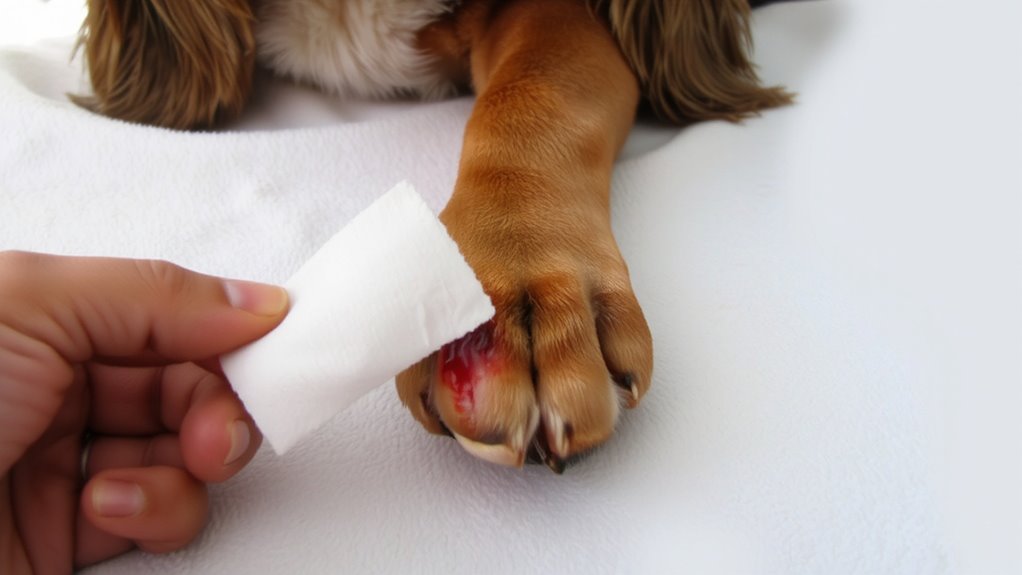
You can manage a dog’s paw pad injury effectively if you stay calm and assess the situation methodically. Remaining calm prevents panic in your pet and allows for clear decision-making. First, restrain your dog gently but securely. Inspect the paw under good lighting. Look for embedded debris, lacerations, abrasions, or punctures. Assess damage by checking depth and contamination level. Superficial wounds affect only the epidermis; deeper injuries expose dermal tissue or may involve structures like digitigrade ligaments. Note the wound size-measure in centimeters. A cut longer than 1.5 cm or deeper than 3 mm requires veterinary evaluation. Avoid probing deeply, which increases pain and risk of infection. Use a magnifying glass if necessary. Limit handling to prevent worsening trauma. Clean visibility guarantees accurate assessment. Early, precise evaluation improves outcome markedly. Record findings to relay to your veterinarian.
Stop Bleeding With Gentle Pressure
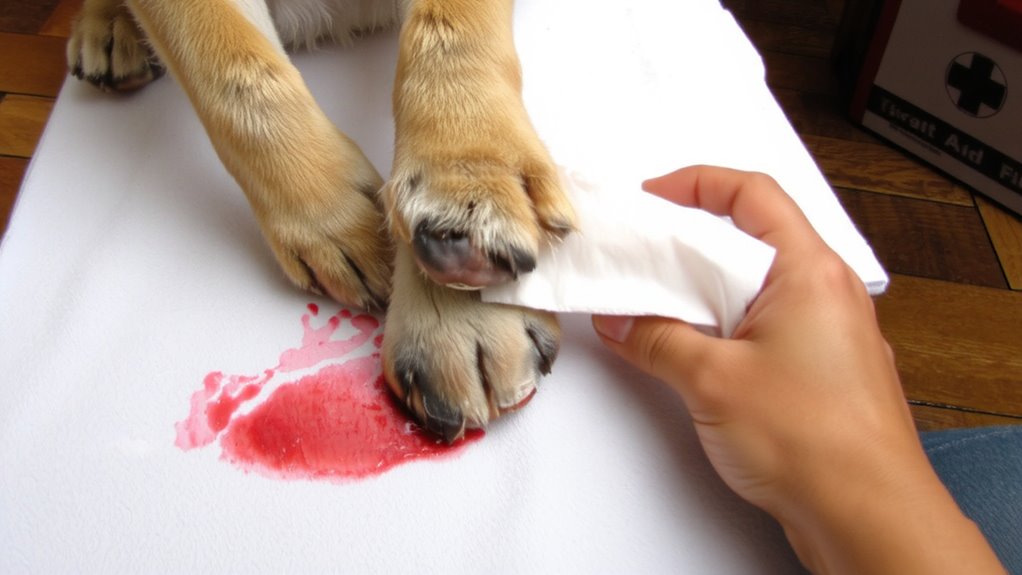
A clean compress applied with firm, steady pressure is the most effective way to control minor bleeding from a dog’s paw pad. Apply pressure directly to the wound using sterile gauze or a clean cloth. Maintain pressure for at least 5 minutes without lifting to check-this guarantees clot formation. Most minor bleeds stop within 5 to 10 minutes if pressure is consistent. If bleeding persists after 10 minutes, extend compression up to 15. Once bleeding stops, you can use a bandage to protect the area. Use conforming wrap or cohesive bandage material-such as Vetrap-to secure the pad without restricting circulation. Wrap snugly but not tightly; you should fit one finger beneath the wrap. Elevating the paw slightly during compression can help reduce blood flow. Avoid cotton balls, as fibers can stick. Proper pressure control minimizes complications and prepares the wound for safe cleaning later.
Clean the Paw Pad Wound Safely
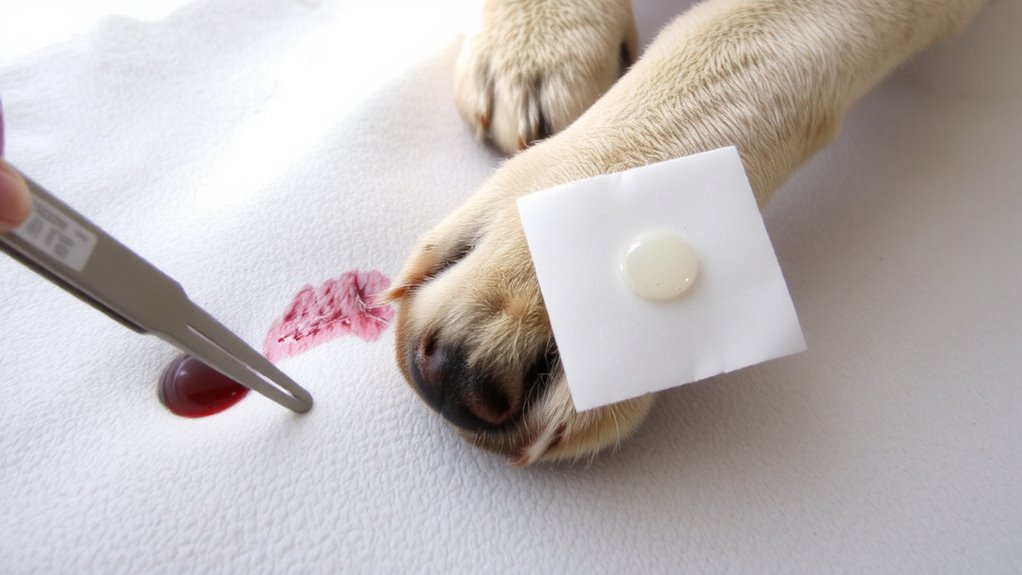
After the bleeding has stopped, cleaning the wound is essential to prevent infection and promote proper healing. Use an antiseptic wipe designed for animals to gently remove debris and bacteria from the paw pad. Avoid wipes containing alcohol or hydrogen peroxide-they can damage tissue and delay recovery. For deeper cleaning, rinse the area with sterile saline solution using a 10- to 20-mL syringe to apply mild pressure without forcing contaminants deeper. Then, pat the area dry with sterile gauze, applying light pressure to absorb moisture without friction. Sterile gauze pads are ideal because they minimize lint residue and reduce the risk of introducing pathogens. Guarantee the entire wound surface and surrounding 1-inch margin are cleaned. Repeat if debris remains, using a fresh wipe or gauze pad each time to prevent cross-contamination. Do not scrub aggressively-gentle wiping is sufficient for effective debridement.
Protect the Paw Pad While It Heals
To guarantee proper recovery, protecting the injured paw pad is critical once cleaning is complete. Keep the wound covered with a non-stick telfa pad, secured by a conforming bandage. Use adhesive tape only on the outer layer to avoid skin irritation. Change the dressing every 24 hours or sooner if it becomes soiled. The wound must stay dry-moisture compromises healing and increases infection risk. Use a waterproof bootie during outdoor bathroom breaks if needed. Avoid walking your dog on rough or dirty surfaces, including gravel, sand, or wet grass. Limit movement to short, leashed trips. Excessive walking delays tissue repair. Consider an e-collar to prevent licking. Unprotected exposure to elements or repeated friction disrupts epithelial regrowth. Maintain a clean, contained recovery space indoors. Monitor bandage tightness-too loose invites slippage; too tight impairs circulation. Proper protection guarantees effective wound closure. For thorough cleaning before bandaging, use a vet-recommended antiseptic wipe or spray, especially those included in the Top Cleaning Products for Dogs.
Call the Vet If Bleeding Won’t Stop
If the bleeding from your dog’s paw pad doesn’t stop within 10 to 15 minutes of continuous pressure, it’s time to call your veterinarian. Prolonged bleeding is a medical concern requiring professional evaluation. Apply firm, steady pressure using sterile gauze; do not remove it to check the wound, as this disrupts clot formation. If blood soaks through, add more gauze without disturbing the initial layer. Consider using a pressure bandage: wrap with 2-inch conforming gauze, then secure with cohesive wrap. Avoid elastic bandages that restrict circulation. Monitor for signs of shock-pale gums, rapid breathing, weakness. Immediate vet visit is essential if bleeding persists, as deeper tissue damage or vessel involvement may require sutures, hemostatic agents, or antibiotics. Your vet may also assess for foreign bodies or infection. Do not delay care-untreated wounds risk complications and extended healing time. A prompt vet visit guarantees appropriate diagnostics and treatment.
On a final note
Stay calm and assess the injury quickly. Apply gentle pressure with sterile gauze for 3–5 minutes; most minor bleeds stop within this time. Clean the wound with saline solution to remove debris. Use a non-adherent pad and wrap securely with veterinary wrap, ensuring proper circulation. Change the dressing daily. If bleeding persists beyond 10 minutes or shows signs of infection, contact your veterinarian immediately.