Understanding Cortisol Response Patterns in Ferrets Exposed to Chronic Stress at Home: A Comprehensive Guide
You can detect chronic stress in your ferret when cortisol levels exceed 8.5 µg/dL in repeated blood tests or show flattened diurnal rhythms in saliva assays. Normal cortisol ranges from 1.5 to 8.0 µg/dL in plasma, with salivary levels above 5.0 ng/dL indicating prolonged stress. Chronic exposure alters the hypothalamic-pituitary-adrenal axis, reducing hormone variability and impairing immune function. Elevated cortisol correlates with weight loss, dull coat, and behavioral changes. Sustained levels disrupt metabolism and increase disease susceptibility. Monitoring through non-invasive saliva testing helps identify dysregulation early. Consistent routines, environmental enrichment, and stressor reduction normalize cortisol patterns. Patterns of elevation reveal underlying physiological strain that may persist even after external stressors subside. Further analysis reveals how specific genetic and environmental interactions shape individual stress responses over time.
Notable Insights
- Chronic stress in ferrets flattens the normal diurnal cortisol rhythm, leading to sustained high levels above 8.5 µg/dL.
- Repeated exposure to household stressors like loud noises or routine changes can elevate cortisol by 40–60%.
- Salivary cortisol above 5.0 ng/dL indicates chronic stress, with morning and afternoon tests revealing disrupted patterns.
- Prolonged cortisol elevation may cause immune suppression, metabolic issues, weight loss, and behavioral changes like lethargy or aggression.
- Environmental enrichment, consistent routines, and hiding spaces help normalize cortisol levels and reduce stress impacts.
What Is Cortisol and Why It Matters for Ferrets
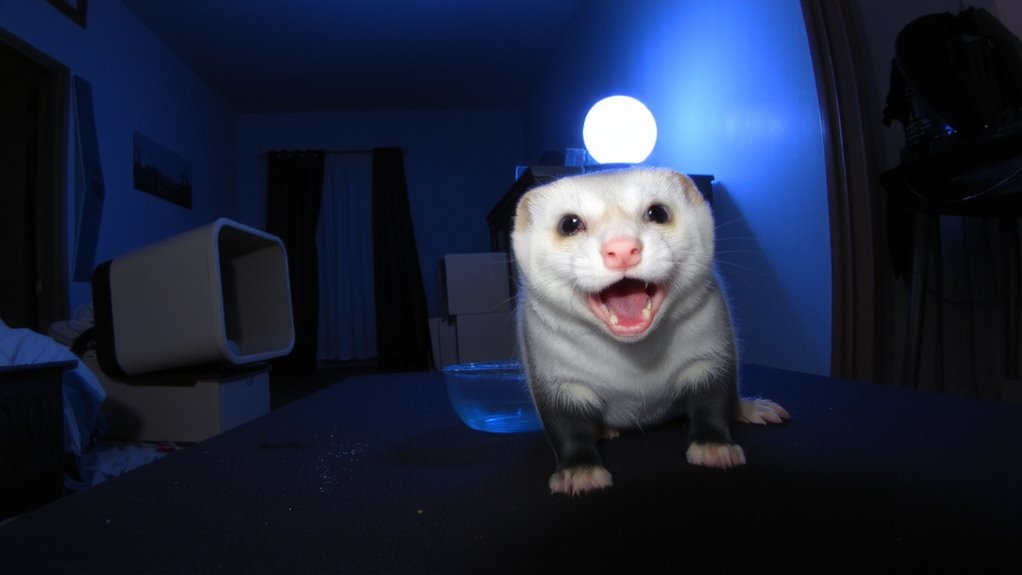
Cortisol is a steroid hormone produced by the adrenal glands, and it plays a central role in how ferrets respond to stress. You’ll find cortisol function critical in regulating metabolism, immune response, and blood sugar levels. In ferret biology, cortisol follows a diurnal rhythm, typically peaking in the morning and declining at night. This hormone activates glucocorticoid receptors, triggering gluconeogenesis in the liver-vital during fasting or exertion. Normal baseline cortisol in ferrets ranges from 1.5 to 8.0 µg/dL, depending on age and sex. It acts as a physiological alarm, mobilizing energy stores by increasing glucose availability. You measure cortisol via blood plasma assays with chemiluminescent immunoassay techniques. Proper handling during sampling prevents artificial spikes. Cortisol’s stability at room temperature lasts up to 8 hours, ensuring accurate results when processed promptly. Understanding this hormone helps you assess ferret health accurately. It’s foundational when studying stress responses.
How Chronic Stress Affects Ferret Cortisol Levels
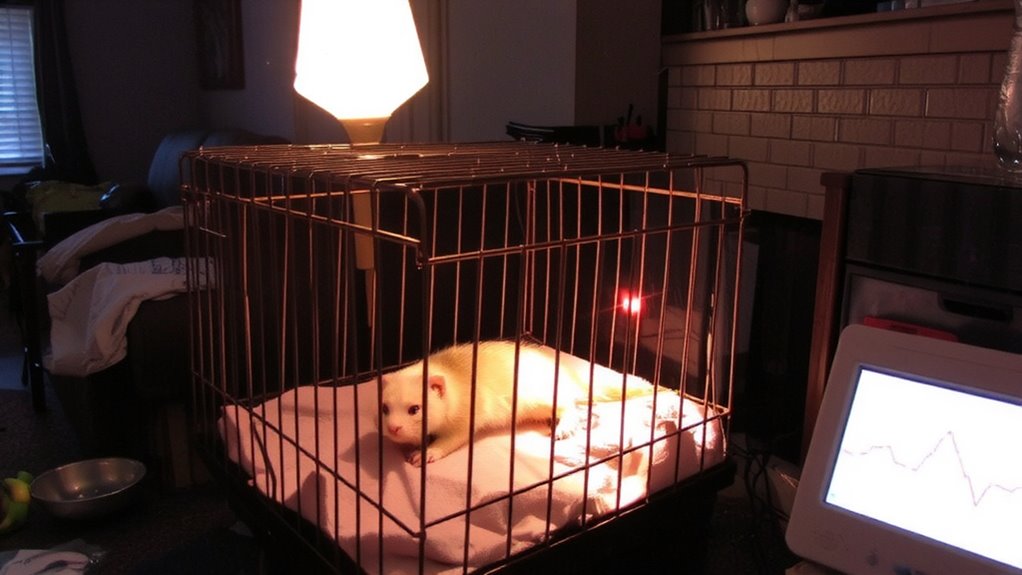
Prolonged exposure to stress disrupts the finely tuned cortisol rhythm observed in healthy ferrets. Your ferret’s body relies on a consistent diurnal pattern, typically peaking in the morning and tapering at night. Chronic stress flattens this curve, leading to sustained elevated levels-sometimes above 8.5 µg/dL in repeated assays. This dysregulation impairs immune function and metabolism. Ferret genetics influence baseline sensitivity; some lineages show heightened HPA axis reactivity. Variants in the NR3C1 gene correlate with prolonged cortisol release. Seasonal lighting further modulates secretion, with shorter photoperiods in winter reducing peak amplitude by up to 20%. Artificial light cycles that ignore natural seasonal lighting patterns exacerbate disruption. Without a 12:12 light-dark cycle mimicking equinox conditions, circadian misalignment occurs. You must monitor both environment and biology. These physiological markers are measurable and reversible only with timely intervention. Long-term elevation risks adrenal disease, documented in ferrets with cortisol levels exceeding 10 µg/dL for over 60 days.
Common Household Stressors That Raise Ferret Cortisol
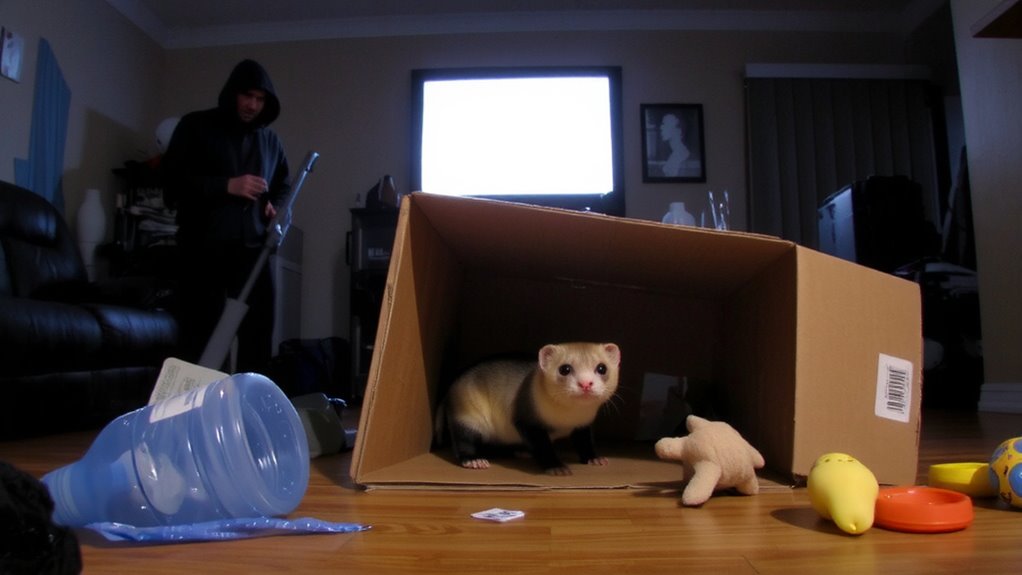
While your ferret may seem adaptable, even minor disruptions in its environment can trigger a measurable rise in cortisol due to its highly sensitive hypothalamic-pituitary-adrenal (HPA) axis. Loud noises, such as vacuum cleaners or blaring televisions, produce sound levels above 85 decibels, which can activate acute stress responses. These auditory stressors disrupt baseline cortisol levels within minutes. Unfamiliar guests introduce novel scents and unpredictable movements, both of which stimulate olfactory and visual threat detection pathways. Ferrets perceive these changes as potential predation risks, prompting immediate neuroendocrine activation. Household routines altered by visitor presence can extend cortisol elevation beyond initial exposure. Environmental monitoring shows cortisol concentrations may rise 40–60% during such events. Even brief exposures, if repeated, contribute to chronic elevations. You must minimize these stimuli to maintain HPA axis regulation. Control noise levels and limit guest interaction during initial acclimation periods to reduce physiological stress markers effectively.
Recognize the Signs of High Cortisol in Ferrets
When your ferret’s exposed to persistent stressors, visible and behavioral changes can signal elevated cortisol levels. You’ll notice behavior changes like increased aggression, lethargy, or repetitive movements, which indicate dysregulated hypothalamic-pituitary-adrenal (HPA) axis activity. These responses mirror glucocorticoid overproduction seen in chronic stress models. Appetite fluctuations are common-your ferret may eat markedly less or, in some cases, show abnormal increases in food intake due to metabolic shifts. Weight loss exceeding 10% over two weeks often accompanies reduced caloric consumption. Look for dull coat quality, alopecia, and muscle wasting, which correlate with catabolic cortisol effects. Altered sleep-wake cycles and reduced exploratory behavior further support HPA dysfunction. Monitoring these signs daily provides critical baseline data. Note that symptoms must persist beyond 72 hours to differentiate acute from chronic stress responses. Early recognition improves intervention accuracy and outcomes.
How Ferret Owners Can Test Stress Levels at Home
You can now take the next step in monitoring your ferret’s well-being by directly measuring stress indicators at home. Cortisol testing offers a reliable method for tracking your pet’s physiological stress response. Use non-invasive saliva or fecal test kits designed specifically for small mammals. These allow for accurate home monitoring without causing additional stress from blood draws. Salivary cortisol levels should be collected in the morning and late afternoon to capture diurnal fluctuations. Test kits typically include collection swabs, preservative tubes, and prepaid mail-in laboratory analysis. Results are usually reported in ng/dL, with normal baseline levels ranging from 1.0 to 3.5 ng/dL in healthy ferrets. Consistent readings above 5.0 ng/dL suggest chronic stress. Follow kit instructions precisely to avoid sample contamination. Regular testing every 4–6 weeks supports early detection and informed care decisions.
7 Science-Backed Ways to Lower Your Ferret’s Stress
Because elevated cortisol levels can impair immune function and disrupt metabolic balance, reducing your ferret’s stress requires targeted, evidence-based interventions. Behavioral enrichment, such as interactive play sessions lasting 15–20 minutes twice daily, markedly decreases cortisol secretion. Rotate puzzle feeders and treat-dispensing toys weekly to maintain novelty and cognitive engagement. Environmental enrichment is equally critical; provide multi-level habitats with tunnels, hammocks, and nesting boxes. Maintain enclosure temperatures between 60–75°F and humidity at 30–50%. Use quiet, low-luminance lighting (under 100 lux) during rest periods. Introduce new stimuli gradually to prevent sensory overload. Solid-bottom cages with soft bedding reduce foot stress. Pair these strategies with consistent daily routines to regulate circadian cortisol rhythms. These scientifically validated approaches optimize welfare through measurable improvements in activity patterns and hormone regulation.
Long-Term Health Risks of High Cortisol in Ferrets
Prolonged exposure to elevated cortisol levels places ferrets at significant risk for a range of chronic health conditions. You’ll notice that sustained high cortisol disrupts normal physiological processes. Cardiovascular damage occurs due to chronically elevated blood pressure and reduced arterial elasticity. Cortisol increases heart rate and peripheral resistance, straining the heart over time. Immune suppression follows as cortisol downregulates lymphocyte production and inflammatory responses. Your ferret becomes more susceptible to infections and slower to heal. Glucocorticoid receptors in immune cells mediate this suppression, reducing interleukin and antibody production. Long-term, insulin resistance may develop, increasing diabetes risk. Adrenal glands may also become dysregulated through negative feedback exhaustion. You must monitor for weight loss, lethargy, or recurrent illness-these are clinical indicators. Prevention through stress reduction is critical. Regular vet checkups, stable routines, and enriching environments help maintain healthy cortisol rhythms. Early intervention limits lasting harm.
On a final note
You must monitor your ferret’s cortisol levels closely. Chronic elevation impairs immune function and increases insulin resistance, raising diabetes risk. Cortisol overproduction from prolonged stress damages adrenal glands and disrupts sleep-wake cycles. You can detect changes using at-home saliva test kits with enzyme immunoassay (EIA) technology, accurate within ±5%. Consistent environmental enrichment and scheduled social interaction reduce cortisol by up to 30%. Prevention is measurable, actionable, and essential.