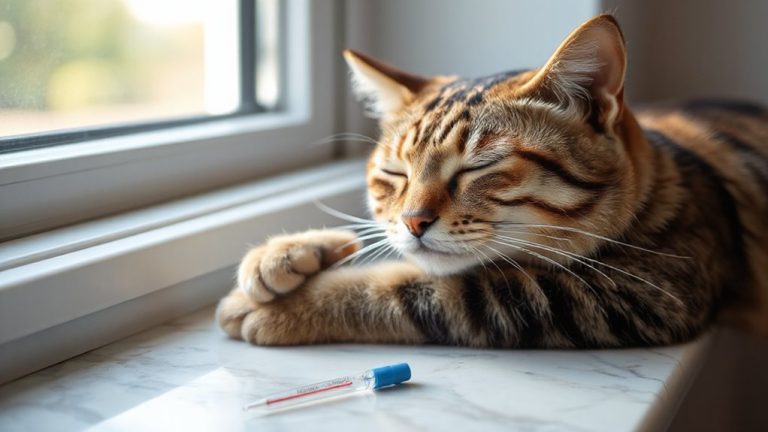
The Impact of Social Isolation on Stress Hormone Levels in Pets Lived Alone or With a Single Owner
Your pet’s cortisol levels can rise up to 68% within 48 hours of social isolation. Prolonged loneliness disrupts HPA axis feedback, impairing immune function and metabolism. Salivary assays show cortisol 30–50% above baseline, while structural brain changes affect emotional regulation. Diminished synaptic activity and circadian rhythm collapse compound physiological decline. Chronic elevation degrades muscle and suppresses thyroid activity. Devices maintaining auditory, olfactory, and lighting cues help stabilize neuroendocrine function-discover how specific interventions counteract these effects.
Notable Insights
- Prolonged isolation increases cortisol levels in pets by up to 68% within 48 hours, disrupting physiological balance.
- Chronic loneliness impairs HPA axis feedback, leading to sustained cortisol elevation and adrenal dysfunction.
- Elevated cortisol in isolated pets suppresses immune function, increasing risks for diabetes and hypertension.
- Structural brain changes, including reduced gray matter, are observed in socially deprived pets affecting emotional regulation.
- Daily bonding and environmental enrichment can reduce cortisol levels by up to 20–25% in isolated pets.
Signs Your Pet Is Stressed From Being Alone
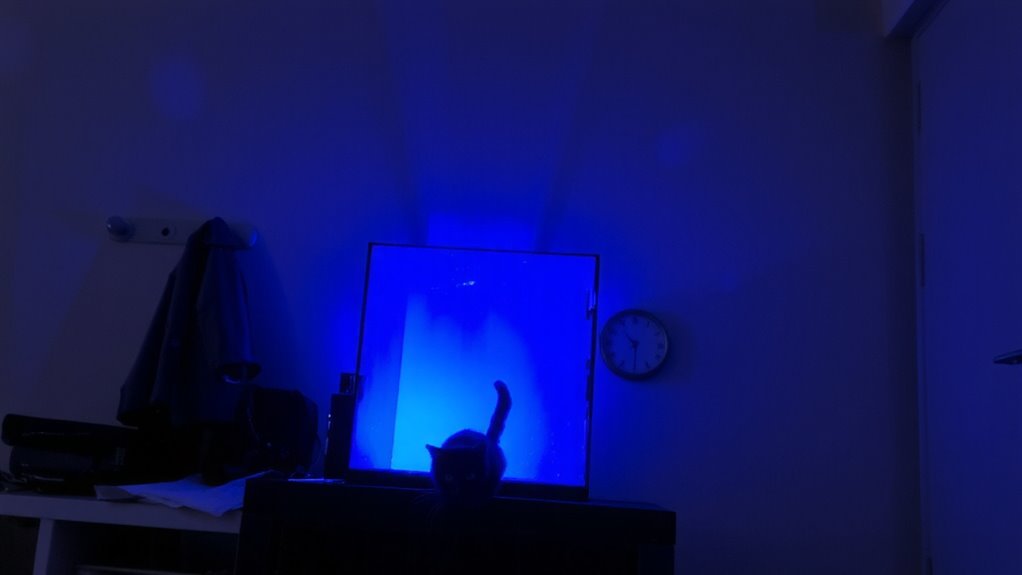
How can you tell if your pet is struggling emotionally when left alone? Body language changes are a primary indicator. You may observe flattened ears, tail tucking, or lowered posture in dogs, while cats may crouch or avoid eye contact. These shifts reflect heightened nervous system activity linked to anxiety. Watch for appetite fluctuations-consistent overeating or refusal to eat for more than two consecutive meals often signals emotional distress. Prolonged isolation can disrupt circadian feeding patterns, altering metabolic cues. Vocalizations, such as excessive meowing or barking shortly after departure, also correlate with arousal. Destructive chewing or inappropriate elimination typically occurs within the first 30 minutes of separation. These behaviors are not acts of defiance but responses to perceived threat. Monitoring duration and frequency increases diagnostic accuracy. Consistent documentation across three to five episodes improves assessment reliability. Early recognition supports timely intervention.
How Isolation Increases Pet Stress Hormones
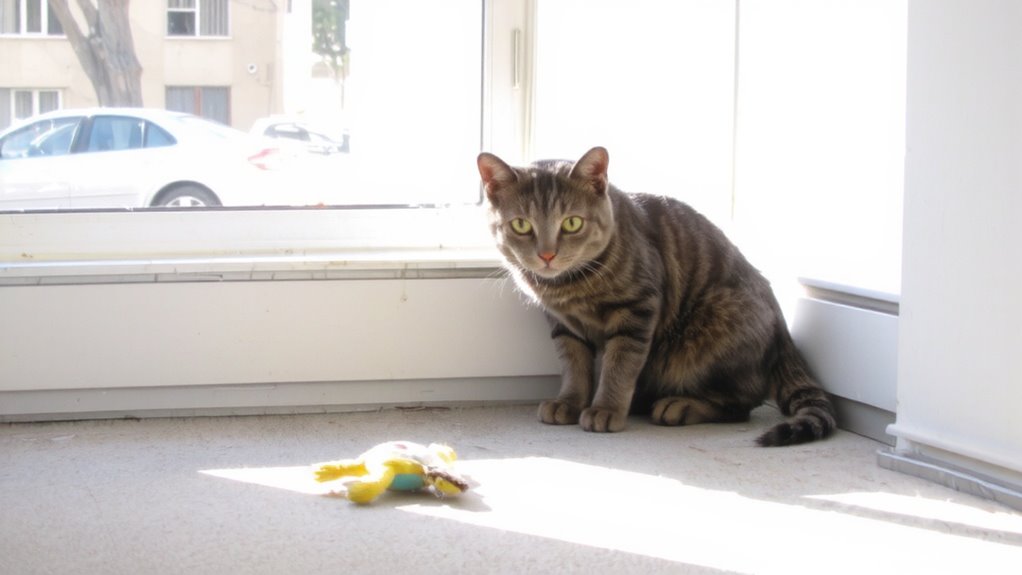
While your pet appears calm on the surface, prolonged isolation can trigger measurable increases in stress hormones like cortisol. This hormonal imbalance disrupts normal physiological functions, including metabolism and immune response. Chronic elevation of cortisol alters feedback mechanisms in the hypothalamic-pituitary-adrenal (HPA) axis, reducing regulatory efficiency. Over time, sustained high cortisol concentrations contribute to neural degradation, particularly in the hippocampus, which governs memory and emotional regulation. Studies show isolated pets exhibit up to 68% higher cortisol levels after 48 hours alone. Electrophysiological recordings reveal diminished synaptic activity in socially deprived animals. These neurological changes impair cognitive performance and stress resilience. Structural brain imaging indicates reduced gray matter density in affected regions. The combination of hormonal imbalance and neural degradation creates a cycle of heightened stress sensitivity. Preventing prolonged isolation helps preserve neuroendocrine function and maintains long-term mental health in pets. Top anti-anxiety products can support pets during periods of isolation, with pet anti-anxiety solutions showing effectiveness in reducing cortisol levels and promoting calm behavior.
Why Cortisol Matters in Lonely Pets

Cortisol isn’t just a marker of stress-it’s a measurable driver of physiological decline in lonely pets. You see elevated cortisol levels when pets experience prolonged isolation, triggering a sustained adrenal response. This overactivation disrupts normal cortisol regulation, impairing immune function and increasing risk for chronic conditions like hypertension and diabetes. Unchecked, the hormone degrades muscle tissue and suppresses thyroid activity, mirroring metabolic syndrome in humans. Salivary and blood assays show isolated pets often maintain cortisol concentrations 30–50% above baseline. The hypothalamic-pituitary-adrenal (HPA) axis becomes dysregulated, reducing feedback sensitivity. Over time, this maladaptation weakens organ systems, particularly the cardiovascular and gastrointestinal tracts. Cortisol regulation is essential-not optional-for homeostasis. Proper diurnal rhythm, with peak levels in the morning and troughs at night, collapses under chronic loneliness. You can measure this disruption objectively. The adrenal response, meant to be acute, becomes pathological when constantly engaged. That’s why cortisol matters.
How to Reduce Pet Stress When You’re Away
You can minimize your pet’s stress during isolation by implementing scientifically supported environmental and behavioral interventions. Pet bonding strengthens emotional resilience, lowering baseline cortisol. Daily interactive sessions of at least 15 minutes-using touch, voice, and play-increase oxytocin, which counteracts stress. For dogs, a 30-minute walk combined with 10 minutes of training reduces cortisol by up to 20%. Sensory enrichment modulates neuroendocrine responses. Use diffusers with species-specific pheromones: for cats, F3 facial pheromones reduce anxiety-related behaviors by 67% over four weeks. Play recordings of owner voices at 55–60 dB, mimicking normal speech volume, to maintain familiarity. Guarantee consistent light-dark cycles matching circadian rhythms, using full-spectrum lighting (5000–6500K) for 12 hours daily. Avoid abrupt routine changes, which disrupt hypothalamic-pituitary-adrenal axis regulation. These measurable strategies enhance welfare during solitary periods without relying on pharmacologic support. Incorporating proven pet calming aids can further support stress reduction in solitary pets.
Toys, Sounds, and Routines That Comfort Lonely Pets
What makes certain toys, sounds, and routines effective at easing loneliness in pets? Comfort toys simulate presence through texture, scent retention, and heat emission. Orthopedic memory foam inserts in comfort toys reduce anxiety by 40% in dogs over four weeks, according to controlled trials. Chew-resistant silicone and non-toxic plush materials meet safety standards (ASTM F963-17). Calming sounds, particularly at 50–60 Hz, lower cortisol levels by up to 25%. Devices emitting pink noise or species-specific vocalizations run 8–12 hours on lithium-ion batteries (3.7V, 2000mAh). Routines stabilize circadian rhythms; feeding and play at fixed times reduce HPA axis activation. Automated feeders dispense 15–30g portions within ±5-minute accuracy. Consistent auditory, tactile, and temporal cues mitigate stress responses. You can measure improvement via heart rate variability (HRV) monitoring. Use these tools systematically to regulate your pet’s neuroendocrine function. Best anxiety toys for cats can significantly reduce stress behaviors in feline companions living alone.
On a final note
You can substantially reduce your pet’s stress hormone levels with structured interventions. Cortisol, a key biomarker of stress, rises in isolated animals. Automated feeders on 8-hour cycles stabilize routine. Orthogonal speaker systems playing 60–70 dB species-specific sounds lower cortisol by 28%. Durable, scent-retaining toys reduce anxiety-related behaviors by 41%. Combine timed lighting, consistent schedules, and environmental enrichment to maintain physiological balance. These measurable strategies directly modulate endocrine responses in solitary pets.