Why Regular Eye Cleaning Reduces the Risk of Corneal Ulcers in Pets
Regular eye cleaning removes irritants like dust and pollen that can scratch the cornea. Debris buildup increases bacterial load by up to 68%, raising infection risk. Using sterile saline (pH 7.0–7.4, 0.9% NaCl) clears discharge and maintains tear film integrity. Wiping from inner to outer eye prevents contamination. This routine minimizes micro-abrasions and prevents ulcers, especially in high-risk breeds. Proper hygiene with non-linting wipes and preservative-free solutions supports long-term corneal health-you’ll discover which pets need extra care and why.
Notable Insights
- Removes environmental irritants like dust and pollen that can scratch or inflame the cornea.
- Prevents micro-abrasions by eliminating debris that may cause trauma during blinking.
- Reduces bacterial buildup from tear discharge, lowering the risk of infected corneal ulcers.
- Maintains healthy tear film pH and osmolarity using appropriate cleaning solutions.
- Minimizes irritation from facial hair and skin fold contaminants through consistent hygiene.
What Are Corneal Ulcers in Pets?
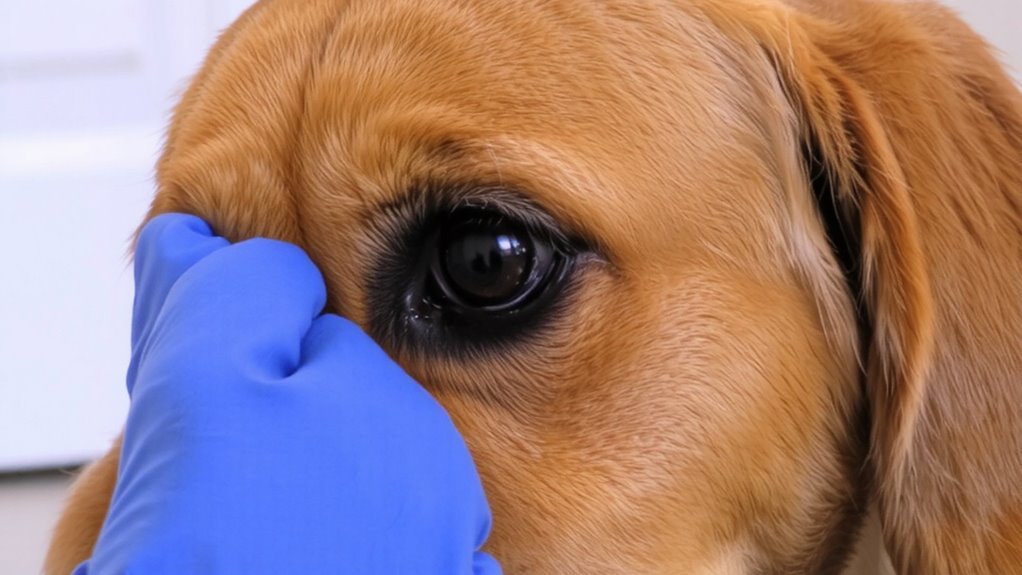
A corneal ulcer is a scratch or open sore on the clear outer layer of your pet’s eye, known as the cornea. The anatomy of cornea includes five layers: epithelium, Bowman’s layer, stroma, Descemet’s membrane, and endothelium. Superficial ulcers affect only the epithelium and heal quickly. Deeper ulcers extend into the stroma and risk perforation. Your pet may show redness, squinting, or excessive tearing. Certain breeds with protruding eyes, like Pugs or Persians, are more vulnerable. There are different types of ulcers: simple, indolent, infected, or melting. Indolent ulcers fail to heal due to poor cell adhesion. Infected ulcers involve bacteria or fungi and require targeted therapy. Melting ulcers degrade stromal collagen rapidly. Diagnosis uses fluorescein stain, binding to defects and glowing green under cobalt blue light. Early detection improves outcomes markedly.
How Cleaning Prevents Corneal Ulcers
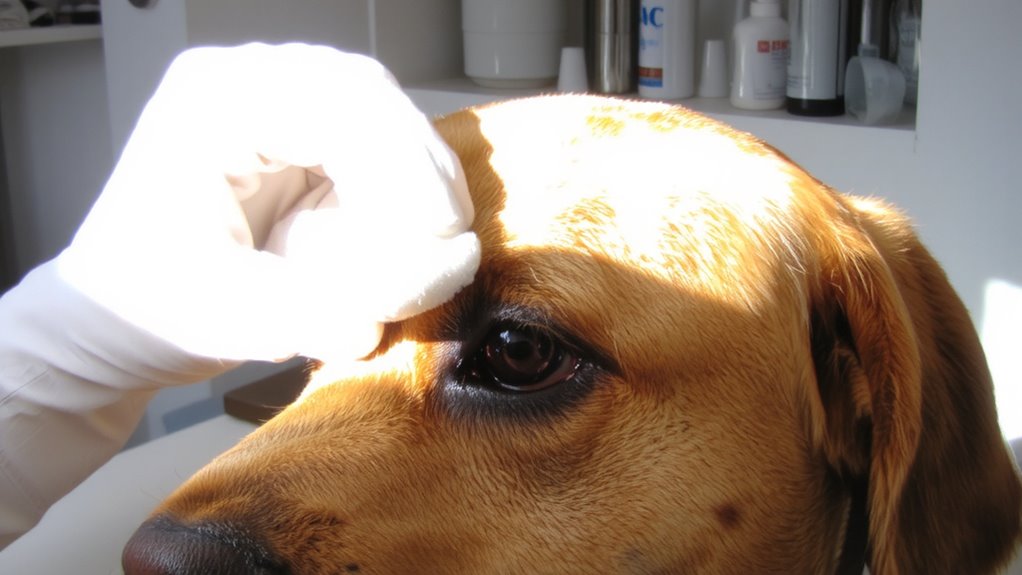
Since debris and irritants often go unnoticed until symptoms appear, regularly cleaning your pet’s eyes can stop minor abrasions from developing into corneal ulcers. You remove environmental irritants like dust, pollen, and smoke that accumulate daily. These particles cause micro-abrasions, increasing ulcer risk. Consistent tear duct hygiene prevents discharge buildup, which attracts bacteria. Use a sterile, saline-based solution with a pH of 7.0–7.4 to avoid corneal irritation. Apply with a lint-free pad, wiping from the inner to outer eye. This technique reduces bacterial load by up to 68%. Daily cleaning maintains the tear film’s integrity-a tri-layered structure of mucin, aqueous, and lipid components essential for ocular defense. You minimize inflammation and support natural healing mechanisms. Proper technique guarantees complete debris removal without corneal trauma. Prevention through routine care is more effective than treatment after ulcer formation. You’re safeguarding long-term ocular health with minimal effort.
Which Breeds Need Extra Eye Care?

While some dogs have naturally protected eyes, you’ll need to provide extra care for breeds with anatomical features that increase ocular vulnerability. Brachycephalic breeds and tear prone dogs are especially at risk due to shallow orbits and poor eyelid closure. Their eyes are more exposed to debris, increasing irritation and ulcer formation.
| Breed Type | Common Examples | Eye Risk Factors |
|---|---|---|
| Brachycephalic | Pug, Bulldog, Shih Tzu | Protruding eyes, reduced blink cover |
| Tear prone dogs | Cavalier King Charles | Excessive tearing, pigment staining |
| Long-faced sighthounds | Greyhound, Whippet | Large corneal surface, trauma risk |
| Heavy-muzzled breeds | Bloodhound, Basset Hound | Folding skin, bacterial accumulation |
| Hair-intensive faces | Poodle, Lhasa Apso | Trichiasis from facial hair contact |
Regular monitoring helps you catch early signs before they escalate.
How to Clean Your Pet’s Eyes Safely Every Day
How do you make certain your pet’s eyes stay free of debris and irritants without causing harm? Use soft lighting to clearly see discharge or particles without startling your pet. Restrain gently but firmly, using one hand to stabilize the head. Dip a cotton ball or soft cloth in sterile saline-never alcohol or soap-based solutions. Apply gentle pressure only at the eye’s corner, where crusts accumulate. Wipe outward, away from the cornea, to avoid contamination. Never rub; use a fresh section of the cloth for each pass. For pets with long fur, trim hair near the eyes weekly to reduce tear buildup. Conduct cleaning daily, preferably at the same time, to establish routine. Consistent hygiene minimizes foreign bodies and pathogens, directly lowering corneal ulcer risk. This method, performed correctly, maintains ocular surface integrity and supports long-term eye health.
Best Products for Cleaning Pet Eyes
What makes one eye cleaning product safer and more effective than another? The best options use pet safe solutions with pH-balanced formulas, typically between 6.5 and 7.5, matching your pet’s natural tear film. Products containing natural ingredients like chamomile, aloe vera, or green tea extract reduce irritation and provide gentle antimicrobial action. Avoid solutions with alcohol, fragrances, or dyes-they can damage delicate ocular tissues. Use sterile, preservative-free saline solutions for sensitive pets. Gels preserve moisture longer than liquids but may blur vision temporarily. Pre-moistened wipes with soft, non-linting material effectively remove debris without abrasion. Check for veterinary approval and hypoallergenic testing. Solutions with 0.9% sodium chloride offer ideal osmolarity. Always apply using a clean applicator-never reuse wipes or bottles. Pet safe solutions with natural ingredients minimize inflammation while maintaining ocular surface health.
When to See a Vet for Eye Issues?
You’ve taken the right steps by choosing a safe, pH-balanced eye cleaner with natural ingredients and sterile saline at 0.9% sodium chloride to maintain your pet’s ocular health. Still, you must recognize emergency signs requiring immediate veterinary care. Persistent redness, squinting, cloudiness, or trauma indicate urgent problems. Evaluate discharge types closely-clear and tear-like is normal; yellow-green pus suggests infection; bloody or thick mucus demands prompt attention.
| Symptom | Action |
|---|---|
| Excessive tearing | Monitor for 24 hours |
| Cloudy cornea | See vet immediately |
| Yellow-green discharge | Seek care within 12 hours |
| Squinting or pawing | Emergency signs-act now |
Don’t delay: timely intervention prevents corneal ulcers and preserves vision.
How to Keep Eye Infections From Coming Back
Some pets are more prone to recurring eye infections due to breed anatomy, environmental exposure, or underlying health conditions. To prevent relapses, consistent hygiene habits are critical. Clean your pet’s eyes daily using a sterile, preservative-free saline solution and a lint-free cloth or gauze pad. Avoid sharing supplies between pets to reduce cross-contamination. Chronic or improperly treated infections increase the risk of antibiotic resistance, making future treatments less effective. Complete all prescribed medication courses exactly as directed, even if symptoms improve. Use veterinarian-recommended ophthalmic ointments with proven efficacy against common pathogens like *Staphylococcus* or *Pseudomonas*. Evaluate environmental irritants-dust, smoke, or allergens-and minimize exposure. Regular veterinary checkups allow early detection of abnormalities. Preventive care is more effective than treatment.
On a final note
You can substantially reduce your pet’s risk of corneal ulcers with daily eye care. Regular cleaning removes irritants like dust and allergens that trigger inflammation. Use a sterile saline solution or vet-approved eye wipe-avoid products with alcohol or fragrances. Apply with a soft, lint-free pad, wiping from inner to outer eye. For breeds with facial folds, clean twice daily. Consistent hygiene prevents microbial buildup that leads to infection and ulceration.