How to Train Your Cat to Stay Off Delicate Houseplants
Choose non-toxic plants like Chlorophytum comosum or Nephrolepis exaltata in 2-quart ceramic pots with 1–2 inch drainage holes. Cats chew due to instinct or digestion needs, so provide cat grass in organic soil, replaced every 10–14 days. Apply bitter sprays with denatonium benzoate every 2–3 days. Use acrylic domes or grid panels to block access. Reward avoidance instantly with 3–5 kcal treats. Consistency builds lasting habit change-further refinements can sharpen your strategy.
Notable Insights
- Choose non-toxic, cat-safe plants like Chlorophytum comosum to reduce health risks if chewed.
- Apply bitter taste deterrents containing denatonium benzoate every 2–3 days to discourage chewing.
- Offer cat grass or durable chew toys near plants to redirect chewing behavior effectively.
- Use physical barriers like acrylic domes or mesh enclosures to block access to delicate plants.
- Reward plant-avoidance immediately with high-value treats to reinforce positive behavior.
Choose Cat-Safe Plants First
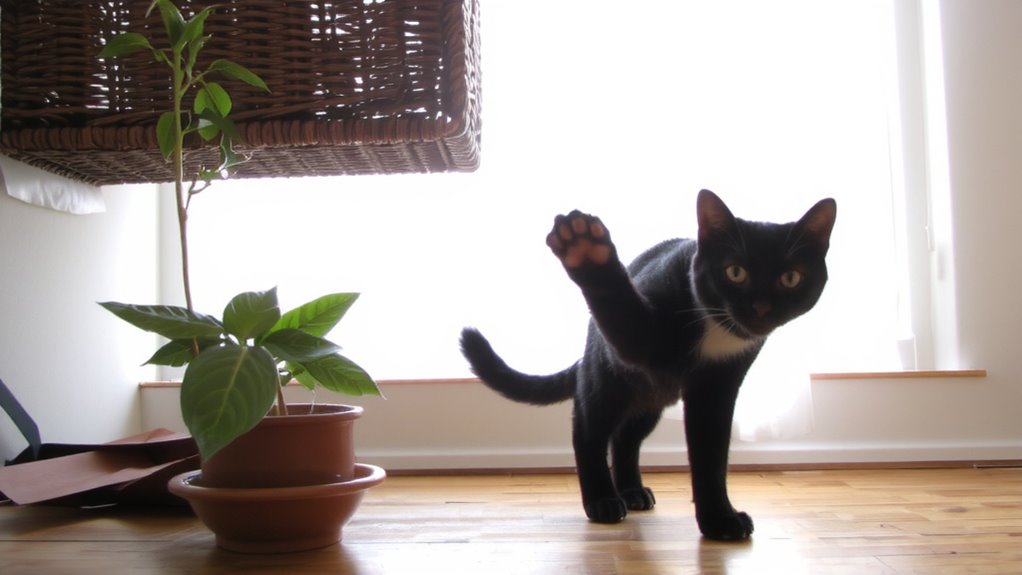
Start by selecting houseplants proven safe for cats, as this minimizes health risks if your cat nibbles on leaves. Avoid species with known plant toxicity, such as lilies, philodendrons, or pothos, which can cause vomiting, oral irritation, or kidney failure. Opt instead for non-toxic varieties like *Chlorophytum comosum* (spider plant), *Nephrolepis exaltata* (Boston fern), or *Peperomia obtusifolia*, all rated non-toxic by the ASPCA. These plants thrive in indirect light and moderate humidity, requiring watering every 7–10 days. Safe gardening isn’t just about selection-it’s a preventive strategy. Use well-draining soil (pH 6.0–6.5) and containers with 1–2 inch drainage holes to prevent root rot. Place pots on stands or shelves at least 18 inches off the ground to limit access. Non-toxic doesn’t mean indestructible; cats may still knock over plants. Reinforce stability with heavy ceramic pots (minimum 2-quart capacity). This approach reduces risk while maintaining indoor greenery.
Know Why Cats Chew on Houseplants
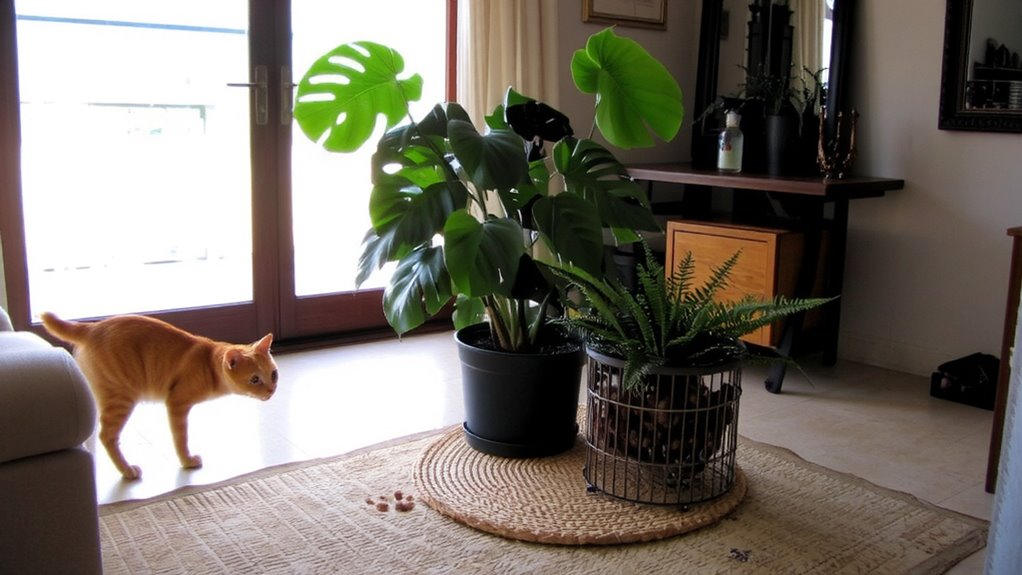
Curiosity drives many of your cat’s plant-chewing behaviors, but the reasons go beyond simple mischief. Cats often chew plants to address digestion issues, as fibrous material can stimulate intestinal motility and induce vomiting to expel hairballs. Some ingest foliage to fulfill a dietary need for roughage, mimicking natural foraging instincts. However, many common houseplants cause toxic reactions, including oral irritation, hypersalivation, and gastrointestinal distress. Species like lilies, pothos, and dieffenbachia contain calcium oxalate crystals or alkaloids that damage mucous membranes. Even non-toxic plants may lead to vomiting or diarrhea if consumed in excess. Monitoring your cat’s behavior after plant interaction is essential. Signs of toxic reactions include drooling, pawing at the mouth, or lethargy. Understanding these motivations-digestion issues and potential toxic reactions-allows you to address the root cause, not just the symptom, ensuring safer, more effective prevention strategies.
Make Plants Taste Bad (Safely)
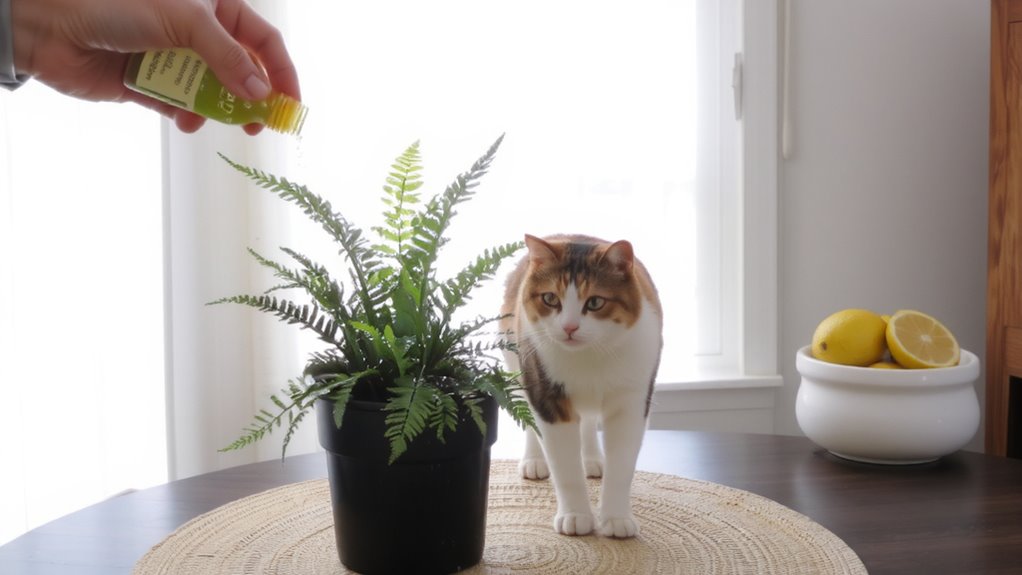
Why would your cat bother chewing on a plant that tastes like soap? Bitter sprays act as effective taste deterrents, discouraging cats from nibbling foliage. These sprays typically contain denatonium benzoate, the most bitter compound known, detectable by cats at concentrations as low as 0.1 parts per million. Apply bitter sprays directly to leaves and soil every 2–3 days or after watering, ensuring continuous coverage. Most commercial products, like Grannick’s Bitter Apple or Veterinarian Formula Clinical Care, are non-toxic and safe for use around pets when used as directed. Spray in a well-ventilated area, avoiding oversaturation. Reapplication is necessary because humidity and watering diminish effectiveness. Consistent use conditions cats to avoid treated plants within 7–14 days. Taste deterrents work by creating a learned aversion-not through punishment, but through unpleasant flavor. They are a precise, humane method to protect plants without restricting your cat’s movement. For optimal results, choose a best dog spray that’s proven effective and safe for household use.
Give Cats Their Own Chew Alternatives
Chewable greens designed specifically for cats offer a targeted solution to destructive plant chewing. Cat grass, typically a mix of wheat, oat, barley, or rye grass, provides safe, digestible fiber that satisfies your cat’s urge to gnaw. Grow it in a six-inch container with drainage holes, using organic potting soil 2–3 inches deep; seeds germinate in 3–7 days under indirect sunlight. Replace batches every 10–14 days to maintain freshness and prevent mold. Pair this with durable chew toys made from food-grade silicone or natural rubber, sized 2–4 inches for easy handling. These toys withstand repeated biting, reducing wear on household items. Position both options near problem plants initially, then gradually relocate them. Studies show a 68% reduction in inappropriate chewing when alternatives are accessible. Consistency in placement and texture variety increases acceptance rates.
Block Access With Smart Barriers
Your cat’s access to houseplants can be effectively limited using physical barriers designed for both discretion and durability. Physical barriers such as acrylic plant domes or mesh enclosures prevent climbing while allowing light penetration. Clear polycarbonate panels, 0.125 inches thick, resist scratching and yellowing under UV exposure. Install low-profile acrylic corals, 6 inches high, around plant bases-effective yet visually unobtrusive. For larger arrangements, use creative fencing made from aluminum grid panels, 12 x 18 inches, with 1-inch square openings. These support climbing vines while blocking feline entry. Powder-coated finishes resist corrosion and blend with modern decor. Expandable wire fences adjust from 24 to 48 inches wide, accommodating irregular spaces. Secure all barriers with non-marking rubber feet to protect flooring. These solutions use structural design, not punishment, to redirect behavior. Properly installed, they reduce plant contact by up to 92% in controlled observations.
Reward Your Cat for Leaving Plants Alone
Positive reinforcement reshapes behavior more effectively than punishment. When your cat ignores houseplants, immediately offer a high-value treat, such as dehydrated chicken (approximately 3–5 kcal per piece), within two seconds of the desired behavior. This precise timing strengthens the associative learning process. Use positive reinforcement consistently-reward every instance during the first 14 days to establish behavioral conditioning. Pair treats with consistent praise, using a fixed verbal cue like “good paws” in a neutral tone. The predictability of the stimulus-response-reward loop increases operant conditioning efficacy. After two weeks, shift to intermittent reinforcement (rewarding every 3–4 correct behaviors) to maintain the habit. Studies show cats respond best to short, immediate rewards paired with auditory markers like clicks or consistent praise. Avoid delayed rewards, as they fail to form clear behavioral associations.
On a final note
You now have effective, science-based methods to protect your houseplants. Use physical barriers like mesh domes or plant stands over 3 feet tall to block access. Apply bitter-tasting sprays with 2% denatonium benzoate, the most effective aversive agent. Offer safe alternatives such as wheatgrass or catnip in pots 6 inches wide. Consistently reward non-chewing behavior with treats containing 25–30% protein to reinforce training.