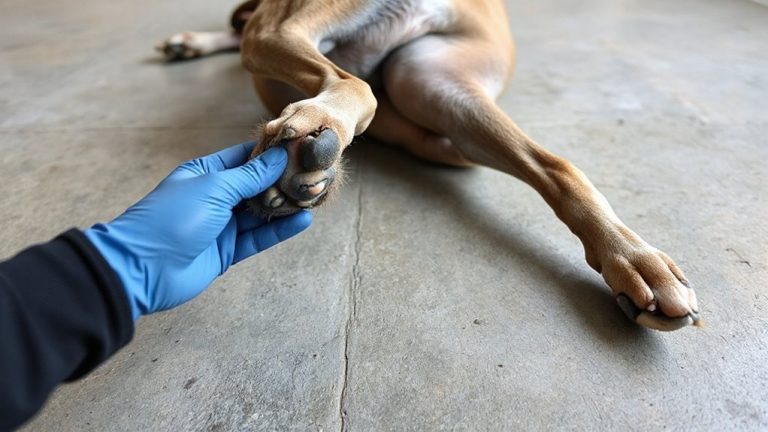
Identifying Excessive Grooming as a Symptom of Underlying Anxiety in Persian Cats
You might notice your Persian cat licking excessively, especially along the hind legs or abdomen. Persistent grooming beyond 20% of waking hours causes symmetrical hair loss and skin irritation. Saliva crystallization damages the skin barrier, raising infection risk. This behavior often stems from anxiety due to environmental stressors like noise or routine changes. Neural pathways link licking to endorphin release, reinforcing the cycle. Addressing underlying causes improves outcomes.
Notable Insights
- Excessive grooming in Persian cats, such as persistent licking leading to symmetrical hair loss, may indicate underlying anxiety.
- Bald patches, skin irritation, or lesions along the abdomen and hind legs are physical signs of stress-induced over-grooming.
- Repetitive grooming behaviors release endorphins, reinforcing compulsive licking as a maladaptive coping mechanism for emotional distress.
- Environmental stressors like routine changes, inadequate litter boxes, or noise above 65 decibels can trigger anxiety-related grooming.
- Reducing over-grooming involves environmental enrichment, consistent routines, and pheromone diffusers to address the root anxiety.
Signs Your Persian Cat Is Over-Grooming
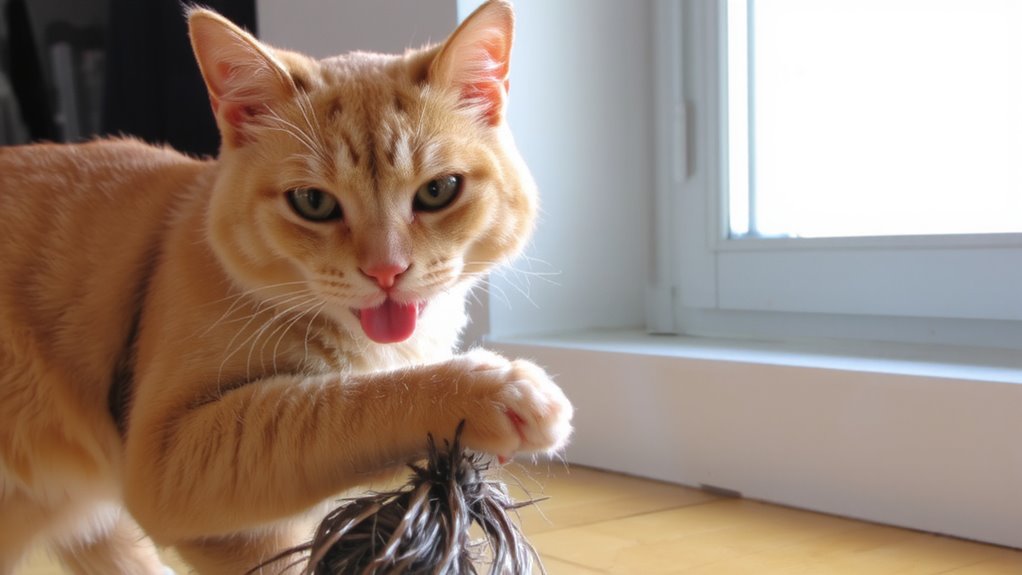
Why does your Persian cat seem to spend hours licking its coat? Excessive grooming is a visible sign that something’s off. You’ll notice fur thinning, especially along the hind legs, abdomen, or flank. This isn’t normal shedding-it’s targeted hair loss from persistent licking. Look closely: bald patches may appear, sometimes with remaining stubble or uneven texture. Skin irritation often follows, presenting as redness, sores, or flaky patches. The constant friction erodes the cutaneous barrier, increasing infection risk. Saliva crystallization on skin can worsen inflammation. Unlike seasonal shedding, over-grooming creates distinct, symmetrical bald areas. Use a magnifying tool to inspect coat density; compare to baseline photos if available. Monitor session duration: grooming exceeding 20% of awake time indicates abnormal behavior. Early detection of fur thinning and skin irritation allows timely intervention, preventing secondary complications. Document changes systematically to aid veterinary assessment. A damaged coat may require professional tools for safe maintenance, such as using a best cat shaver to prevent further skin trauma during trimming.
Why Anxiety Causes Over-Grooming in Persian Cats
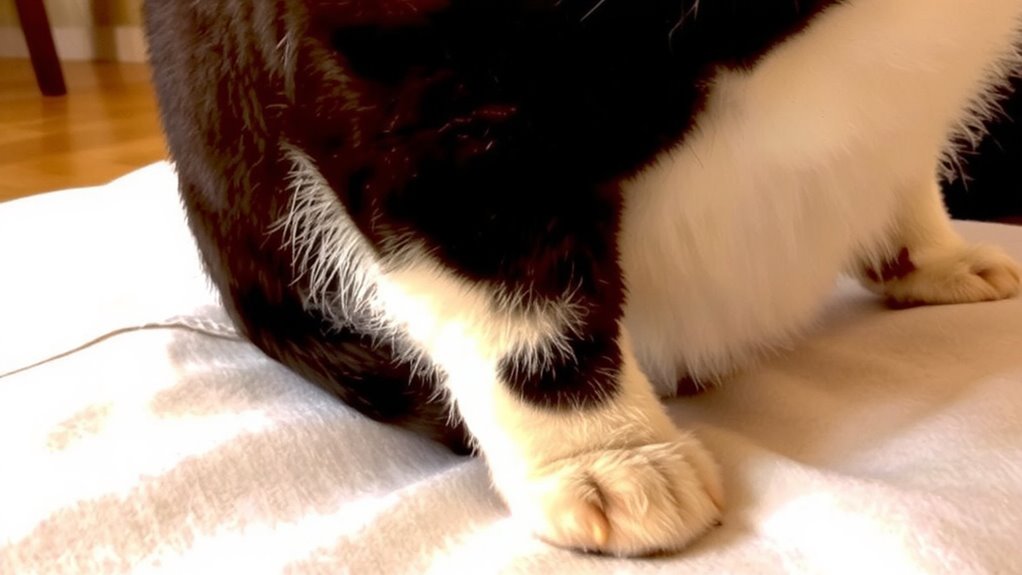
When stress exceeds a Persian cat’s threshold, the grooming mechanism-a natural behavior regulated by neural reward pathways-shifts from maintenance to compulsion. This compulsive behavior emerges as a coping strategy for unresolved anxiety. Your cat’s brain responds to distress by triggering repetitive actions that release endorphins, offering temporary relief. Over time, this feedback loop reinforces over-grooming, even in the absence of physical triggers.
Chronic anxiety disrupts normal neurochemical balance, particularly involving serotonin and dopamine-neurotransmitters that modulate mood and repetitive behaviors.
| Neurotransmitter | Role in Grooming Behavior |
|---|---|
| Serotonin | Regulates impulse control; low levels link to compulsive behavior |
| Dopamine | Reinforces rewarding actions, including self-soothing rituals |
This self-perpetuating cycle establishes over-grooming as a maladaptive response. You’re observing not vanity-but neurological distress expressed through behavior. Addressing underlying causes like bad dog breath can help reduce stress in multi-pet households where health issues in one animal may indirectly affect another’s behavior.
Common Stressors for Persian Cats
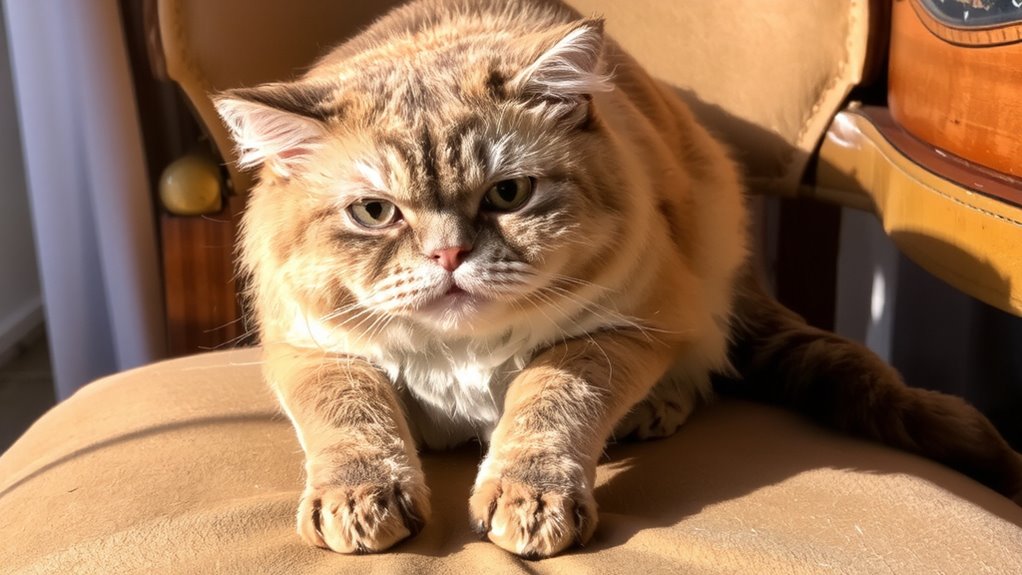
While Persian cats may appear serene, their sensitive temperaments make them prone to stress from environmental and social disruptions. Changes in routine or household dynamics can trigger anxiety. Litter box issues often arise when the box isn’t cleaned daily or is placed in a high-traffic area; clumping litter should be scooped at least once every 12 hours to maintain hygiene and reduce aversion. Multi-cat homes require one litter box per cat, plus one extra, spaced apart to minimize competition. Food preferences are equally critical-Persians often favor wet food at room temperature, served in shallow ceramic bowls to avoid whisker fatigue. Abrupt diet changes or feeding near noisy appliances can lead to avoidance behaviors. Environmental enrichment, like vertical spaces and consistent feeding zones, helps mitigate stress. Noise levels above 65 decibels-equivalent to normal conversation-may also elevate cortisol. When traveling, using a secure pet travel restraint system can reduce motion-related stress and maintain a sense of safety.
When to See a Vet for Over-Grooming
Persistent over-grooming in Persian cats can signal underlying medical or psychological issues that go beyond typical stress responses. You should see a vet if you notice bald patches or thinning fur, as excessive licking often leads to hair loss. Hair loss from over-grooming typically appears symmetrically along the abdomen, inner thighs, or forelimbs. This behavior can break the skin barrier, increasing the risk of skin infections caused by bacteria like Staphylococcus or fungi such as Malassezia. Look for redness, scabs, or oozing lesions-clinical signs of infection. Chronic irritation may require cytology or skin scrapings for accurate diagnosis. Early veterinary evaluation helps differentiate between dermatological conditions, parasites, and anxiety-related grooming. A physical exam, combined with a detailed history, allows for targeted treatment. Delaying care can worsen tissue damage and prolong recovery. Seek professional help promptly when over-grooming persists beyond two weeks.
How to Calm an Anxious Persian Cat
What makes your Persian cat so tense that it can’t stop grooming? Anxiety in your cat often stems from monotony or a lack of stimulation. Behavioral enrichment reduces stress by encouraging natural feline activities. Introduce daily play sessions using wand toys for 10–15 minutes, twice daily, to mimic hunting and expend nervous energy. Environmental enrichment modifies your cat’s surroundings to promote security and exploration. Install vertical spaces like cat trees with platforms at minimum heights of 3–5 feet to support perching. Use pheromone diffusers (such as Feliway), placed 3–5 feet above floor level, to maintain consistent air saturation. Rotate toys weekly to sustain novelty. Provide hiding spots with enclosed beds or cardboard boxes, ensuring at least one per 100 sq ft of living space. These structured interventions address anxiety at its source by engaging both mind and body.
Persian-Safe Calming Techniques and Tools
You’ve already taken steps to enrich your Persian cat’s environment and manage anxiety through structured play and spatial modifications. Now, consider integrating Persian-safe calming tools backed by veterinary science. Calming collars release low-dose, sustained essential oils like lavender and valerian, which interact with olfactory receptors to reduce stress. Look for collars with adjustable fits and a 30-day efficacy window. Alternatively, plug-in pheromone diffusers simulate feline facial pheromones (F3). Devices like Feliway Classic cover up to 700 square feet and remain effective for four to six weeks per refill. They work continuously, altering behavioral responses at the neurological level. Both tools are non-invasive and ideal for long-term use. While not replacements for medical intervention, they provide measurable reductions in anxiety markers-such as overgrooming-when used consistently. Always choose products tested for use in brachycephalic breeds to guarantee airway safety and avoid respiratory irritation.
Create a Low-Stress Home for Your Persian Cat
Though stress can manifest subtly, adjusting your home environment is essential to preventing behavioral and physiological issues in Persian cats. Begin with litter box placement: position at least one box on each floor, away from high-traffic areas, appliances, and food zones. Use uncovered, low-sided boxes filled with unscented clumping litter to guarantee accessibility and hygiene. Place boxes at least 5 feet from food and water stations to prevent aversion. Install a dedicated window perch design near a south-facing window for consistent natural light. Use perches that support at least 15 lbs, attach securely with brackets, and measure 18” x 12” to accommodate full-body stretching. Add washable fleece padding for thermal comfort. These modifications reduce environmental stressors, minimizing compulsive grooming. Maintain consistent placement and clean routines. A stable, predictable space supports emotional regulation and directly mitigates anxiety-induced behaviors.
On a final note
You must recognize excessive grooming as a clinical indicator of anxiety in Persian cats. Persistent licking, hair loss, or skin lesions signal distress. Over-grooming, known as psychogenic alopecia, stems from elevated cortisol levels due to environmental stressors. Identify triggers like loud noises or routine changes. Use pheromone diffusers calibrated to release 10 mg of F3 feline facial pheromone per hour. Consult a veterinarian to rule out dermatological causes and consider behavior modification protocols.