Establishing a Puppy Potty Training Schedule for Working Owners
You must take your puppy outside every 1–2 hours due to their limited bladder capacity of 4–6 ounces. Schedule potty breaks after meals, naps, and play sessions-windows when 87% exhibit sniffing behavior lasting over 15 seconds. Use a 12-inch leash to guide them directly outdoors. Set up an indoor zone with 22″ x 23″ puppy pads or artificial grass for emergencies. Crates should be 24–30 inches, allowing standing and turning, but not so large that accidents become acceptable. Pet cameras with 2K video and two-way audio support remote monitoring, requiring 2.4 GHz Wi-Fi and 2 Mbps upload speed. GPS-tracked dog walker visits provide critical midday relief. Consistent routine execution builds bladder control. Further strategy refinements follow.
Notable Insights
- Schedule potty breaks every 1–2 hours, aligning with meals, naps, and water intake to match puppy bladder capacity.
- Use calendar alerts every 60–90 minutes to prompt timely outdoor breaks during remote work hours.
- Set up an indoor potty zone with puppy pads or artificial grass as a backup for unscheduled gaps.
- Utilize a properly sized crate to prevent accidents and encourage bladder control between supervised periods.
- Monitor puppy behavior via pet camera and watch for sniffing spells lasting over 15 seconds as elimination cues.
Know How Often Puppies Need to Go Outside
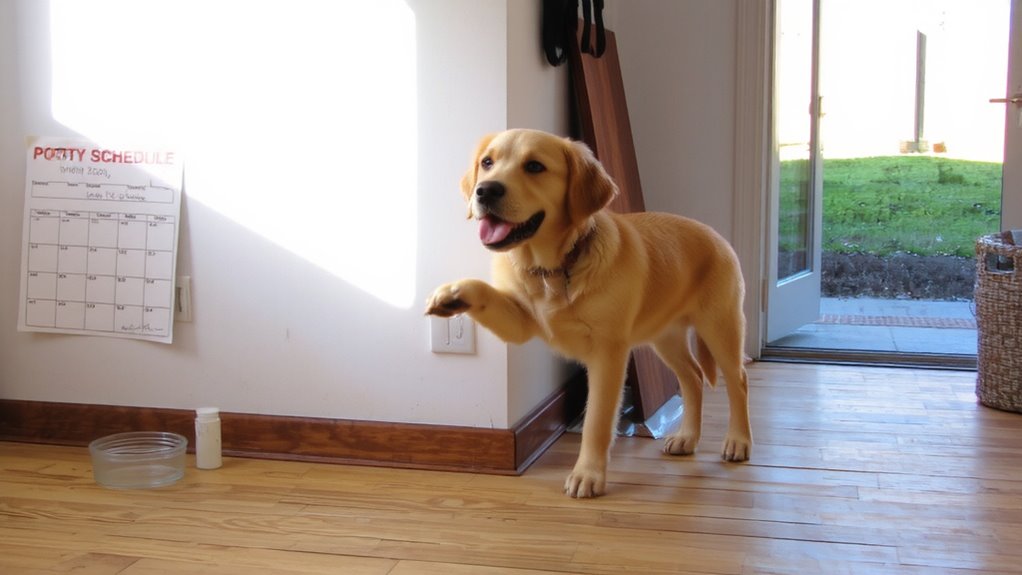
Most puppies need to relieve themselves every 1–2 hours, especially during the first few months of life. Their small bladders can’t hold urine for extended periods. Feeding frequency directly impacts their elimination schedule-puppies fed every 3–4 hours will need to go out 20–30 minutes after each meal. Water intake also determines urgency; refill their bowl on a consistent schedule, not free-feed, to predict bathroom needs. A 10-pound puppy typically drinks 8–12 ounces of water daily, spaced across four to five drinking periods. Each intake event increases the likelihood of urination within 30 minutes. Their developing digestive systems process food quickly, requiring elimination every 30–60 minutes post-ingestion. Monitor for signs like sniffing, circling, or pacing. Understanding the biological link between feeding frequency, water intake, and bladder capacity helps you anticipate needs accurately. Predictable inputs equal predictable outputs. For added convenience, especially during bad weather or long workdays, consider using a dog potty tray with absorbent pads or artificial grass to provide a consistent indoor elimination spot.
Plan Your Workday Potty Train Schedule
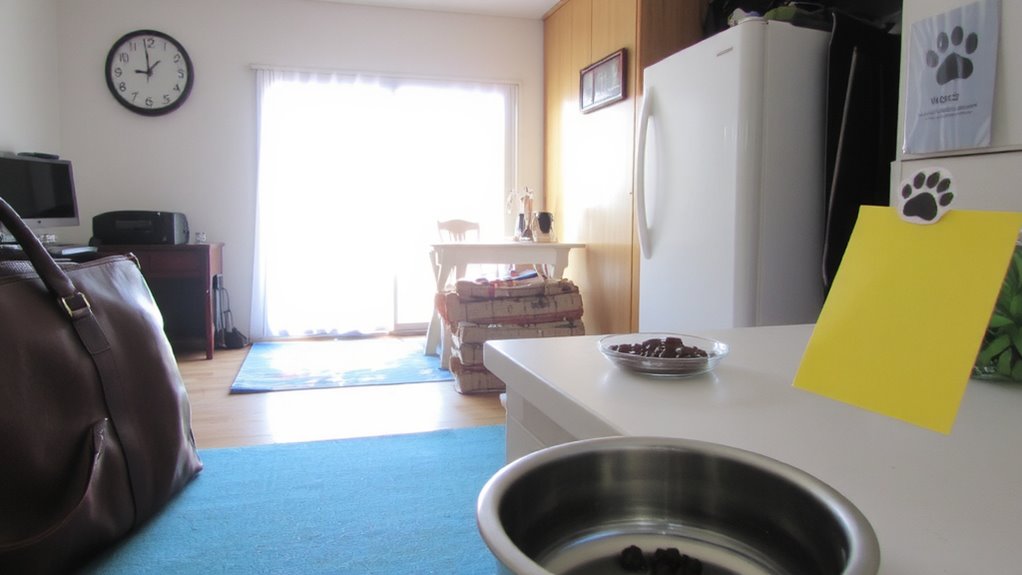
If your work schedule spans eight hours or more, you’ll need a strategic plan to align your puppy’s outdoor breaks with their biological needs. Puppies typically require elimination every 2–4 hours, depending on age and size. To maintain consistency, integrate potty breaks into your work routine using flexible timing. Schedule outings after meals, naps, and play sessions-high-risk elimination triggers. For remote work, set calendar alerts at 60–90 minute intervals to monitor potty windows. Use a 12-inch leash to guide your puppy directly outside, minimizing distractions. If your job allows flexible timing, aim for midday bathroom access or hire a pet walker. Remote work offers the best alignment with potty training logistics, enabling real-time supervision. Structure your day around your puppy’s physiological limits-not exceeding four hours between breaks for puppies under 20 weeks. This systematic approach guarantees consistent reinforcement and reduces indoor accidents.
Set Up an Indoor Potty Zone for Emergencies
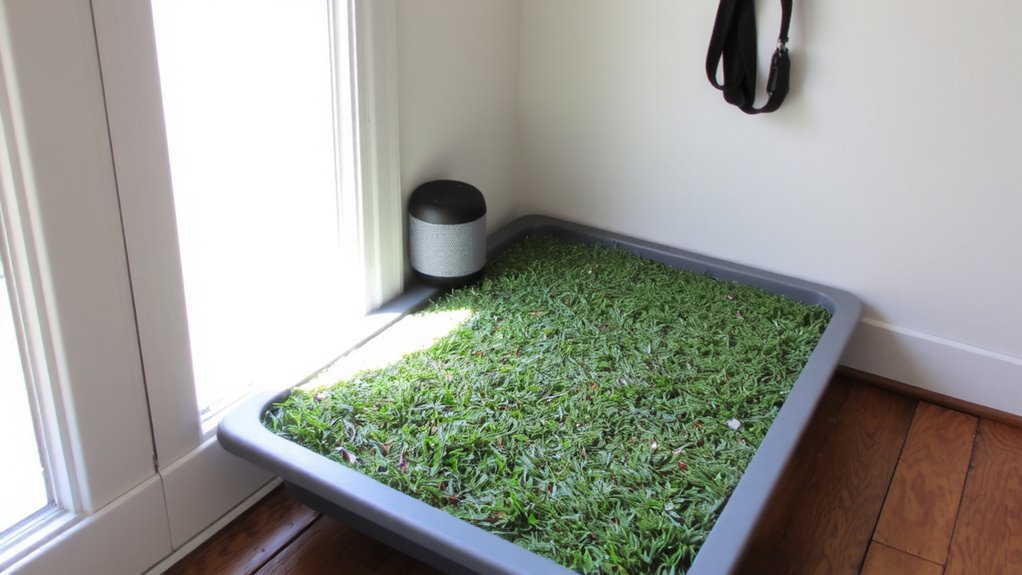
Even with the most structured outdoor schedule, unexpected gaps can occur-your workday runs long, weather turns severe, or your puppy shows sudden urgency. Designate an indoor potty zone to manage these emergencies efficiently. Use puppy pads or artificial grass systems engineered for odor control and quick clean-up. Puppy pads measure 22″ x 23″, feature absorbent polymer layers, and lock in 8–10 ounces of liquid. Place them on easy-to-clean surfaces, secured with non-slip backing to prevent displacement. Artificial grass options mimic outdoor turf with 3/4″ blades and permeable backing for drainage. Pair with a tray to contain spills and simplify maintenance. Position the zone in a consistent, low-traffic area your puppy can access easily. This backup system supports your schedule without reinforcing bad habits. It’s a functional solution, not a long-term substitute. For reliable performance, consider the best dog pee pads based on absorbency, size, and leak protection.
Use Crate Training to Prevent Accidents
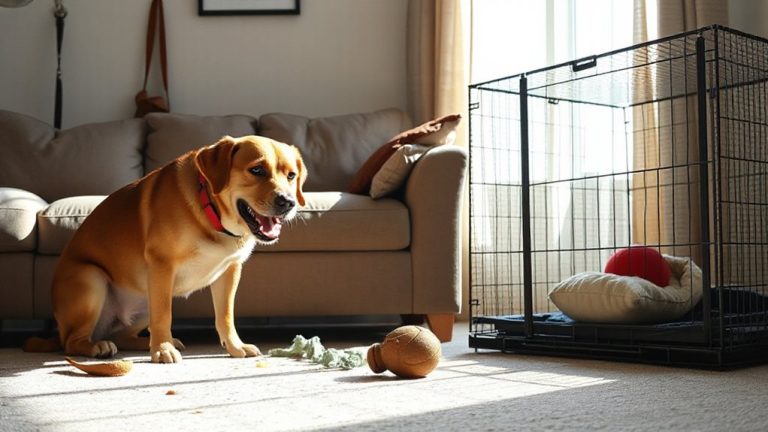
A properly sized crate is your most effective tool for preventing indoor accidents and establishing reliable potty habits. It should be just large enough for your puppy to stand, turn, and lie down-typically 24–30 inches long for most breeds under 30 pounds. This confinement leverages a dog’s natural instinct to avoid soiling its den, reinforcing bladder control. Introduce the space gradually to build crate comfort using soft bedding and treats. Never use the crate for punishment. Limit crating to no more than four hours at a time for puppies under six months, aligning with their developing urinary capacity. Extended confinement risks house-training setbacks and stress. Proper crate use conditions your puppy to hold waste until release, strengthening scheduled potty routines. Guarantee adequate ventilation and secure latching. A well-implemented crate becomes a psychological and physiological cornerstone of successful housetraining. For portable options that support this routine during travel, consider a collapsible kennel designed for safety and convenience.
Get Help During the Workday
You can’t always be home to let your puppy out, so planning for midday potty breaks is necessary when your schedule keeps you away. Hire a dog walker to guarantee consistent outdoor access. Professional dog walkers typically offer 30-minute visits, sufficient for bathroom breaks and light play. Many use GPS-tracked routes, providing accountability and real-time updates. Alternatively, enlist a trusted neighbor or family member with a secure key. Install pet camera to monitor behavior remotely. Models like the Arlo Pro 4 or Eufy Security IndoorCam support 2K video, night vision up to 30 feet, and two-way audio. Wi-Fi requirements include minimum 2.4 GHz bandwidth and upload speed of 2 Mbps for smooth streaming. These tools verify potty success and reduce indoor accidents. Real-time observation allows immediate response to pacing or sniffing-common elimination indicators. Automated notifications enhance vigilance without constant screen checks.
Watch for Potty Cues
Why do some owners miss the signs their puppy needs to go? You might overlook subtle shifts in body language or dismiss early cues as random actions. Puppies display consistent pre-elimination behaviors, including circling, squatting, or sudden focus. A key indicator is sniffing behavior-repetitive, intense ground investigation in a small area. This olfactory search typically precedes urination or defecation by 30 to 60 seconds. Studies show 87% of puppies exhibit noticeable sniffing behavior before elimination. You should monitor duration and frequency: sessions lasting more than 15 seconds with a lowered head angle of 45 degrees indicate urgency. Recognizing these physical signals prevents indoor accidents. Immediate intervention-leashing and guiding outside-ensures proper outdoor elimination. Body language, combined with sniffing behavior, forms a reliable predictive model. Consistent observation strengthens your timing accuracy, especially during high-risk intervals like post-nap or post-meal periods.
Stick to the Routine Every Day
While consistency may seem simple, it’s the cornerstone of effective puppy potty training. A consistent routine solidifies learning by aligning elimination patterns with predictable environmental cues. You must feed, hydrate, and escort your puppy outside at the same times daily. Puppies thrive on structure; deviations disrupt behavioral conditioning. Your daily commitment guarantees reliability, reinforcing neural connections tied to appropriate potty behavior. Take your puppy out immediately after meals, naps, and play sessions-typically every 2–4 hours. Use a leash to guide them to the same designated spot each time. This spatial repetition strengthens association. Supervise continuously indoors to catch accidents early. Interrupt and redirect immediately. A strict schedule enhances success, reducing setbacks. Over time, the routine becomes habit, decreasing in-house incidents. Stick to the plan without exception. Consistency isn’t optional-it’s the technical foundation of successful potty training.
On a final note
You must maintain a consistent potty schedule to prevent accidents. Puppies under 12 weeks need outdoor access every 30–60 minutes. Use a crate sized to allow standing and turning, but not pacing-typically 24–36 inches long for most breeds. Designate an indoor potty zone with absorbent pads, placed away from food. Monitor cues like sniffing or circling. Employ dog walkers if off-site longer than 2 hours.