Why Fiber Content in Commercial Cat Food Often Falls Short of Digestive Needs
You’re feeding your cat fiber, but most commercial diets use cheap, poorly digestible sources like powdered cellulose or soy hulls-some with less than 15% digestibility. These fillers add bulk without supporting gut health. Even high-fiber labels often lack fermentable fibers like chicory root or beet pulp, which produce beneficial short-chain fatty acids. Ideal cat food contains 1.5–3.5% total fiber, including 0.5–1% fermentable types, yet many fall short. Transparency in sourcing determines real digestive benefits. Learn how to identify effective fiber forms next.
Notable Insights
- Many commercial cat foods use low-quality fillers like powdered cellulose instead of functional, digestible fiber sources.
- Cheap fiber ingredients such as soy hulls and corn gluten meal offer minimal nutritional value and poor digestibility in cats.
- Marketing claims like “high in fiber” often lack transparency about fiber type, source, or fermentability.
- Most mainstream diets contain less than 1.5% fermentable fiber, falling short of optimal gut health requirements.
- Without batch testing and clear labeling, the actual fiber functionality in cat food remains inconsistent and unreliable.
Why Cats Need Fiber (Even on a Meat Diet)
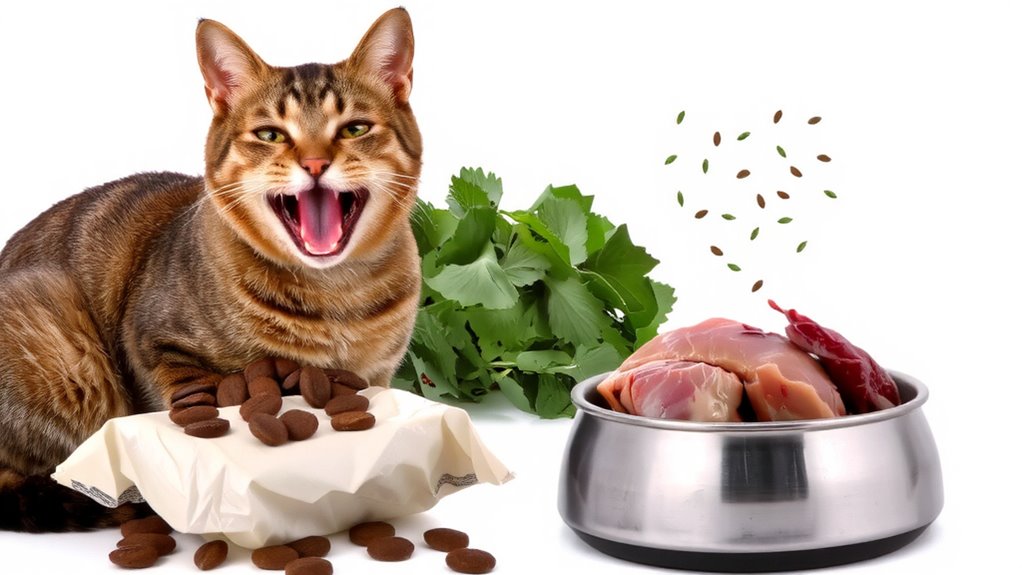
While cats are obligate carnivores and thrive on meat-based diets, they still need fiber for proper digestive function. You’re likely aware that fiber supports natural digestion by adding bulk to stool and promoting consistent bowel movements. Insoluble fiber, like cellulose, absorbs water, increasing intestinal motility and reducing hairball retention. Soluble fiber, such as beet pulp or chicory root, ferments in the colon, producing short-chain fatty acids that nourish intestinal cells. Both types enhance nutrient absorption by stabilizing the gut microbiome and slowing food transit, allowing more time for the small intestine to extract essential nutrients. Studies show a suitable fiber range of 1.5–3.5% in dry matter improves digestive efficiency. Without adequate fiber, even high-protein diets may fail to support gut health. Proper fiber balance is not optional-it’s critical for maintaining your cat’s long-term digestive performance and metabolic function.
How Most Cat Foods Cut Corners on Fiber
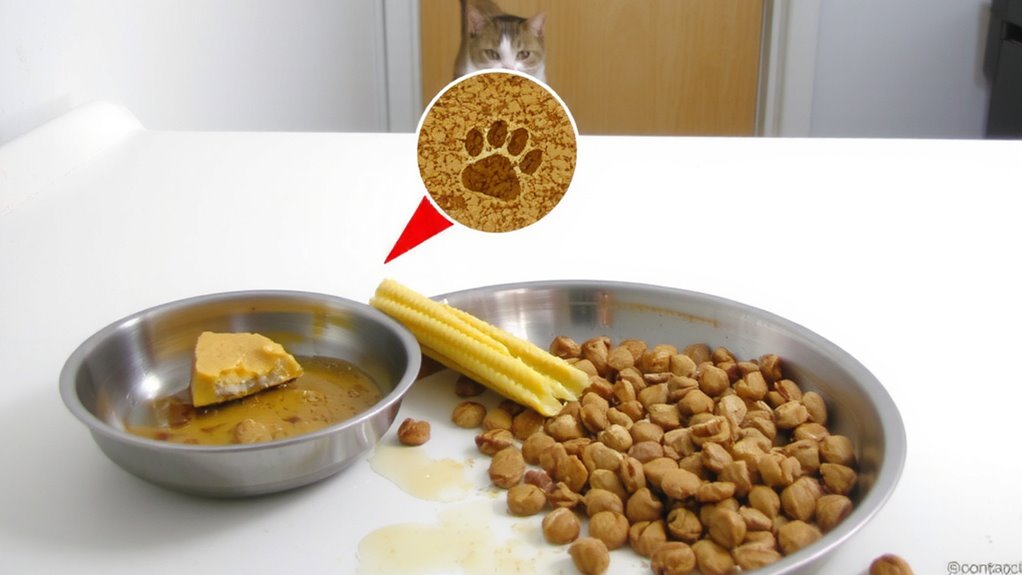
Many commercial cat foods skimp on fiber quality, relying on cheap fillers instead of functional sources. You’ll often see marketing claims like “high in fiber” without details on fermentability or source. These claims distract from poor ingredient sourcing, where low-cost cellulose or beet pulp replaces effective fibers like chicory root or psyllium. Functional fiber requires specific solubility and fermentation profiles-ideal levels are 1.5–3.5% dry matter for balanced fermentation into short-chain fatty acids. Most mainstream diets fall short, measuring below 1.5% fermentable fiber despite adequate total fiber. Cheap alternatives lack viscosity and microbial selectivity, reducing digestive benefits. Proper fiber formulation depends on precise ingredient sourcing-consistent batch testing guarantees fiber functionality. Without it, even high-fiber labels misrepresent actual digestive support. You’re better off checking guaranteed analysis and ingredient lists than trusting front-label promises. Real fiber quality isn’t advertised-it’s verified.
Cheap Fillers That Ruin Fiber Quality
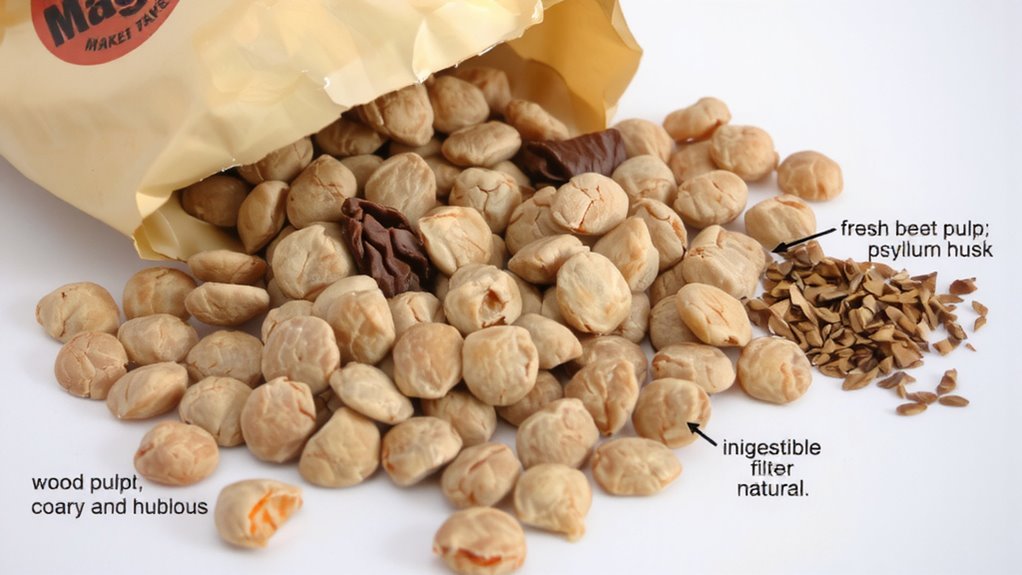
When you see ingredients like powdered cellulose or soy hulls listed near the top of a cat food label, it’s a red flag for compromised fiber quality. These cheap fillers provide bulk but lack nutritional value and hinder fiber’s functional benefits. Manufacturers use them to cut costs, often pairing them with corn gluten and soy byproducts-low-cost protein substitutes that dilute diet quality.
| Filler Ingredient | Source | Digestibility (Feline) |
|---|---|---|
| Powdered Cellulose | Wood pulp | <10% |
| Soy Hulls | Soy byproducts | ~15% |
| Corn Gluten Meal | Corn processing | ~30% |
Corn gluten adds protein on paper but lacks amino acid balance. Soy byproducts disrupt nutrient absorption. These fillers inflate fiber content without supporting digestive health, misleading consumers with label claims while failing feline physiology. Choose whole-food fiber sources instead.
Fermentable Vs. Insoluble Fiber: What Works?
Fiber quality in cat food isn’t just about source-it’s about function. You need to distinguish fermentable from insoluble fiber because they impact digestion differently. Fermentable fibers, like inulin and chicory root, undergo fiber fermentation in the colon, producing short-chain fatty acids that support colon health. These fibers act as prebiotics, feeding beneficial gut bacteria. However, too much can cause a prebiotic imbalance, leading to gas, bloating, or loose stools. Insoluble fibers, such as cellulose, add bulk and speed transit time but don’t ferment. They help with hairball control and bowel regularity. Your cat benefits most from a balanced blend: around 1.5–3% total fiber, with 0.5–1% fermentable types. Excessive insoluble fiber dilutes nutrient absorption. Proper ratios support ideal stool consistency-firm but not hard-without compromising caloric density.
How to Find Healthy Fiber on Cat Food Labels
How do you spot healthy fiber on a cat food label without getting lost in marketing claims? Look for clear label transparency and identifiable fiber sources. Reputable brands list specific ingredients like chicory root, beet pulp, or psyllium, not generic terms like “fiber” or “plant matter.” Check the guaranteed analysis for crude fiber percentages between 2% and 4%, reflecting ideal digestive support without nutrient interference. Ingredients are listed by weight, so fiber sources near the top indicate higher content. Avoid foods listing cellulose first among fibers-it’s low in fermentability. True label transparency includes disclosing whether fibers are fermentable or insoluble. This specificity helps you assess digestive impact. You’re not just reading a label-you’re evaluating formulation intent. Knowing the fiber sources tells you how the food will function in your cat’s gut. Precision matters. Choose based on data, not buzzwords.
Choose Cat Food That Supports Digestion With Fiber
Digestive health begins with smart ingredient choices. You need to select cat food with fiber sources that offer both bulk and prebiotic benefits. Soluble fibers ferment in the colon, producing short-chain fatty acids that support gut lining integrity. Insoluble fibers add stool bulk and regulate transit time. Look for formulations containing beet pulp, chicory root, or psyllium-these provide targeted fiber profiles. Premium foods often list specific fiber concentrations, typically 1.5–3.5% on a dry matter basis, optimized for digestive efficiency.
| Fiber Source | Prebiotic Benefit |
|---|---|
| Chicory root | High in inulin |
| Beet pulp | Moderate fermentation |
| Psyllium husk | Water absorption up to 14x |
| Flaxseed | Balanced soluble/insoluble |
On a final note
You need to prioritize fermentable fiber in your cat’s diet for peak digestion. Most commercial foods contain less than 1.5% fermentable fiber, falling short of the 2–4% range shown to support healthy gut microbiota. Insoluble fiber alone won’t suffice-it passes through undigested. Look for inulin, beet pulp, or fructooligosaccharides on labels. These fibers fuel beneficial bacteria, producing short-chain fatty acids that nourish colon cells and improve stool quality. Choose formulas with balanced, labeled fiber sources to meet your cat’s physiological needs.