The Connection Between Chronic Flatulence in Dogs and Poorly Digestible Proteins
Your dog’s chronic flatulence is often caused by poorly digestible proteins. When protein digestibility falls below 75%, up to 40% more undigested material reaches the colon. Gut bacteria ferment these proteins, producing hydrogen sulfide and methane-gases responsible for volume and foul odor. Low-quality proteins from animal by-products or soy resist breakdown due to imbalanced amino acids and poor bioavailability. High-sulfur diets amplify rotten-egg smells. Switching to highly digestible proteins like eggs or chicken-over 90% digestible-reduces fermentation. The right protein choice markedly lowers gas production and supports better digestive health; ideal selection depends on bioavailability and amino acid balance. Further details reveal how targeted dietary changes yield measurable improvements.
Notable Insights
- Poorly digestible proteins escape small intestine breakdown, reaching the colon where bacteria ferment them, producing excess gas.
- Protein digestibility below 75% increases colonic fermentation by up to 40%, leading to chronic flatulence in dogs.
- Fermentation of undigested proteins generates hydrogen sulfide and methane, increasing gas volume and foul odor.
- Low-quality proteins from soy, legumes, and animal by-products are linked to higher gas production after meals.
- Feeding highly digestible proteins like eggs, chicken, or fish reduces fermentable residue and helps control chronic flatulence.
Why Is My Dog So Gassy?

Why does your dog seem to produce more gas than expected? Poorly digestible proteins are often the primary cause. When your dog consumes low-quality or indigestible protein sources, they reach the colon undigested. Gut bacteria ferment these proteins, producing hydrogen sulfide and methane as byproducts. This fermentation process increases flatulence volume and odor intensity. Digestive enzymes in the small intestine break down proteins, but insufficient enzyme activity reduces protein absorption. Undigested proteins then serve as substrates for colonic microbial fermentation. High-fiber diets or abrupt food changes can worsen this effect. You’ll notice increased passing of gas, especially after meals containing soy, legumes, or animal by-products. The composition of gut bacteria directly influences gas output-individual microbiome variations explain differing susceptibility among dogs. Selecting highly digestible proteins like eggs, chicken, or fish minimizes undigested residue. Guarantee protein digestibility exceeds 85% for best results. Supplementing with digestive enzymes for dogs can significantly improve protein breakdown and reduce excessive gas production.
Is Dog Flatulence a Sign of a Problem?
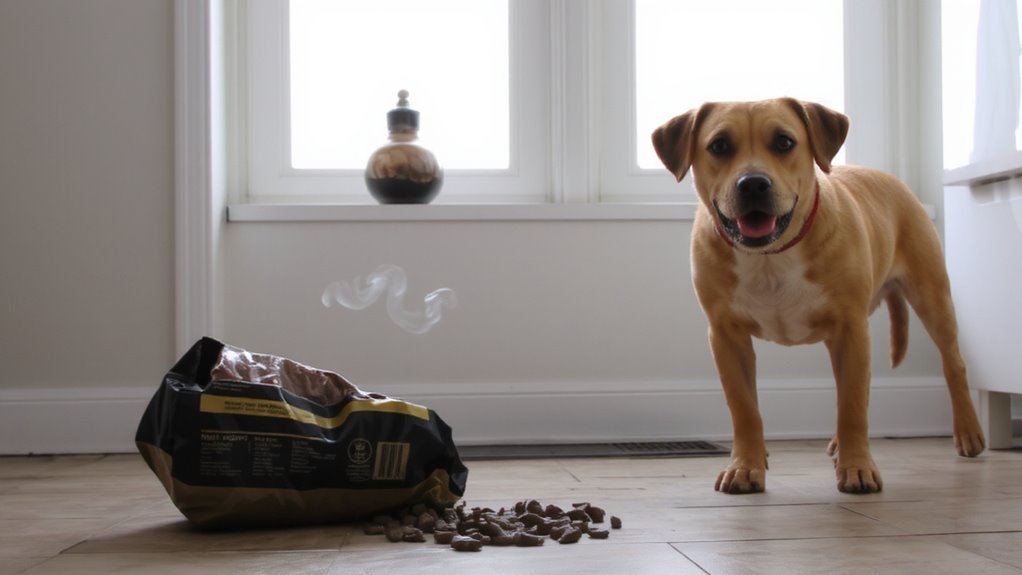
How often is too often when it comes to your dog passing gas? Occasional flatulence is normal, but frequent or foul-smelling gas may signal an underlying issue. Persistent symptoms could indicate poorly digestible proteins overloading the colon with fermentation substrates. Excessive gas coinciding with vomiting, distension, or discomfort might suggest an intestinal blockage, which impedes normal motility and can elevate intra-luminal pressure. You should also consider an anal gland infection, as abscesses or impaction can mimic or exacerbate gastrointestinal distress. Structural abnormalities or foreign bodies in the GI tract require imaging for diagnosis. If your dog shows lethargy, appetite changes, or straining to defecate, seek veterinary evaluation. Acute onset with pain demands immediate care. Chronic cases need fecal analysis, dietary review, and possibly endoscopy. Don’t assume it’s just gas-systemic conditions like pancreatitis or malabsorption syndromes may present similarly. Early intervention improves prognosis.
What Food Ingredients Cause the Most Gas?
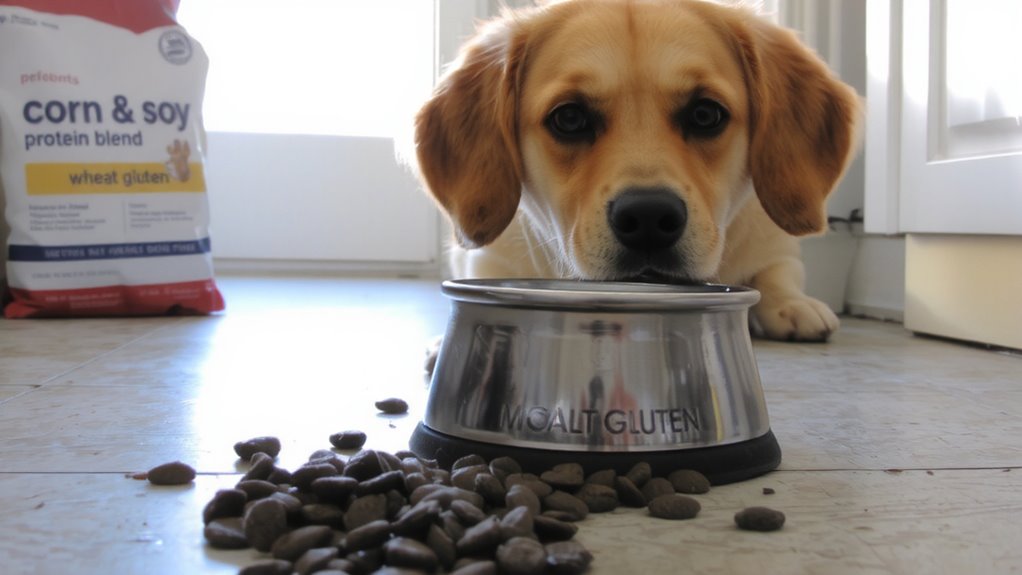
Several common dietary components especially contribute to canine flatulence, with poorly digestible proteins topping the list. You’ll find these proteins in low-cost kibble, where they resist complete breakdown in the small intestine. Undigested protein reaches the colon, where gut bacteria ferment it, producing excess gas. Fermented feeds, like soybean meal or distillers’ grains, are particularly prone to this effect due to high fiber and complex carbohydrates. These ingredients increase fermentation volume by up to 40% compared to refined diets. Sulfur compounds-found in eggs, meat by-products, and certain preservatives-further amplify odor. They metabolize into hydrogen sulfide, the gas responsible for rotten-egg smells. Diets with over 3% sulfur-containing amino acids can double malodorous emissions. While fermentation is a normal digestive process, excessive gas results from ingredient composition, not volume alone. You should evaluate ingredient quality, not just protein content, to minimize gaseous outcomes.
How Low-Quality Proteins Worsen Gas
Although all proteins undergo some degree of fermentation in the colon, low-quality proteins markedly increase gas production due to poor digestibility and imbalanced amino acid profiles. You’ll notice more flatulence when feeding meals with low bioavailability proteins like meat by-products or plant-based fillers. These sources resist complete breakdown, causing protein fermentation to shift into overdrive in the large intestine. That fermentation feeds gut bacteria, generating hydrogen sulfide and methane. Enzyme deficiency in your dog’s digestive tract worsens this-insufficient proteases mean more undigested protein reaches the colon. Undigested peptides then provide substrate for bacterial overgrowth, amplifying gas volume and odor. In fact, studies show diets with less than 75% protein digestibility increase colonic fermentation by up to 40%. You’re not just dealing with nuisance gas-it’s a sign of inefficient digestion. Low-quality proteins create a metabolic burden, elevating fermentation by-products linked to gut discomfort and chronic bloating.
Best Proteins for Easier Digestion
Digestibility starts at the source-choose proteins with high bioavailability to minimize fermentation and gas. You’ll see fewer digestive issues when you prioritize quality protein sourcing. Eggs and chicken have over 90% digestibility, meaning your dog absorbs more nutrients and leaves less undigested material to ferment in the colon. Fish, particularly salmon and whitefish, offer digestibility rates near 87% and supply beneficial omega-3 fatty acids. These proteins also support natural digestive enzymes, improving breakdown efficiency. Lamb and turkey follow closely, with digestibility above 85%, though individual sensitivities may vary. Avoid plant-based proteins like soy, which drop to 70–75% digestibility and challenge enzyme capacity. High bioavailability means less residue, reduced bacterial fermentation, and markedly less gas production. You’re not just feeding your dog-you’re optimizing gut function with every meal. Choose wisely.
Simple Food Swaps to Stop Dog Farts
When your dog’s diet includes poorly digestible ingredients, excess gas becomes almost inevitable, but switching to highly digestible proteins can make a measurable difference. Replace common allergens like soy and corn with novel proteins such as duck or venison, which have digestibility coefficients above 85%. These swaps reduce fermentation in the colon, directly decreasing gas production. Incorporate probiotic supplements containing at least 1 billion CFUs of *Lactobacillus acidophilus* per serving to stabilize gut flora and improve nutrient breakdown. Consistent feeding schedules-two measured meals daily at fixed times-regulate digestive enzyme release and prevent bacterial overgrowth. Avoid table scraps, especially beans and dairy, known for high fermentability. Opt instead for single-source, minimally processed kibble with named meat meals. Shift foods gradually over seven days to avoid sudden microbial shifts. These practical adjustments target the root cause of flatulence with precision and reliability.
On a final note
You can reduce your dog’s chronic flatulence by addressing protein digestibility. Poorly digestible proteins ferment in the colon, producing excess gas. High-quality, highly digestible proteins-like egg (98% digestibility) or lamb (90%)-minimize this. Switch to a diet with a protein digestibility coefficient above 85%. Avoid meals and by-products with variable amino acid profiles. A simple swap to named-source animal proteins often reduces gas within 10–14 days.