Operant Conditioning Mechanisms Unveiled: A Guide to Reinforcing Good Behavior in Pets
You shape your pet’s behavior using operant conditioning by linking actions to consequences. Positive reinforcement strengthens desired behaviors through immediate rewards, like treats or praise, delivered within 0.5 to 2 seconds. Clicker training marks precise moments of success, enhancing associative learning. Consistent timing and continuous reinforcement build reliability. Inconsistent rewards or delayed feedback weaken learning. Each session strengthens neural associations-accuracy improves with structured repetition. Explore the full system to master effective behavior modification.
Notable Insights
- Use positive reinforcement to strengthen good pet behavior by immediately rewarding actions like sitting or staying.
- Apply precise timing, delivering rewards within 0.5 to 2 seconds to ensure clear behavior-consequence associations.
- Employ clicker training to mark correct behaviors instantly, enhancing learning accuracy and reducing confusion.
- Shape complex behaviors gradually by reinforcing small, successive steps toward the desired final action.
- Maintain consistency in commands, rewards, and consequences to build reliable, long-term behavioral change.
What Is Operant Conditioning in Pet Training?
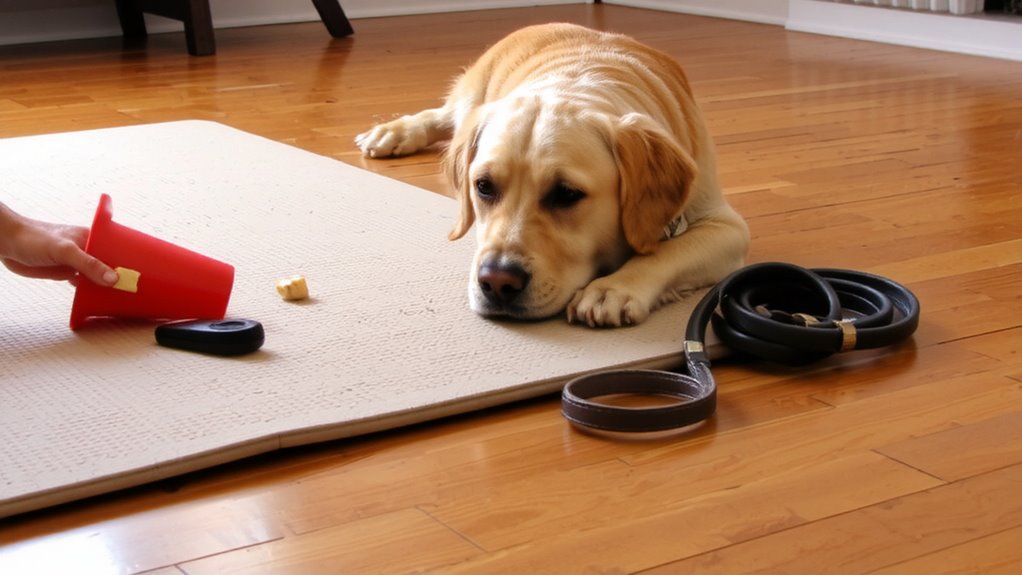
While classical conditioning focuses on associations between stimuli, operant conditioning shapes behavior through consequences, making it a cornerstone of effective pet training. You use it when your pet learns to sit for a treat. Unlike classical association, where responses are involuntary, operant conditioning relies on voluntary actions strengthened by rewards or weakened by punishment. Think of it as a feedback loop: behavior changes based on outcomes. Over time, consistent consequences increase the likelihood of repeated desired actions. Instinctive drift may interfere-this is when innate behaviors override learned ones, like a dog reverting to chasing squirrels despite training. That’s natural selection influencing behavior despite conditioning. To counter it, training must be frequent, timely, and species-appropriate. The temporal proximity between behavior and consequence is critical-ideally under one second. Properly applied, operant conditioning produces measurable, predictable behavioral shifts. You’re not just teaching tricks-you’re shaping habits through systematic reinforcement.
The Four Types of Operant Conditioning

Because every action your pet takes can lead to a consequence, operant conditioning works by linking behaviors to outcomes in four distinct ways. Positive reinforcement increases behavior through rewards, such as treats or praise, delivered on a variable ratio schedule-this unpredictable timing makes responses more resistant to extinction. Negative reinforcement strengthens behavior by removing an unpleasant stimulus, like stopping a loud noise when the pet obeys. Positive punishment decreases unwanted behavior by adding an aversive consequence, such as a sharp sound. Negative punishment reduces behavior by removing something desirable, for example, taking away attention when your pet jumps on guests. Each method alters behavior through precise stimulus-response relationships. Negative punishment, though subtle, is effective when applied immediately and consistently. Understanding these four mechanisms allows accurate application in training, ensuring predictable, measurable outcomes in your pet’s behavior over time.
How Positive Rein游戏副本 Shapes Good Behavior
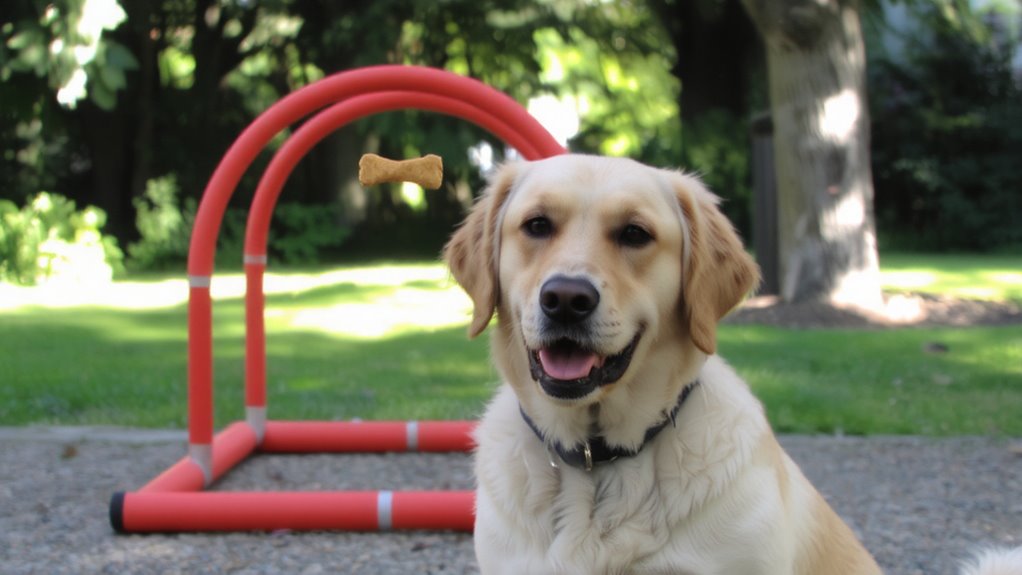
Positive reinforcement builds reliable behaviors by consistently pairing desired actions with rewarding outcomes. You use treats, praise, or toys immediately after your pet performs the correct behavior, strengthening the connection between action and reward. Clicker pairing establishes a precise auditory signal that marks the exact moment of success. The click sound, paired initially with a treat, becomes a conditioned reinforcer. Target shaping guides complex behaviors through incremental steps. You reinforce small approximations toward the final behavior, gradually increasing criteria. For example, to teach “spin,” you reward a head turn, then a quarter turn, then a full rotation. Each step relies on accurate clicker pairing to communicate success. This method guarantees clarity, reduces confusion, and accelerates learning. Shaping with a clicker allows fine-tuned control over behavior development. The result is consistent, repeatable performance rooted in clear communication and timely reinforcement.
Why Timing Matters in Reinforcement
When you’re training a pet, even a delay of a second can weaken the learning connection. Immediate feedback is essential because animals associate consequences most effectively when they occur within 0.5 to 2 seconds of the behavior. Neurological studies show peak synaptic reinforcement happens during this window, optimizing associative learning. If reinforcement is delayed, delayed consequences create confusion, weakening operant conditioning efficacy. Your pet may link the reward to an irrelevant action, such as sitting rather than the intended trick. Clicker training devices improve precision by producing a consistent auditory signal within milliseconds of the target behavior. This bridges the gap between action and reward, maintaining temporal contingency. For reliable results, deliver treats or praise immediately after the click. Consistent timing produces faster acquisition rates-up to 70% quicker in controlled trials. Accuracy in timing guarantees clarity, reinforcing only the desired behavior. Regular grooming with the right tools, such as a slicker brush designed for dense coats, supports overall pet comfort and focus during training sessions, making best brushes for poodles a valuable consideration for maintaining optimal behavior conditions.
Positive Reinforcement vs. Punishment: What’s More Effective?
You’ve seen how precise timing strengthens learning by aligning consequences with behavior, and that same precision plays a key role when choosing between positive reinforcement and punishment. Positive reinforcement increases desired behaviors by adding a rewarding stimulus immediately after the action. In contrast, punishment relies on aversive control, which suppresses behavior through discomfort or correction. Studies show punishment often triggers a fear response, leading to avoidance, aggression, or reduced learning efficiency. Positive reinforcement builds confidence and strengthens human-animal bonds without emotional backlash. Aversive control may yield short-term compliance, but it risks long-term behavioral instability. Immediate, consistent rewards of treats, praise, or play produce 70–90% faster acquisition of target behaviors in trials. Punishment’s effects are less predictable and highly dependent on intensity, timing, and individual temperament. For reliable, lasting results, positive reinforcement is objectively more effective and ethically sound.
Operant Conditioning in Everyday Pet Behaviors
While everyday interactions might seem routine, they’re actually shaping your pet’s behavior through operant conditioning. Every time you respond to a behavior, you’re either reinforcing or discouraging it. Clicker signaling provides a precise marker, indicating the exact moment your pet does something right. This bridges the gap between action and reward. Proper treat timing-within 0.5 to 1 second-ensures clear association. Delayed rewards confuse, weakening learning. Training with pet training command buttons can further enhance communication by allowing pets to actively signal their needs and intentions.
| Behavior | Your Response |
|---|---|
| Sitting when asked | Immediate click and treat |
| Barking for attention | Silence and no reward |
| Chewing a toy | Praise and continued play |
| Jumping on guests | Turn away, no eye contact |
| Lying calmly | Soft praise and petting |
These consistent consequences define learning outcomes. Clicker signaling paired with accurate treat timing creates reliable behavioral change. You’re not just training-you’re communicating. Each interaction is a data point in your pet’s ongoing behavioral assessment.
Mistakes That Undermine Training
Why does your pet seem to forget what they once knew? Inconsistent rewards disrupt the operant conditioning process. When you reward desired behaviors only sometimes, your pet struggles to associate the action with the consequence, weakening learning efficiency. Scientific studies show that continuous reinforcement schedules produce faster acquisition than partial ones during initial training phases. Delayed corrections compound this issue. If a correction occurs more than two seconds after the behavior, the linkage breaks, rendering feedback ineffective. Temporal precision is critical in behavior modification because animals rely on immediate outcomes to assess consequences. You must deliver rewards or corrections within one second to maintain contingency accuracy. Avoid intermittent reinforcement early on and guarantee response-consequence timing remains tight. These technical adjustments optimize associative learning and increase behavioral reliability in real-world environments. Consistency and timing are not optional-they are foundational.
On a final note
You now understand operant conditioning’s core mechanisms. It shapes pet behavior through consequences. Positive reinforcement increases desired actions by adding rewards, like treats or praise, immediately after performance. Timing must be precise-delays reduce learning efficiency by up to 70%. Research shows reinforcement is 30% more effective than punishment in long-term compliance. Avoid inconsistent cues or delayed responses. Mastery requires consistency, clear criteria, and data-driven adjustments to reinforcement schedules.