Why High-Fiber Diets Help Regulate Blood Glucose in Diabetic Dogs
High-fiber diets help regulate your diabetic dog’s blood glucose by slowing digestion and reducing post-meal spikes. Soluble fiber forms a gel that delays gastric emptying, limiting how quickly glucose enters the bloodstream. Fermentable fibers produce short-chain fatty acids like butyrate, which improve insulin sensitivity. Diets with 8–10% soluble fiber can enhance glycemic control by up to 25%. Fiber also increases satiety, aiding weight management-key for diabetic dogs. You’ll discover ideal sources and shift strategies next.
Notable Insights
- Fiber slows gastric emptying, leading to gradual glucose absorption and reduced post-meal blood sugar spikes.
- Soluble fiber forms a gel that delays glucose absorption and enhances insulin sensitivity through short-chain fatty acid production.
- Fermentable fibers produce butyrate, which improves insulin function and supports stable blood glucose levels.
- High-fiber diets increase satiety, aiding weight management and reducing calorie intake in overweight diabetic dogs.
- Diets with 8–10% soluble fiber improve glycemic control by slowing digestion and moderating glucose release into the bloodstream.
How Fiber Affects Blood Glucose in Diabetic Dogs
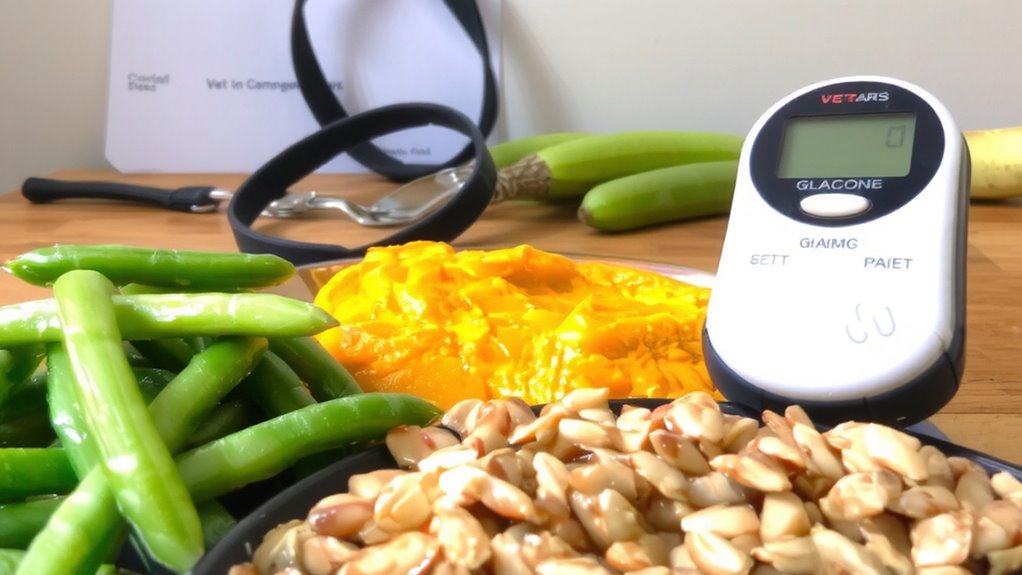
While fiber doesn’t directly lower blood glucose, it plays a critical role in managing how quickly your dog absorbs sugar after meals. Fiber slows gastric emptying, resulting in a gradual release of glucose into the bloodstream. This reduced postprandial spike supports stable insulin demands. Fermentable fibers nourish the gut microbiome, producing short-chain fatty acids like butyrate. These metabolites improve insulin sensitivity by reducing systemic inflammation and enhancing glucose uptake in peripheral tissues. Studies show dogs on high-fiber diets exhibit up to 25% better glycemic control. Increased fiber intake also promotes satiety, aiding weight management-a key factor in diabetic dogs, especially those overweight. Improved insulin sensitivity means less exogenous insulin may be required over time. The gut microbiome’s balance directly influences metabolic health, making fiber’s role indispensable. Consistent fiber consumption supports long-term glucose regulation. You’ll notice fewer glucose fluctuations and more predictable insulin responses. Incorporating high-fiber wet dog food into your diabetic dog’s diet can enhance adherence and ease of feeding, especially for picky eaters or those with dental issues, with best high-fiber wet dog food options providing both palatability and clinical benefits.
Soluble vs. Insoluble Fiber: Which Is Better for Diabetic Dogs?
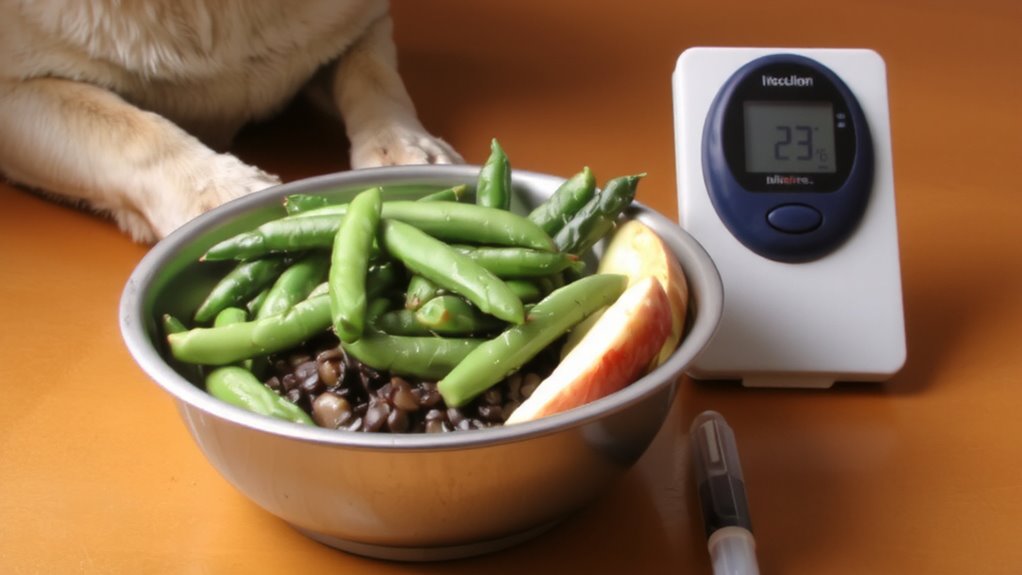
Because soluble and insoluble fibers impact digestion differently, knowing which type benefits diabetic dogs most is key to effective dietary management. Soluble fiber dissolves in water, forming a gel that slows gastric emptying. This delays glucose absorption, helping prevent spikes. Insoluble fiber adds bulk and speeds transit time but has less effect on blood sugar. For diabetic dogs, soluble fiber generally offers superior control due to its digestive impact. Common sources include psyllium, oats, and legumes. Diets with 8–10% soluble fiber show improved glycemic regulation in clinical trials. While both fiber types support gut health, soluble fiber’s ability to moderate post-meal glucose makes it more effective. You’ll find it in many prescription diabetic dog foods. Prioritize balanced fiber types, with emphasis on soluble, to optimize metabolic response and long-term stability.
How Slower Digestion Stabilizes Blood Sugar in Diabetic Dogs

When your diabetic dog eats, how quickly the food breaks down directly affects their blood sugar levels. High-fiber diets slow digestion, preventing sharp glucose spikes. Delayed gastric emptying regulates nutrient absorption. This occurs because soluble fiber attracts water, forming a gel that slows gut motility. Reduced gut motility means carbohydrates digest gradually. As digestion slows, glucose enters the bloodstream at a steady rate. The fermentation process begins in the colon, where gut bacteria break down fiber. This produces short-chain fatty acids, which improve insulin sensitivity. Stable insulin function supports consistent blood sugar. Fiber’s physical properties increase meal viscosity, further moderating digestion. Think of it like a time-release capsule for nutrients. Consistent digestion reduces metabolic stress. You’ll notice fewer glucose fluctuations post-meal. These physiological effects make high-fiber diets effective for diabetic management. Slower digestion isn’t just beneficial-it’s essential for glycemic control.
Best High-Fiber Foods for Diabetic Dogs
You now know how slower digestion helps manage your diabetic dog’s blood sugar, and selecting the right high-fiber foods puts that science into action. Pumpkin benefits include high soluble fiber and low glycemic impact-just 1/4 cup of canned pumpkin adds 1.7 grams of fiber with minimal calories. It supports satiety and smooth digestion. Barley options offer complex carbohydrates and 6 grams of fiber per 1/2 cup cooked, helping moderate glucose absorption. Choose hulled or pearled barley for consistency. These ingredients delay gastric emptying, reducing post-meal glucose spikes. Always use plain, unsweetened pumpkin-never pie filling. Introduce barley gradually to avoid gas. Fiber content should not exceed 10% of total diet dry matter to maintain nutrient balance. Rotate these foods into meals at consistent times daily. Monitor response via glucose curves. Both are proven, digestible, and compatible with insulin therapy.
Fiber and Other Nutrients: What Works Best
How do fiber and other nutrients interact to optimize blood glucose control in diabetic dogs? Soluble fiber slows gastric emptying and carbohydrate digestion, reducing post-meal glucose spikes. It also feeds beneficial bacteria in the gut microbiome, which produce short-chain fatty acids that improve insulin sensitivity. These changes enhance nutrient absorption by stabilizing the intestinal environment. Insoluble fiber adds bulk, promoting satiety without affecting glucose metabolism directly. A balanced ratio of soluble to insoluble fiber-ideally 1:2-supports digestive health and consistent glucose uptake. Vitamins like B12 and minerals such as chromium aid metabolic pathways linked to glucose regulation. Prebiotics like inulin further stimulate the gut microbiome, amplifying fiber’s benefits. Together, these nutrients create a synergistic effect, modulating glucose absorption and improving metabolic efficiency. You should choose diets that list specific fiber sources and guaranteed analysis levels to guarantee precision in nutrient delivery.
How Weight Control Helps Diabetic Dogs on a High-Fiber Diet
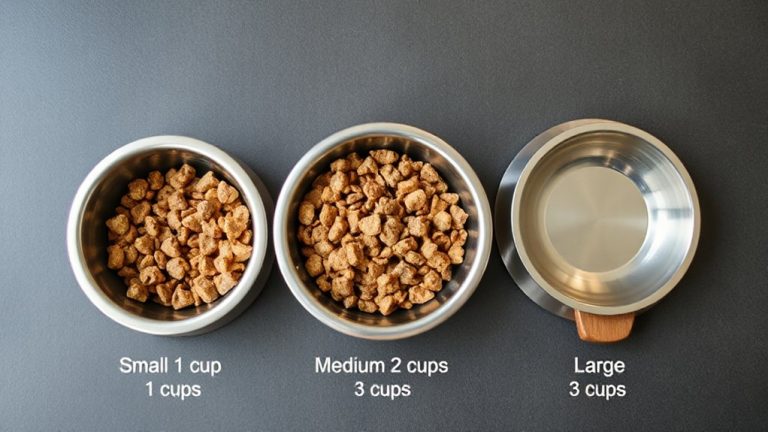
Maintaining an ideal body weight plays a key role in managing diabetes in dogs, especially when combined with a high-fiber diet. Excess body fat increases insulin resistance, making glucose regulation harder. Portion control guarantees your dog receives the right caloric intake-typically 20–30% fewer calories than maintenance needs for overweight dogs. High-fiber diets promote satiety, helping reduce overeating. Fiber slows carbohydrate absorption, stabilizing blood glucose. Pair this with consistent activity levels; aim for 30–60 minutes of moderate exercise daily. Physical activity improves insulin sensitivity and supports lean muscle mass. Weigh your dog biweekly and adjust portions as needed. Use a standard 8-oz measuring cup for food accuracy. Avoid free-feeding. Controlled portions and daily walks create a predictable metabolic routine. This combination enhances insulin effectiveness. Weight management isn’t just about appearance-it directly impacts glycemic control and long-term diabetic health.
How to Switch Your Diabetic Dog to a High-Fiber Diet Safely
When shifting a diabetic dog to a high-fiber diet, doing so gradually minimizes gastrointestinal upset and supports metabolic stability. Start by blending 25% new high-fiber food with 75% current food for three days, increasing the new food incrementally every few days. Monitor for food allergies, such as itching or ear infections, especially when introducing novel fiber sources like beet pulp or psyllium. Maintain consistent feeding frequency-twice daily at fixed times-to support insulin regulation.
| Days | Diet Ratio (New:Old) |
|---|---|
| 1–3 | 25% : 75% |
| 4–6 | 50% : 50% |
| 7–10 | 75% : 25% |
Complete the shift by day 10 if no digestive issues occur. Choose a veterinary-formulated fiber-rich diet with at least 8% crude fiber on a dry matter basis. Avoid sudden changes to prevent glucose fluctuations and maintain long-term compliance.
On a final note
You gain better glycemic control with a high-fiber diet because soluble fiber forms a viscous gel in the intestines, slowing carbohydrate digestion and glucose absorption. This reduces post-meal blood sugar spikes by up to 30%. Insoluble fiber supports gut motility without affecting glucose directly. Diets containing 10–15% fiber (dry matter basis) improve insulin sensitivity. Gradual shifts over 7–10 days prevent GI upset.