Why Pumpkin Puree Is a Veterinarian-Approved Fiber Source for Constipated Cats
Veterinarians often recommend plain canned pumpkin puree to help manage mild cat constipation. It’s rich in both soluble and insoluble fiber, which softens stool and stimulates colon contractions. A typical dose is 1–2 teaspoons daily for most cats, adjusted by size. Only use 100% pure pumpkin-avoid pie filling with toxic additives like nutmeg. High water content and low fat make it gentle on digestion. You’ll see improved bowel movements within 48 hours. There’s more to know about safe, effective use.
Notable Insights
- Plain canned pumpkin is rich in both soluble and insoluble fiber, helping regulate bowel movements in constipated cats.
- Soluble fiber in pumpkin absorbs water to soften stool, making it easier to pass.
- Insoluble fiber adds bulk and stimulates colon contractions to improve digestive motility.
- Veterinarians recommend 1/2 to 1 teaspoon per 10 pounds of body weight daily for mild constipation.
- Only 100% pure pumpkin is safe-pumpkin pie filling contains toxic additives like nutmeg and sugar.
Do Vets Really Recommend Pumpkin for Cat Constipation?
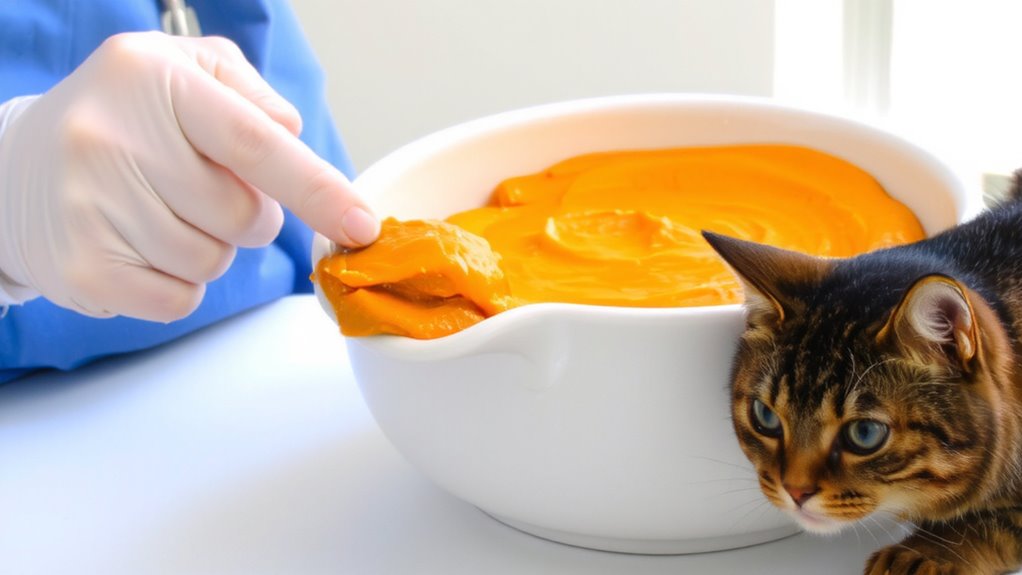
While some home remedies lack scientific backing, veterinarians do often recommend plain canned pumpkin as a safe and effective dietary aid for cats experiencing mild constipation. This recommendation is rooted in how soluble and insoluble fiber influences feline digestion. Pumpkin contains both fiber types, helping regulate bowel movements without irritating the GI tract. A typical dose is one to two teaspoons mixed into food once daily, depending on your cat’s size and condition. You must use plain pumpkin-not pie filling, which contains sugars and spices harmful to cats. Many Pumpkin myths suggest any pumpkin product works, but only 100% pure canned pumpkin is appropriate. Veterinarians emphasize this distinction to avoid worsening digestive issues. Studies on fiber supplementation in feline digestion support pumpkin’s role in improving stool consistency and motility. Always consult your vet before starting any supplement, even natural ones.
How Pumpkin Helps Relieve Constipation in Cats
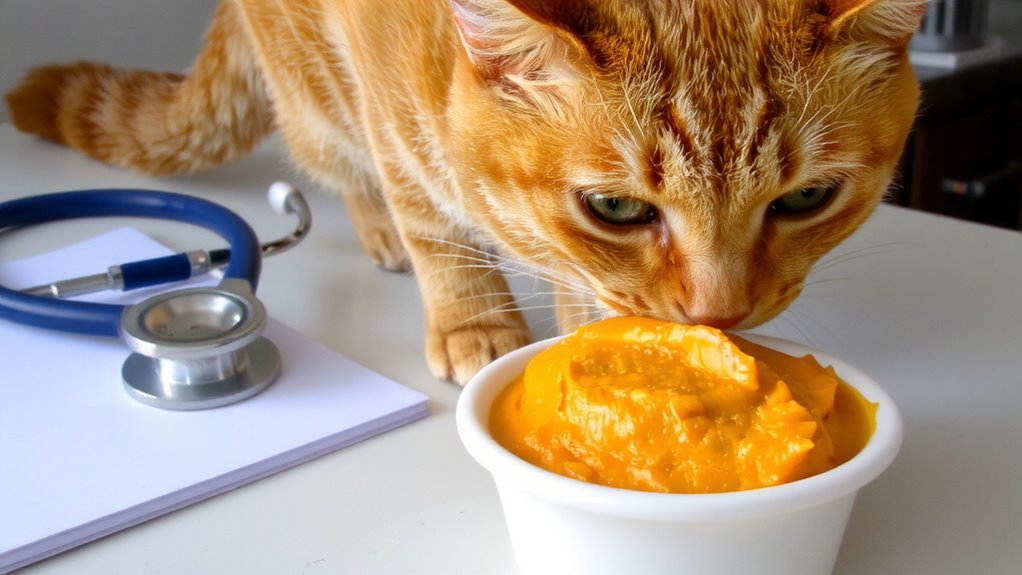
Because pumpkin is rich in both soluble and insoluble fiber, it plays a dual role in resolving feline constipation. Soluble fiber absorbs water, forming a gel that softens stool and promotes smooth intestinal transit. Insoluble fiber adds bulk, stimulating colon contractions for more efficient movement. You’ll typically give 1/2 to 1 teaspoon of plain pumpkin puree per 10 pounds of body weight daily. This supports digestive health by maintaining moisture and consistency in the colon. The fiber benefits extend beyond laxation-pumpkin helps regulate gut motility and nourishes beneficial microbiota. Its low fat and high water content (about 90%) make it gentle on sensitive systems. Unlike synthetic supplements, pumpkin offers a natural, whole-food source of fiber with minimal risk of side effects when dosed correctly. Consistent use can reduce straining and improve fecal quality within 48 hours.
Pumpkin Puree vs. Pie Filling: What’s Safe for Cats?
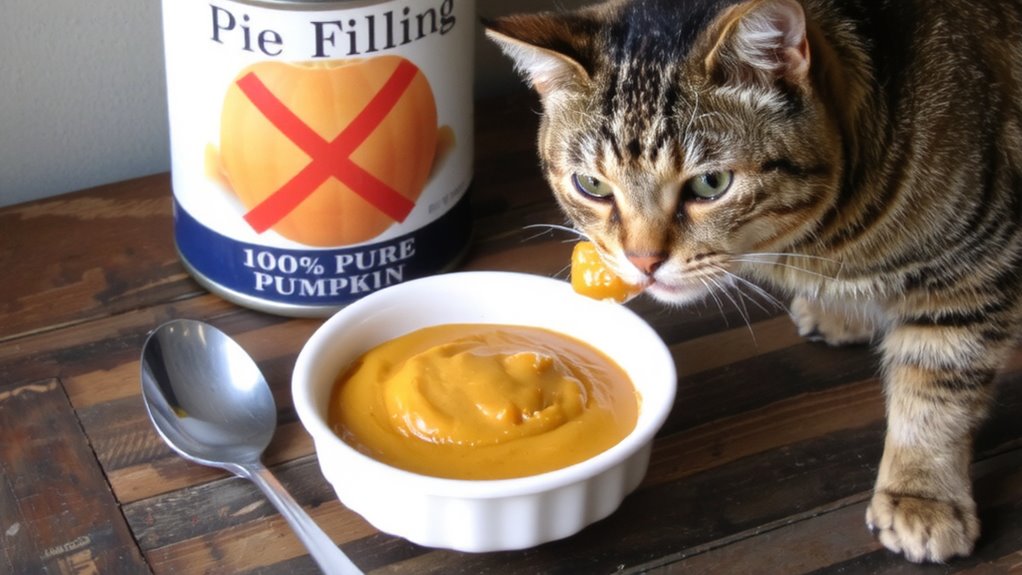
When choosing a pumpkin product for your constipated cat, it’s critical to select plain pumpkin puree and avoid pie filling. Pumpkin safety hinges on ingredient differences that aren’t immediately obvious. Plain pumpkin puree contains 100% pumpkin-nothing added. It delivers 3 grams of dietary fiber per 1/4 cup, aiding digestion without unwanted side effects. In contrast, pie filling often includes sugar, spices like cinnamon and nutmeg, and preservatives. These additives serve no nutritional purpose for cats and may cause gastrointestinal irritation or toxicity. Nutmeg, in particular, contains myristicin, which is harmful to cats even in small quantities. The fiber content in pie filling is also inconsistent due to added liquids and sweeteners. Always check the label: if the ingredients list anything beyond pumpkin, it’s unsafe. Ingredient differences define suitability-only pure pumpkin supports feline digestive health effectively.
How Much Pumpkin to Give a Constipated Cat
A single tablespoon of plain pumpkin puree is typically sufficient to help relieve mild constipation in most adult cats. The ideal portion size depends on your cat’s weight and tolerance-smaller cats may need only 1–2 teaspoons. Exceeding recommended amounts can cause diarrhea or nutrient imbalance. For feeding frequency, administer pumpkin once daily for up to three consecutive days. If no improvement occurs, discontinue use. Do not exceed this feeding frequency without veterinary guidance. The fiber content in pumpkin-approximately 0.5 grams per tablespoon-adds bulk and absorbs water, easing intestinal transit. Always use 100% pure pumpkin, not pie filling. Monitoring your cat’s response guarantees safe, effective use. Consistency in portion size and feeding frequency maximizes digestive benefits while minimizing risk.
When to Call the Vet for Cat Constipation
How long should you wait before seeking help if your cat isn’t passing stool? Don’t wait more than 48 to 72 hours. When to call the vet becomes urgent if your cat shows straining without results, decreased appetite, or lethargy. These are key emergency signs. Dehydration worsens constipation and requires immediate veterinary assessment. If your cat hasn’t defecated in three days, especially with a history of gastrointestinal issues, professional evaluation is necessary. Obstruction, megacolon, or ileus may mimic simple constipation but demand diagnostic imaging and medical intervention. Vomiting, especially if frequent or bile-tinged, signals possible blockage. Palpation may reveal a distended colon. Blood work helps rule out underlying causes like kidney disease. Early vet care prevents complications. Don’t rely solely on home remedies if symptoms persist. Emergency signs warrant prompt action-your cat’s digestive health depends on timely treatment.
Easy Ways to Mix Pumpkin Into Your Cat’s Food
Start by selecting 100% pure pumpkin puree-never pumpkin pie filling, which contains sugars and spices toxic to cats. For flavor enhancement and texture blending, begin with 1–2 teaspoons per meal for an average-sized adult cat. Mix it thoroughly with wet food to guarantee even distribution.
| Method | Benefit |
|---|---|
| Stir into wet food | Promotes seamless texture blending |
| Top dry kibble | Encourages intake via flavor enhancement |
| Freeze in portions | Guarantees freshness and accurate dosing |
Gradually introduce pumpkin over 3–5 days to monitor tolerance. Do not exceed 1 tablespoon daily unless directed by a veterinarian. Pumpkin’s soluble and insoluble fiber content supports intestinal motility. Always provide fresh water to complement fiber supplementation and maintain hydration. Consistency in mixing prevents refusal. Use within 5–7 days of opening if refrigerated.
On a final note
You can rely on plain pumpkin puree to support your cat’s digestive health. Two tablespoons of 100% pure pumpkin provides about 1.7 grams of soluble and insoluble fiber per serving, helping retain water in the stool and promote intestinal motility. Always avoid pie fillings with sugars and spices. Administer once or twice daily, mixed with food. Consult your vet if symptoms persist beyond 48 hours.