Puppy Dental Care 101: Essential Steps for Maintaining Oral Hygiene in Young Dogs
Start puppy dental care between 8 and 10 weeks of age to prevent plaque buildup before deciduous teeth shed at 12–16 weeks. Use a soft-bristled brush with a 1-inch head for small breeds or up to 1.5 inches for larger breeds. Always choose veterinary-approved enzymatic toothpaste in safe flavors like poultry; never use human toothpaste due to toxic fluoride. Brush daily with circular motions along the gumline, focusing on premolars and molars. Continue for best results and uncover advanced tips next.
Notable Insights
- Start oral care early by introducing toothbrushing when your puppy is 8 to 10 weeks old to establish lifelong dental habits.
- Use a soft-bristled, appropriately sized toothbrush and veterinary-approved enzymatic toothpaste in pet-safe flavors.
- Brush your puppy’s teeth daily using small circular motions, focusing on the outer gumline where plaque accumulates most.
- Train your puppy gradually with positive reinforcement to accept toothbrushing, starting with brief sessions and increasing duration over time.
- Monitor for signs of dental problems like bad breath, swollen gums, tartar buildup, or eating discomfort, and seek veterinary care if needed.
Start Puppy Dental Care Early
While your puppy’s baby teeth may seem temporary, the foundation for lifelong oral health begins as early as 8 to 10 weeks of age. During the early stages of puppy teething phases, your pup develops 28 deciduous teeth, also known as milk teeth. These begin to loosen and fall out between 12 and 16 weeks. Milk tooth loss typically starts with the incisors, followed by canines and premolars, making way for 42 permanent teeth. Monitoring this change is critical-retained baby teeth can cause malocclusion. Teething discomfort peaks between 12 and 24 weeks, increasing chewing behavior. Early dental exams allow veterinarians to assess eruption patterns. Introducing oral hygiene routines now guarantees compliance later. Start with gentle gum and tooth manipulation for 30 seconds daily. This baseline training supports future brushing success and reduces resistance. Begin early, stay consistent.
Choose the Right Toothbrush and Toothpaste for Puppies
A proper toothbrush and toothpaste make all the difference in establishing an effective puppy dental care routine. Choose a toothbrush with soft bristles and an ergonomic handle for better control. The ideal toothbrush size matches your puppy’s mouth-smaller breeds need compact heads (about 1 inch long), while larger breeds may require slightly longer heads (up to 1.5 inches). Dual-headed brushes offer angled bristles for hard-to-reach molars. Never use human toothpaste. It contains fluoride and detergents that are toxic if ingested. Instead, select a veterinary-approved toothpaste in a puppy-safe toothpaste flavor like poultry, beef, or peanut butter. These flavors reduce resistance during brushing. Enzymatic toothpastes break down plaque biofilm more effectively than non-enzymatic options. Most contain glucose oxidase or lactoperoxidase to inhibit bacterial growth. Always verify the product label indicates safety for dogs.
How to Brush Your Puppy’s Teeth
Start by letting your puppy get used to the taste of veterinary-approved toothpaste-let them lick it off your finger to create a positive association. Use only enzymatic toothpaste formulated for dogs; human toothpaste can cause gastrointestinal upset. Apply a small amount-about 1/4 inch-to a soft, appropriately sized toothbrush. Gently lift your puppy’s lip and brush in small, circular motions along the gumline, focusing on the outer surfaces where plaque accumulates. Concentrate on the premolars and molars, as these areas are prone to tartar buildup. Daily brushing prevents bad breath and maintains healthy chewing habits. Good oral hygiene preserves puppy breath and supports jaw development. Plaque removal within 48 hours prevents mineralization into calculus. Consistent technique guarantees long-term dental health, reducing future vet costs and preventing periodontal disease progression. Choosing the right tools, such as a toothbrush designed for dogs, can significantly improve cleaning efficacy and best dog dental products compatibility.
Train Your Puppy to Accept Toothbrushing
Because proper dental care begins with cooperation, training your puppy to accept toothbrushing is essential for long-term oral health. Start with gradual exposure by letting your puppy sniff the toothbrush and taste pet-safe toothpaste. Spend 30–60 seconds daily on this for 3–5 days before introducing brushing. Use positive reinforcement: reward calm behavior with treats and praise. Progress to gently lifting the lips and touching the teeth for short intervals, increasing duration over 7–10 days. Conduct sessions at consistent times to build routine. Use a soft-bristled brush angled at 45 degrees to the gumline. Focus on the outer surfaces of the premolars and molars-areas most prone to plaque. Limit initial brushing to 5–10 seconds per side, extending to 30 seconds per side over several weeks. Patience and consistency guarantee compliance and effective plaque removal.
Spot Early Signs of Puppy Dental Problems
How do you know when something’s wrong in your puppy’s mouth? Bad breath is one of the earliest red flags. While puppy breath is typically mild, persistent foul odor often signals bacterial overgrowth. Swollen gums appear red, puffy, and may bleed during chewing or brushing. Healthy gingiva should be salmon pink and firm. Check your puppy’s mouth weekly, lifting the lips gently without forcing. Look for tartar buildup-hard, yellow-brown deposits along the gumline. Excessive drooling, reluctance to eat, or pawing at the face can also indicate discomfort. Early periodontal disease is reversible with prompt intervention. Detecting issues like retained deciduous teeth or malocclusions by 6–8 months is critical. These conditions create plaque traps. Regular oral exams help catch pathology before irreversible damage occurs. Prevention includes consistent hygiene and veterinary follow-up. Early detection supports lifelong dental health.
Best Dental Chews and Toys for Puppies
Choosing the right dental chew or toy supports effective plaque control while accommodating your puppy’s developing dentition. Prioritize dental chew safety by selecting products made from non-toxic, BPA-free materials with no small detachable parts. Opt for chews sized appropriately-typically 2–3 inches for small breeds, 3–4 inches for medium to large breeds-to prevent choking. Look for enzymatic chews containing chlorhexidine or zinc, which reduce bacterial load by up to 70% with consistent use. For toy texture variety, combine soft rubber toys with raised nubs for gum massage and firmer nylon options for abrasive plaque removal. Rotate between different textures weekly to maintain engagement and maximize cleaning efficiency. Avoid hard bones or antlers, which can fracture deciduous teeth. Supervise all chew sessions. Use these tools daily for ideal mechanical plaque disruption. Consider using a pet training deterrent mat to discourage inappropriate chewing behaviors during house training.
When to See the Vet for Puppy Teeth Cleanings
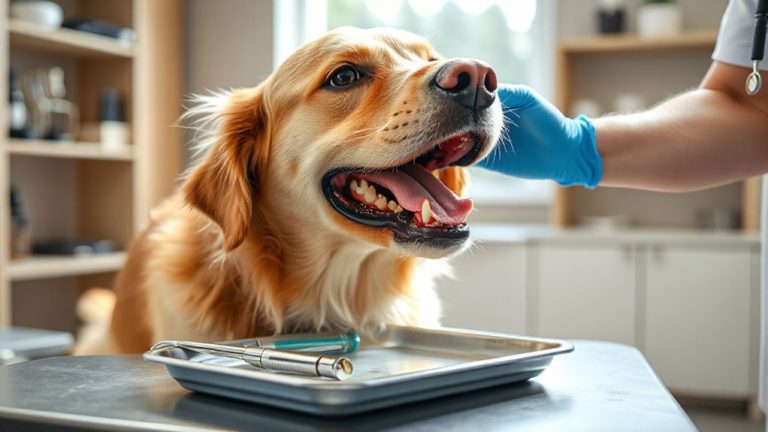
Routine home care with dental chews and toys helps manage plaque, but professional evaluation remains necessary to address areas unreachable by mechanical cleaning alone. You should schedule your puppy’s first veterinary dental exam by six months of age. A veterinarian will perform professional scaling to remove tartar buildup above and below the gumline. This procedure requires general anesthesia for precision and safety. Dental X-rays are essential during the cleaning to evaluate tooth root health and detect hidden pathology like abscesses or impacted teeth. Without X-rays, up to 60% of dental disease remains undiagnosed. Professional scaling uses ultrasonic instruments calibrated to 25–30 kHz to fracture and remove calculus without damaging enamel. Most puppies tolerate the procedure well and return home the same day. Follow your vet’s recommendations for frequency, typically every 12–24 months, depending on breed and oral health. Early intervention prevents periodontal disease.
On a final note
Start dental care early to prevent plaque buildup. Use a soft-bristled toothbrush with 0.1 mm bristles, designed for puppies. Always choose veterinary-approved, enzymatic toothpaste-never human products. Brush daily using a 45-degree angle along the gumline. Training guarantees compliance; begin with 30-second sessions. Dental chews with texture depth of 3–5 mm reduce tartar. If you spot redness, swelling, or halitosis, see your vet. Professional cleanings may be needed under anesthesia for subgingival scaling.