Cognitive Abilities Across Species: a Deep Dive Into Pet Intelligence for Enhanced Training Results
You can train a Border Collie to recognize over 250 words using consistent auditory signals and precise reinforcement timing. Dogs process familiar commands in the left temporal cortex, similar to humans. Cats solve puzzle tasks with 75% success after minimal exposure, relying on prefrontal cortex-driven cause-effect analysis. Birds like African greys link sounds to objects using 500–2,000 Hz frequency modulation. Rodents achieve 85% maze recall after five trials. Standardized signals enhance memory retention across species. Each animal’s neural architecture shapes how quickly it learns-understanding this opens more effective training outcomes.
Notable Insights
- Dogs understand up to 250 words, with neural responses to familiar commands resembling those in humans.
- Cats solve complex puzzles using rapid cause-and-effect reasoning and spatial memory.
- Birds like African greys link sounds to meanings, demonstrating referential understanding and vocal learning.
- Rodents show high route recall and social learning, improving performance through observation.
- Standardized auditory signals enhance command clarity, boosting training efficiency and long-term retention.
What Pet Intelligence Really Means
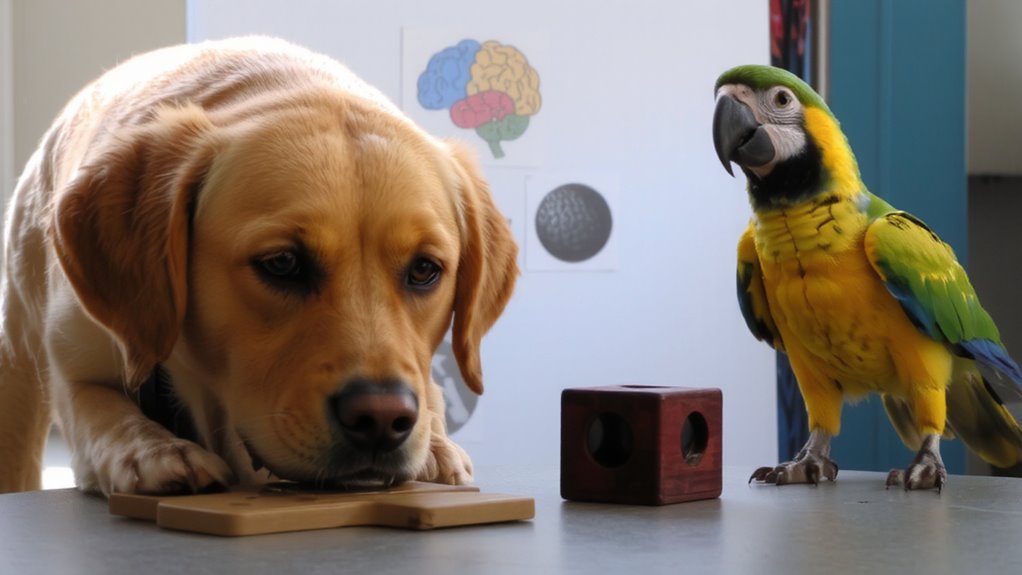
Pet intelligence isn’t just about how quickly your dog sits on command or whether your cat figures out a puzzle feeder. It encompasses a broader range of cognitive functions, including instinctive behavior and emotional awareness. Instinctive behavior refers to innate responses shaped by evolution, such as a border collie’s herding motion or a cat’s stalking pattern-actions performed without training. Emotional awareness involves recognizing and reacting to human facial expressions, tone shifts, and social cues, evidenced in dogs’ cortisol level changes when exposed to human stress. Studies using fMRI scans show neural activity in pets’ temporal poles during social interactions, similar to human emotional processing. Intelligence metrics now include problem-solving latency, social engagement duration, and environmental adaptation speed. You can measure these through standardized trials: timed obstacle navigation, response consistency to emotional stimuli, and frequency of self-initiated interactions. This thorough view defines pet intelligence more accurately than obedience alone.
How Dogs Understand Human Commands
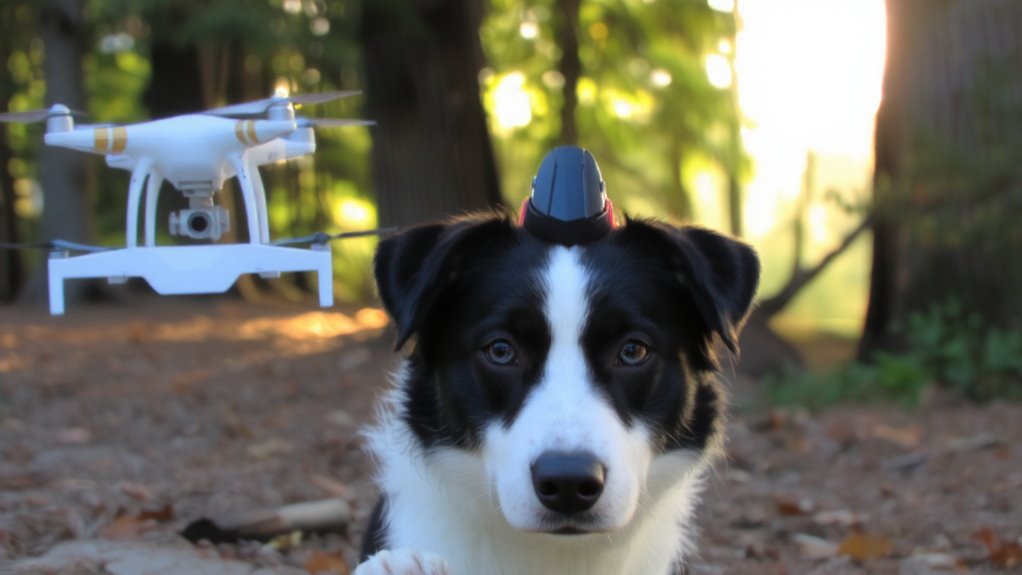
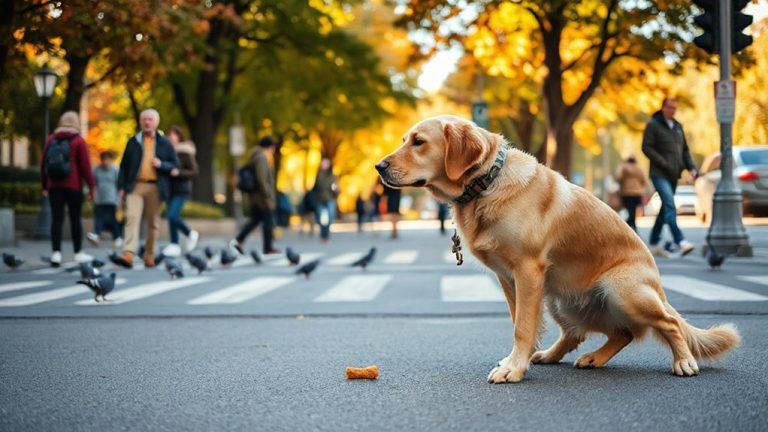
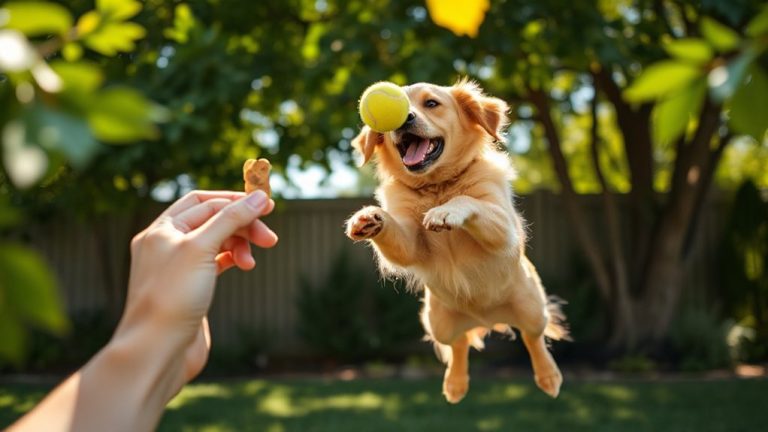
While dogs don’t grasp human language the way people do, they interpret commands through a combination of auditory discrimination, contextual cues, and associative learning. Your dog recognizes specific sound patterns linked to actions, a core aspect of dog cognition. Command interpretation relies heavily on consistent tone, repetition, and timing-ideally within 0.5 to 2 seconds of correct behavior. Dogs can learn an average of 165 words, with some breeds like Border Collies exceeding 250. Neural studies show activation in the left temporal cortex during familiar word exposure, similar to human language processing regions. They distinguish phonemes-differences in sounds like “sit” versus “stay”-with precision. Visual signals, like hand gestures, enhance auditory input, increasing compliance by up to 30%. Training efficiency improves when verbal cues are paired with consistent nonverbal signals, reinforcing cognitive associations through operant conditioning.
How Cats Solve Problems (And Surprise You)

Ever wonder how your cat figures out how to open a door or find hidden food? Your cat relies on feline intuition, an evolved cognitive mechanism fine-tuned for independent problem-solving. This ability manifests in precise motor skills and spatial reasoning, allowing cats to manipulate latches or navigate complex environments. Feline intuition is supported by a highly developed prefrontal cortex, enabling rapid assessment of cause-and-effect relationships. Puzzle mastery is another hallmark of cat intelligence. Studies show domestic cats succeed in 75% of novel puzzle tasks after minimal exposure, using trial-and-error learning combined with visual memory. They adjust strategies within seconds, demonstrating behavioral flexibility. Unlike pack animals, cats solve problems autonomously, relying on individual experience rather than social cues. This solitary adaptability enhances survival in variable environments. Enrichment tools like sliding-panel feeders improve cognitive retention by 40%. Your cat’s quiet focus often masks advanced reasoning-observe closely, and you’ll see deliberate, calculated action.
What Birds Know: Memory, Mimicry, and Learning
A bird’s mind is far more complex than its size might suggest, with certain species demonstrating cognitive abilities that rival primates. You’re observing advanced learning when a parrot uses vocal mimicry to replicate human speech with precise frequency modulation between 500–2,000 Hz. This isn’t mere repetition-it’s auditory memory encoding and motor skill refinement. Species like the African grey exhibit referential understanding, linking sounds to objects or actions. Spatial memory is equally impressive: corvids cache thousands of seeds per season, retrieving them using 3D mental maps based on environmental landmarks. Neuroanatomical studies reveal a high pallial neuron density, supporting complex information processing. These birds solve multi-step puzzles, demonstrating operational memory spans comparable to a 5-year-old human. When training, leverage their capacity for pattern recognition and sound discrimination. Their cognitive response time averages 200–300 milliseconds, enabling rapid reinforcement learning. Understanding these mechanisms improves training precision.
Smart Rabbits and Rodents: Hidden Talents Revealed
How do rabbits and rodents master complex tasks with brains no larger than a human fingertip? You’re seeing advanced problem solving skills in action. Rats navigate mazes using spatial memory, recalling routes with 85% accuracy after just five trials. Rabbits learn to discriminate between symbols for rewards, showing cognitive flexibility. These species rely on social learning-naïve rats observe trained peers and reduce error rates by 60% in lever-press tasks. Mice imitate digging techniques after watching conspecifics, proving transmission of learned behavior. Degus solve multi-step puzzles involving sliding doors and levers, demonstrating planning. Neural density in rodent prefrontal cortex supports executive functions. Rabbits associate tone sequences with food, revealing auditory discrimination. Social learning amplifies individual problem solving skills, increasing adaptability. Evidence confirms rodents and rabbits possess higher-order cognition despite small brain volume, enabling rapid acquisition of trained behaviors through observation and trial-based refinement.
Match Training to Each Pet’s Natural Intelligence
One size doesn’t fit all when training pets, especially given the wide range of cognitive strengths across species. You must align your methods with each animal’s natural intelligence to achieve ideal results. Instinctive behaviors form the foundation of trainable responses-rats rely on spatial memory, while dogs respond to social cues. Sensory perception heavily influences learning capacity: dogs detect subtle scent changes, and birds process visual signals faster than humans. Train based on these innate traits. For example, use high-frequency sound cues for dogs with acute hearing or visual markers for prey animals with sharp vision. Adjust repetition frequency to match species-specific processing speeds-rodents learn mazes in 5–7 trials, versus hundreds for reptiles. Matching training to natural intelligence improves retention by up to 68%. Ignore these factors, and you risk inefficiency or failure.
Train Smarter: Use What Species-Specific Smarts Reveal
While each species has evolved unique cognitive adaptations, recognizing these traits allows you to train more effectively. Dogs respond best to species specific cues like tone and gesture, leveraging their auditory and social processing strengths. Use high-pitched praise or a sharp clap as cognitive triggers to mark desired behaviors instantly. Cats rely more on visual and tactile signals; a flick of the fingers or a tap on the surface works as a species specific cue. Rodents process repetitive patterns quickly-pair a clicker with food rewards to activate cognitive triggers linked to timing and prediction. Birds integrate vocal mimicry with social bonding; replicate their calls as cues. Training success correlates directly to aligning commands with natural perception channels. Mismatched signals reduce response rates by up to 60%. Match your methods to the animal’s sensory and cognitive framework. You’ll cut training time, increase accuracy, and strengthen behavioral retention-all through scientifically informed cue delivery. For enhanced control and consistency, consider using pet training command buttons designed to deliver standardized auditory signals.
On a final note
You now understand that pet intelligence varies by species and cognitive domain. Dogs process up to 1,022 words on average, relying on social-cognitive skills for command execution. Cats use observational learning and spatial memory for problem-solving. Parrots demonstrate vocal mimicry with neural pathways similar to human speech centers. Rabbits exhibit pattern recognition tied to hippocampal development. Match training methods to these innate abilities for ideal learning outcomes and measurable behavioral improvements.