Best Rat Cages: 36x24x63 In. with 0.5-In. Wire Spacing
You need a cage that supports your rats’ active nature and social behavior. Choose models with at least 24”L x 18”W x 36”H dimensions and ½-inch wire spacing for safety. Multi-level designs like the MidWest Critter Nation offer 36 x 24 x 63 inches of space, dual lockable doors, and 0.5-inch horizontal bars. Durable steel construction, removable trays, and secure ramps promote hygiene and mobility. Look for chew-proof finishes and lockable casters. More details on top-rated options follow.
We are supported by our audience. When you purchase through links on our site, we may earn an affiliate commission, at no extra cost for you. Learn more. Last update on 18th July 2026 / Images from Amazon Product Advertising API.
Notable Insights
- Choose cages with multiple levels and ramps to encourage climbing and physical activity.
- Ensure wire spacing is 0.5 inches or smaller to prevent escapes and injuries.
- Prioritize floor space over height, aiming for at least 2 cubic feet per rat.
- Select durable, chew-proof materials like epoxy-coated metal to withstand rodent behavior.
- Include interactive features like hammocks, ramps, and adjustable shelves for mental stimulation.
Deluxe Double Unit Small Animal Cage

If you’re a small animal owner looking for a secure, spacious home that combines smart design with easy maintenance, the Deluxe Double Unit Small Animal Cage stands out as a top choice. It’s a two-story, double-unit, 4-tier structure built from durable wrought iron and alloy steel. Measuring 24 x 17.5 x 53.5 inches on a rolling stand, it offers vertical space without sacrificing footprint. The 1/2-inch wire spacing prevents escapes and injuries. Large 15 x 18-inch hinged doors with a safety lock guarantee secure access. A top 8 x 9-inch hook door allows feeding or cleaning from above. Two anti-slip ramps and adjustable solid platforms support safe movement. Removable pull-out trays, grates, and platforms simplify cleaning. Four casters-two lockable-enable stable mobility. A bottom shelf stores supplies. The cage works indoors or outdoors. It includes a hammock, water bottle, food bowl, and removable tray. Compatible with rats, mice, guinea pigs, rabbits, ferrets, chinchillas, sugar gliders, hamsters, gerbils, squirrels, tortoises, and lizards. It weighs 34.3 pounds. Package size: 25.3 x 21.3 x 7.8 inches. Model KG by Mcage. Black Vein finish. Available since December 5, 2023. ASIN: B0CPKW56GF.
Best For: Small animal owners seeking a secure, multi-level habitat with easy maintenance and ample space for active pets like rabbits, ferrets, and guinea pigs.
Pros:
- Spacious four-tier, two-story design maximizes vertical space while maintaining a compact footprint
- Durable wrought iron and alloy steel construction with 1/2-inch wire spacing for safety and security
- Includes essential accessories (hammock, water bottle, food bowl) and features removable trays and lockable casters for convenience
Cons:
- May be too tall for some rooms or cabinets due to 53.5-inch height
- Solid platforms and ramps are adjustable but may require assembly and periodic adjustment
- Black Vein finish may show wear or scratching over time with heavy-use animals
MidWest Critter Nation 4-Tier Small Animal Cage
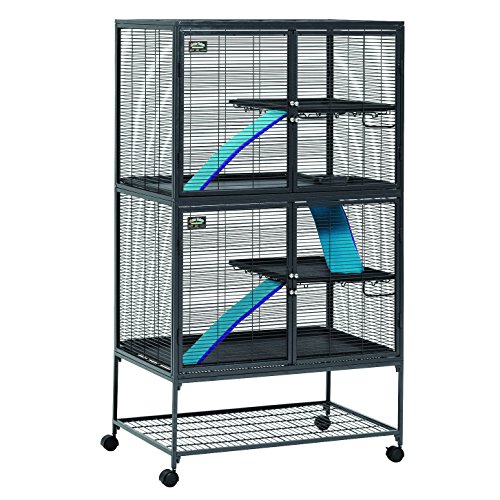
The MidWest Critter Nation 4-Tier Small Animal Cage stands out as the best choice for rat owners who need ample vertical space without sacrificing floor footprint, making it ideal for multi-rat households or active climbers. It measures 36 x 24 x 63 inches, with four tiers and two main living levels connected by ramps. Full-width double doors with dual-locking latches guarantee secure access. Horizontal wire spacing is 0.5 inches-perfect for climbing and escape prevention. Durable square-tube construction features a gray quartz finish. Includes two adjustable shelves, three soft-covered ramps, two leak-proof pans, and a cover. Locking casters allow easy movement. Built to last, it’s ideal for rats, ferrets, chinchillas, and sugar gliders.
Best For: Rat owners with multiple pets or active climbers who need spacious, secure, and durable housing with easy access and mobility.
Pros:
- Spacious four-tier design with ample vertical climbing room while maintaining a compact floor footprint
- Secure 0.5-inch horizontal wire spacing and dual-locking latches prevent escapes and ensure safety
- Includes essential accessories like adjustable shelves, soft-covered ramps, and leak-proof pans for comfort and convenience
Cons:
- Assembly can be time-consuming and challenging without clear instructions
- Ramps may be steep for less agile or older animals
- Higher price point compared to basic small animal cages
Ferret Chinchilla Travel Cage (3-Level, Chew-Proof)

You’ll appreciate the Ferret Chinchilla Travel Cage if you need a secure, portable home for rats or other small animals prone to chewing. I rely on its chew-proof metal construction to withstand persistent gnawing. The 24L x 16W x 24H cage has 3/8-inch cross-bar spacing and a 1/2-inch grated floor, preventing escapes and injuries. Three levels offer vertical exploration, connected by sturdy wire ladders. Two 6.5 x 11-inch front doors with locking clips guarantee access and security. I fold it flat for travel-no tools needed. Raised bottom grates lift animals above waste. A pull-out tray simplifies cleaning. Epoxy-coated finish resists corrosion and guarantees safety.
Best For: Small animal owners seeking a durable, portable, and escape-proof habitat for chew-prone pets like ferrets, chinchillas, and rats.
Pros:
- Chew-proof metal construction with a safe epoxy-coated finish ensures durability and animal safety
- Three-level design with secure ladders and narrow bar spacing promotes enrichment while preventing escapes
- Foldable, tool-free assembly and carry handles make it highly portable and easy to clean
Cons:
- Limited floor space may restrict movement for more active or larger small animals
- Wire flooring, while elevated, may be uncomfortable for some animals without added bedding or platforms
- Lack of included accessories like food bowls or hideouts requires additional purchases
Deluxe Double Unit Small Animal Cage

When space and durability matter most, this Deluxe Double Unit Small Animal Cage stands out for owners housing active or larger groups of rats. Measuring 20.5 x 20 x 45 inches on a rolling stand, it offers two full levels with a middle floor for added territory. The wrought iron construction guarantees long-term resilience, while 1/2-inch wire spacing prevents escapes or injuries. Large 21 x 15-inch front doors with a secure lock simplify access. A metal ladder connects floors. Removable platforms, ramps with paw-safe fabric, and a bottom tray ease cleaning. Four casters allow mobility. Includes hammock, water bottle, and food bowl. Suitable for rats, ferrets, guinea pigs, rabbits, chinchillas, and more.
Best For: Active small animals like rats, ferrets, and rabbits needing a spacious, durable, and multi-level enclosure with secure construction and easy mobility.
Pros:
- Spacious two-story design with full middle floor provides ample living and play area for larger or more active pets
- Wrought iron construction and 1/2-inch wire spacing ensure durability and prevent escapes or limb injuries
- Removable platforms, ramps, and tray with paw-safe fabric covers make cleaning simple and safe
Cons:
- Tall design may not fit in low-ceiling spaces or underneath furniture
- Wire flooring without solid base areas may be uncomfortable for some animals without added bedding
- Limited included accessories for larger animals requiring multiple food or water stations
VEVOR 34″ Rolling Critter Cage
Though not all rat cages offer both mobility and secure containment, the VEVOR 34” Rolling Critter Cage delivers on both fronts for active, curious rats and hands-on owners. It measures 24×17.3×34.1 inches, providing a roomy two-tier design that supports climbing and exploration. The non-slip fabric ramp connects levels safely. Reinforced metal tubing and powder coating guarantee durability and rust resistance. Mesh spacing is 0.55 inches-tight enough to prevent escapes. Screw-in latches add security. The pull-out tray and removable grids simplify cleaning. Lockable wheels allow smooth, controlled movement. A storage shelf near the base holds supplies.
Best For: Active rat owners who need a durable, mobile, and secure cage with ample space for climbing and easy maintenance.
Pros:
- Spacious two-tier design with a non-slip ramp encourages natural climbing behavior and exercise
- Reinforced metal construction with rust-resistant coating and secure screw-in latches ensure long-term durability and pet safety
- Lockable wheels and pull-out tray provide convenient mobility and effortless cleaning
Cons:
- Assembly may be time-consuming due to multiple components and hardware
- Fabric-covered ramp may wear down over time with heavy chewing or scratching
- Mesh spacing, while secure for most small animals, may still be too wide for very small rodents like dwarf hamsters
Chew-Proof Metal Travel Cage for Small Animals

The Mcage 70700 Chew-Proof Metal Travel Cage stands out for small animal owners who prioritize durability and portability in a multi-level housing solution. It measures 20 x 14 x 20 inches and weighs 8.73 pounds, making it easy to carry with two top side handles. Its foldable design fits into a 22 x 21 x 3.5-inch package and requires no tools for setup. The black epoxy-coated metal resists chewing and corrosion. Narrow 3/8-inch bar spacing prevents escapes or injuries. It suits rats, hamsters, guinea pigs, and other small animals. Removable wire shelves, ladders, and a raised grate floor allow versatile movement. A pull-out tray simplifies cleaning. Front doors provide secure access. This cage works well for travel or indoor use.
Best For: Small animal owners seeking a durable, portable, and chew-proof travel cage with multi-level accessibility for pets like rats, hamsters, and guinea pigs.
Pros:
- Sturdy chew-proof metal construction with a secure 3/8-inch bar spacing to prevent escapes and injuries
- Foldable, tool-free setup with two carry handles for easy portability and space-saving storage
- Multi-level design with removable shelves, ladders, and a pull-out tray for enhanced activity and simplified cleaning
Cons:
- Limited interior space may restrict movement for larger small animals or multiple pets
- Epoxy coating may chip over time with heavy chewing or rough handling
- No included accessories such as food or water holders for travel use
PawHut 4-Tier Small Animal Cage

This 4-tier cage suits active small animals needing vertical space for climbing, making it ideal for rat owners who prioritize exercise and mental stimulation. I use this PawHut cage for my rats, and its 20.5″ x 20.5″ x 44.75″ steel frame offers ample room. It’s built from alloy steel, nylon, and polypropylene-durable materials that guarantee long-term use. Four smooth-rolling wheels let me reposition it easily. Dual access doors and a pull-out tray simplify cleaning. The wire mesh design provides ventilation and visibility. Its 26.4-pound weight offers stability without being too heavy. It’s a space-efficient, secure habitat backed by a 1-year warranty.
Best For: Active small animals like rats, ferrets, and sugar gliders that require vertical space for climbing and enrichment.
Pros:
- Durable construction with alloy steel, nylon, and polypropylene ensures long-term use
- Four smooth-rolling wheels allow for easy mobility and repositioning
- Multi-tier design with dual access doors and pull-out tray simplifies cleaning and interaction
Cons:
- Limited floor space per tier due to vertical design may restrict movement for larger groups
- Wire mesh spacing may not be suitable for very small pets that could escape
- Assembly required, which may be time-consuming for some users
Homey Pet 3-Level Small Animal Cage (Black)

Looking for a spacious, durable home that keeps active rats safe and engaged? I recommend the Homey Pet 3-Level Small Animal Cage (Black). It measures 24.8L x 16.5W x 37.8H inches, offering three full levels for climbing and exploration. The 0.7-inch bar spacing prevents escapes while allowing visibility. Made from ABS plastic and metal, it’s sturdy yet lightweight at 20 pounds. Non-slip stairs and floor grids protect delicate rodent feet. A deep base, urine guard, and removable tray simplify cleaning. Lockable caster wheels let me move it easily. No tools are needed for assembly. It’s ideal for rats and other small animals. Model SA-W25P-3F, ASIN B09X9LGK3D.
Best For: Small pet owners seeking a durable, multi-level cage for active rodents like rats, chinchillas, and guinea pigs who need space to climb and explore safely.
Pros:
- Spacious 3-level design with non-slip stairs and platforms promotes exercise and mental stimulation
- Easy to clean with removable tray, urine guard, and deep waste-containment base
- Tool-free assembly and lockable caster wheels offer convenience and mobility
Cons:
- 0.7-inch bar spacing may be too wide for very small pets like dwarf hamsters or baby mice
- Plastic components may degrade over time with heavy chewing from certain species
- 30-day warranty is shorter than some competing brands offering 1-year coverage
Deluxe Two-Tier Small Animal Cage
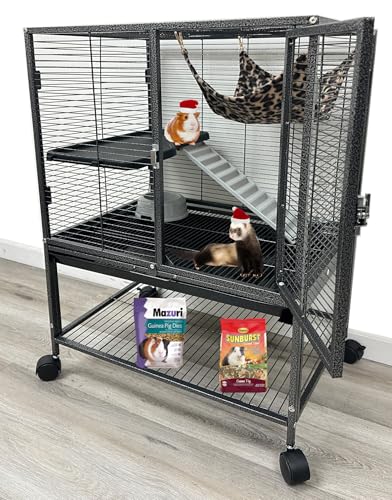
A heavy-duty option stands out for serious small animal owners who demand durability and smart design in a multi-level habitat. This deluxe two-tier cage is built from strong wrought iron, measuring 24”L x 17.5”W x 34”H on its rolling stand. It features a large hinged front door (10.5” x 18.5”) with a secure lock and an 8.5” x 9” top-access hook door. The ½-inch wire spacing prevents escapes and supports safe climbing. An anti-slip ramp with soft fabric cover links levels, leading to an adjustable, washable solid platform. Four casters-two lockable-allow easy movement. The pull-out grate and removable tray simplify cleaning. Open framing promotes airflow and visibility while supporting climbing. It suits rats, rabbits, ferrets, and more. Includes a hammock, water bottle, food bowl, and top storage area.
Best For: Dedicated small animal owners seeking a durable, multi-level habitat with excellent safety features and easy maintenance for pets like rabbits, ferrets, and chinchillas.
Pros:
- Sturdy wrought iron construction with narrow ½-inch wire spacing ensures security and prevents escapes
- Multi-level design with anti-slip ramp and adjustable solid platform promotes natural movement and paw safety
- Easy to clean with pull-out grates, removable tray, and washable components
Cons:
- Tall height may not fit under some furniture or in low-ceiling spaces
- Open wire frame may require added bedding or covers to retain warmth in cooler environments
- Top storage area may not be fully secure for heavy or frequently accessed supplies
MidWest Critter Nation Small Animal Cage
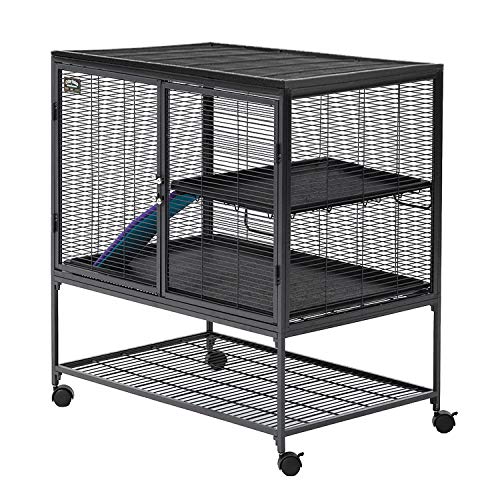
Spaciousness defines the MidWest Critter Nation Small Animal Cage, making it ideal for rat owners who prioritize room to roam and vertical exploration. At 36 x 24 x 39 inches, this two-tier cage supports climbing, running, and resting behaviors essential to rat health. Horizontal wire spacing measures 0.5 inches-tight enough for safety, wide enough for secure footing. The full-width double doors open wide for easy access. A removable pan and shelf simplify cleaning. Durable metal construction features a gray quartz finish and locking casters for stable mobility. An included ramp cover protects feet. The adjustable shelf lets you customize layout. Built by a family-owned company with over 100 years of experience. Customer support is based in Indiana. Assembly instructions and safety guidelines guarantee proper setup.
Best For: Rat owners seeking a spacious, durable, and safe two-tier cage that supports active climbing and exploration while allowing easy cleaning and customizable setup.
Pros:
- Spacious two-tier design with 0.5-inch wire spacing provides ample room and safety for rats to climb and play
- Removable pan and shelf, full-width double doors, and ramp cover make cleaning and daily maintenance simple and pet-friendly
- Durable metal construction with locking casters and adjustable shelf offers stability, mobility, and habitat customization
Cons:
- Assembly required, which may be time-consuming for some users despite included instructions
- Lack of included accessories like food bowls or hideouts may require additional purchases
- Height and size may not fit in smaller rooms or under low ceilings
Factors to Consider When Choosing a Rat Cage
You need a cage that’s big enough to give your rats room to move, play, and explore-aim for at least 2 cubic feet of space per rat, with minimum interior dimensions of 24”L x 18”W x 18”H. Make sure the wire spacing is no more than ½ inch apart to prevent escapes or injuries, especially for younger or smaller rats. Look for cages with wide front doors, removable trays, and modular levels for easy access and cleaning, and consider models on wheels if you plan to move the cage often.
Size And Dimensions
When selecting a rat cage, space matters-start with at least 2 cubic feet per rat to support healthy social dynamics and reduce stress, especially in groups where overcrowding can trigger aggression. For a pair, aim for minimum dimensions of 24 inches long, 18 inches wide, and 36 inches high. These measurements allow room for movement, exploration, and essential accessories. Rats are natural climbers, so vertical space is valuable. Choose multi-level designs with at least 12 inches between tiers to enable full limb extension and safe climbing. Tall, narrow cages limit floor area and restrict horizontal activity, which rats prefer for foraging and play. Prioritize width and depth over height alone. A spacious footprint supports exercise, reduces territorial behavior, and promotes mental well-being. Proper dimensions don’t just prevent conflict-they enhance physical health and natural behaviors. Smart sizing guarantees your setup grows with your rats’ needs.
Wire Spacing Safety
A well-sized cage means little if the wire spacing puts your rats at risk. Use 1/2 inch (1.27 cm) spacing for adult rats-it’s safe and prevents limb or head entrapment. For younger or smaller rats, go with 3/8 inch (0.95 cm) bars; tighter spacing stops them from squeezing through. Never allow gaps larger than 5/8 inch (1.59 cm); those invite escape and serious injury. Horizontal wires must stay uniform across the entire structure-no weak spots where chewing or pressure could widen gaps. Inconsistent spacing risks structural failure. Choose chew-resistant metal with secure welds to maintain spacing integrity over time. Flimsy materials bend, creating dangerous openings. Think of bar spacing like a fence: too wide, and predators-or escape artists-get through. Precision matters. Always verify measurements before buying. Your rat’s safety hinges on it.
Accessibility Features
How easily can you reach every level of the cage for cleaning, feeding, and handling?
Large hinged front doors measuring at least 15 x 18 inches let you access all levels without obstruction. These wide openings simplify cleaning and interaction, especially in multi-tiered setups. For overhead access, top-access hook doors (8 to 9 inches) allow feeding, spot cleaning, or lifting rats without disrupting lower levels-ideal for quick checks or treat delivery. Dual-level access with full-width double doors on multiple tiers supports unrestricted movement during maintenance or enrichment. Secure dual-locking latches keep doors closed during active play but open reliably when needed. Removable platforms, pull-out trays, and slide-out grates let you clean thoroughly without disassembling the cage. These features reduce maintenance time and stress for both you and your rats. Proper access isn’t just convenient-it supports consistent hygiene and strengthens handling routines.
Mobility Options
Though you might not move your rat cage daily, choosing one with mobility in mind makes cleaning, repositioning, and rearranging your space far more practical. Look for models with lockable rolling casters-four wheels, at least two with locking mechanisms-to glide smoothly across floors while staying stable when parked. These casters work on both carpet and hard flooring, giving you flexibility in placement. Lightweight steel or alloy frames offer durability without adding excess weight, making movement easier without compromising structure. Some cages feature integrated wheels permanently attached to a rolling base, designed specifically for indoor versatility. Others use foldable or collapsible frames, letting you disassemble for transport or storage easily. These options save space and simplify relocation, especially in tight rooms. Choose based on your floor type and how often you plan to move the cage.
Ease Of Cleaning
Keeping your rat’s cage clean is simpler when the design supports quick maintenance. Choose models with removable trays and pull-out grates for fast access without full disassembly. Slide-out bottom pans let you remove waste efficiently and cut down mess during cleaning. Non-porous, smooth surfaces resist odor and make wiping or rinsing the base more effective. Use tightly fitting tray liners to prevent leaks and contain spills. Opt for cages with 1/2-inch wire spacing on floor grates-this keeps waste on the grate where it’s easier to clean while letting urine pass through for better hygiene. Removable platforms, ramps, and accessories can be washed thoroughly to control bacteria and odor. These features save time and improve sanitation, making your routine safer and more efficient. Design affects cleanliness-pick wisely.
Paw Protection Design
A well-designed rat cage prioritizes paw protection to prevent injuries and support long-term health. Choose cages with wire mesh spacing of 0.5 inches or less to keep toes from getting trapped. Solid platforms with raised edges provide secure footing and reduce joint strain during movement. Opt for anti-slip ramps made of solid materials or covered in soft fabric to minimize falls and foot stress. Rounded wire ends and smooth metal coatings eliminate sharp points that could cut sensitive paw pads. These design features mimic stable terrain, reducing wear on delicate foot tissues. Removable ramps and platforms let you inspect for damage and clean thoroughly, maintaining hygiene. You’ll prevent abrasions, burs, and long-term lameness by addressing these structural details. Avoid bare wire floors or wide gaps-both increase injury risk. Prioritize materials that combine durability with soft contact surfaces. Your rat’s mobility and comfort depend on thoughtful, paw-safe engineering.
Multi Level Layout
When designing a multi-level layout, prioritize vertical space to encourage climbing-a natural behavior that promotes exercise and mental stimulation. Each level must offer at least 12 inches of headroom to prevent injury when rats stand upright. Include secure ramps or ladders with anti-slip surfaces to guarantee safe, consistent movement between tiers. This reduces fall risks and supports confident navigation. Wire spacing between levels should not exceed 0.5 inches to prevent escapes or limb entrapment. Solid flooring or mesh no larger than 0.5 inches minimizes foot injuries while allowing airflow. Removable trays and platforms simplify cleaning, which helps maintain hygiene. Choose modular designs with detachable levels to reconfigure layouts easily. This adaptability supports long-term use as your rats’ needs change. Prioritize function, safety, and ease of maintenance when selecting platforms, connectors, and access points. Multi-level cages should balance complexity with practicality.
Durable Construction Quality
You need a rat cage built to last, and that starts with high-quality materials. Choose cages made from wrought iron or alloy steel-they resist chewing and structural damage. Frames should use thick metal square tubes for stability and to prevent warping over time. Look for a rust-resistant powder or epoxy coating; it guarantees durability in both dry and humid environments. The bars must be metal and chew-proof, with spacing no wider than 0.5 inches to block escapes and extend life. Welded joints outperform plastic connectors-avoid cages with weak stress points. Secure assembly matters: screw-in latches and tool-free, stable connectors keep the structure solid during daily handling. These features work together like a well-built chassis-protecting integrity under constant use. A poorly constructed cage fails early, risking safety. Prioritize proven durability with tested materials and smart engineering-it protects your pets and your investment.
Frequently Asked Questions
Can Rats Live Together in Multi-Level Cages?
Yes, rats can live together in multi-level cages. You need at least 2 cubic feet of space per rat, with multiple levels connected by ramps or ladders. Mesh spacing must be ½ inch or smaller to prevent escapes. Solid flooring on platforms prevents foot injuries. Guarantee ventilation and secure latches. Multi-level designs encourage climbing and exploration, mimicking natural behaviors. You’ll reduce stress and promote social interaction when space and layout support colony living.
How Often Should I Clean a Rat Cage?
You should clean your rat cage weekly. Spot clean soiled areas every 2–3 days to manage odor and hygiene. Replace all bedding weekly and disinfect surfaces with a 10% bleach solution. Rinse thoroughly to avoid toxic fumes. Use mild dish soap for accessories. Cage size matters-40 gallons or larger allows better waste distribution. A bare-bottom cage simplifies cleaning. Consistent sanitation prevents respiratory infections and keeps ammonia levels low, ensuring your rats stay healthy.
Do Rats Need Exercise Wheels in Their Cage?
No, rats don’t need exercise wheels, but you can include one if it’s properly sized. Wheels under 12 inches cause spinal strain. Use a solid-surface wheel at least 12 inches in diameter to prevent injuries. Rats are active climbers, so prioritize multi-level cages with ramps and platforms. If you add a wheel, make sure it’s silent-running and securely mounted. Otherwise, skip it-mental and physical stimulation matter more than forced running.
Are Wire Cages Safe for Rat Feet?
Yes, wire cages are safe for rat feet if properly designed. Avoid wire mesh smaller than 1/2 inch or wider than 1 inch to prevent foot injuries. Use solid-bottom levels or platforms to reduce pressure on joints. Guarantee bar spacing is no more than 1 inch to prevent escapes. Galvanized or powder-coated steel resists rust. Rats weigh 300–600 grams; cage floors must support weight without sagging. Choose durable, flat surfaces where toes can’t get trapped.
Can I Use a Dog Crate for My Rats?
No, you can’t use a dog crate for your rats. The spacing between bars is too wide, usually over 1 inch, which risks injury or escape. Rats need secure, narrow-bar enclosures. A dog crate lacks proper ventilation and climbable surfaces. It’s also not designed for small animals. Use a cage made specifically for rats instead. They thrive in multi-level habitats with solid flooring and vertical bars ½ inch apart.