Best Bird Cages for Budgies That Keep Them Happy and Safe
Choose a cage with 3/8- to 1/2-inch bar spacing to keep your budgie secure. Models like the Prevue Parakeet Manor (12L x 9W x 16H inches, 3/8-inch bars) and VIVOHOME 30-inch cage (17.9-inch square, 30.3H, rust-proof steel) offer safe, spacious environments. Prioritize width over height for flight, use powder-coated metal for durability, and select cages with removable trays, 360° casters, and multiple perches. Look for included enrichment like swings and toys to support well-being. More details on top-performing models follow.
We are supported by our audience. When you purchase through links on our site, we may earn an affiliate commission, at no extra cost for you. Learn more. Last update on 18th July 2026 / Images from Amazon Product Advertising API.
Notable Insights
- Choose cages with bar spacing of 3/8 to 1/2 inch to prevent escape and ensure budgie safety.
- Prioritize width over height-minimum 18″ depth and 30″ length for flight and enrichment space.
- Select powder-coated metal or wrought iron cages with non-toxic, rust-resistant finishes for durability.
- Include removable trays, secure latches, and multiple feeding ports for easy cleaning and safety.
- Add enrichment features like wooden perches, swings, and toys to promote mental and physical well-being.
Upgraded 46-Inch Bird Cage with Perches
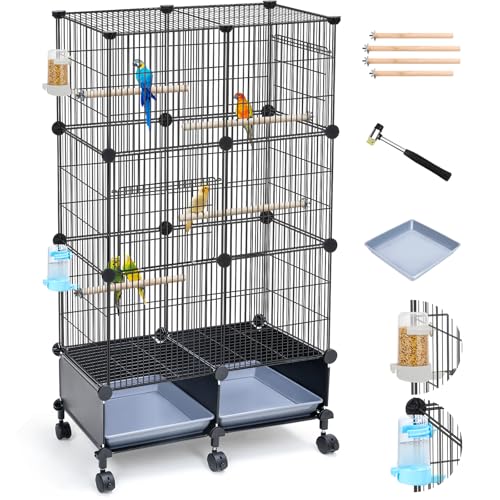
If you own multiple budgies or plan to house a small flock, this upgraded 46-inch cage stands out as the best choice for providing ample space and long-term durability. It measures 24L x 12W x 46H inches, with 1/2″ bar spacing to prevent escape and injury. The powder-coated metal frame has a hammered paint finish, offering water resistance and long-term strength. A detachable plastic tray and removable panels simplify cleaning. Six 360-degree caster wheels with locks guarantee stability and portability. It includes four wooden perches, one food container, and one external water bottle mount. Dual doors open wide for access, feature secure locks, and support ventilation. The tool-free assembly requires only the included hammer. This design suits homes, pet stores, and clinics. It’s built for safety, ease of maintenance, and consistent daily function.
Best For: Bird owners seeking a durable, spacious, and portable cage ideal for housing multiple small to medium birds like budgies, cockatiels, and lovebirds.
Pros:
- Spacious 46-inch height with 1/2″ bar spacing provides ample room and safety for small to medium bird species
- Detachable tray and tool-free assembly make cleaning and setup quick and convenient
- Equipped with lockable 360-degree casters for easy mobility and stability indoors or outdoors
Cons:
- Narrow 12-inch width may limit wing spreading or movement for more active birds
- Plastic food container and single water bottle may require frequent refilling for larger flocks
- High cage height could pose challenges in rooms with low ceilings or limited vertical space
VEVOR 41-inch Parrot Bird Cage

The VEVOR 41-inch Parrot Bird Cage stands out as an ideal choice for bird owners seeking a durable, spacious, and functional home for small to medium birds like budgies, especially those keeping multiple pets. Its dimensions measure 17.95 x 13.98 x 36.42 inches, with a top-open height of 40.94 inches for easy access. The 0.4-inch bar spacing prevents escapes while accommodating budgies, cockatiels, and similar species. It uses 2.6 mm thick iron wire coated in anti-corrosion paint for longevity. The durable PP base resists wear. Two main doors and four feeding ports simplify care. Four feeding cups, wooden perches, and a swing support daily needs.
Best For: Small to medium bird owners, especially those keeping multiple pets like budgies, cockatiels, and lovebirds, who need a durable and spacious cage with easy access and safety features.
Pros:
- Spacious 41-inch design with a top-open layout allows for easy cleaning and bird interaction
- Durable construction with 2.6 mm thick iron wire and anti-corrosion coating ensures longevity
- Includes essential accessories like feeding cups, wooden perches, and a swing for immediate use
Cons:
- Bar spacing may be too wide for very small birds like canaries or finches, posing escape risks
- Assembly may be time-consuming without clear instructions included
- Plastic base, while durable, may stain or retain odors over time without proper maintenance
VIVOHOME 30″ Wrought Iron Bird Cage

You’ll find the VIVOHOME 30″ Wrought Iron Bird Cage works best for owners of medium to large birds like Conures, Cockatiels, and Lovebirds-though it comfortably suits active budgies, especially in pairs. It measures 17.9 x 17.9 x 30.3 inches and weighs 13 pounds, offering sturdy, space-efficient housing. The frame is made of low-carbon, rust-proof steel with a non-toxic hammer-pattern paint finish. Four caster wheels allow smooth mobility, while a strong base guarantees stability. Steel wire bars are evenly spaced for safety. A removable bottom tray and pull-out sandbox drawer simplify cleaning. Two wooden perches and two plastic feeders are included. The cage supports indoor or outdoor use. It has a 1-year warranty. Model VH660 (ASIN: B083S9S5RC) was released January 12, 2020.
Best For: Bird owners seeking a durable, stylish, and mobile cage for medium to large birds like Conures, Cockatiels, and Lovebirds, or active small birds in pairs.
Pros:
- Sturdy construction with rust-proof, low-carbon steel and non-toxic finish ensures durability and bird safety
- Removable bottom tray and pull-out sandbox drawer make cleaning quick and hassle-free
- Equipped with caster wheels for easy mobility and works well indoors or outdoors
Cons:
- Limited floor space at 17.9 x 17.9 inches may restrict movement for very active or larger bird species
- Plastic feeders included may be less durable compared to stainless steel alternatives
- Tall, narrow design could be less stable if birds climb near the top without proper securing
Prevue Parakeet Manor Bird Cage
Compact yet thoughtfully designed, this cage suits budgie owners who prioritize space efficiency without compromising on essential features. I’ve used the Prevue Parakeet Manor (model 98012, ASIN B0B7RLX7M8), and it delivers practical functionality in a modest footprint. Its 12”L x 9”W x 16”H dimensions fit neatly on counters or tables. The 3/8-inch wire spacing prevents escapes while allowing visibility. It’s made of durable metal with plastic cups and perches. A pull-out tray simplifies cleaning. The handle aids portability. This indoor cage includes two feeding cups and ships ready-to-sell in multilingual packaging. It’s backed by a 30-day warranty.
Best For: Small bird owners seeking a compact, durable, and portable cage for budgies or canaries with easy cleaning and simple assembly.
Pros:
- Compact design with 3/8-inch wire spacing ensures safety and visibility for small birds
- Pull-out tray and removable feeding cups simplify cleaning and daily maintenance
- Includes handle and comes in retail-ready multilingual packaging for easy transport and display
Cons:
- Limited interior space may restrict movement for more active birds or multiple occupants
- Plastic perches may not be as comfortable or natural-feeling as wooden or rope perches
- 30-day warranty is shorter compared to longer-term warranties offered by some competitors
VIVOHOME 54″ Wrought Iron Bird Cage

Looking for a durable, long-term home that handles budgies’ energy and curiosity? I recommend the VIVOHOME 54″ Wrought Iron Bird Cage. Its sturdy alloy steel frame has nontoxic hammer-pattern paint, resisting corrosion and ensuring long-term safety. The cage measures 24.2L x 16.9W x 54.0H inches and weighs 25.8 pounds. A flat top allows space for hanging toys or plants. Multiple mesh attachment points support accessories. Four casters enable easy movement. The secure latch and locking mechanism prevent escapes. A pull-out tray simplifies cleaning. It includes two wooden perches, four feeding cups, and works for budgies, canaries, and small parrots.
Best For: Bird owners seeking a durable, spacious, and secure cage for budgies, canaries, cockatiels, lovebirds, or small parrots.
Pros:
- Sturdy wrought iron and alloy steel construction with nontoxic, corrosion-resistant paint ensures long-term safety and durability
- Flat top and multiple mesh attachment points allow for hanging toys, plants, and accessories to enrich bird environment
- Easy to clean with a pull-out tray, removable shelves, and fully washable components
Cons:
- At 54 inches tall, it may be too large for small rooms or limited spaces
- The black finish may show scratches or scuffs over time despite durable coating
- Some users may find assembly time-consuming due to size and number of parts
Yaheetech 39-inch Parrot Bird Cage with Toys
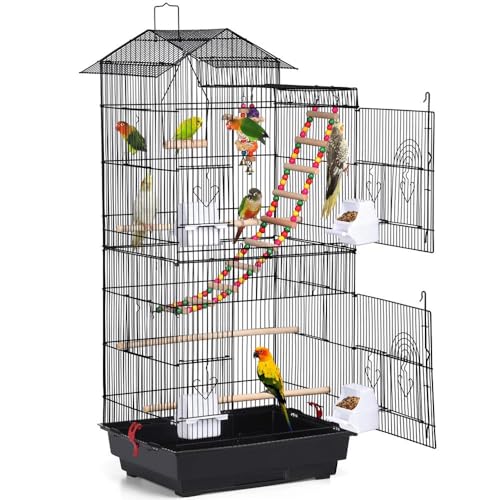
The Yaheetech 39-inch Parrot Bird Cage with Toys stands out as a strong choice for budgie owners who prioritize vertical space and long-term versatility. Its dimensions are 46 x 35.5 x 99 cm (18” x 14” x 39”), with 1.3 cm (0.4”) bar spacing-ideal for small birds like budgies, canaries, and lovebirds. Two wide swing doors feature wire latch locks, ensuring security while simplifying cleaning and access. A slide-out tray and detachable mesh grate improve hygiene by blocking direct contact with waste. The top handle aids portability. Included toys-a ladder and hanging swing-encourage activity, turning the cage into an engaging habitat.
Best For: Small bird owners seeking a tall, secure, and engaging cage that accommodates budgies, canaries, and similar-sized birds with room for activity and easy maintenance.
Pros:
- Spacious vertical design provides ample room for flying and climbing, ideal for active small birds
- Easy to clean with a slide-out tray and detachable mesh grate that enhances hygiene
- Includes a ladder and swing to promote mental stimulation and physical exercise
Cons:
- Bar spacing may be too wide for very small birds like finches, risking potential escape or injury
- Limited floor space due to vertical orientation might restrict movement for less active birds
- Plastic handle may feel less durable when frequently moving the fully assembled cage
Yaheetech 53″ Large Bird Cage with Stand

If you want a spacious, durable home that supports your budgie’s active lifestyle, the Yaheetech 53″ Large Bird Cage with Stand delivers. It’s built from powder-coated metal, resisting corrosion and simplifying cleaning. Dual large front doors lock securely; smaller inner doors allow safe feeding without full access. A pull-out tray and wide openings make cleanup fast. A metal grate separates your bird from the bottom, improving hygiene. Four 360-degree casters-two lockable-enable easy movement and stable placement. An open shelf underneath stores food, toys, and supplies. At 53 inches tall, it offers ample vertical space for flying and climbing, supporting natural behaviors safely.
Best For: Bird owners seeking a spacious, durable, and easily movable cage that supports active pets like budgies with secure access and convenient maintenance features.
Pros:
- Sturdy powder-coated metal construction resists corrosion and simplifies cleaning
- Dual front doors with secure locks and inner feeding doors enhance safety and accessibility
- 360-degree casters (two lockable) and pull-out tray allow for easy mobility and quick cleaning
Cons:
- Assembly may be time-consuming due to the cage’s size and number of components
- Metal grate spacing may not be suitable for very small birds or young chicks
- Large footprint requires ample room, limiting placement options in smaller spaces
VEVOR 64-inch Parrot Bird Cage with Stand

A cage this tall acts like a vertical playground, making the VEVOR 64-inch Parrot Bird Cage with Stand an ideal choice for budgie owners who prioritize flight space and long-term versatility. Its dimensions measure 17.99 x 13.98 x 59.45 inches, with a total height of 64.17 inches when the top is open. Bar spacing is 0.4 inches-safe for budgies. It comfortably houses 2–3 small birds. The open-top design allows easy access and direct interaction. It includes 1 swing and 4 perch stands. Four plastic feeders and side feeding doors simplify refills. Two main doors and a removable PP co-polymer tray aid cleaning. The rolling stand has 360° wheels, a storage shelf, and a red stability clip. The cage detaches for flexible placement. Constructed from iron wire with a baked spray-painted finish, it guarantees durability and long-term use.
Best For: Bird owners seeking a spacious, durable, and mobile cage ideal for small to medium-sized birds like budgies, finches, and lovebirds who value flight space and easy maintenance.
Pros:
- Spacious vertical design with 0.4-inch bar spacing safely accommodates 2–3 small birds and encourages natural flight and movement
- Convenient features including open-top access, side feeding doors, removable tray, and 360° rolling stand with storage shelf
- Durable iron wire construction with baked spray-painted finish and impact-resistant PP co-polymer tray for long-term use
Cons:
- Tall design may not fit in low-ceiling rooms or under shelves when the top is opened
- Plastic feeders may require frequent cleaning to prevent clogging or contamination
- Swing and perch count may be insufficient for multiple active birds needing enrichment
Yaheetech 52-inch Steel Bird Cage with Stand
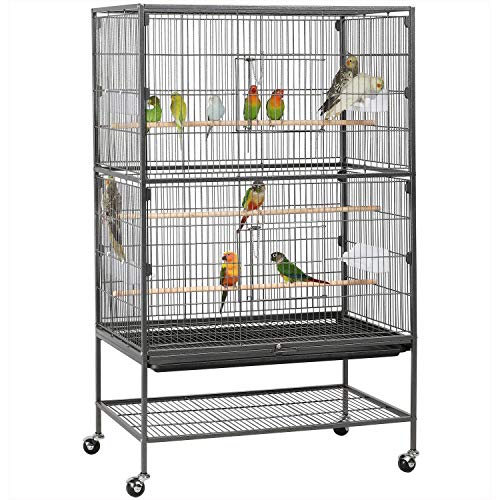
You’ll find the Yaheetech 52-inch Steel Bird Cage with Stand is best suited for owners of multiple budgies or those planning to house larger companion birds like cockatiels or conures. It measures 31″ L × 20.5″ W × 52″ H, offering ample vertical space for climbing and movement. The 5/8″ bar spacing prevents escape and injury. Constructed from powder-coated steel with a hammered finish, it resists rust and wear. A removable tray and metal grate simplify cleaning. Two large front doors allow easy access. Four 360° casters guarantee smooth mobility. Ideal for homes or clinics, it balances durability, function, and space.
Best For: Bird owners seeking a durable, spacious habitat for multiple small to medium-sized birds or larger companion species like cockatiels, conures, or African greys.
Pros:
- Sturdy powder-coated steel construction with a hammered finish ensures long-lasting durability and rust resistance
- Extra-large size with 5/8″ bar spacing provides safety and ample room for climbing, socializing, and activity
- Smooth 360° mobility and easy-clean features like a removable tray and pull-out grate enhance convenience
Cons:
- Tall design may not fit in low-ceilinged rooms or under standard shelves
- Heavy weight could make it difficult to move despite the casters
- Larger footprint requires significant floor space, limiting placement options in smaller homes
Encrypted Large Bird Cage 57-Inch
The Encrypted Large Bird Cage 57-Inch stands out as the best choice for owners of multiple budgies or mixed flocks of small to medium-sized birds. Its 57-inch tall aviary design provides ample vertical space for flying and climbing. The bars are spaced 5/8 inch apart-secure for small birds like budgies, parakeets, and cockatiels. A wide splash guard at the base reduces seed and water scatter. The top storage shelf holds toys, treats, and cleaning supplies. A quick-open front door allows easy access. 360° caster wheels enable smooth movement. Includes food and water bowls, ladders, swings, and a nest for immediate use.
Best For: Bird owners with multiple budgies, cockatiels, or parakeets who need a spacious, durable, and mobile cage with built-in storage and enrichment.
Pros:
- Spacious 57-inch aviary design with 5/8-inch bar spacing provides safe, vertical room for flying and climbing
- Includes essential accessories like food bowls, ladders, swings, and a nest for immediate use
- Equipped with 360° caster wheels and a quick-open front door for easy mobility and access
Cons:
- May be too large for small rooms or limited spaces despite its mobility
- Top shelf may require frequent cleaning from bird debris or spilled water
- Splash guard might not fully contain mess during active feeding or water play
Factors to Consider When Choosing a Bird Cage for Budgies
You need to prioritize your budgie’s safety and comfort when picking a cage. Bar spacing should be ½ inch or less to prevent injury, and the cage must be at least 20 inches long, 18 inches wide, and 18 inches high for adequate movement. Durable, non-toxic materials like powder-coated steel resist chewing, while removable trays and grill parts make cleaning quick, and lockable wheels help you move the cage securely when needed.
Bar Spacing Safety
Every inch matters when it comes to bar spacing, and for good reason-budgies are small, agile birds with narrow heads that can slip through poorly designed enclosures. You need bars spaced at 1/2 inch or less to keep your budgie secure. Spacing wider than 5/8 inch increases the risk of escape or injury. The ideal range is 3/8 to 1/2 inch, balancing safety with visibility. Choose 3/8-inch spacing for extra protection, especially with younger or smaller budgies. Consistently spaced bars prevent weak spots and discourage chewing or climbing hazards. Uneven gaps create escape opportunities and structural vulnerabilities. Always check spacing with a ruler before buying. Never assume cage specs are accurate-verify them. Your budgie’s safety depends on precise, uniform spacing. A well-built cage uses welded or locked bars to maintain consistent gaps. This isn’t just about design-it’s a critical safety standard.
Cage Size Requirements
A single budgie needs a minimum cage size of 18 inches long, 14 inches deep, and 18 inches high to move freely and stretch its wings safely. You should prioritize width over height-budgies are horizontal fliers and need more floor space to fly side to side. A cage at least 30 inches long is ideal for a pair, allowing space for social interaction and independent movement. The interior must fit at least three perches at varying heights, multiple food bowls, and several toys without crowding. Bar spacing remains critical: maintain ½ to 5/8 inch gaps to prevent escape or injury. Avoid tall, narrow cages-they waste usable space. Wider enclosures mimic natural flight patterns and promote daily exercise. You’ll maximize mobility and mental stimulation when floor dimensions support longer flights. Choose layouts that balance perch placement, feeding zones, and open areas for unobstructed movement.
Material Durability
Durability hinges on the cage’s core materials and construction quality, starting with a powder-coated metal frame that resists corrosion and holds up in humid environments. You need steel wires at least 2.0 mm thick-they won’t bend easily under chewing or climbing pressure. Thin wires deform; thicker gauges maintain shape and security. Non-toxic, water-resistant paint guarantees rust protection and bird safety if flakes are accidentally ingested. Look for high-quality alloy or wrought iron builds-they resist warping over time, even with frequent cleaning or outdoor use. Reinforced joints add structural strength, reducing weak points. Budgies chew constantly, so weak frames fail quickly. A well-built cage uses precision-welded corners and sturdy fasteners to handle active movement. These specs matter-compromising on material integrity risks escape or injury. Invest in verified durability, not just size or style. Your budgie’s safety depends on solid engineering.
Ease Of Cleaning
Keeping your budgie’s environment hygienic means choosing a cage designed for efficient, thorough cleaning. Opt for models with removable slide-out trays made from durable, non-porous polypropylene (PP) plastic to block moisture absorption and simplify daily waste removal. Choose cages with detachable side panels or interior grates that grant full access to corners and seams, cutting down bacterial buildup. Select smooth, powder-coated or painted metal finishes-they resist corrosion and wipe clean with a damp cloth and mild detergent. Prioritize seamless construction with minimal crevices to prevent trapped feathers, food, or droppings. These design features reduce cleaning time by up to 50% compared to cages with fixed trays or textured surfaces. A well-constructed cage with thoughtful engineering guarantees long-term sanitation with less labor. Your cleaning routine becomes faster, more effective, and safer for your bird’s health.
Mobility Features
When moving your budgie’s cage is part of your routine, mobility features make the task efficient and safe. Look for cages with 360-degree swivel casters to glide smoothly across carpets, tile, or hardwood. At least two wheels should have locking mechanisms, securing the cage on uneven or slick floors and preventing stress-inducing shifts. A top-mounted handle on compact models adds convenience, letting you lift and reposition the cage with one hand during cleaning or room changes. Detachable stands simplify relocation-remove the base without dismantling perches or accessories. Choose lightweight materials like powder-coated aluminum or reinforced ABS plastic, which balance durability and ease of movement. These cages typically weigh 8–15 lbs unloaded, reducing strain during transport. Stable yet maneuverable, a well-designed mobile cage behaves like a rolling workstation-solid when locked, fluid when shifting-ensuring your budgie stays secure while you maintain flexibility in placement and daily care.
Accessory Inclusions
A cage’s included accessories directly influence your budgie’s comfort, safety, and daily maintenance efficiency. Multiple feeding cups-typically two to four-are often included, letting you separate food and water to preserve freshness and reduce contamination. Wooden perches of varying diameters provide natural foot support, improving grip strength and minimizing pressure sores. These perches mimic tree branches, promoting long-term foot health. Many cages include swings and ladders made from non-toxic, durable materials to encourage movement and mental engagement. Removable slide-out trays or pull-out drawers simplify cleaning; just slide them out for quick waste disposal and wipe-downs. Some models feature detachable mesh grates that sit beneath the cage floor, creating a physical barrier between your budgie and droppings. This design reduces direct waste contact, lowering disease risk and maintaining hygiene with minimal daily effort on your part.
Ventilation Design
Proper airflow within your budgie’s cage isn’t just comfortable-it’s critical for respiratory health and temperature regulation. Choose bar spacing between 1/2 inch and 5/8 inch to guarantee ventilation while preventing escape or injury. Vertical bars outperform horizontal ones by enabling unobstructed front-to-back airflow and reducing blockage from toys or perches. Fully welded mesh on at least two sides delivers consistent air circulation and minimizes stagnant zones. Opt for cages taller than 36 inches with vents at the top and bottom-this setup supports thermal convection, naturally pulling fresh air in and pushing stale air out. Look for powder-coated or rust-resistant bars; these finishes resist chipping and prevent toxic particles or debris from contaminating the air. Clean airflow means fewer respiratory irritants. A well-ventilated cage isn’t optional-it’s a functional necessity for your budgie’s long-term health and environmental stability. Always prioritize airflow design when selecting a model.
Bird Compatibility
Good airflow sets the foundation for a healthy cage, but selecting the right design for your budgie’s behavior and physical needs guarantees long-term well-being. You need bar spacing between 1/2 inch and 5/8 inch-any wider risks head entrapment or escape. The cage must be at least 24 inches wide to allow short flights and full wing stretches. Horizontal bars on at least two sides support climbing, building foot strength and muscle tone. Choose models with non-toxic, powder-coated or hammered finishes-avoid lead-based paints or zinc components. Your budgie needs space for multiple perches, food bowls, water dispensers, and toys without congestion. Overcrowding restricts movement and increases stress. A properly sized, thoughtfully equipped cage mimics natural habitats, encouraging foraging, flight, and exploration. Prioritize dimensions, material safety, and layout to meet your bird’s instinctive needs.
Frequently Asked Questions
How Often Should I Clean My Budgie’s Cage?
You should clean your budgie’s cage weekly. Daily spot-cleaning removes droppings and leftover food. Weekly full cleanings prevent bacteria buildup. Use mild dish soap and water; avoid toxic cleaners. Rinse thoroughly. Replace liner or substrate. Disinfect monthly with a 10% bleach solution, then air dry. Make certain bars and perches are scrubbed. Proper hygiene reduces disease risk. Clean cages maintain air quality and support respiratory health.
Can Budgies Live Alone in a Large Cage?
Yes, budgies can live alone in a large cage, but they need daily social interaction. A solitary budgie requires at least 4–6 hours outside the cage for mental stimulation. The enclosure must measure no less than 30″L x 18″W x 18″H, with bar spacing of ½″ to prevent injury. Use horizontal bars for climbing. Include multiple perches, toys, and foraging opportunities to reduce boredom and support behavioral health.
Do Budgies Need a Cage With a Playtop?
Yes, you need a cage with a playtop if you want to maximize space and enrichment. A playtop gives your budgie room to climb, stretch wings, and play outside the main enclosure. Look for models with a wide perch-free platform, at least 18 inches across, and sturdy wrought iron or powder-coated steel bars. This setup reduces cage fatigue and supports natural behaviors, mimicking wild movement patterns in a secure, vertical layout.
Is It Safe to Place a Cage in Direct Sunlight?
No, it’s not safe to place a cage in direct sunlight. Direct exposure can overheat the cage, risking heatstroke. Temps above 85°F are dangerous. Sunlight through glass magnifies heat, like a greenhouse. Instead, pick a spot with indirect light. Guarantee 12 hours of natural, diffused light daily for circadian health. Use sheer curtains to filter brightness. Always monitor humidity and airflow. Provide shaded areas inside the cage so your bird can retreat from light as needed.
Can I Use Newspaper as Cage Lining?
Yes, you can use newspaper as cage lining, but it’s not ideal. The ink may contain trace toxins, and paper breaks down quickly when wet. Line the tray with paper meant for pets instead-it’s non-toxic and absorbs moisture better. Change the lining daily to maintain hygiene. Monitor for ink transfer on your budgie’s feet or beak. For best results, use reptile carpet or paper towels-they’re safer and more durable.