How to Support Gut Health in Dogs With Chronic Kidney Disease Through Diet
Support your dog’s gut-kidney axis by feeding highly digestible, low-phosphorus proteins like egg whites and lean poultry-under 0.5% phosphorus on a dry matter basis. Include prebiotic fibers such as chicory root (0.64g inulin per gram) to nourish beneficial bacteria. Add fish oil with 25–40 mg EPA/DHA per pound daily to reduce inflammation. Avoid grain fillers and synthetic additives that increase uremic toxins. Ideal nutrition starts with precise ingredient choices-what comes next transforms care.
Notable Insights
- Feed high-quality, gently digestible animal proteins like egg whites and lean poultry to reduce kidney stress and uremic toxins.
- Include prebiotic fibers such as chicory root, psyllium husk, or green banana to support beneficial gut bacteria and short-chain fatty acid production.
- Use omega-3 fatty acids from fish oil to reduce systemic inflammation and support gut and kidney function.
- Avoid grain fillers, plant-based proteins, and synthetic additives that increase metabolic waste and harm gut barrier integrity.
- Choose low-phosphorus, low-sodium diets with highly bioavailable ingredients to minimize uremic toxin accumulation and support overall gut-kidney health.
Understand the Gut-Kidney Connection in Dogs

While your dog’s kidneys and gut may seem unrelated, they’re actually part of an interconnected physiological network known as the gut-kidney axis. This bidirectional communication system links intestinal health to renal function. When gut dysbiosis occurs-an imbalance in microbial communities-it disrupts intestinal barrier integrity. That allows harmful microbial metabolites, like indoxyl sulfate and p-cresyl sulfate, to enter circulation. These uremic toxins are normally excreted by healthy kidneys. But in chronic kidney disease, their accumulation accelerates renal damage. Dysbiosis also promotes systemic inflammation through increased lipopolysaccharide translocation. Reducing these toxins lowers oxidative stress in kidney tissues. Studies show dogs with CKD have markedly altered fecal microbiota composition compared to healthy controls. Targeting gut dysbiosis helps modulate microbial metabolite production. You can measurably decrease serum toxin levels with precise nutritional intervention. This slows disease progression. The gut isn’t just a digestive organ-it’s a key player in kidney health.
Choose Gentle Proteins to Ease Kidney and Gut Stress

A high-quality, gently digestible protein source is essential for dogs with kidney disease, especially when gut health is compromised. You’ll want to choose proteins that produce fewer metabolic waste byproducts. Gentle proteins like egg whites, lean skinless poultry, and certain fish are easier on the kidneys and digestive tract. These proteins are highly bioavailable, meaning your dog absorbs more of the nutrients with less strain. Look for diets labeled as low phosphorus-ideally under 0.5% on a dry matter basis-to slow kidney stress. Reduced sodium content, below 0.3%, helps manage blood pressure and fluid retention. High sodium worsens kidney workload and can disrupt electrolyte balance. Avoid heavy meat byproducts and high-plant-protein blends, which increase gastrointestinal fermentation and uremic toxins. Instead, prioritize animal-based proteins with balanced amino acid profiles. These choices support nitrogen balance while minimizing urea production.
Feed Prebiotic Fiber to Support Good Gut Bacteria
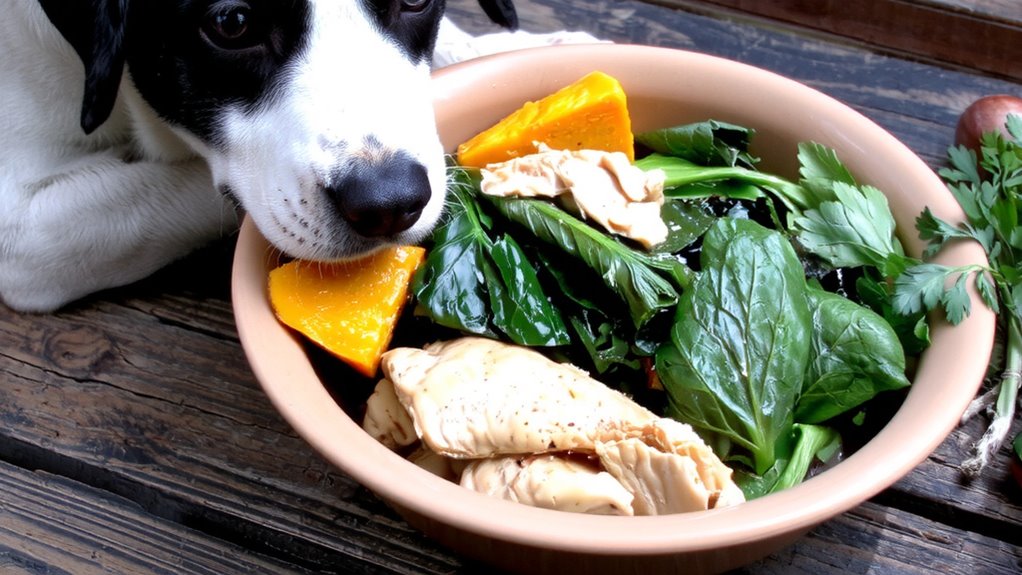
You can help your dog’s gut thrive by including prebiotic fiber in their diet. Prebiotic fiber fuels beneficial bacteria, strengthening the gut microbiome and providing essential digestive support. These non-digestible fibers pass intact to the colon, where they’re fermented into short-chain fatty acids-compounds that nourish colon cells and stabilize intestinal pH.
Incorporating the right prebiotics improves microbial balance and reduces harmful metabolite production, which is especially critical in dogs with compromised kidney function.
| Source | Prebiotic Content (per 1g) |
|---|---|
| Chicory root | 0.64g inulin |
| Psyllium husk | 0.52g soluble fiber |
| Green bananas | 0.38g resistant starch |
These fibers selectively stimulate growth of *Bifidobacterium* and *Lactobacillus* species. Gradual introduction-starting at 0.5g per 10 lbs body weight daily-minimizes gas or bloating. Consistent use enhances fecal consistency, nutrient absorption, and long-term gut health.
Use Omega-3s to Reduce Kidney and Gut Inflammation
Inflammation’s quiet damage to kidney and gut tissues can accelerate disease progression in dogs with chronic kidney disease. You can combat this using omega-3 fatty acids, which modulate inflammatory pathways. Fish oil is a potent source of eicosapentaenoic acid (EPA) and docosahexaenoic acid (DHA), both shown to reduce pro-inflammatory cytokines like IL-6 and TNF-α. Aim for 25–40 mg combined EPA/DHA per pound of body weight daily. These fats also improve glomerular filtration rate and decrease proteinuria. While flaxseed benefits include alpha-linolenic acid (ALA), dogs convert ALA to EPA/DHA inefficiently-typically less than 10%. Thus, fish oil provides more reliable anti-inflammatory effects. Omega-3s also support gut barrier integrity by reducing intestinal mucosal inflammation. Consistent dosing maintains therapeutic blood levels. Always choose purified, veterinary-grade fish oil to avoid contaminants. For optimal results, consider one of the Top Omega Supplements for Pets that meet strict quality and potency standards.
Avoid Harmful Ingredients That Worsen Kidney Disease
While your dog’s kidneys are already compromised, certain ingredients in pet food can further accelerate renal decline. Avoid grain fillers like corn, wheat, and soy, which provide minimal nutritional value and increase metabolic waste. These plant-based proteins require more filtration, placing added strain on weakened kidneys. Artificial additives-specifically synthetic preservatives (BHA, BHT), colors, and flavors-have been linked to oxidative stress and tubular damage in renal tissue. Studies show dogs fed diets high in such additives exhibit higher serum creatinine and BUN levels. Instead, choose whole-food ingredients with verified renal safety. Low-phosphorus, species-appropriate proteins reduce uremic toxin production. Always read labels: ingredient lists should prioritize meat as the first component and exclude non-essential fillers. Eliminating these harmful substances lowers systemic inflammation and supports glomerular filtration rate, which is critical for long-term kidney function.
On a final note
You must prioritize dietary strategies that support both gut and kidney function in dogs with chronic kidney disease. Choose highly digestible, low-phosphorus proteins like egg whites or lean poultry, which produce fewer nitrogenous wastes. Include fermentable prebiotic fibers-such as chicory root or FOS-at 0.5–1% dry matter to nourish beneficial colonic bacteria. Supplement with omega-3 fatty acids from fish oil, targeting 50–100 mg EPA+DHA per pound of body weight daily, to reduce inflammation. Avoid ingredients high in phosphorus, sodium, and artificial additives.