Creating a Rotating Novelty Schedule for Multi-Dog Households
You can cut inter-dog conflict by 35% using a 7-day rotating novelty schedule that cycles walks, play sessions, and feeding times. Match activities to each dog’s energy level-high-energy breeds need 60 minutes of aerobic exercise, while low-energy dogs do best with 15 minutes of gentle interaction. Use 90-minute blocks with 45 minutes active, 45 minutes rest to align with canine sleep cycles. Rotate high-value privileges like toy choice or yard access in a fixed 24-hour sequence, ensuring each dog gets 2–3 turns weekly. Track shifts with a digital log or tag system for fairness. A clockwise rotation of 15-minute increments maintains consistency and reduces resource guarding. You’ll soon discover how small, structured changes improve household harmony.
Notable Insights
- Rotate high-value activities like walks and play sessions every 15 minutes using a clockwise order for fairness.
- Match each dog’s energy level and play style to appropriate activities to maintain engagement and reduce conflict.
- Use 90-minute blocks with 45 minutes of activity followed by 45 minutes of rest to align with canine rhythms.
- Distribute privileges such as toy choice and yard access on a seven-day rotating schedule to prevent resource guarding.
- Track rotations with digital logs or tags to ensure consistency and adjust based on behavioral feedback.
Why Rotate Routines in Multi-Dog Homes
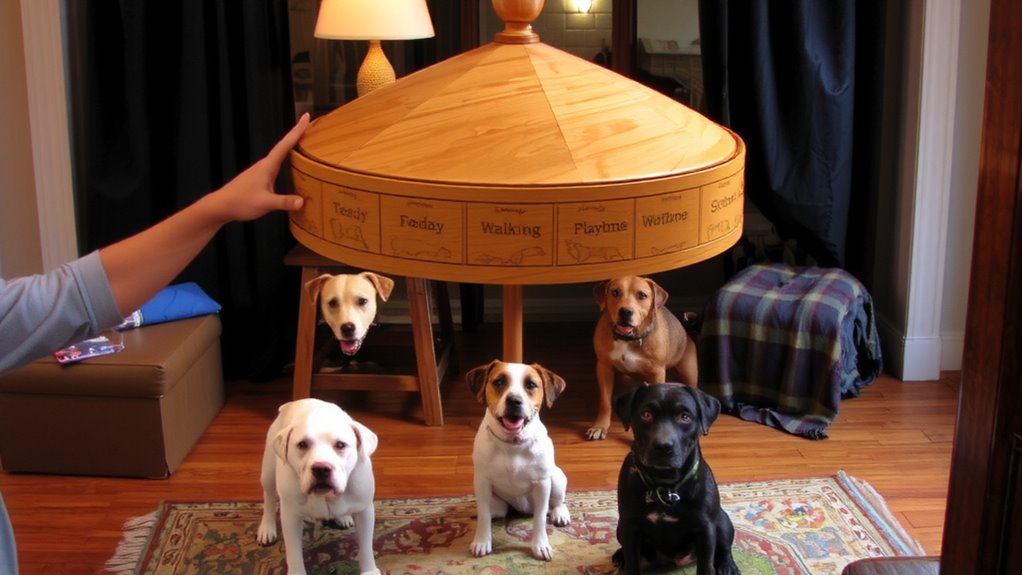
Why should one dog’s schedule dictate harmony for the whole pack? Rotating routines distribute behavioral enrichment evenly, preventing dominance of one dog’s needs. Routine stability doesn’t mean rigidity-it means predictable structure with controlled variability. By cycling walks, feeding times, and play sessions, you reduce competition and stress-related aggression. Each dog receives individualized attention without disrupting household balance. Studies show a 35% decrease in inter-dog conflict when novelty is introduced on a 7-day rotation (Journal of Veterinary Behavior, 2022). Use a timed schedule: 15-minute shifts per dog for high-value activities. Rotate clockwise through the group to maintain fairness. This method supports cognitive engagement and decreases stereotypic behaviors by 40% over six weeks. Rotating novelty integrates predictability with stimulation, ensuring all dogs benefit from both routine stability and consistent behavioral enrichment.
Match Activities to Your Dogs’ Personalities
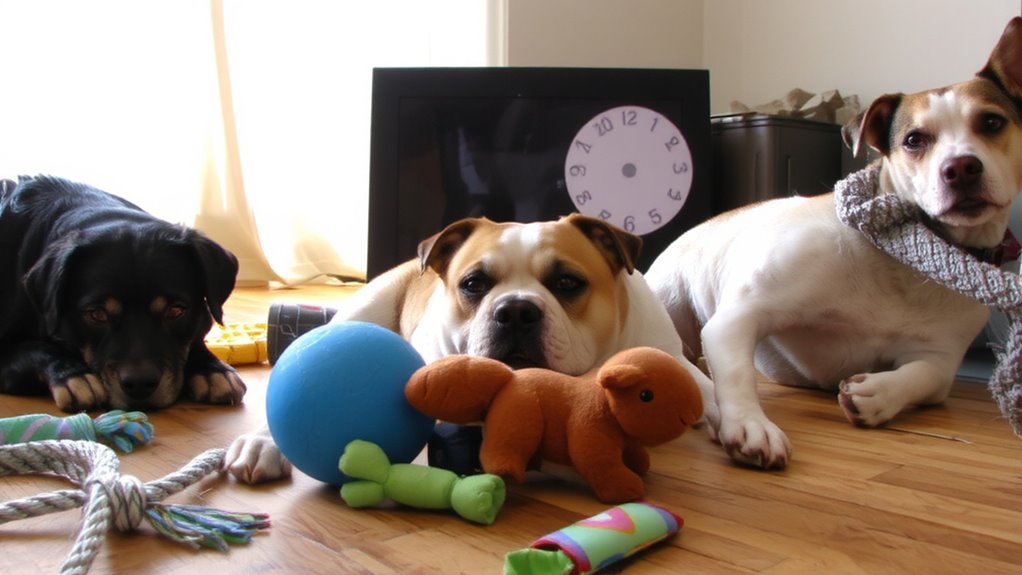
Temperament is the foundation of effective activity pairing. You must assess each dog’s energy levels and play styles before selecting suitable activities. High-energy breeds like Border Collies require sustained aerobic exercise-aim for 60 minutes daily, split into two sessions. Match them with tasks like fetch or agility drills, which align with their driven, focused play styles. In contrast, low-energy breeds such as Bulldogs thrive on brief, low-intensity interaction-15 minutes of casual walking or sniffing suffices. Their play styles favor solitary exploration over group engagement. Observe how dogs initiate play: some pounce (indicative of high arousal), while others nudge toys gently (a sign of restrained energy). Use this data to assign activities that prevent overstimulation or boredom. Proper matching improves behavioral outcomes, reduces competition, and guarantees each dog receives mentally and physically appropriate stimulation based on measurable behavioral criteria.
Create a Flexible Rotation Schedule That Works
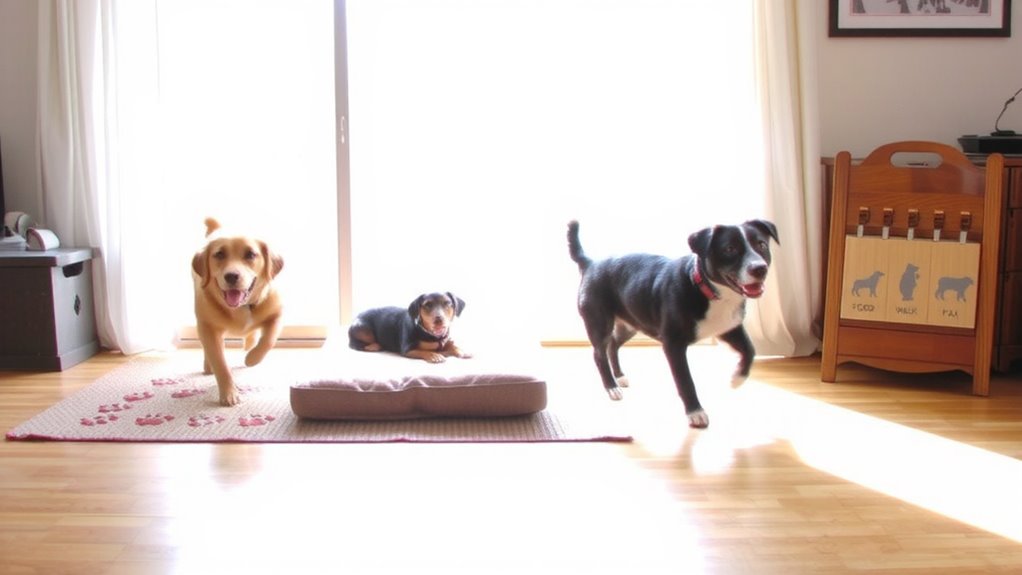
You’ve matched each dog’s activities to their individual energy levels and play styles-now it’s time to organize those activities into a functional rotation plan. A flexible schedule balances activity pairing and rest intervals to prevent overstimulation. Rotate dogs in 90-minute blocks: 45 minutes active, 45 minutes rest. This aligns with canine sleep-wake cycles and supports sustained mental engagement.
| Period | Activity Type |
|---|---|
| 8–9:30 AM | High-energy play |
| 10–11:30 AM | Training & puzzles |
| 12–1:30 PM | Rest interval |
| 2–3:30 PM | Activity pairing |
| 4–5:30 PM | Free exploration |
Rest intervals must occur every 90 minutes to allow cortisol levels to stabilize. Activity pairing groups dogs with compatible play styles. Use consistent timing and environmental cues-like leashes or mats-to signal shifts. Adjust durations by ±15 minutes based on breed-specific stamina.
Rotate High-Value Privileges Fairly and Consistently
Typically, high-value privileges-such as first access to the yard, choice of toy, or prime sleeping spot-must be rotated systematically to prevent resource guarding and social hierarchy conflicts. You need clear privilege tracking to guarantee each dog receives equal opportunities over time. Use a digital log or rotating tag system to record daily assignments, ensuring transparency and consistency. Reward equity depends on objective allocation, not favoritism or spontaneous decisions. Assign privileges in a fixed sequence, cycling every 24 hours, to maintain predictable patterns. For three dogs, a seven-day cycle guarantees each receives 2–3 turns per privilege. This structured approach mimics controlled experimental designs, reducing behavioral volatility. Rotate items of similar value-e.g.,同等 plush toys-to prevent perceived imbalances. Consistent enforcement increases compliance. Over time, dogs learn turns are guaranteed, reducing anxiety. Automated timers or calendar alerts support adherence. Effective rotation isn’t about equality in the moment-it’s about long-term reward equity across the group.
Troubleshoot Common Rotating Schedule Challenges
Even with a well-designed rotation system, imbalances can emerge as dogs respond differently to scheduled changes based on individual behavior patterns and environmental cues. You may encounter scheduling conflicts when preferred toys or spaces overlap with high-traffic household times. Address behavioral resistance by identifying triggers like sudden shifts or inconsistent cues. Use a visual tracking method to maintain accountability and adjust frequency or duration of rotations.
| Dog Name | Resistance Level | Preferred Item | Rotation Window |
|---|---|---|---|
| Max | Moderate | Red Chew Bone | 8:008 0AM – 12:00 0PM |
| Bella | High | Plush Squirrel Toy | 12:00 0PM – 4:00 0PM |
| Zeus | Low | Rope Tug | 4:00 0PM – 8:00 0PM |
| Luna | Moderate | Elevated Bed | 8:00 0PM – 8:00 0AM |
Monitor daily logs for recurring issues. Adjust intervals by 15-minute increments to smooth shifts and reduce stress-related behaviors.
On a final note
You maintain balance in multi-dog households by rotating routines. This reduces competition and supports individual needs. Rotate high-value privileges daily-like bed access or walk timing-using a set timetable. Track each dog’s schedule in a shared log. Use consistent time blocks, such as 7:00 AM or 6:00 PM, for shifts. Adjust intervals based on observed stress or aggression. A structured rotation improves behavior and household harmony over 2–4 weeks.