How to Use Lean Fish Like Cod in Homemade Weight-Loss Meals for Cats
Use lean fish like cod to support your cat’s weight loss with high-quality protein and minimal fat. Cod provides 18g of protein and only 0.7g of fat per 100g, preserving muscle while cutting calories. Steam or boil boneless fillets to 145°F without seasoning. Serve 1.5–2.5 oz daily, depending on weight, with low-calorie veggies. Keep portions under 25% of total calories. More details on safe preparation and portioning follow.
Notable Insights
- Use lean cod fillets to provide high-quality protein while minimizing fat intake for effective weight management in cats.
- Steam or boil boneless cod without seasoning to preserve nutrients and ensure safe, digestible meals.
- Limit cod to 25% of your cat’s daily calories to maintain balanced nutrition during weight loss.
- Combine cooked cod with low-calorie vegetables like zucchini or spinach to increase meal volume without excess calories.
- Consult your vet before starting cod, especially for cats with health conditions, to ensure dietary safety and appropriateness.
Why Cod Helps Cats Lose Weight
A significant number of cats lose weight more effectively when fed lean protein sources like cod. You should know cod delivers high protein with minimal caloric load. This fish contains approximately 18 grams of protein per 100 grams, supporting muscle retention during weight loss. Its low fat content-just 0.7 grams per 100 grams-reduces overall energy density. High protein diets increase thermogenesis, raising metabolic rate by up to 30% compared to fats or carbohydrates. Cod’s digestibility exceeds 90%, ensuring efficient nutrient absorption. You can substitute higher-fat meats with cod to cut total dietary fat by 20–25% without sacrificing protein intake. The moisture content in fresh cod also promotes hydration, which aids renal function during dietary shifts. By choosing a low fat, high protein option like cod, you maintain satiety while creating a necessary caloric deficit. This precise balance supports safe, sustainable feline weight loss.
When to Talk to Your Vet About Cod
You should consult your vet before adding cod to your cat’s diet, especially if they have existing health conditions. A vet consultation guarantees cod aligns with your cat’s nutritional needs and medical history. Cod is low in fat (less than 1% per 100g) and high in protein (about 18g per 100g), making it suitable for weight management. However, cats with kidney disease or pancreatitis may require modified protein intake. Health monitoring is essential when introducing any new food. Watch for changes in appetite, energy levels, or digestion. Blood tests during routine checkups can detect protein metabolism issues early. Cod should not exceed 10% of your cat’s daily caloric intake to avoid nutrient imbalances. Omega-3 levels in cod support skin and joint health but may interact with certain medications. Always prioritize professional guidance over homemade diet trends.
How to Cook Cod Safely for Cats
Since improper preparation can introduce health risks, cooking cod for your cat requires strict attention to safety and nutritional preservation. Proper cod preparation begins with selecting fresh, boneless fillets free of additives. Rinse the fish under cool water to remove surface bacteria. Cook using methods that preserve nutrients-steaming or boiling is ideal. Always guarantee the internal cooking temperature reaches 145°F (63°C), as measured by a food thermometer, to destroy harmful pathogens without overcooking. Avoid oil, seasoning, or butter; these can upset your cat’s stomach. Overcooking degrades protein quality, so remove the cod promptly once target temperature is reached. Let it cool completely before serving to prevent burns. Never feed raw or undercooked cod-parasites and bacteria like *Listeria* pose serious health threats. Proper thermal processing eliminates these risks while maintaining digestibility. Safe cooking supports both safety and nutritional value in homemade cat meals.
Easy Homemade Cod Recipes for Weight Loss
When preparing meals to support feline weight loss, choosing simple, high-protein, low-fat options like cod makes nutritional sense. Bake or steam cod without oil to preserve lean integrity; 85% of the fillet’s weight remains after cooking, retaining essential amino acids. Combine it with low-calorie vegetables like steamed zucchini or boiled spinach in modest portions-no more than ¼ cup per meal. These flavor combinations appeal to cats without adding excess fat. Avoid seasoning; cats lack taste receptors for sweetness or spiciness, and additives can disrupt digestion. Serve cod at room temperature or slightly warm-ideally between 75°F and 90°F-to mimic body temperature, enhancing palatability. Cold fish may deter eating. Offer meals immediately after preparation to maintain safe serving temperature and nutrient stability. Store leftovers in airtight containers at 40°F or below, using within 48 hours. Rotate recipes weekly to prevent dietary monotony.
How Much Cod Your Cat Needs for Weight Loss
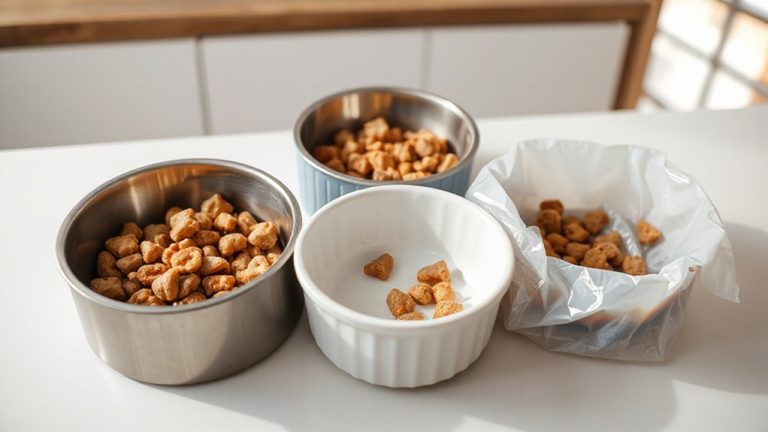
How much cod is just right for your cat’s weight-loss plan? Portion control and feeding frequency are critical. Cod provides lean protein but must be fed in precise amounts to avoid excess calorie intake. An average 10-pound cat aiming for weight loss needs about 180–200 kcal daily, with cod comprising no more than 25% of that total.
| Cat Weight (lbs) | Daily Cod Portion (oz) | Feeding Frequency |
|---|---|---|
| 8 | 1.5 | Once daily |
| 10 | 2.0 | Once daily |
| 12 | 2.5 | Once daily |
Serve cod as part of a balanced diet. Overfeeding-even lean fish-hinders weight loss. Pre-weigh portions to guarantee accuracy. Adjust based on veterinary body condition scoring and monthly weight checks.
Common Mistakes Feeding Cod to Overweight Cats
Feeding cod to overweight cats often backfires due to common oversights. Overfeeding cod, even though it’s low in fat, adds excess calories that hinder weight loss. A 4-ounce portion of cod has about 110 calories-too much for a cat needing only 180–220 calories daily. Stick to 1–2 ounces per meal, no more than three times weekly. You might think raw cod is healthier, but raw cod risks include thiamine deficiency and bacterial contamination. Thiaminase in raw fish breaks down essential vitamin B1, leading to neurological issues. Always cook cod plainly-steaming or boiling without oil or seasoning. Never substitute cod for balanced nutrition; it lacks taurine, arachidonic acid, and essential minerals. Use it only as a supplement within a vet-approved, calorie-controlled diet. Rotate with other lean proteins to guarantee nutrient diversity. Monitor weight weekly.
On a final note
You should feed cod as part of a balanced, calorie-controlled diet for effective feline weight loss. Cod provides 18–20% protein per 100 grams with minimal fat-approximately 0.3–0.5 grams-making it ideal for lean muscle maintenance. Always serve cooked, boneless portions under 30 grams per meal to prevent nutritional imbalances. Excess portions displace essential nutrients. Rotate cod with other proteins to guarantee amino acid diversity. Consult your vet before long-term use.