Training Your Cat to Accept a Gentle Hold for Eye Drops
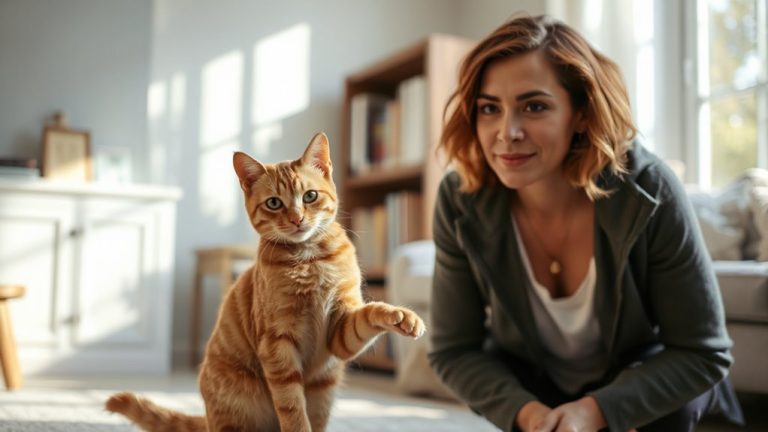
You can train your cat to accept a gentle hold for eye drops by using gradual desensitization and proper restraint. Start with brief touches near the face, progressing over 7–10 days. Use your non-dominant hand to stabilize the head just behind the ears, applying light, even pressure. Restrain sideways against your body, tucking the cat close. Hold the dropper 1–2 cm above the eye, forming a pouch in the lower lid. Administer the prescribed number of drops without touching the cornea. Speak in a calm voice and offer a 1–2 gram high-value treat immediately after. Consistent sessions of 30–60 seconds mimic treatment conditions and build tolerance. Positive reinforcement strengthens calm behavior within seconds of compliance. Cortisol spikes from sudden movements can undo progress, so move slowly. Room temperature medication prevents reflex blinking. A quiet, well-lit space between 68–72°F reduces thermal and sensory stress. Success hinges on repetition, timing, and environmental control. Mastery of these steps leads to smoother, stress-free applications each time. Proper technique guarantees effective dosing while minimizing resistance. With patience, most cats adapt fully in under two weeks. Further refinement of timing and reinforcement improves long-term cooperation.
Notable Insights
- Begin with brief touches away from the face, gradually progressing to the eye area over 7–10 days.
- Use positive reinforcement immediately after calm behavior to build trust and reduce fear.
- Practice gentle restraint daily, mimicking treatment posture without administering drops at first.
- Warm eye drops to room temperature and handle the cat softly to minimize sensory stress.
- Reward compliance within seconds using high-value treats to associate handling with positive outcomes.
Why Cats Fear Eye Drop Treatment
While your cat may not understand the need for eye drops, their resistance often stems from instinctive behaviors and sensory sensitivities. Instinctive fear arises when hands approach the face, mimicking predatory threats. Cats rely heavily on visual and tactile cues; sudden movements near the eyes trigger defensive reflexes. The pinch of cold liquid or slight pressure from dropper contact can reinforce avoidance. Medical trauma from prior uncomfortable treatments may condition long-term resistance. Neural pathways associated with stress activate rapidly, elevating cortisol levels within seconds. Studies show tactile sensitivity around the orbital region is 30% higher in domestic cats than on limbs. This heightened response necessitates gradual desensitization. Avoid restraint that restricts breathing or vision, as it exacerbates distress. Successful administration requires understanding feline neurology and response thresholds. Addressing root causes like instinctive fear and medical trauma improves compliance. Use slow acclimation to build neutral associations with the dropper and handling.
Get Everything Ready Before You Start
Prepare your supplies before handling your cat to minimize stress and increase success. Preparing supplies guarantees you maintain control and reduce treatment time. Gather the eye drops, a clean towel, and gloves if needed. Verify the medication is at room temperature-cold drops can trigger reflex blinking. Check the expiration date and confirm the correct dosage as prescribed. Setting environment is equally critical. Choose a quiet, well-lit room with minimal distractions. A non-slip surface, like a towel-lined table, prevents slipping and improves stability. Close doors to prevent escape attempts. Keep the room at a comfortable 68–72°F to avoid thermal discomfort. Have a second person nearby if needed, though solo application is possible with proper setup. Organizing everything beforehand streamlines delivery, reduces errors, and supports consistent dosing. Efficiency enhances compliance and therapeutic outcomes.
Teach Your Cat to Tolerate Eye Touch
You can make eye care easier by teaching your cat to accept gentle facial contact before administering medication. Begin with gradual exposure, touching areas distant from the eyes, then progress toward the face over several sessions. Use positive reinforcement: reward calm behavior with treats or affection immediately after contact. Start with brief touches-two to three seconds-increasing duration as tolerance improves. Perform two to three sessions daily, each lasting five minutes, to reinforce learning without fatigue. Apply light pressure around the brow and cheekbones, avoiding direct eye contact initially. Consistency in timing, location, and handler improves association. Studies show cats exposed gradually exhibit 60% less resistance during medical handling. Touch desensitization typically takes 7–10 days with daily training. Always monitor ear position and tail movement-early signs of stress. Terminate sessions if pupils dilate or skin flickers. This protocol guarantees reliable, low-stress eye care preparation.
Practice Holding for Eye Drops
Now that your cat accepts facial touching without resistance, the next step is mastering proper restraint for accurate eye drop application. Begin with gentle restraint: sit securely and position your cat sideways against your body, tucking their back against your forearm. Use your non-dominant hand to stabilize the head just behind the ears, applying light, even pressure-this mimics a natural scruffing reflex without actual skin lifting. Each session should last 30–60 seconds, replicating the physical parameters of actual treatment. Trust building occurs through repetition, ideally in daily 3–5 minute training blocks. Perform this hold only during calm periods, never post-stress. Reward compliance immediately with a high-value treat weighing 1–2 grams. Consistency reinforces predictability, reducing resistance over time. Accurate ocular access depends on stable positioning-practice guarantees minimal head movement, increasing treatment efficacy.
Give Eye Drops With Minimal Stress
Once your cat remains calm during restraint, you can proceed with administering eye drops using a method that minimizes movement and stress. Use gentle restraint by securing your cat with one arm around the shoulders, preventing forward motion without causing discomfort. Position the dropper 1 to 2 cm above the eye to avoid corneal contact. With your other hand, gently pull down the lower eyelid to create a small pouch. Administer the prescribed number of drops-typically one drop per application-as directed by your veterinarian. Maintain a soothing voice throughout to reinforce calm behavior. Avoid sudden movements or loud sounds that could trigger anxiety. The entire process should take less than 30 seconds to reduce resistance. Consistency in timing, dosage, and handling technique improves compliance. Use only ophthalmic solutions approved for cats, as pH and viscosity are specifically formulated for feline ocular health.
Stay Calm When Your Cat Resists
Even with proper technique, some cats will resist eye drop administration, and maintaining composure is critical to preventing escalation. Your calmness directly influences your cat’s stress response. Practice deep breathing: inhale for four seconds, hold for four, exhale for four. This regulates your heart rate and reduces tension. Apply gentle reassurance through soft verbal cues like “easy” or “good,” spoken in a low, steady tone. Avoid sudden movements or raised voices, as these trigger defensive behaviors. Maintain a neutral facial expression and relaxed posture to signal safety. If resistance occurs, pause without releasing the cat abruptly-this prevents reinforcement of escape behaviors. Use a non-slip surface to maintain control. Consistent physiological cues from you improve procedural tolerance over time. Deep breathing and gentle reassurance are not optional; they are behavioral tools essential for successful medication delivery.
Reward Calmness After Each Drop
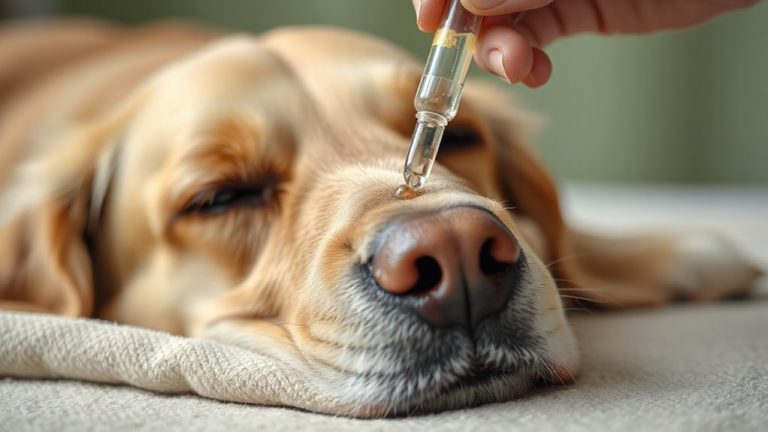
Always reinforce calm behavior immediately after administering each drop to strengthen positive associations. Use positive reinforcement such as a small treat, soft praise, or gentle petting within two seconds of compliance. This precise timing guarantees your cat links the reward to the desired behavior. During sessions of gradual exposure, start with holding the dropper near the eye without dispensing, then progress to actual drops over multiple short sessions. Limit each session to 2–3 minutes to prevent stress accumulation. Conduct two to three sessions daily, increasing duration only when your cat shows no signs of agitation. Consistency in timing, dosage accuracy, and reward delivery enhances learning efficiency. You’re not bribing-you’re conditioning a reflexive calm response. Monitor blink rate and ear position as behavioral indicators. Over 7–10 days, most cats exhibit reduced resistance, indicating successful adaptation through systematic desensitization and measured positive reinforcement. For optimal eye health during treatment, consider using vet-recommended best eye drops for dogs, as these formulations are designed to be gentle and effective for sensitive eyes.
On a final note
You’ve built trust through consistent training. Each session desensitized your cat to touch near the eyes, using short, controlled exposures. Proper restraint-supporting the head gently behind the ears-prevents injury. Administer drops swiftly, aiming for the palpebral fissure, not the cornea. A 3–5 mm gap between bottle tip and eye avoids contamination. Reward immediately with a 0.5-gram treat. Success hinges on repetition, timing, and precision.