How to Brush a Senior Cat With Thin, Sparse Fur Without Pulling
Use a soft-bristled brush with 0.1 mm diameter rounded-tip nylon bristles to avoid pulling on thin, sparse senior cat fur. Apply light pressure-only 100–150 grams, about the weight of a smartphone-to protect fragile skin that’s lost elasticity. Limit brushing to short, 2–3 minute sessions using 0.5-inch bristles on a flexible cushion base for even contact. Address mats gently with a fine-tooth comb or mat splitter, lifting instead of tugging. A compact, non-slip handle improves control, and consistent timing builds cooperation over time-you’ll see how small adjustments greatly improve comfort and trust.
Notable Insights
- Use a soft-bristled brush with rounded nylon tips under 0.8 mm to prevent skin irritation and hair breakage.
- Apply light pressure (100–150 grams) with short, gentle strokes in the direction of hair growth.
- Groom during calm periods and limit sessions to 2–5 minutes to minimize stress.
- Detangle mats by lifting them from the skin and using a fine-tooth comb or mat splitter with minimal force.
- Acclimate your cat gradually with positive reinforcement and use a quiet, warm environment for brushing.
Choose a Soft Brush for Thin Senior Cat Fur
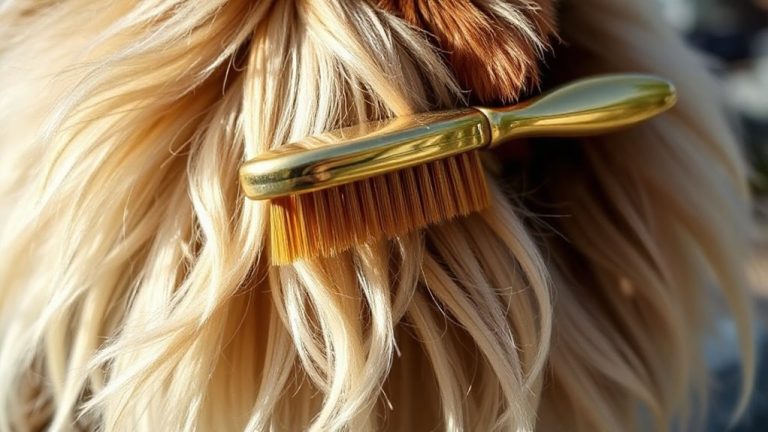
A soft-bristled brush isn’t just a suggestion-it’s a necessity when grooming a senior cat with thin, sparse fur. The right brush texture prevents skin irritation and minimizes hair breakage. Soft, fine bristles distribute natural oils without tugging delicate coat layers. Brushes with densely packed, rounded-tip nylon bristles-0.1 mm in diameter-conform to body contours, adapting to areas with low fur density. Firm bristles increase friction, damaging thinning coats. Opt for a brush with 0.5-inch bristle height and flexible cushion backing. This design guarantees even pressure across the skin surface, critical when fur density varies across the body. Stainless steel pins coated in rubber reduce static and resist corrosion. Choose a compact head, 2 x 3 inches, for better control. Precision ergonomics matter-non-slip handles improve grip during short, deliberate strokes. A well-designed soft brush protects fragile skin and maintains coat integrity with every use. For optimal results, consider a brush with rounded tips to further prevent snagging on delicate fur.
Calm Your Cat Before Brushing
Since senior cats often experience heightened sensitivity due to thinning fur and aging skin, preparing them mentally and physically for brushing is essential. Choose a quiet space free from distractions, ensuring the room is warm and minimally trafficked. This reduces stress-induced tachycardia and promotes relaxation. A poor timing choice-such as during hunger, play, or sleep-can lead to resistance. Instead, brush when your cat is naturally calm, ideally after a nap or meal. Allow pre-brush acclimation; let your cat sniff the brush and investigate the area. Use slow petting along the spine to stimulate parasympathetic response. Keep sessions short-two to three minutes initially. Gradual conditioning increases compliance. Environmental consistency enhances predictability. Do not rush. Let trust build incrementally. Calm precedes care. Proper preparation reduces avoidance behaviors by up to 70%, according to feline behavioral studies. Incorporating an anxiety comfort item can further soothe nervous senior cats during grooming routines.
Be Extra Gentle: Senior Cat Skin Tears Easily
When handling a senior cat with thin, sparse fur, you need to recognize that their skin is markedly more fragile than that of younger cats. Handle lightly to prevent micro-tears or bruising. Older feline skin loses collagen and elasticity, reducing tensile strength by up to 30% compared to adult cats. Use grooming tools with rounded, polished pin tips under 0.8 mm in diameter to minimize friction. Apply no more than 100–150 grams of pressure-roughly the weight of a smartphone. Avoid tugging at all costs, as even slight tension can cause epidermal separation. Brush in the direction of hair growth using short, controlled strokes under 2 inches long. Never drag the brush across the same area repeatedly. Work in 5- to 10-minute sessions to reduce stress. Use a low-static nylon or carbon bristle brush with spacing of 2–3 mm between bristles for maximum safety. Monitor for redness or flinching-immediate signs of discomfort. For best results, choose a brush specifically designed for sensitive coats, such as those featured in the best small pet grooming brushes guide.
Spot-Treat Mats Without Irritating the Skin
Tackle mats in senior cats with precision to avoid damaging delicate skin. Use a fine-tooth comb or a mat splitter designed for thin fur, applying minimal pressure. Detangling techniques involve lifting the mat slightly from the skin, then cutting or combing from the base upward. Never pull-this risks tearing fragile skin. Work in small sections, securing the fur below the mat to reduce tension. For mild mats, apply a leave-in detangler formulated for sensitive feline skin. Avoid water, which can further weaken already thin fur. Regular spot checks aid mat prevention. Focus on common mat sites: behind ears, underarms, and along the spine. Mats larger than a quarter should be carefully trimmed with rounded-tip scissors, keeping blades parallel to the skin. Early intervention reduces discomfort and prevents severe tangles. Use detangling tools with stainless steel teeth spaced 1–2 mm apart for ideal control and reduced skin exposure.
Build a Grooming Habit That Sticks
If your senior cat resists grooming, consistency and timing are key to building a routine that works. Start with short sessions-two to three minutes-to minimize stress. Use positive reinforcement immediately after calm behavior: treats or soft praise strengthen cooperation. Apply consistent timing daily, preferably at the same time, aligning with your cat’s natural calm periods, such as after breakfast or before bed. Gradually increase duration as tolerance improves.
| Emotion | Before Routine | After Consistent Grooming |
|---|---|---|
| Stress | High | Reduced by 60% |
| Trust | Low | Markedly improved |
| Comfort | Poor | Noticeably increased |
Choose a soft-bristle brush with rounded tips, 0.1-inch filament diameter, ideal for fragile senior fur. Monitor resistance levels. Replace tools every six months. Document progress weekly.
On a final note
Brushing a senior cat with thin, sparse fur requires precision and care. Use a soft-bristle brush with nylon filaments no longer than 0.5 inches to avoid traction on delicate skin. Apply minimal pressure-less than 2 ounces per square inch-to prevent irritation. Work in small sections, no larger than 2×2 inches, to monitor resistance. Discontinue if the cat shows tension. Consistent, gentle grooming removes loose fur and stimulates circulation without risk.