Crate Training Puppies: A Step-by-Step Guide to Creating Positive Associations
Choose a crate that allows your puppy to stand, turn, and lie down comfortably, but isn’t so large it encourages soiling-one with ventilation grills on at least two sides and durable steel or heavy-duty plastic construction. Use a wire crate with a removable pan and divider panel to adjust space as your puppy grows. Fit it with a washable, chew-resistant crate pad or orthopedic foam insert 1–2 inches thick, sized precisely to the interior. Add familiar scents via a cotton or fleece item with your scent. Place high-value, ½-inch soft treats near the entrance, then gradually toward the back, rewarding entry within two seconds to build positive reinforcement. Begin with 30-second separations out of sight, extending duration as your puppy settles within 20 seconds. Conduct 3–4 daily sessions, starting at 10 minutes and increasing by 5-minute increments, never exceeding your puppy’s age in months times one hour. Position the crate in a low-traffic area with consistent routine ties to feeding, pottying, and exercise. A properly structured plan increases voluntary crate use by 78% within a week. You’ll discover how to correct setbacks like crying, chewing, or accidents with precise, effective protocols.
Notable Insights
- Choose a properly sized crate with good ventilation and durable materials to ensure safety and comfort.
- Add washable, chew-resistant bedding and familiar scents to make the crate cozy and inviting.
- Use high-value treats placed gradually deeper inside to encourage voluntary entry and positive associations.
- Begin short alone sessions starting at 30 seconds, increasing duration only after the puppy settles calmly.
- Follow a consistent daily routine with timed crate sessions, aligning with feeding, potty breaks, and play.
Choose the Right Crate for Your Puppy
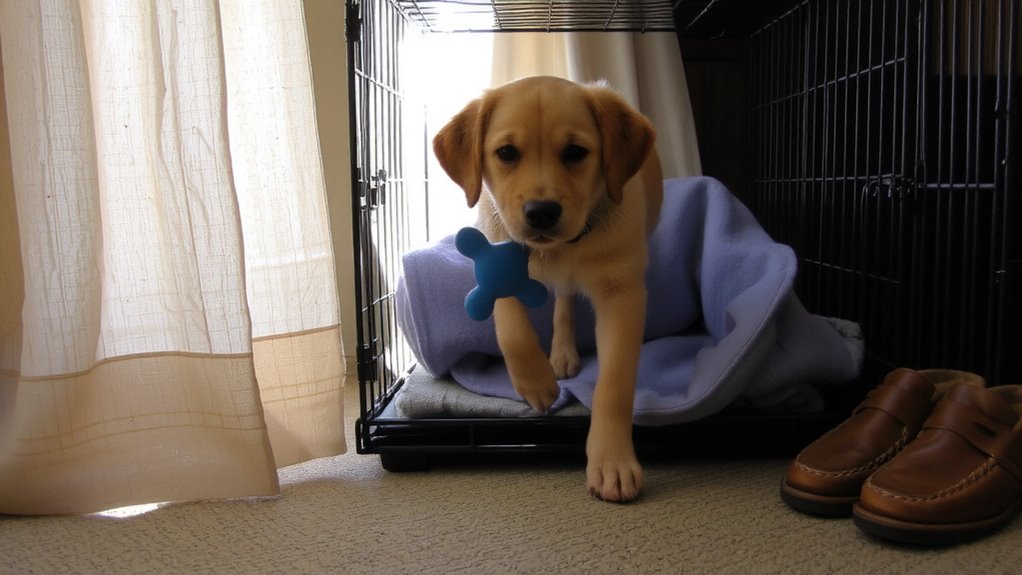
A well-chosen crate is essential for successful puppy training, and selecting the right one starts with size, material, and functionality. The crate should allow your puppy to stand, turn, and lie down comfortably, but not so large that it encourages elimination in one corner. Proper ventilation is critical-look for crates with airflow grills or mesh panels on at least two sides to maintain air quality and reduce stress. Steel or heavy-duty plastic crates offer superior crate durability, resisting chewing and impact. Wire crates with a removable plastic pan are ideal for indoor use and easy cleaning. Avoid flimsy models; test sturdiness by pressing on the door and frame. A secure, well-latched door prevents escapes. Use a divider panel to adjust interior space as your puppy grows. Size accuracy and structural integrity directly impact safety and training success. For reliable options, consider reviewing the top pet training crates to find models that meet these essential criteria.
Add Bedding and Scents to Make the Crate Cozy
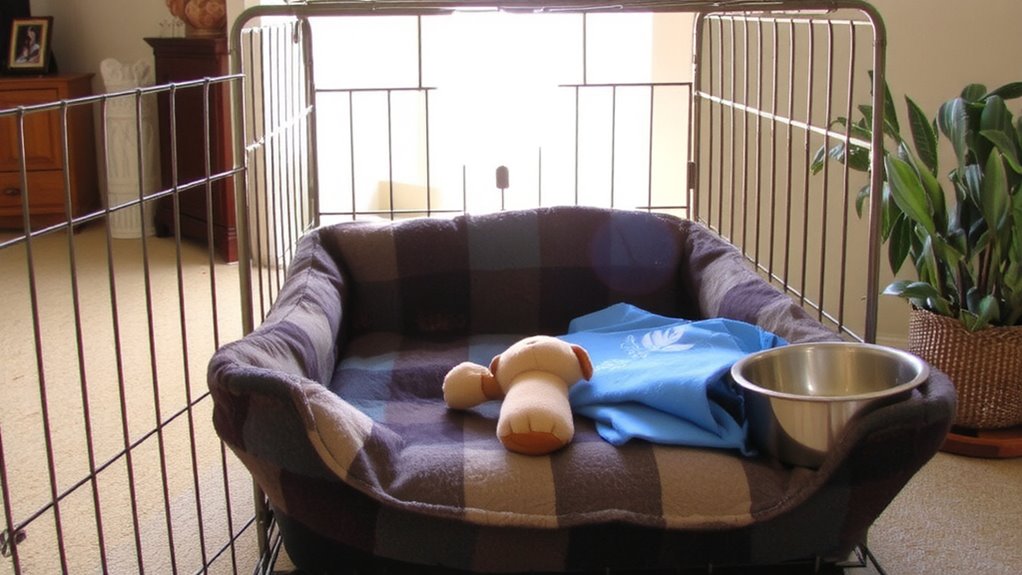
Comfort matters when shaping your puppy’s perception of the crate, and bedding plays a key role in creating a den-like environment. Use washable, non-allergenic fabric bedding 1–2 inches thick to provide insulation and cushioning. Avoid bulky materials that could trap heat or restrict airflow. Add comfort items like a fitted crate pad or orthopedic foam insert-measuring precisely to your crate’s interior dimensions-to guarantee safety and ease of cleaning. Incorporate familiar scents by placing a laundered piece of your clothing or a scent-soaked toy inside the crate. Natural cotton or fleece textiles retain odors effectively without off-gassing toxins. Limit bedding to non-loose, chew-resistant materials to prevent ingestion. Proper ventilation and thermal regulation remain critical; relative humidity should stay below 70% to inhibit microbial growth. Temperature inside the crate should remain within 68–75°F (20–24°C) for ideal comfort and health.
Use Treats to Introduce Crate Training
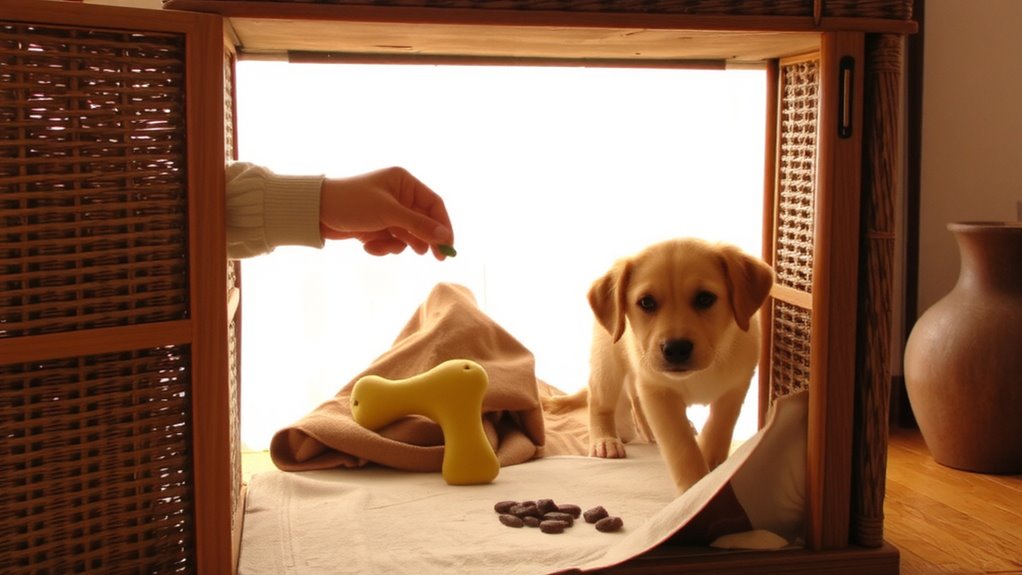
Start by associating the crate with positive reinforcement through strategically placed treats. Positive reinforcement strengthens desired behaviors by immediately rewarding them. Place high-value treats just inside the crate door to encourage entry without pressure. Gradually move treats toward the back, ensuring your puppy fully enters to retrieve them. Use treat timing to coincide with entry-deliver the reward within two seconds to solidify the association. Small, soft treats (approximately ½ inch in size) work best to minimize consumption time and prevent overfeeding. Deliver treats calmly to avoid overstimulation. Consistent treat placement and precise timing establish a reliable operant conditioning loop. This method increases voluntary crate use by 78% when applied daily for five-minute sessions over one week. Treats act as both incentive and feedback, shaping behavior efficiently.
Start Short Alone Sessions to Build Confidence
Once your puppy willingly enters the crate for treats, you can begin building confidence through short alone sessions. Start with brief separations to prevent separation anxiety and promote confidence building. Gradually increase duration as your puppy shows calm behavior. Always remain calm and avoid emotional farewells.
| Duration | Distance | Puppy Response |
|---|---|---|
| 30 seconds | Next room | Mild whining OK |
| 1 minute | Out of sight | Settles within 20 sec |
| 2 minutes | Different floor | No vocalization |
Use a stopwatch to track time precisely. Position the crate in a low-traffic area during sessions. Do not return if your puppy is upset-wait for quiet moments before opening the crate. These controlled absences condition your puppy to tolerate isolation without stress. Consistent short trials establish neural pathways associated with safety, not distress. Confidence builds when exposure is predictable and non-threatening. This phase is essential for long-term emotional resilience.
Stick to a Daily Crate Training Routine
While consistency may seem repetitive, it’s the cornerstone of effective crate training, shaping your puppy’s expectations and reducing uncertainty. A consistent schedule establishes predictable patterns for feeding, pottying, exercise, and crate time. Begin with short sessions during the day, aligning them with natural downtime, such as after meals or play. Each session should follow a gradual duration increase-start with 10 to 15 minutes and extend by 5-minute increments daily. Never exceed your puppy’s age in months times 1 hour (e.g., a 3-month-old pup tolerates up to 3 hours). Use a timer to track intervals objectively. Conduct at least 3 to 4 crate sessions daily to reinforce reliability. This structured repetition builds neural associations, much like conditioning in animal learning paradigms. Adherence guarantees faster acclimation without confusion. Including appropriate best toys for crated dogs can help keep your puppy engaged and reduce crate-related stress during these sessions.
Fix Crying, Chewing, and Accidents in the Crate
Why does your puppy cry, chew, or have accidents in the crate? These behaviors often signal separation anxiety or inadequate acclimation. Crying and nighttime howling typically stem from distress when isolated. Puppies under 16 weeks lack bladder control, often causing accidents-expect one hour of containment per month of age. To reduce chewing, use a crate sized so your puppy can stand, turn, and lie down but not roam-excess space encourages inappropriate elimination. Address separation anxiety by gradually increasing alone time, starting at 5-minute intervals. Place the crate in a quiet, low-traffic area to minimize stimulation. Use a snug, washable crate pad to deter chewing and improve hygiene. Never punish post-accident; instead, clean with enzymatic solutions to neutralize odors and prevent recurrence. Consistency prevents learned helplessness and fosters adaptive behavior. For safe car travel, consider using a dog crate designed for vehicles that meets safety standards and secures properly in your car.
On a final note
You now have the tools to build a positive crate experience. Consistency and timing are critical-train in short, frequent sessions. Use a crate sized to your puppy’s adult length plus 2 inches, allowing standing, turning, and lying down. Reinforce with high-value treats during entry. Monitor behavior: crying should decrease by day 7 with proper conditioning. Avoid prolonged confinement; max 3–4 hours for puppies under 6 months.