Creating a Bathing Schedule for Pets With Autoimmune Skin Disorders
You should bathe your pet weekly using a vet-approved, hypoallergenic shampoo with a pH between 5.5 and 7.0. Choose products free of sulfates, parabens, and fragrances-colloidal oatmeal or 2–4% chlorhexidine formulas help soothe and control microbial load. Maintain water temperature between 85°F and 92°F, and allow 5 to 10 minutes of shampoo contact time. Monitor for redness or increased itching within 48 hours. Adjust frequency and products based on your veterinarian’s guidance and your pet’s clinical response-further refinements follow from consistent observation and professional input.
Notable Insights
- Use a vet-approved, hypoallergenic shampoo with a neutral pH to protect the skin barrier.
- Bathe weekly unless otherwise directed, adjusting frequency based on disease severity and response.
- Allow medicated shampoos 5 to 10 minutes of contact time before rinsing thoroughly.
- Use lukewarm water and gentle techniques to minimize irritation during bathing.
- Monitor for redness or increased itching and adjust the routine with veterinary guidance.
Know Common Autoimmune Skin Disorders in Pets
Autoimmune skin disorders in pets disrupt the body’s ability to recognize its own cells, leading to attacks on the skin and mucous membranes. You’ll often see pemphigus foliaceus, the most common autoimmune skin disease in dogs and cats. It causes blistering, crusting, and scaling, typically starting on the face and ears. The immune system targets desmoglein-1, a protein that binds epidermal cells. Without it, skin layers separate, forming lesions. Lupus erythematosus is another key condition, with two forms: systemic and cutaneous. Discoid lupus erythematosus primarily affects the nose and face, degrading the nasal planum and causing depigmentation. It’s common in middle-aged dogs, especially Collies and German Shepherds. UV light can exacerbate both diseases. Diagnosis requires skin biopsies examined histopathologically. Immunosuppressive therapy is standard. Early recognition helps control progression and improves long-term management outcomes.
Choose Vet-Approved, Hypoallergenic Bath Products
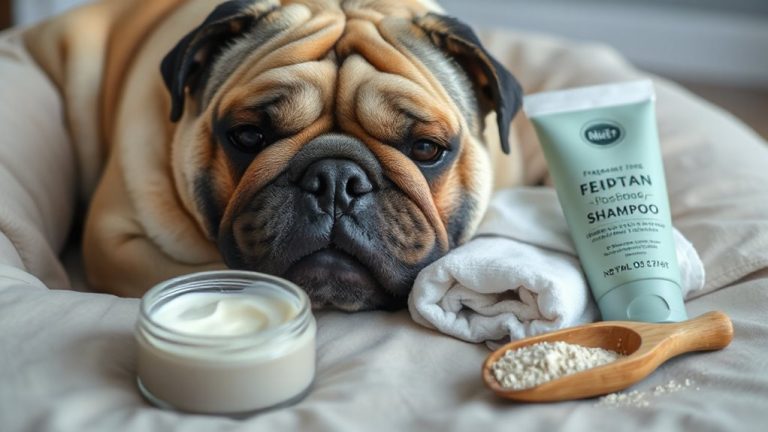
A proper bathing routine starts with selecting the right shampoo-specifically, one that’s vet-approved and hypoallergenic. Product selection is critical for pets with autoimmune skin disorders, as harsh ingredients can worsen inflammation. Always prioritize ingredient safety by choosing shampoos free from sulfates, parabens, and artificial fragrances. Look for formulations with a neutral pH (around 7.0) to match your pet’s skin barrier. Medicated options containing chlorhexidine (2–4%) or miconazole (1%) are often recommended, but only when prescribed. One excellent choice is an oatmeal-based shampoo, as colloidal oatmeal helps soothe and protect sensitive skin.
| Product Type | Active Ingredient | Ideal pH Range |
|---|---|---|
| Oatmeal-based | Colloidal Oatmeal | 6.5–7.5 |
| Antimicrobial | Chlorhexidine | 5.5–6.5 |
| Moisturizing | Ceramides & Fatty Acids | 7.0–7.5 |
Always consult your veterinarian before introducing a new product. They can guide you toward safe, effective choices tailored to your pet’s condition.
How Often Should You Bathe a Pet With Autoimmune Skin Disease?
How often should you bathe your pet when their skin is already under siege? Bathing frequency plays a critical role in managing autoimmune skin disease. Too often, and you risk stripping natural oils; too infrequent, and debris accumulates, worsening inflammation. For most pets, a weekly bath is ideal. This interval supports debris removal without disrupting the skin barrier. Veterinarians commonly recommend medicated shampoos containing chlorhexidine (2%) or benzoyl peroxide (3%), proven to reduce microbial load in 14-day clinical trials. These ingredients act on pathogens without acidifying the skin excessively. Your pet’s skin barrier function improves with consistent, controlled cleansing. Always follow label directions-most treatments require 5 to 10 minutes of contact time. Adjust bathing frequency based on disease severity and your vet’s guidance. Consistency maintains barrier integrity and minimizes flare-ups.
Bathe Sensitive Skin Safely and Gently
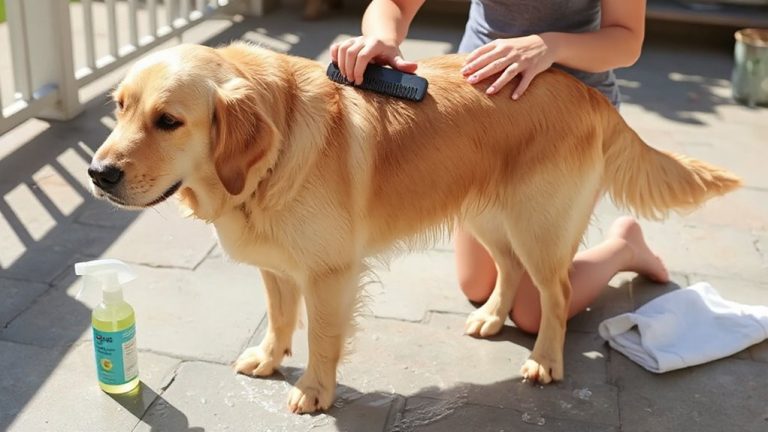
Gentle handling starts with the right shampoo. Choose a veterinary-recommended, fragrance-free, hypoallergic shampoo with a pH of 5.5 to 7.0, matching your pet’s skin. Maintain water temperature between 85°F and 92°F-warm but not hot-to avoid triggering inflammation. Test with a thermometer or the inner wrist to confirm. Use a low-pressure handheld sprayer to minimize stress and prevent skin trauma. Apply shampoo with a soft touch, using a circular massage technique with fingertips only-avoid nails or brushes. Massage lasts 3–5 minutes to allow active ingredients like oatmeal or chlorhexidine (0.5%–2%) time to work. Rinse thoroughly for at least twice the application time to eliminate residue. Keep sessions under 10 minutes to reduce moisture-related barrier disruption. Towel dry gently with a microfiber cloth. For pets with environmental or food-related sensitivities, consider a shampoo formulated specifically for dog allergies.
Watch for Skin Irritation After Baths
Monitor your pet closely after each bath, as delayed reactions can appear even with careful technique. Post bath redness may develop within 12 to 24 hours, signaling irritation or inflammation. Check ears, paws, and folds-common sites for flare-ups. Perform an itching assessment by observing for scratching, licking, or restlessness within 48 hours. Use a symptom log to track frequency and intensity on a scale of 1 to 10. Redness lasting over 48 hours or increasing in severity requires documentation for veterinary review. Limit environmental allergens post-bath to reduce confounding variables. Avoid grooming tools that abrade the skin. Moisturize only with vet-approved, fragrance-free products containing ceramides or fatty acids. Early detection helps prevent secondary infections. Immediate intervention reduces flare-up duration. Consistent observation guarantees bathing remains therapeutic, not harmful.
Adjust the Bathing Plan With Your Veterinarian
Why does your pet’s current bathing routine no longer seem effective? Autoimmune skin disorders change over time, requiring adjustments in bathing frequency and product safety. What once helped may now worsen irritation or fail to control symptoms. You need to reevaluate every few weeks, especially during flare-ups or remission phases. Work closely with your veterinarian to modify the plan based on clinical signs and treatment progress.
| Factor | Adjustment |
|---|---|
| Increased redness or scaling | Reduce bathing frequency; reassess product safety |
| Improved skin condition | Maintain or slightly increase bathing frequency |
| Recurrent infections | Switch to antimicrobial shampoo; confirm product safety for long-term use |
Your vet can recommend pH-balanced, hypoallergenic formulations and precise bathing frequency tailored to your pet’s immune response and skin barrier integrity.
On a final note
You must follow a strict bathing regimen if your pet has an autoimmune skin disorder. Use only vet-approved, hypoallergenic shampoos with a pH of 5.5 to 7.0 to maintain skin barrier integrity. Bathe every 7 to 14 days unless otherwise directed. Avoid hot water; keep it lukewarm (38–39°C). Monitor for erythema or increased scaling post-bath. Adjust frequency and products based on clinical response and veterinarian assessment.