What Coat Matting Patterns Indicate About Grooming and Health Neglect
Your pet’s matted coat reveals missed grooming and possible health issues. Mats near ears, under legs, or at the tail base trap moisture, creating 90%+ humidity-ideal for bacteria. Friction zones collect dirt and dead hair, tightening into skin-pulling clumps. Chronic conditions like arthritis or hypothyroidism reduce mobility and coat quality. Tight mats as small as 0.5 inches cause pressure sores. This pattern signals prolonged neglect-understanding the root causes explains what comes next.
Notable Insights
- Mats behind ears or under legs often signal inadequate grooming frequency and high friction in moisture-prone areas.
- Uniform matting across the body may indicate systemic illness reducing mobility or self-grooming ability.
- Skin-bound mats with odor or discharge suggest prolonged neglect and possible secondary infections.
- Collar-area matting typically results from tight collars rubbing against thick, poorly maintained coats.
- Matting at the tail base linked to fecal buildup can reflect pain, arthritis, or hormonal disorders affecting grooming.
Why Your Pet’s Coat Is Matted: and What It Means?
Why does your pet’s coat develop stubborn mats despite regular care? Mats form when loose hair, dirt, and moisture trap underlying strands, especially in areas with friction like behind ears or under legs. Your pet’s coat texture plays a decisive role-wavy or curly fur tangles more easily than straight hair due to increased surface friction and kink density. Even with brushing, insufficient grooming frequency allows tangles to tighten into dense, skin-binding mats within days. Long-haired breeds need daily grooming to prevent mating, while short-haired pets require weekly sessions. A slicker brush with 0.5–1 mm wire spacing works best for breaking up early tangles. Mats close to the skin reduce airflow, increasing humidity and risk of skin irritation. Regular inspection and proper tools are essential. Consistent grooming frequency matched to your pet’s coat texture prevents mat formation effectively. A best pet grooming tubs setup at home can significantly improve cleaning efficiency and reduce matting risks during baths.
Hidden Illnesses Behind a Matted Pet Coat
A matted coat isn’t always the result of poor grooming-sometimes it’s a sign your pet is already sick. Underlying medical conditions can reduce mobility or self-grooming behavior, leading to mat formation. Internal infections, such as pyometra or abscesses, trigger systemic inflammation and lethargy, decreasing your pet’s ability to maintain coat hygiene. Chronic pain from arthritis or spinal issues also limits grooming reach. Hormonal imbalances, including hypothyroidism or Cushing’s disease, alter skin oil production and hair turnover rates. These conditions elevate sebum secretion, causing fur to clump and stick together, especially along the dorsal trunk and腋 regions. Elevated cortisol levels in Cushing’s syndrome weaken hair shafts, accelerating breakage and tangle formation. Diagnostic blood panels should include T4, ACTH stimulation tests, and CBCs to identify root causes. Early detection improves treatment outcomes and prevents secondary skin complications. Regular brushing with high-quality dog grooming clippers can help manage shedding and reduce matting risks, especially in long-haired breeds.
Signs of Neglect in Severe Coat Matting
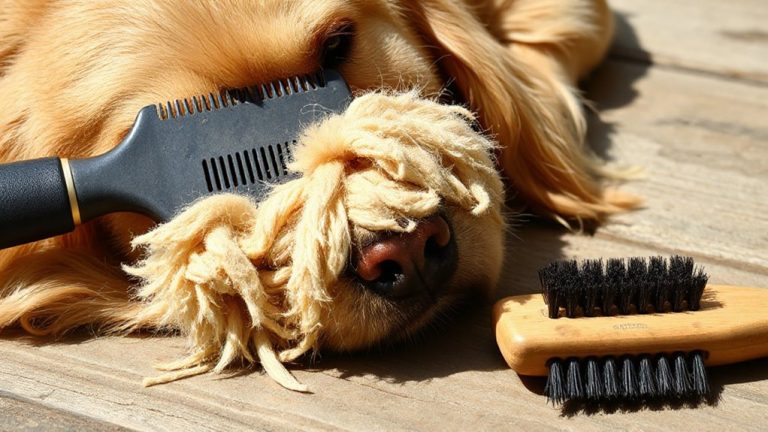
Severe matting is more than a cosmetic issue-it’s a visible marker of prolonged neglect. You can see tight, dense clumps forming across the coat, creating constant coat tension that pulls on the skin. This tension restricts movement and causes discomfort, similar to wearing clothes that are too tight for days. Mats press firmly against the body, trapping moisture and debris. Over time, this leads to skin trauma, including abrasions, pressure sores, and bacterial infections. The trapped environment promotes pathogen growth, with humidity levels under mats reaching over 90%, ideal for dermatophytes. You’ll often find inflamed, raw skin beneath mats, sometimes with odor or discharge. These signs indicate the animal hasn’t been groomed for weeks or months. Without intervention, tissue damage worsens. Regular brushing and proper coat maintenance prevent these conditions, preserving skin integrity and overall health. Using the right tools, such as best dog clippers for doodles, can significantly reduce the risk of matting in high-maintenance breeds.
Where Mats Form on a Pet’s Coat: and Why
Your pet’s coat isn’t matted uniformly-certain areas are prone to matting due to friction, moisture, and limited airflow. These spots experience increased coat tension and repeated rubbing, creating ideal conditions for mat formation. Key friction zones include behind the ears, under the legs, and along the collar. Mats develop where hair layers press together, trapping moisture and restricting ventilation. Regular inspection of high-risk areas allows early detection and prevents skin complications.
| Location | Cause of Matting | Contributing Factor |
|---|---|---|
| Behind ears | Moisture + coat tension | Poor airflow, long fur |
| Under legs | Skin fold friction zones | Movement, sweat accumulation |
| Collar area | Constant rubbing | Tight collars, thick coats |
| Tail base | Fecal residue + moisture | Soiling, limited grooming |
| Armpits | High motion + humidity | Skin contact, dense fur |
Why Sick or Sore Pets Stop Grooming
When pets become ill or experience pain, their grooming habits often decline because physical discomfort limits mobility and energy. You’ll notice reduced self-care as pain avoidance becomes a priority. Conditions like arthritis or dental disease make grooming movements too painful, so your pet skips these tasks. Energy depletion from illness further diminishes their capacity to groom. Metabolic demands increase during sickness, leaving fewer calories for non-essential activities. Studies show sick animals can experience up to 40% reduction in daily activity levels. Pain avoidance and energy depletion work together, suppressing grooming behaviors even in typically fastidious animals. Neurological changes from illness may dull instinctual routines. Without intervention, poor grooming accelerates coat deterioration. The result isn’t sloppiness-it’s a physiological response. You can expect noticeable texture and cleanliness shifts within 7–10 days of illness onset. These changes are measurable indicators of declining health, not mere cosmetic concerns.
Early Signs of Dangerous Coat Matting
Loose fur clumping into small tangles is often the first visible indicator of developing coat matting, especially in long- or double-coated breeds like Persians, Collies, or Siberian Huskies. These initial mats typically form behind the ears, under the legs, or along the belly-pressure points where friction is frequent. You may notice subtle coat texture changes: once soft fur feels coarse or wiry, signaling dehydration or sebum imbalance. Early grooming resistance is a red flag; your pet flinches or avoids brushing, often due to tenderness from underlying skin irritation. Mats as small as 0.5 inches can trap moisture, creating an anaerobic environment ideal for bacterial growth. Immediate intervention with a slicker brush and mat splitter is critical. Left untreated, these minor tangles progress to dense, skin-tight masses within 7–10 days. Regular coat assessments every 48 hours can catch matting before it escalates.
Mild vs. Severe Coat Matting: What to Do
How can you tell when coat matting crosses the line from manageable to dangerous? Mild matting appears as loose tangles near the ears, armpits, or tail base, often corrected with weekly brushing. Your dog’s coat texture plays a key role-curly or double-coated breeds mat faster. At this stage, increase grooming frequency to every other day using a slicker brush and detangling spray. Severe matting forms dense, solid clumps紧贴皮肤, restricting movement and airflow. These mats won’t loosen with brushing and require professional clipping. Never pull them free-this damages skin. Use blunt-tipped scissors sparingly, only on small, isolated mats. For severe cases, consult a vet or groomer. Ignored matting leads to sores, infection, and thermoregulation issues, especially in thick coats. Early intervention preserves coat texture and prevents pain.
On a final note
Your pet’s matted coat signals grooming failure and possible health decline. Mats form when dead hair, oil, and debris bind to the skin, restricting airflow and promoting infection. Severe matting, especially near joints or underarms, suggests chronic pain or illness limiting self-care. A single 2-inch mat can harbor over 50 mites. Immediate brushing won’t fix dense mats; they require safe clipping with #10 blades. Regular grooming-daily brushing, monthly baths-prevents recurrence.