How to Use Treats to Build Confidence in a Timid Kitten
Use pea-sized, high-value treats under 5 kcal-like 3 mm freeze-dried chicken-with 70%+ moisture for easy chewing. Start in a quiet, enclosed space under 100 sq ft, rewarding calm behavior within 1–2 seconds. Pair treat delivery with soft sounds or distant people, increasing exposure by 10% increments only after three successful trials. Watch for flattened ears or crouching; keep sessions under 90 seconds. Consistent timing and precise treat specs build reliable confidence-further refinements can markedly enhance results.
Notable Insights
- Use high-value, soft treats with animal-based proteins to reward calm behavior and encourage positive associations.
- Deliver treats within 1–2 seconds of relaxed body language to reinforce confidence during low-stress exposure.
- Pair tiny freeze-dried treats with gentle exposure to new stimuli, starting at a safe distance.
- Keep training sessions under 5 minutes in a quiet, secure space to prevent overstimulation.
- Gradually increase challenges only after three stress-free trials, rewarding continued calmness with pea-sized treats.
Choose High-Value Treats Your Kitten Loves
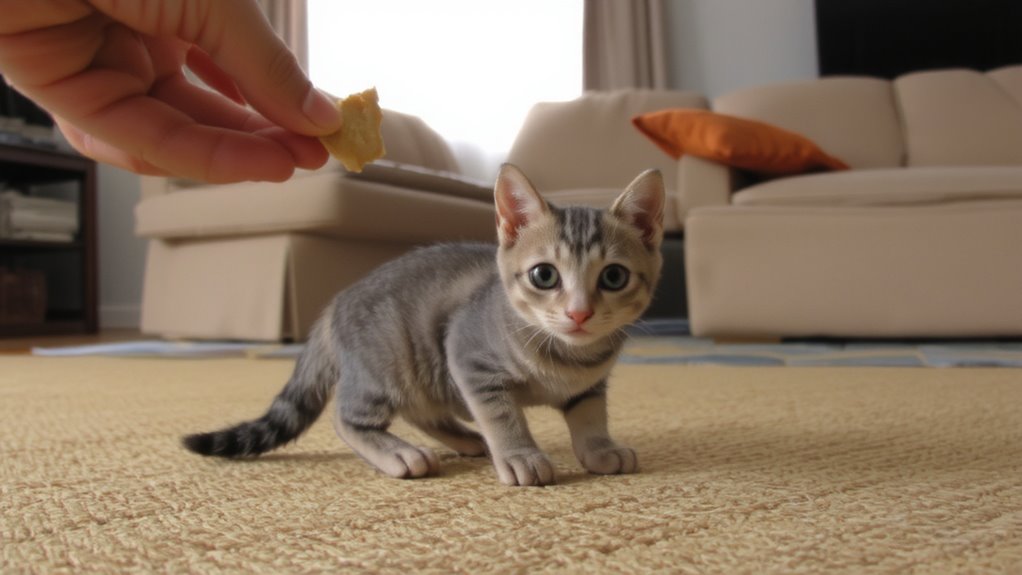
A treat’s effectiveness hinges on its appeal to your kitten. High-value treats stimulate a stronger positive response than standard options. You must consider your kitten’s innate taste preference, which typically favors animal-based proteins like chicken, salmon, or liver. These ingredients trigger higher palatability due to elevated nucleotide content, enhancing flavor detection. Opt for treats with at least 70% moisture content in soft chews; they’re easier for young teeth to manage. Introduce treat variety early-rotate between freeze-dried, pouch-based, and soft-textured formats to prevent sensory fatigue. Effective treat sizes range from 1–3 mm in diameter, ensuring they’re small enough to consume quickly without interrupting training flow. Caloric load should stay under 5 kcal per piece to avoid satiation. Consistent use of species-appropriate, high-value rewards supports associative learning and confidence-building.
Start in a Quiet, Safe Zone for Training
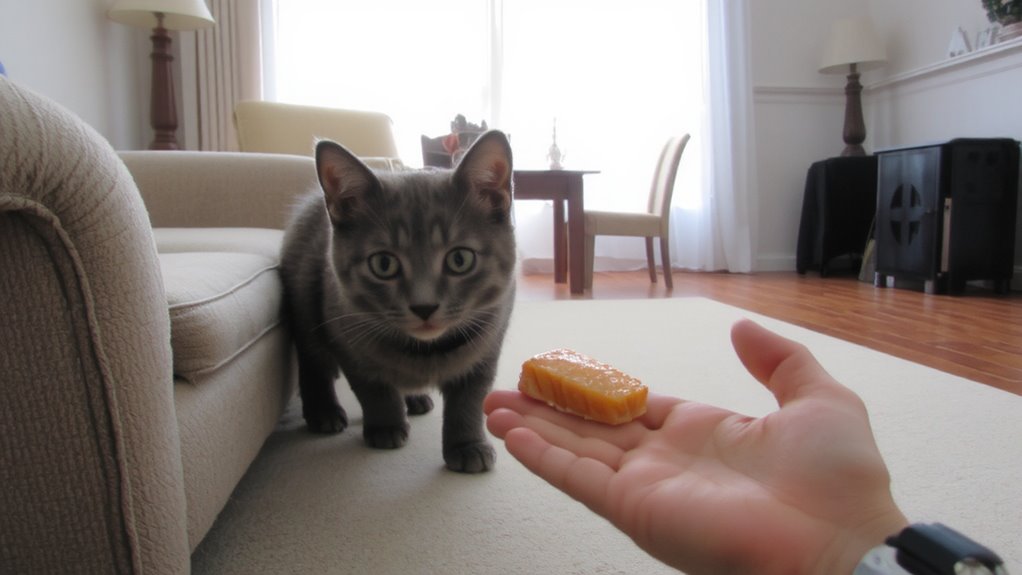
Since your kitten’s nervous system remains highly sensitive during early development, begin training sessions in a quiet, enclosed space free of sudden noises or distractions. A quiet environment reduces sensory overload, allowing the kitten to focus on learning. Choose a small room like a bathroom or spare bedroom, ideally under 100 square feet, with minimal furniture and no loud appliances. This controlled area acts as a safe space where the kitten can associate experiences with predictability. Use nonslip flooring to prevent slipping, which can increase anxiety. Keep the temperature between 70–75°F for comfort. Avoid high-traffic zones. The quiet environment should have one entry point to limit escape risks. Limit visual stimuli by closing blinds. This safe space serves as a behavioral foundation, reducing cortisol levels. Consistent use strengthens neural pathways linked to calmness. Start sessions when the kitten is alert but relaxed, typically 30 minutes after rest.
Use Treats to Introduce New Sounds & People
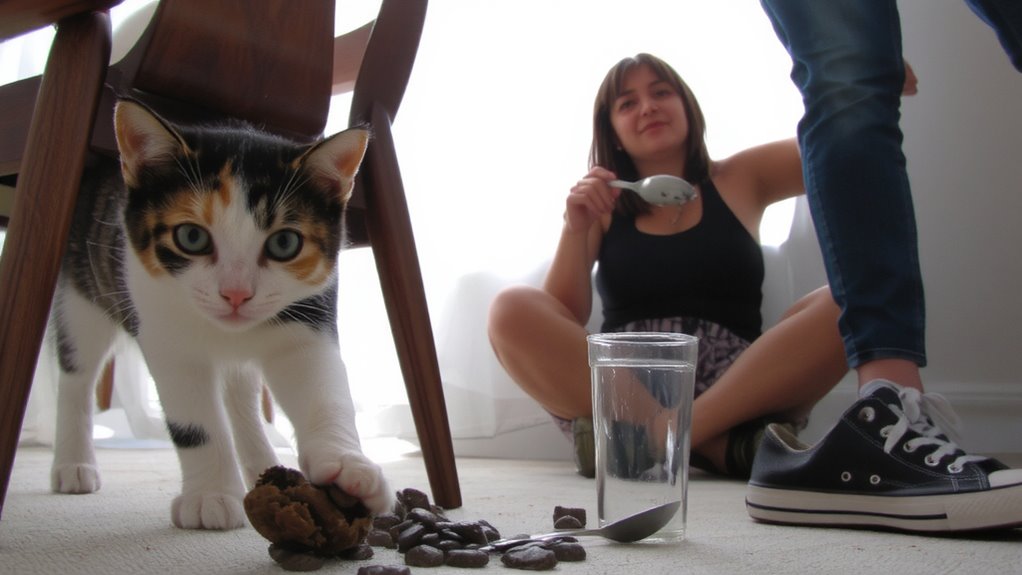
You’ve set up a controlled, low-stimulus space to stabilize your kitten’s baseline comfort-now build on that foundation by pairing positive reinforcement with gradual exposure to new stimuli. Use gentle exposure to introduce soft sounds or unfamiliar people at a safe distance. Immediately reward calm curiosity with high-value treats like freeze-dried chicken (approx. 0.5g per reward). Over 5–7 days, decrease distance or increase volume in 10% increments. Always monitor pupil dilation, ear position, and tail movement as behavioral indicators. Choosing the right treats plays a crucial role in effective training, and for similar soft, palatable options that appeal to sensitive puppies, consider best treats for Goldendoodle puppies.
| Stimulus | Action |
|---|---|
| Doorbell (low volume) | Play recording 5 ft away, treat after 5 sec of calm |
| Stranger (motionless) | Stand 8 ft away, offer treat if kitten looks |
| Clapping (soft) | Two claps, pause 30 sec, reward if no flinch |
| Vacuum (off) | Let kitten approach, treat for sniffing |
Gentle exposure duration should not exceed 10 minutes per session.
Reward Calm Behavior Around People and Noise
When your kitten begins showing signs of relaxed awareness-ears forward, tail upright, breathing steady-during initial exposure sessions, it’s time to reinforce calmness in the presence of people and predictable noises. Use positive reinforcement immediately when calm behavior occurs. Offer high-value treats, such as freeze-dried chicken pieces (approximately 3–5 mm in size), within 1–2 seconds of the desired behavior. This precise timing strengthens the association between calmness and reward. Conduct sessions in 5–7 minute intervals, two to three times daily, to avoid overstimulation. Apply gradual exposure by maintaining a consistent distance-start at 2 meters-from noise sources like a TV or talking person. Increase proximity only after five successful, calm sessions. Monitor body language closely. Avoid petting or sudden movements. Each session should end while the kitten remains calm, preserving a positive context for future learning.
Increase Challenges Slowly
As your kitten consistently demonstrates calm behavior during initial exposure sessions, it’s time to systematically raise the difficulty to promote continued confidence growth. Use gradual exposure to introduce slightly more intense stimuli, such as a visitor standing closer or a soft sound played at a higher volume. Increase distance, duration, or decibel level in 10–15% increments to avoid setbacks. Continue using high-value treats delivered within 1–2 seconds of calm behavior to maintain clear positive reinforcement. Each session should last 3–5 minutes to prevent fatigue. Monitor body language: forward ears and relaxed posture indicate readiness for progression. Only advance when the kitten shows no signs of fear across three consecutive trials. This structured escalation guarantees neural pathways associate new challenges with safety, not threat. Progress slowly-rushing compromises long-term behavioral outcomes. Choosing the right high-value treats can make a significant difference in your kitten’s responsiveness during training.
Watch for Stress: Don’t Rush Treat Sessions
Why do some kittens regress after seeming to make steady progress? You’re likely overlooking fear signs and pacing cues. Pushing treat sessions too fast overwhelms their developing nervous system. Watch for flattened ears, dilated pupils, or crouching-these are clear fear signs. If your kitten freezes or retreats, pause immediately. Let them dictate the pace. Short sessions of 30 to 90 seconds are ideal; longer durations increase stress. Respond to pacing cues like slow approach or sniffing: they signal readiness. Rushing undermines neural conditioning. Instead, match their threshold. Use high-value, pea-sized treats (approx. 0.2 oz each) to sustain attention without overfeeding. Repeat only if the kitten initiates. Controlled repetition reinforces safety. Overstimulation leads to regression. Consistent, observation-based timing improves associative learning. You’ll achieve better long-term results by respecting biological response limits, not forcing outcomes.
Make Confidence a Daily Routine
Consistently reinforcing positive behaviors builds lasting confidence in timid kittens. Positive reinforcement with treats strengthens neural pathways linked to safety and trust. Administer rewards immediately after desired behaviors-ideally within 1–2 seconds-to create clear associations. Use consistent timing to establish predictability; schedule sessions at the same times daily, ideally 3–5 brief interactions of 3–5 minutes each. This frequency maintains engagement without overstimulation. Choose low-calorie, soft-textured treats (≤5 kcal each) to prevent satiation and allow repetition. Limit total treats to ≤10% of daily caloric intake. Pair each session with a verbal cue like “good” to reinforce behavior. Gradually increase environmental complexity-add neutral stimuli like a towel or toy-as confidence grows. Track progress weekly, noting approach latency, body posture, and treat acceptance. Over 4–6 weeks, most kittens show measurable reductions in freezing, fleeing, or hiding. Routine builds resilience more effectively than occasional interaction.
On a final note
You’ve built trust through precise, reward-based conditioning. Treats act as positive reinforcement, strengthening neural pathways linked to calmness. Start with 3–5 second exposures to stimuli, rewarding immediate. Gradually extend duration and proximity. Limit sessions to 3–5 minutes, 2–3 times daily, to prevent habituation. Use high-calorie, palatable treats (3–5 kcal each) to maintain motivation. Consistency in timing and environment increases predictability, reducing cortisol levels. Repeat daily to solidify confidence.