Understanding Cortisol Response Patterns in Pets Exposed to Chronic Stress at Home
Your pet’s cortisol levels rise in response to chronic stress, disrupting normal diurnal rhythms-morning peaks can drop by up to 40% in dogs. Cortisol, regulated by the HPA axis, controls metabolism and immune function but becomes dysregulated under persistent stress. This leads to sustained high levels, not adrenal fatigue. Testing includes blood, saliva, or urine CCR with values outside 1–5 ng/mL or elevated ratios indicating imbalance. You’ll discover proven, measurable ways to restore your pet’s hormonal balance through targeted environmental changes.
Notable Insights
- Chronic stress disrupts the HPA axis, leading to sustained high cortisol and flattened diurnal rhythms in pets.
- Dogs exposed to long-term stress may show up to 40% lower morning cortisol peaks.
- Elevated cortisol in pets correlates with symptoms like restlessness, excessive panting, and appetite changes.
- Saliva and urine testing at home help assess cortisol levels without clinic-induced stress artifacts.
- Consistent routines and quiet zones help normalize cortisol rhythms and reduce stress in household pets.
What Is Cortisol and Why It Matters for Pets
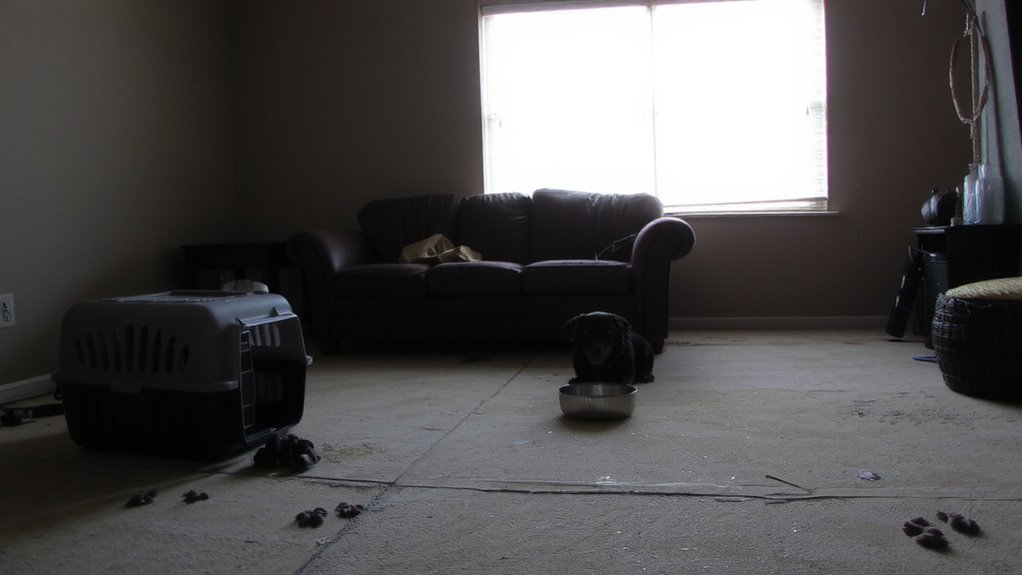
A hormone’s role in your pet’s body can be as critical as fuel in an engine-none more so than cortisol. Cortisol function includes regulating metabolism, immune response, and blood sugar. It’s produced by the adrenal glands in response to signals from the hypothalamus and pituitary. This hormone is central to stress regulation, helping your pet react appropriately to challenges. Normal cortisol levels follow a diurnal rhythm, peaking in the morning and declining at night. It activates gluconeogenesis, increases cardiac output, and suppresses non-essential functions during acute stress. The hormone binds to glucocorticoid receptors in tissues like liver, muscle, and immune cells. Balanced cortisol guarantees adaptive behavior and physiological stability. Disruptions impair homeostasis. You’ll find cortisol measured in ng/mL in blood tests, with canine baselines averaging 1–5 ng/mL pre-activation. Its precision in timing and concentration underscores why cortisol matters-it keeps your pet’s internal systems responsive and resilient under pressure.
How Chronic Stress Changes Your Pet’s Cortisol Levels

You’ve seen how cortisol supports your pet’s daily function, but when stress becomes ongoing, that same hormone can shift from helpful to harmful. Chronic stress triggers persistent cortisol release, overwhelming your pet’s hypothalamic-pituitary-adrenal (HPA) axis. This prolonged activation leads to hormonal disruption, impairing normal feedback mechanisms. Cortisol levels remain elevated, disrupting metabolism, immune function, and behavioral regulation. Over time, adrenal fatigue may develop, where the adrenal glands fail to produce adequate cortisol despite continued stress. This stage reflects HPA axis dysregulation, not gland exhaustion. Diurnal cortisol rhythm flattens-morning peaks diminish by up to 40% in affected dogs. In cats, baseline levels can increase twofold. These measurable changes impair glucose regulation and increase inflammatory markers. Without intervention, the endocrine system remains locked in overdrive, compromising long-term health. Monitoring cortisol patterns helps identify dysfunction early. Effective management strategies, including the use of vet-recommended pet stress relief solutions, can help restore hormonal balance and improve overall well-being.
Common Hidden Signs of High Cortisol in Cats and Dogs
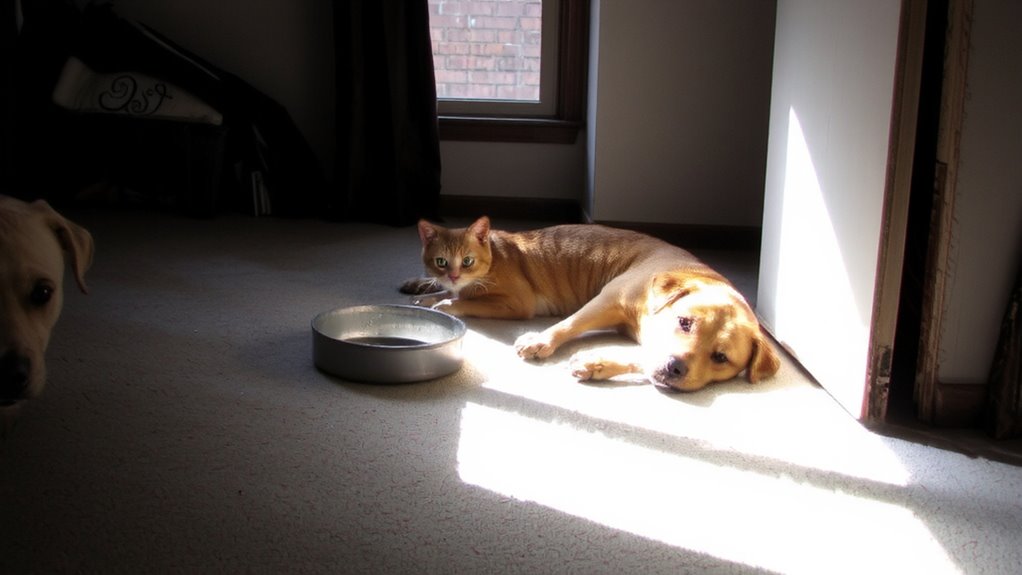
Why might your pet seem off without obvious illness? Elevated cortisol can trigger subtle but measurable changes. Behavior changes are common: your dog may pant excessively at rest, while your cat could hide more or groom compulsively. These aren’t just quirks-they’re physiological responses to prolonged stress. Cortisol disrupts neural pathways, altering mood regulation. Appetite shifts also occur: some pets overeat, others refuse food. A dog consuming 20% more calories than baseline or a cat skipping multiple meals may signal hormonal imbalance. Sleep disturbances, like夜间 restlessness, often accompany these signs. You might notice reduced activity levels-less than 30 minutes of sustained play daily in dogs previously active. In cats, vertical scratching may drop by 50%. These markers, while non-specific, correlate with chronic HPA axis activation. Monitoring duration and frequency improves detection. No single symptom confirms high cortisol, but clusters suggest endocrine disruption requiring veterinary assessment.
How Vets Test for Cortisol Imbalances in Stressed Pets
When clusters of behavioral and physiological changes-like excessive panting, altered sleep patterns, or reduced play-persist beyond 14 days, your vet will likely recommend cortisol screening to confirm endocrine dysfunction. They’ll start with a baseline blood test, but that only shows cortisol at a single moment. For a clearer picture, vets use saliva testing, which captures free cortisol levels in saliva collected at home, minimizing clinic stress. Saliva samples are taken at specific times, usually morning and evening, to assess the diurnal rhythm. Urine analysis is also common-the cortisol-to-creatinine ratio (CCR) in a single urine sample helps detect prolonged elevation. The test requires no fasting and reflects integrated hormone exposure over hours. Some clinics use multiple-day urine collections to improve accuracy. Combined, these methods offer a reliable, non-invasive way to evaluate your pet’s HPA axis function and identify abnormal cortisol patterns linked to chronic stress.
Practical Ways to Lower Pet Stress at Home
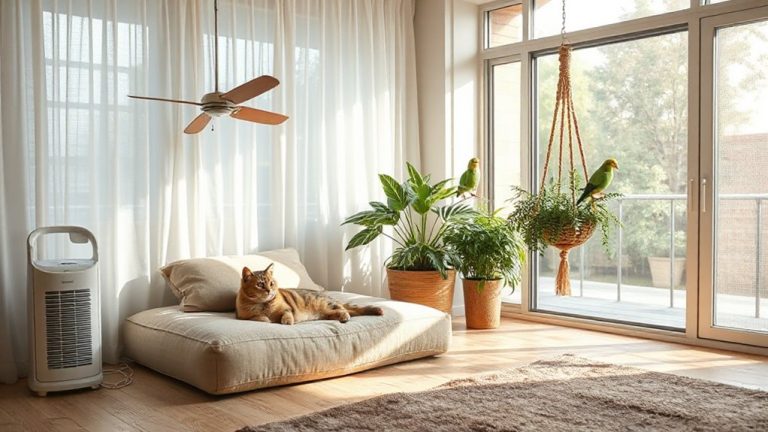
How can you effectively reduce your pet’s stress in a home environment? Implementing noise reduction strategies is essential. Use sound-absorbing materials like acoustic panels or thick curtains to lower ambient decibel levels by 20–30%. Keep noise below 60 dB, a threshold that minimizes cortisol spikes in sensitive animals. Pair this with consistent routines to stabilize your pet’s circadian rhythm. Aromatherapy benefits are measurable when using diffusers with species-appropriate essential oils. For dogs, lavender oil diffused at 0.5–1% concentration reduces anxiety-related behaviors by up to 47%. For cats, avoid phenolic compounds; instead, use synthetic feline facial pheromones (F3 fraction) in diffusers, operating continuously for 28-day cycles. Provide designated quiet zones with temperature control between 68–72°F and low-lumen lighting (under 50 lux). These targeted interventions directly modulate HPA axis activity, reducing baseline cortisol. Playing scientifically composed calming music for pets can further reduce stress indicators by synchronizing with natural resting heart rates.
On a final note
You now understand cortisol’s role in your pet’s stress response. Chronic stress disrupts normal diurnal cortisol patterns, leading to elevated nighttime levels-often above 5.0 µg/dL in dogs, measured via saliva or serum. Sustained highs impair immune function and metabolism. Testing includes ACTH stimulation or low-dose dexamethasone suppression tests. You can reduce exposure by maintaining routines, providing enrichment, and minimizing environmental stressors. These steps restore natural cortisol rhythm, improving long-term health outcomes.