Why Probiotic Dosage Matters: How CFUs Affect Efficacy in Dogs
Your dog needs the right probiotic dosage because too few CFUs won’t survive stomach acid or colonize the gut. Most dogs require 1 to 5 billion CFUs daily, with larger or sick dogs benefiting from up to 30 billion. Each CFU represents one live microbe that can multiply and support digestion. Exceeding 10–20 billion daily may cause gas, diarrhea, or immune overactivity. Strain specificity and guaranteed potency at expiration guarantee effectiveness-knowing these details clarifies how your choice impacts results.
Notable Insights
- CFUs measure live probiotic bacteria that can colonize a dog’s gut and support digestive and immune health.
- Dogs typically need 1–5 billion CFUs daily, with dosage varying by size, age, and health condition.
- Too many CFUs-over 10–20 billion daily for medium dogs-can cause gas, bloating, or gut microbiome imbalance.
- Effective probiotics require specific strains like *Lactobacillus acidophilus* and must survive stomach acid to work.
- Always check labels for guaranteed CFUs at expiration, not just at manufacture, and follow storage guidelines.
How Many CFUs Does Your Dog Need Daily?
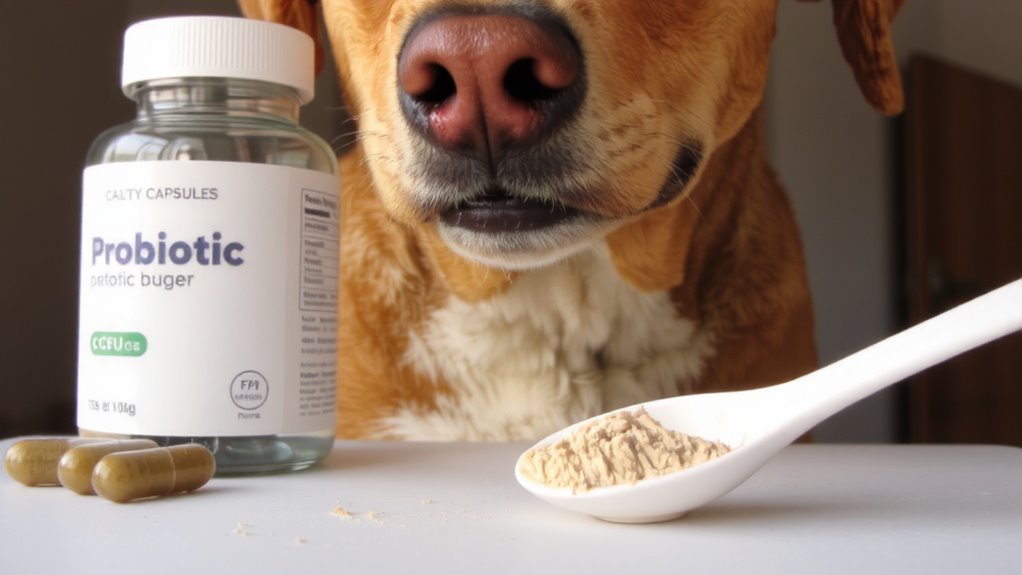
Most healthy dogs benefit from a daily probiotic dose of 1 to 5 billion CFUs (colony-forming units), depending on size, age, and gut health status. You should consider your dog’s individual needs when selecting a supplement. Larger breeds often require higher doses to maintain gut balance, while smaller dogs may thrive on lower counts. Strain specificity is critical-each strain targets different aspects of digestive and immune function. For example, *Lactobacillus acidophilus* supports nutrient absorption, while *Bifidobacterium animalis* helps suppress harmful bacteria. Not all probiotics deliver the same results, even at similar CFU levels. You need a formulation with scientifically validated strains and guaranteed potency through expiration. Shelf stability and proper encapsulation also impact effectiveness. Always follow label instructions and consult your veterinarian. Consistent daily use promotes a resilient microbiome. For dogs struggling with yeast infections, choosing a supplement with best probiotics for dogs with yeast infections can make a significant difference in restoring microbial balance.
What Are CFUs and Why Do They Matter?

Colony-forming units, or CFUs, are the standard measure of viable probiotic bacteria in a supplement. Each CFU represents one live microorganism capable of multiplying and forming a colony in the gut. The number matters because it directly influences how effectively probiotic strains establish gut colonization. Without enough CFUs, the bacteria may not survive stomach acid or outcompete harmful microbes. Effective supplements typically deliver between 1 billion and 50 billion CFUs per dose for dogs. High CFU counts increase the odds that sufficient bacteria reach the intestines alive. Once there, specific probiotic strains adhere to the intestinal lining, supporting microbial balance. Gut colonization depends on both CFU count and strain resilience. You need enough live organisms at the time of consumption-check expiration dates and storage conditions. CFUs aren’t everything, but without them, even the most researched strains won’t take hold. When choosing a supplement, consider the Top Pet Bed Picks for pets that also need physical comfort alongside digestive support.
Can Dogs Take Too Many Probiotics?

While probiotics offer clear benefits for canine gut health, giving too many can disrupt the very balance you’re trying to support. Excessive CFUs-typically beyond 10–20 billion per day for medium-sized dogs-may trigger side effects like gas, bloating, or diarrhea. Though true overdose risks are low, unnaturally high doses can overwhelm native gut flora, leading to microbial imbalance. Some strains, when overadministered, stimulate excessive immune activity, which could worsen underlying conditions. The safety margin is wide, but more isn’t always better. Most clinical studies use targeted doses between 1 and 10 billion CFUs daily, with efficacy plateauing above that range. Always follow label instructions and consult your vet before exceeding recommended amounts. Probiotic potency varies by formulation, so monitor your dog closely when adjusting intake. Consistency and appropriate dosing are key to maintaining digestive equilibrium. For dogs with yeast and allergies, choosing the right best probiotics for dogs can make a significant difference in managing symptoms effectively.
Adjusting Probiotics for Digestive and Immune Needs
How do you know if your dog needs a different probiotic dose? Changes in stool quality, appetite, or energy levels signal an imbalance. If your dog experiences recurring diarrhea or gas, their digestive balance may be compromised, requiring higher CFU counts-typically 10–30 billion per day. For consistent immune support, especially in older dogs or those under stress, a daily probiotic with at least 15 billion CFUs helps maintain gut microbiome diversity. Strains like *Lactobacillus acidophilus* and *Bifidobacterium animalis* are clinically shown to enhance both digestive balance and immune response. Adjust dosage gradually over 5–7 days, monitoring symptoms. Underdosing may fail to colonize the gut; overdosing offers no added benefit beyond threshold efficacy. Always match the probiotic formulation to your dog’s size, age, and health status. Adjustments should align with observable physiological responses, not marketing claims.
How to Read Dog Probiotic Labels
| Feature | What to Look For |
|---|---|
| Strain Specificity | Named bacterial strains with published research |
| CFUs | Minimum of 1–5 billion at expiration |
| Shelf Stability | Storage conditions and use-by date clearly listed |
Always follow dosage instructions based on your dog’s weight and health needs.
On a final note
You need the right CFU count for effective probiotic support in your dog. Most dogs benefit from 1–5 billion CFUs daily, depending on size and health status. Too few CFUs may lack efficacy; excessive amounts offer no added benefit and could disrupt gut balance. Always choose veterinarian-recommended products with guaranteed potency through expiration. Check labels for strain specificity, CFU count, and expiration dates to guarantee viability and targeted support.