How to Use Probiotics to Reduce Antibiotic-Associated Diarrhea in Cats
Give your cat probiotics at the start of antibiotic treatment to reduce diarrhea risk. Administer them 2–4 hours apart from antibiotics to guarantee bacterial survival. Use a daily dose of at least 1 billion CFUs with proven strains like *Enterococcus faecium* SF68 or *Bifidobacterium animalis* AHC7. Choose products with gastric acid resistance and intestinal adhesion for maximum effectiveness. Continue for 7–10 days after antibiotics conclude. You’ll learn which specific products deliver these benefits and how to use them correctly.
Notable Insights
- Start probiotics at the beginning of antibiotic treatment to maintain gut balance.
- Administer probiotics 2–4 hours apart from antibiotics to ensure bacterial viability.
- Choose probiotic strains like *E. faecium* or *B. animalis* proven to support feline gut health.
- Provide a daily dose of at least 1 billion CFUs to effectively colonize the gut.
- Continue probiotics for 7–10 days after antibiotics to restore microbial balance and prevent diarrhea.
Why Antibiotics Give Cats Diarrhea
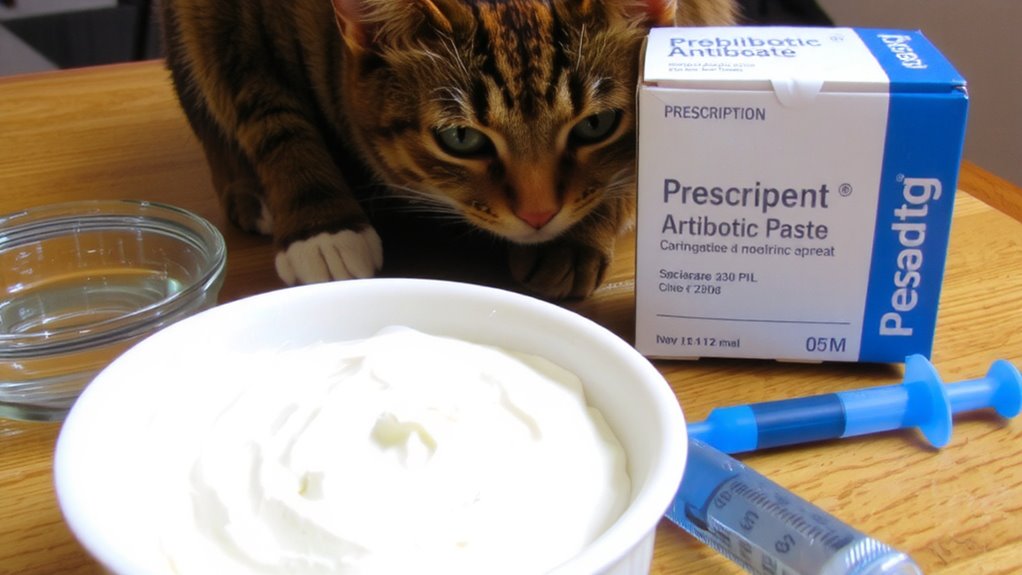
While antibiotics are essential for treating bacterial infections in cats, they often disrupt the natural balance of the gut microbiome, leading to diarrhea. Antibiotics don’t differentiate well between harmful and beneficial bacteria. As a result, they reduce microbial diversity in the intestines. This imbalance weakens fermentation of dietary fibers, decreasing short-chain fatty acid production by up to 60%. These acids normally fuel colonocytes and maintain gut integrity. Their decline promotes osmotic shifts and fluid retention in the colon. You’ll notice loose stools within 2–5 days of starting treatment. Reduced microbial competition also allows opportunistic pathogens like *Clostridium* spp. to expand. Their metabolic byproducts can trigger intestinal inflammation. Inflammatory cytokines such as IL-6 and TNF-α increase gut permeability, worsening diarrhea. Without a stable gut microbiome, mucosal defense declines, leaving the GI tract vulnerable. This cascade explains why antibiotic use frequently results in gastrointestinal distress in cats. Supplementation with targeted probiotics can help restore microbial balance and reduce symptom severity in cats, with best probiotics for dogs with yeast infections showing promise in related gastrointestinal support.
Can Probiotics Prevent Diarrhea in Cats on Antibiotics?
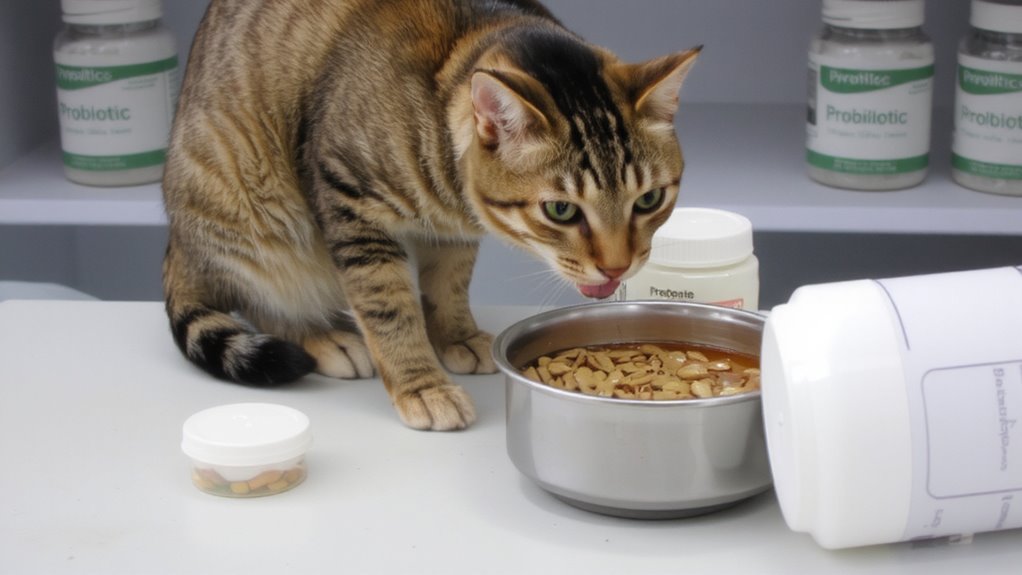
Probiotics can help prevent diarrhea in cats taking antibiotics by maintaining a balanced gut microbiome during treatment. You can preserve your cat’s gut flora by introducing beneficial bacteria that compete with harmful pathogens. These probiotics colonize the intestines, reducing microbial imbalances caused by antibiotic use. Specific strains like *Enterococcus faecium* and *Bifidobacterium animalis* are clinically shown to support digestive stability. They aid in fermenting dietary fiber, producing short-chain fatty acids that nourish intestinal cells. Probiotics also contribute to immune support by enhancing gut barrier function and modulating local immune responses. Products with at least 1–5 billion CFUs per dose are effective for cats. Human probiotics may lack feline-specific strains, so choose veterinarian-recommended formulations. Consistent administration during antibiotic therapy helps sustain microbial diversity. You’re not replacing antibiotics-you’re protecting essential gut flora while they work. Best probiotics for yeast infections in dogs may also offer insights into strain selection for feline gastrointestinal health, particularly when choosing probiotics with proven efficacy.
When to Give Probiotics to Cats on Antibiotics
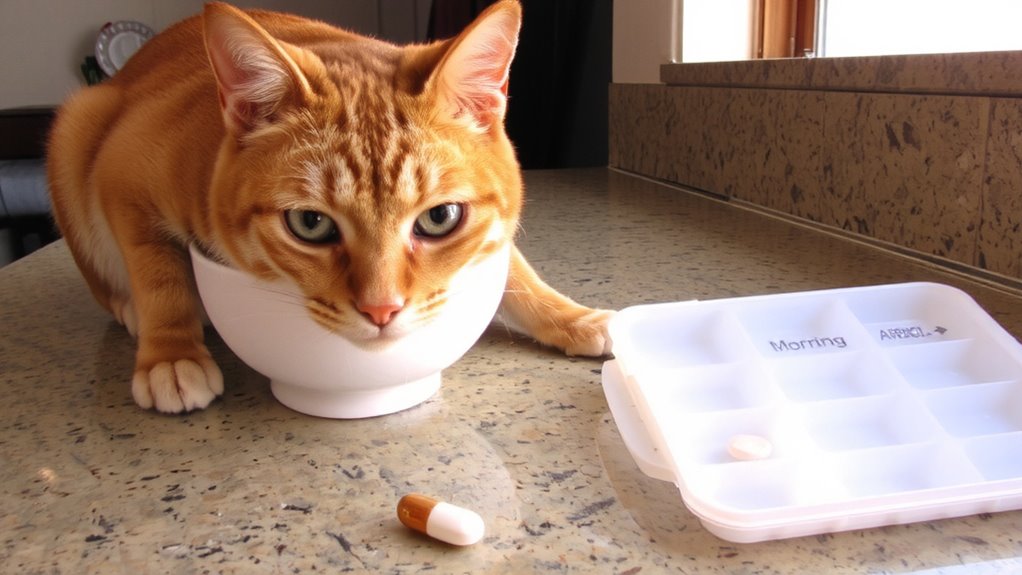
Since antibiotics can disrupt your cat’s gut microbiota within days of starting treatment, it’s best to begin giving probiotics at the same time-or even before. Timing considerations are critical: early intervention helps maintain microbial balance and reduces diarrhea risk. Probiotic timing should aim for consistent administration, ideally 2–4 hours apart from antibiotic doses to minimize interference. Most effective strains include *Enterococcus faecium*, *Lactobacillus acidophilus*, and *Bifidobacterium animalis*, which survive gastric acidity and adhere to intestinal epithelium. Administer a minimum of 1 billion CFUs daily throughout antibiotic treatment. Delayed initiation reduces efficacy; starting on day one improves colonization success. Continue probiotics for at least 7–10 days post-antibiotics to guarantee gut recovery. Products with delayed-release capsules or freeze-dried spores enhance survivability. Proper probiotic timing bridges microbial gaps until natural flora rebound, offering a practical, science-backed strategy to protect your cat’s digestive health during antibiotic therapy. Top immune support supplements for pets often include these beneficial strains to promote overall wellness. Top immune support supplements for pets
How to Give Probiotics to Cats Safely (With Food or Between Doses)
Administering probiotics correctly guarantees maximum efficacy and gut colonization in cats undergoing antibiotic treatment. Give probiotics between antibiotic doses-ideally 2–3 hours apart-to prevent bacterial inactivation. This administration timing allows live microorganisms to establish in the gastrointestinal tract without immediate destruction. Always follow label instructions for dosage accuracy; underdosing reduces effectiveness, while overdosing may cause digestive upset. Administer with a small meal to enhance gastric transit and protect probiotic viability. Use non-heated foods, as high temperatures can kill live cultures. If using powders, mix thoroughly to guarantee uniform distribution. For liquid formulations, shake well and measure precisely using the provided syringe. Capsules can be hidden in treat pockets or compounded into palatable pastes by your veterinarian. Consistent daily delivery supports steady microbial balance. Never exceed recommended duration without veterinary guidance.
Top Probiotic Strains for Cats on Antibiotics
| Strain | Dose (CFU/day) | Proven Benefit |
|---|---|---|
| *E. faecium* SF68 | 10⁹ | Reduces diarrhea duration |
| *L. acidophilus* DSM 10177 | 5×10⁸ | Supports mucosal immunity |
| *B. animalis* AHC7 | 2×10⁹ | Enhances gut barrier function |
Each strain delivers targeted support. Consistency in dosage timing and precise strain selection guarantee peak gut restoration during antibiotic therapy.
When to Call the Vet for Antibiotic-Related Diarrhea
If your cat develops diarrhea while on antibiotics, it’s not always an immediate red flag-but knowing when to act can prevent complications. Contact your vet if diarrhea lasts over 48 hours despite probiotic use. Severe dehydration is a critical concern; signs include sunken eyes, dry gums, and poor skin elasticity. You can test hydration by gently pulling the scruff-if it doesn’t snap back within 1–2 seconds, dehydration is likely. Persistent vomiting compounds fluid loss and impairs nutrient absorption. It also increases the risk of electrolyte imbalances, such as hypokalemia or metabolic acidosis. Do not delay care if your cat refuses food, appears lethargic, or passes bloody stool. These symptoms may indicate a more serious condition like Clostridium overgrowth or antibiotic hypersensitivity. Early veterinary intervention improves recovery outcomes and prevents hospitalization.
On a final note
You can effectively reduce antibiotic-associated diarrhea in cats using probiotics. Administer them 2–3 hours apart from antibiotics to guarantee microbial viability. Strains like *Enterococcus faecium*, *Lactobacillus acidophilus*, and *Bifidobacterium animalis* are clinically proven to support feline gut health. Doses should deliver 1–5 billion CFUs daily. Probiotics help restore intestinal microflora balance disrupted by antibiotics. Always consult your vet before starting supplementation.