Monitoring Changes in Litter Box Habits as an Indicator of Feline Emotional Distress
Changes in your cat’s litter box habits can signal emotional distress. Stress from household shifts, new pets, or loud noises may trigger avoidance. Cats mark territory with pheromone-rich urine when anxious. Provide one litter box per cat plus one extra, placed in quiet areas with two escape routes. Use unscented clumping litter at 1.5–2 inches deep. Boxes should be 1.5 times your cat’s length. Sudden elimination changes outside the box often reflect anxiety, not medical issues-though those must be ruled out first. You’ll discover how to differentiate behavioral causes from health problems and create a calming elimination environment.
Notable Insights
- Sudden litter box avoidance may signal emotional distress due to environmental changes or social stress.
- Inappropriate urination near but outside the box often reflects anxiety, not poor aim.
- Increased frequency or small urine deposits on vertical surfaces can indicate territorial marking from stress.
- Changes in litter box habits should first rule out medical issues like urinary infections or arthritis.
- Providing multiple clean, quiet, and easily accessible litter boxes supports emotional stability and reduces anxiety.
Could Your Cat’s Litter Box Issue Be Emotional?
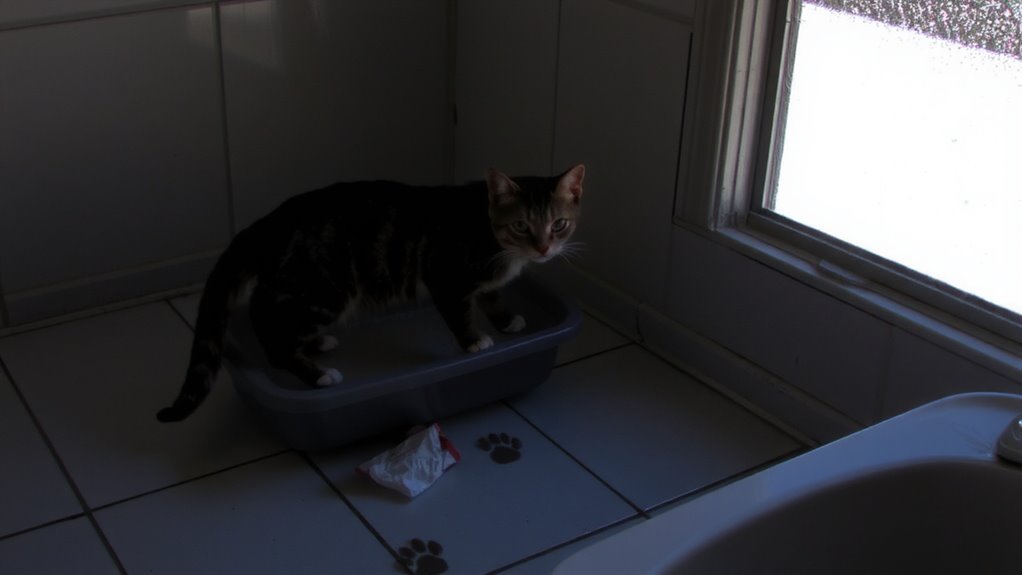
Could the reason your cat avoids the litter box be rooted in emotional stress rather than physical illness? Behavioral changes often stem from emotional triggers like household shifts, new pets, or loud noises. These stimuli can overwhelm a cat’s sensory processing, leading to inappropriate elimination. Territorial insecurity frequently underlies these behaviors, especially in multi-cat homes where space or resources are contested. Cats rely on scent marking for environmental stability; disruptions compromise this system. A litter box placed in a high-traffic or enclosed area may heighten perceived threats, reducing accessibility. Guarantee boxes are located in quiet, easily reachable zones, following the standard of one box per cat plus one additional. Use unscented, non-clumping litter in depths of 1.5 to 2 inches. Eliminate hooded designs if avoidance persists. These adjustments reduce psychological stress, restoring normal elimination patterns without medical intervention. For best results, consider the best cat litter boxes based on size, ease of cleaning, and accessibility.
Rule Out Medical Problems First
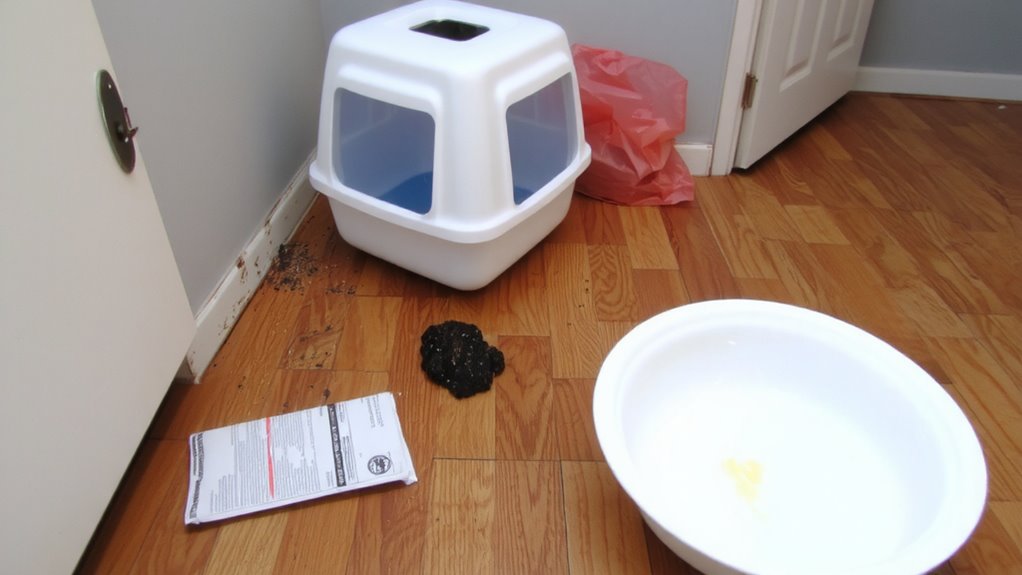
Before addressing potential emotional causes, you’ll want to rule out underlying medical conditions that could explain your cat’s litter object avoidance. Medical screening is essential-issues like urinary tract infections, kidney disease, or arthritis often manifest through inappropriate elimination. Diagnostic testing allows for accurate identification of these conditions. Your vet may perform blood tests, urinalysis, or radiographs depending on initial findings. Early detection improves treatment outcomes markedly.
| Symptom | Possible Condition | Required Test Type |
|---|---|---|
| Straining to urinate | Urinary obstruction | Urinal游戏副本, Ultrasound |
| Increased frequency | Diabetes, kidney disease | Blood chemistry, Urine SG |
| Blood in urine | Cystitis, crystals | Sediment exam, Culture |
| Avoiding box due to pain | Arthritis | Orthopedic X-rays |
Always complete diagnostic testing before considering behavioral interventions.
How Stress Triggers Affect Litter Box Use
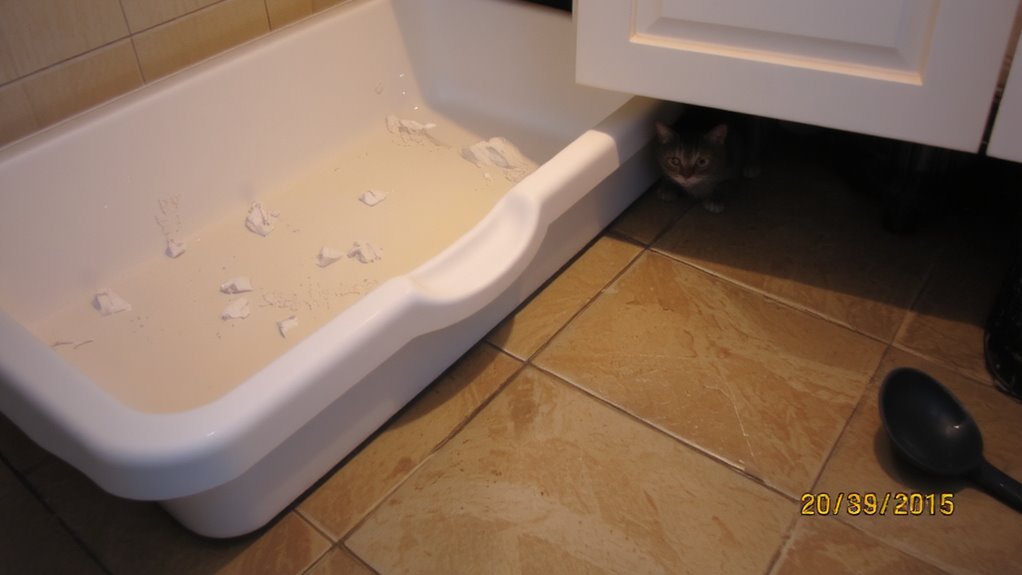
Stress is a silent disruptor of feline routine, often revealing itself through changes in litter box behavior. You may notice your cat avoiding the box, eliminating nearby, or engaging in territory marking. These actions frequently stem from environmental stressors like household changes, new pets, or visitors. Social tension between cats in multi-cat homes can trigger altered elimination patterns. Cats rely on scent cues and spatial predictability; disruptions elevate cortisol levels, affecting bladder and bowel control. Territory marking-such as spraying vertical surfaces-is a common behavioral response to perceived threats. Unlike inappropriate elimination, marking deposits small amounts of urine on walls or furniture. The litter box location, cleanliness, and type influence usage. Clumping litter, at a depth of 1.5 to 2 inches, in a quiet, low-traffic area reduces stress. Uncovered boxes are preferable if social tension exists, allowing easier escape. Monitoring these factors helps identify stress-related causes early. Choosing the right litter boxes to prevent tracking can further minimize environmental stressors by reducing litter scatter and maintaining a cleaner, more predictable space.
What Peeing Outside the Box Says About Anxiety
Why does your cat leave urine marks just outside the litter Judiciary? This behavior often signals anxiety, not poor aim. When your cat sprays near the box, it’s usually territory marking-a communication method driven by stress. The urine contains pheromones that convey emotional state and intent. Alternatively, elimination aversion may be the cause; your cat associates the box with discomfort or fear. This aversion develops when litter texture, scent, or box location triggers negative associations. Anxiety-induced changes in elimination habits occur abruptly and target specific zones-typically vertical surfaces or entryways. Unlike full-blown spraying, perioral urine deposits suggest conflicted impulses: the urge to mark versus the instinct to use the box. Medical issues must first be ruled out. Spayed/neutered cats still mark when stressed. Medical issues must first be ruled out. Behavioral causes require environmental and emotional assessment. Accurate diagnosis distinguishes between marking and aversion-each demands a distinct intervention strategy based on feline ethology and stress physiology. Some cats may also feel confined or stressed due to restricted movement, making innovations like GPS dog collar fences useful for managing anxiety in outdoor-access pets.
Design a Low-Stress Litter Area
A clean, well-placed litter box isn’t just about convenience-it’s a cornerstone of feline emotional stability. Litter placement directly impacts usage; position boxes in quiet, low-traffic areas away from loud appliances. Ideal locations offer at least two exit routes to reduce trapped feelings. Box accessibility is critical-ensure at least one side is low enough (4–6 inches) for easy entry, especially for seniors or kittens. Use large boxes (minimum 1.5 times your cat’s length) to allow full digging and turning. Place one box per cat, plus one extra, on each home level. Avoid soft-sided or covered boxes if your cat shows stress; they restrict airflow and visibility. Use unscented, clumping litter at a depth of 1.5–2 inches. Proper placement and accessibility reduce avoidance behaviors and support consistent elimination patterns.
When to Call the Vet or Behaviorist
How quickly should you act when your cat’s litter box habits change? Immediately. Sudden shifts may signal medical or psychological issues requiring prompt veterinary consultation or behavioral assessment. Rule out illness first-conditions like UTIs, diabetes, or hyperthyroidism alter elimination patterns. If clinical tests are normal, consider psychological triggers.
| Symptom | Likely Cause | Recommended Action |
|---|---|---|
| Straining in box | Urinary blockage | Seek emergency vet care |
| Avoiding box entirely | Stress or aversion | Veterinary consultation |
| Increased frequency | Diabetes or kidney disease | Blood/urine diagnostic panel |
| Eliminating near box | Pain or substrate preference | Behavioral assessment |
| Marking on vertical surfaces | Territorial anxiety | Modify environment, consult specialist |
Delaying evaluation risks chronic distress. Use clinical and observational data to determine whether physiological or emotional factors dominate. Combine veterinary consultation with structured behavioral assessment for accurate diagnosis. Treat the underlying cause-not just the symptom-for lasting resolution.
On a final note
You must first rule out medical causes before attributing litter box issues to emotion. Urinary tract infections, kidney disease, or arthritis often mimic behavioral symptoms. Stress alters elimination patterns by activating the sympathetic nervous system. Prolonged anxiety may lead to chronic avoidance. Provide one litter box per cat plus one, placed in quiet, low-traffic zones. Use unscented, clumping litter. Boxes should measure at minimum 1.5 times your cat’s body length.