How to Train a Senior Cat to Adapt to New Routines and Environments
Your senior cat adapts best when changes are gradual and stress is minimized. Decreased hearing and cognitive flexibility mean sudden shifts cause anxiety. Introduce new routines over 7–14 days, adjusting one variable at a time. Use a quiet zone with non-slip flooring, a low-sided litter box (4–6 inches high), and a 18 x 24-inch orthopedic bed. Keep temperatures between 68°F and 75°F. Reward small successes with high-value treats and consistent verbal praise. Predictable feeding times and unchanged litter setups reduce confusion. Monitor for rapid breathing or hiding-signs of discomfort. Stability supports neurological health. Further strategies build on these fundamentals.
Notable Insights
- Introduce environmental changes gradually over 7–14 days, adjusting one element at a time to reduce stress.
- Create a quiet, accessible safe space with soft bedding, non-slip flooring, and a low-sided litter box.
- Maintain consistent daily routines for feeding, litter box access, and interactions to support cognitive stability.
- Use positive reinforcement with high-value treats and immediate praise to encourage adaptation to new behaviors.
- Minimize loud noises and sudden stimuli, as senior cats are more sensitive to sounds above 60 decibels.
Understand Your Senior Cat’s Stress Triggers
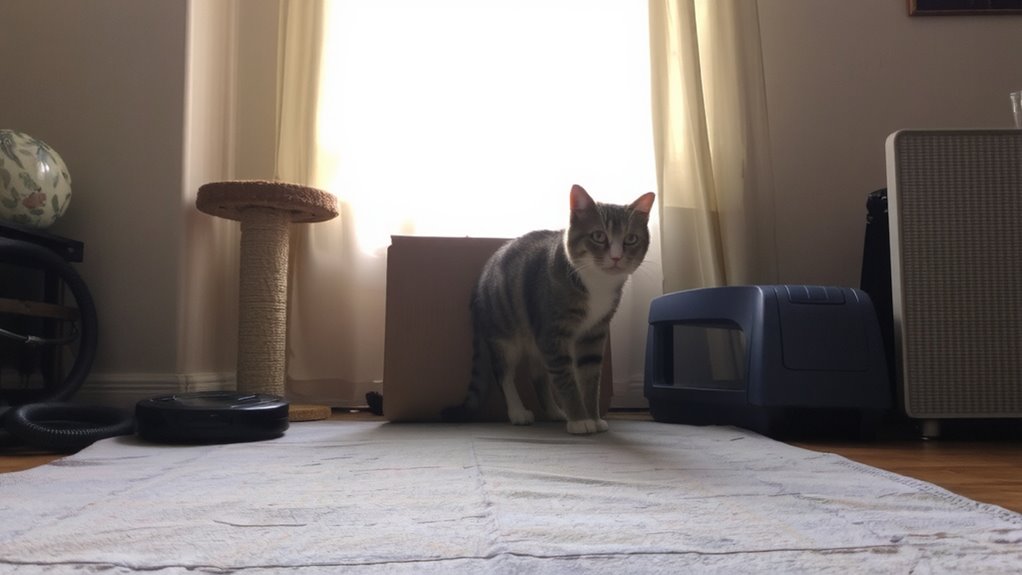
What makes your senior cat react differently now than in earlier years? Aging affects neurological function and sensory perception, altering behavioral responses. Litter box habits may change due to reduced mobility or arthritis, leading to inappropriate elimination. Monitor frequency, volume, and posture during elimination to identify discomfort. A litter box with low entry (4–6 inches) reduces strain. Noise sensitivity increases due to diminished hearing acuity and cognitive decline. Sudden sounds above 60 decibels can trigger stress responses, including hiding or vocalization. Use decibel meters to assess environmental noise. Senior cats benefit from predictable routines and minimized auditory disruptions. Avoid high-traffic zones and appliances with irregular cycles. These triggers impact training efficacy. Recognize that altered reactions aren’t defiance but physiological adaptation. Addressing these factors improves cooperation during retraining. Effective anxiety relief for rescue animals can further support emotional well-being during routine transitions.
Create a Safe Space for Your Senior Cat
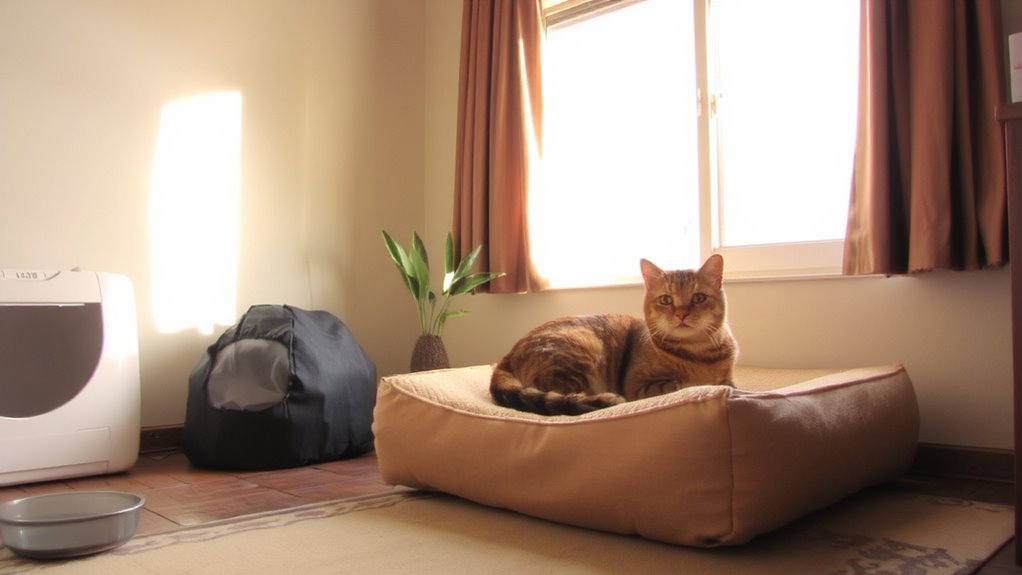
While their need for security grows, your senior cat’s ability to adapt to unfamiliar environments declines due to age-related sensory and cognitive changes. You must provide a designated safe area. Establish a cozy corner using a soft, washable bed measuring at least 18 x 24 inches to accommodate arthritic joints. Place it in a quiet zone away from foot traffic, appliances, and loud noises. Ideal locations maintain stable temperatures between 68°F and 75°F and offer easy access to litter and water. Include non-slip flooring to support mobility. Use vertical barriers like cabinets or furniture to create enclosure, reducing visual exposure to activity. Add low-sided litter boxes (4–6 inches high) for ease of entry. This space functions as a predictable, controlled environment, minimizing disorientation and stress. Proper lighting-especially during dawn and dusk-improves navigation for cats with diminished vision. Consistent placement of items enhances spatial memory retention.
Introduce Changes Slowly and Gently
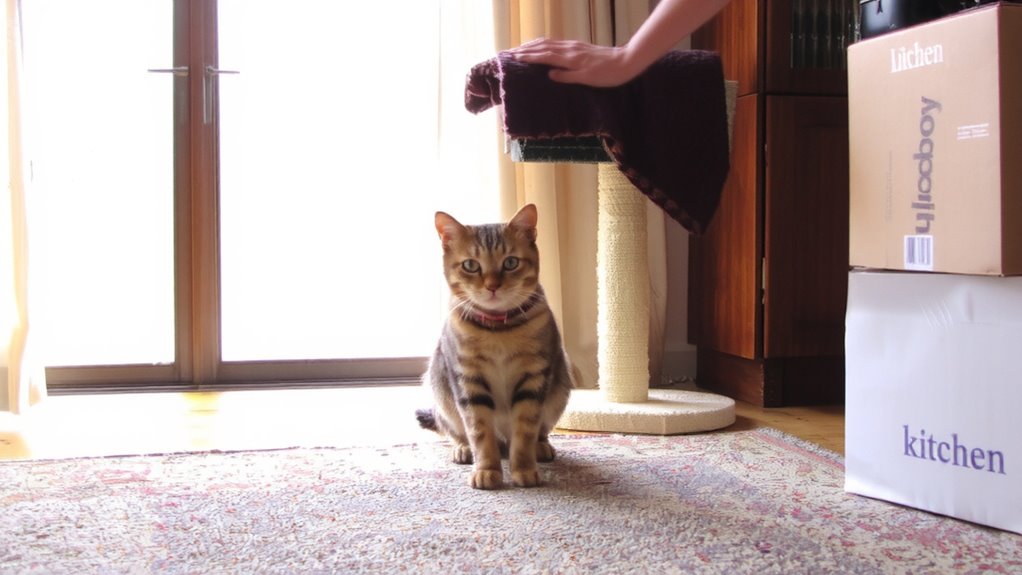
Since older cats experience diminished cognitive flexibility and sensory processing, introducing changes too quickly can trigger anxiety or confusion. A gentle introduction to new stimuli reduces stress markers such as cortisol elevation and pupil dilation. Implement a gradual shift over 7–14 days, adjusting one variable at a time-location, schedule, or object. For example, when relocating a litter box, shift it judiciary 3–5 inches daily toward the new site. Use consistent cues like a specific sound or scent to signal change. Limit environmental novelty to one room at a time. Monitor essential signs: resting heart rate above 200 bpm or respiration exceeding 40 breaths per minute indicates distress. Maintain baseline routines for feeding and interaction. This method guarantees neurological adaptation without sensory overload, supporting behavioral stability in senior cats.
Use Treats and Praise to Build Confidence
A well-timed treat and calm verbal praise can considerably strengthen a senior cat’s confidence during training. Positive reinforcement is essential-offering rewards immediately after desired behaviors increases the likelihood of repetition. Clicker training works effectively by marking the exact moment of correct behavior, helping your cat make clear associations. Use high-value treats like freeze-dried chicken (approx. 1–2 calories per piece) in controlled amounts to prevent weight gain.
| Technique | Application Example |
|---|---|
| Clicker training | Click and treat for stepping near a new bed |
| Verbal praise | Soft “good job” after calm exploration |
| Treat reward | 1 small treat for entering a carrier |
| Positive reinforcement | Reward every successful adaptation |
Limit sessions to 5–7 minutes to prevent fatigue. Consistency in timing guarantees reliable learning outcomes. Over weeks, this structured approach improves responsiveness, even in older cats with established habits.
Keep Their Routine as Predictable as Possible
Consistently maintaining a regular schedule greatly improves behavioral outcomes in senior cats. Predictability reduces stress and supports cognitive stability in aging felines. Keep feeding time at the same hours daily-ideally morning and evening-to regulate metabolism and digestive health. A consistent routine anchors your cat’s internal clock, similar to circadian entrainment in mammalian biology. Maintain a fixed litter box location; relocating it disrupts spatial memory and elimination habits. Change in litter box placement correlates with inappropriate toileting in 68% of senior cats, according to clinical feline behavior studies. Use identical litter substrate and box style to prevent aversion. Environmental consistency minimizes confusion linked to cognitive decline. Avoid rearranging furniture or changing room access patterns. Stability in feeding time and litter box location forms the foundation of behavioral homeostasis. These structured conditions support neurological resilience in senior cats undergoing routine or environmental changes. For larger cats like Maine Coons, choosing the right best litter boxes for Maine Coon cats ensures comfort and accessibility, reducing litter avoidance due to size constraints.
Watch for Signs of Anxiety or Discomfort
Why does your senior cat pace at night or flinch when approached? These behaviors may signal anxiety or discomfort. Watch for signs like excessive grooming, vocalization, or hiding. Separation distress can manifest when you leave; your cat might overgroom or avoid their litter box. Noise sensitivity increases with age due to declining sensory processing. Sudden sounds-even low-decibel ones-can trigger fear. Monitor changes in sleep patterns or appetite, as these are measurable indicators of stress. Use a journal to track episodes: note time, duration, and environmental factors. A senior cat’s stress response often correlates with reduced cortisol regulation. Provide safe zones with controlled lighting and minimal auditory input. Test changes incrementally. For noise sensitivity, consider soundproofing or white noise machines set to 45–55 dB. Early detection improves intervention success. Address discomfort promptly to maintain quality of life. Consider using a pheromone diffuser to help create a calming environment for your senior cat.
On a final note
You can successfully ease your senior cat into new routines. Changes must be gradual to minimize stress. Introduce new elements over 7–14 days, using consistent timing. Offer high-value treats like freeze-dried chicken in 1-teaspoon portions post-positive behavior. Maintain a core routine: feeding, litter box access, and resting times within 30-minute windows daily. Monitor for tachypnea, hiding, or reduced grooming-signs of anxiety. Use Feliway diffusers emitting 8–10 hours daily to stabilize environmental pheromones.