Understanding the Difference Between Food Allergy and Food Intolerance in Pets
You’re dealing with a food allergy when your pet’s immune system mistakenly targets proteins in ingredients like beef, dairy, or chicken, producing IgE antibodies that trigger pruritus, erythema, or papules-commonly around the face, paws, or anus. Food intolerance, in contrast, involves no immune activation; symptoms like flatulence, vomiting, or diarrhea stem from digestive insufficiency or gut microbiome imbalances and are dose-dependent. Unlike allergies, intolerances resolve once the ingredient is removed. Confirming the issue requires an elimination diet using novel or hydrolyzed proteins under veterinary supervision-there’s no lab test that reliably identifies food allergies. Proper diagnosis guides effective, long-term dietary solutions tailored to your pet’s needs.
Notable Insights
- Food allergies involve the immune system reacting to proteins, while intolerances stem from digestive issues without immune involvement.
- Allergies often cause skin problems like itching and rashes, whereas intolerances typically lead to gastrointestinal symptoms like diarrhea and gas.
- Common pet allergens include beef, dairy, chicken, eggs, and wheat, which trigger immune responses.
- Food intolerance symptoms are dose-dependent and improve once the offending ingredient is removed from the diet.
- The only reliable way to diagnose food allergies is through an 8–12 week elimination diet followed by a food challenge.
Food Allergy vs. Intolerance: What’s the Difference?
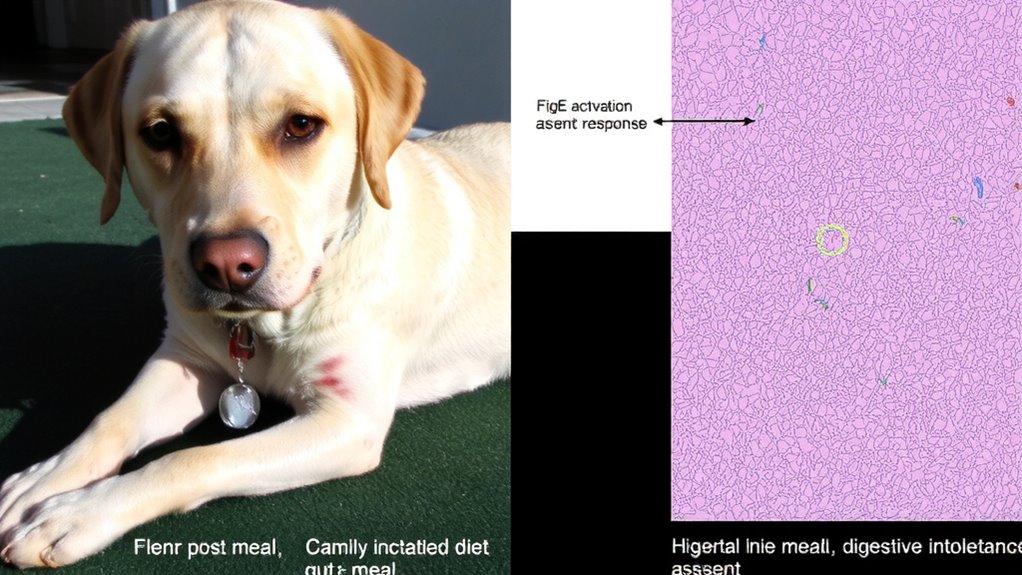
Why do some pets react badly to certain foods while others eat the same ingredients with no issues? The answer lies in how their bodies process food. A food allergy involves your pet’s immune response. When an allergen is mistaken as a threat, antibodies trigger reactions that can damage tissues. This response often targets proteins in ingredients like beef or dairy. In contrast, food intolerance doesn’t involve the immune system. Instead, it stems from digestive limitations. Your pet may lack enzymes needed to break down certain components. The gut microbiome plays a critical role here-it helps regulate digestion and nutrient absorption. Imbalances in microbial populations can worsen intolerance. Unlike allergies, which require minute allergen exposure, intolerances usually depend on quantity consumed. Genetic, dietary, and environmental factors shape these responses.
Symptoms of Food Allergies and Intolerances in Pets

Reactions to food in pets fall into two distinct categories: immune-mediated allergies and digestive intolerances, each with its own symptom profile. Food allergies often manifest as skin irritation, including pruritus, erythema, and papules, primarily around the face, paws, and perianal area. These immune responses typically involve IgE or T-cell activation after exposure to specific antigens. In contrast, intolerances do not involve the immune system and more commonly trigger digestive upset such as flatulence, diarrhea, vomiting, or changes in stool consistency. Symptoms appear dose-dependent and can occur immediately or hours after ingestion. While skin irritation from allergies may become chronic and secondary to bacterial or yeast infections, digestive upset in intolerances usually resolves once the offending ingredient is removed. Monitoring symptom onset, frequency, and duration helps differentiate between the two conditions. Accurate observation is essential for proper diagnosis and effective dietary management.
Most Common Allergens and Problematic Ingredients

You’ve likely noticed symptoms pointing to a food-related issue, whether it’s relentless scratching or frequent digestive upset. Common food allergens in pets include beef, dairy, chicken, eggs, and wheat. Dairy reactions often manifest as gastrointestinal distress due to lactose intolerance or immune-mediated responses. Grain sensitivity, while less common than once thought, can cause pruritus or loose stools in susceptible animals, particularly those with compromised intestinal barriers. Proteins are the primary triggers of true food allergies because they prompt an immune response. Ingredients like soy and corn are also frequent culprits, accounting for up to 25% of diagnosed cases. Unlike allergies, intolerances don’t involve the immune system but still produce adverse effects. Hydrolyzed protein diets reduce allergenicity by breaking down polypeptide chains into fragments smaller than 10 kDa, minimizing immune recognition. Identifying problematic ingredients requires strict dietary control and elimination protocols.
How Vets Diagnose Food Issues in Pets
How do veterinarians pinpoint whether your pet’s symptoms stem from a food allergy or intolerance? They rely on systematic evaluation, not guesswork. Diagnostic testing helps rule out other conditions like infections or organ disease, often using blood panels or fecal exams. However, no reliable lab test confirms food allergies in pets. Instead, vets use elimination diets-the gold standard for diagnosis. You feed your pet a strict novel protein or hydrolyzed diet for 8–12 weeks. Novel diets contain proteins your pet hasn’t had, like duck or kangaroo. Hydrolyzed diets break proteins into fragments too small to trigger immune responses. During this period, no treats or supplements are allowed. If symptoms improve, a food challenge reintroduces old ingredients to confirm the culprit. This method guarantees accurate, observable results.
Creating a Safe Diet Plan for Your Pet
A confirmed diagnosis through an elimination diet sets the stage for building a long-term feeding plan tailored to your pet’s needs. Nutritional balance is critical-your pet requires precise ratios of protein, fat, carbohydrates, vitamins, and minerals. Choose commercial diets formulated to meet AAFCO standards or work with a veterinary nutritionist for homemade meals. Always verify ingredient sourcing; novel proteins like duck or kangaroo must be free from cross-contamination with common allergens. Hydrolyzed protein diets use molecules small enough to avoid immune detection, reducing reaction risks. Rotate limited-ingredient brands only if medically advised. Monitor weight, coat quality, and stool consistency monthly. Adjust caloric intake based on age, activity level, and metabolic health. Avoid treats or supplements not vet-approved. Consistency prevents setbacks. For those considering hydrolyzed options, consult a vet to select the best hydrolyzed dog food based on your pet’s specific health needs.
Allergy or Intolerance? How to Tell the Difference?
Why does your pet react badly after eating certain foods-could it be an immune-driven allergy or a digestive limitation? Food allergies trigger an immune response, often involving IgE antibodies and causing symptoms like itching, hives, or anaphylaxis. In contrast, food intolerances stem from digestive insufficiencies-such as lactase deficiency-and lead to gas, bloating, or diarrhea. Allergies can develop quickly, while intolerance symptoms appear gradually. Diet monitoring helps identify problematic ingredients by systematically introducing novel proteins or carbohydrates. Symptom tracking records timing, severity, and frequency of reactions-critical for diagnosis. Skin and blood tests detect allergens but aren’t reliable for intolerances. Elimination diets lasting 8–12 weeks are the gold standard. You must strictly control intake-no treats or table scraps. Cross-contamination skews results. Accurate data collection guarantees precise conclusions. Misdiagnosis risks unnecessary dietary restrictions.
On a final note
You now understand the distinction between food allergies and intolerances in pets. Allergies involve the immune system, often causing skin or gastrointestinal symptoms. Intolerances are digestive in nature, lacking enzyme-mediated responses. Diagnosis requires elimination diets lasting 8–12 weeks. Hydrolyzed or novel protein diets are standard. Accurate identification prevents mismanagement. Always consult your vet. Correct dietary intervention improves long-term health outcomes substantially.