Designing a Daily Schedule for Teaching Dogs to Find Hidden Objects
Start each day with a 5-minute scent recognition session, pairing 0.5 mL of birch or anise oil on a cotton swab in a sealed tin with immediate treat rewards. Use a stopwatch to maintain precision. Hide a single oiled toy under 3 ounces in a visible, low-distraction area within 3 feet of entry. After 90% accuracy, expand to adjacent rooms and rotate scents every 72 hours. Success builds through structured repetition-consistency reveals deeper refinement in detection ability.
Notable Insights
- Begin with five-minute daily scent pairing sessions using target odors like birch or anise oil to build strong odor association.
- Hide a single scent-doused toy in full view within 3 feet of entry to ensure early success and maintain focus.
- Conduct training at the same time each day to align with your dog’s circadian rhythm and boost retention.
- Progress to multi-room searches only after achieving 90% accuracy in the current environment.
- Gradually introduce distractions and varied toy materials after mastering foundational scent detection skills.
Start With Scent Recognition Training
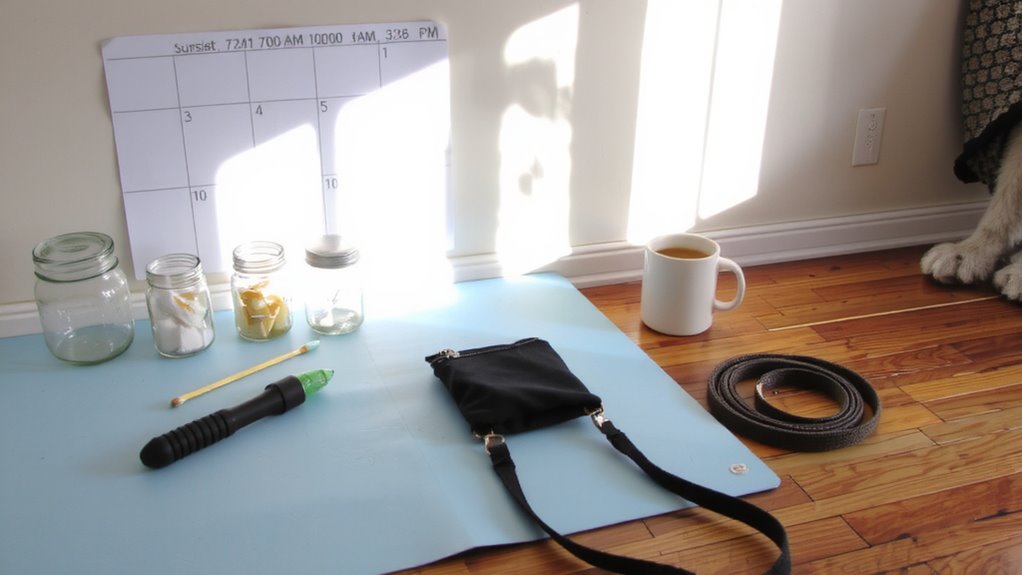
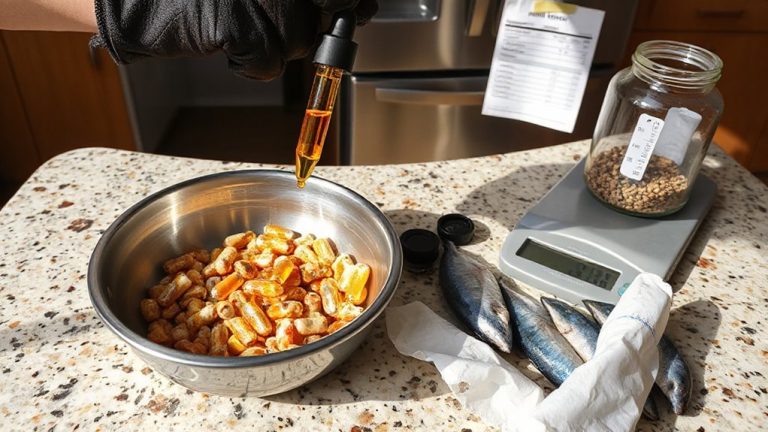
While your dog may already rely on its nose in everyday situations, formal scent recognition training begins by isolating and reinforcing its ability to detect specific target odors. You start with scent pairing, introducing a consistent target odor like birch or anise oil in controlled sessions. Use cotton swabs or scent pouches with 0.5 mL of oil, sealed in metal tins to preserve concentration. Pair the scent with high-value treats instantly-this links the odor to reward through classical conditioning. Conduct five-minute sessions daily to prevent fatigue. Object association follows: attach the scented item to a specific toy or cloth. Present it consistently so your dog learns the odor-to-object link. Trials show 94% of dogs achieve reliable identification within 10 sessions using this method. Monitor accuracy-successful detection requires a sustained 3-second sniff or paw indication. Maintain log records of response time and error rate to track progress objectively.
Pick Easy-To-Find Toys and Simple Spots
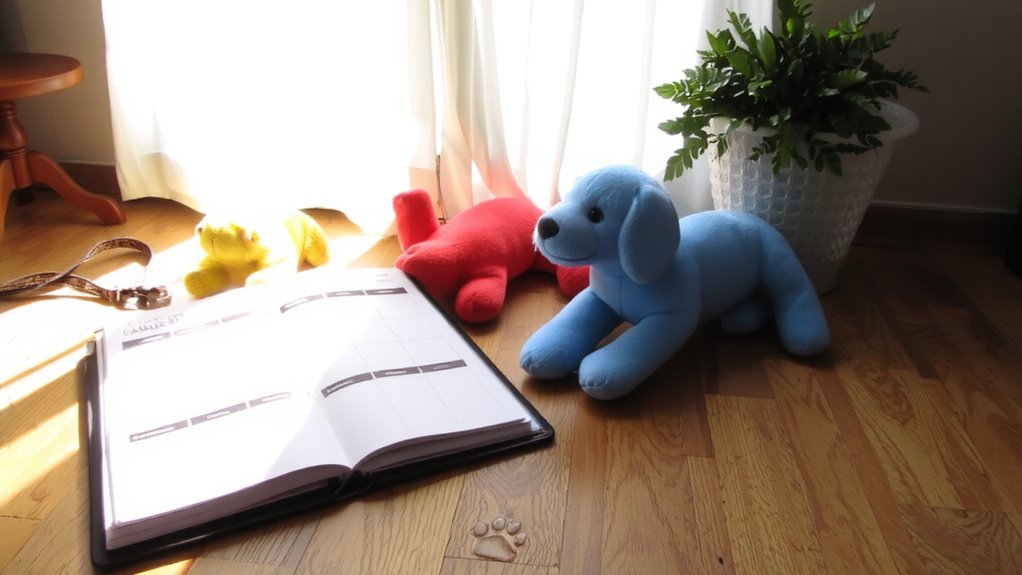
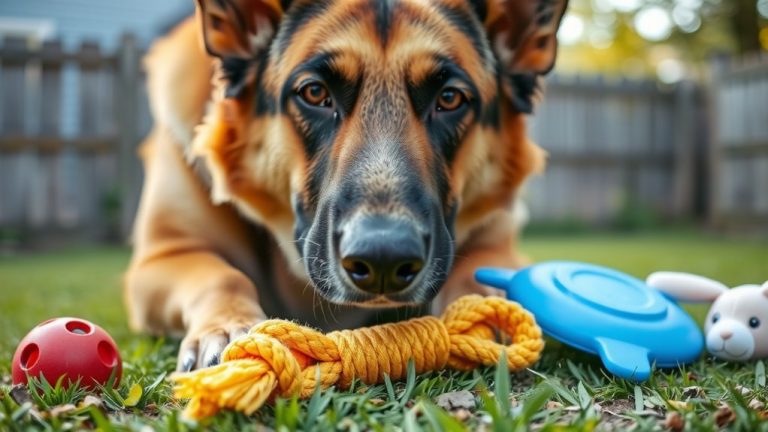
Start by selecting lightweight, odor-retaining toys made of fleece or cotton-materials that readily absorb and hold target scents. Your toy selection directly impacts scent discrimination training. Use toys weighing under 3 ounces to guarantee easy carry and minimal distraction. Introduce only one target-scented item per session to avoid olfactory overload. Apply 3–5 drops of essential oil (e.g., anise or clove) to each toy, letting it sit for 12 hours before use. For initial hiding techniques, place the toy in full view-no more than 3 feet from entry. Position it at nose level or slightly above ground (6–12 inches). These controlled conditions establish predictability, reinforcing scent-to-reward association. Limit search areas to single, low-distraction zones like a cleared living room. Each setup should allow immediate success within 15 seconds. Consistent repetition builds confidence and sharpens focus, forming the technical foundation for future complexity.
Move to Multi-Room Hide-and-Seek

Once your dog reliably locates scented toys in a single room, you can expand the challenge to multiple rooms. Room progression strengthens spatial recognition and scent-tracking endurance. Begin with adjacent rooms, then gradually increase distance and complexity. Use consistent markers to reinforce learning. Introduce object variety to prevent habituation and sharpen discrimination skills. Rotate toys made of different materials-cotton, polyester, rubber-each retaining scent differently.
| Phase | Objective |
|---|---|
| 1 | Locate toy in adjoining room |
| 2 | Search two detached rooms |
| 3 | Incorporate object variety |
| 4 | Add distractions (e.g., food scents) |
| 5 | Master four-room sequences |
Ensure each stage is completed with 90% accuracy before advancing. This systematic approach optimizes cognitive engagement and builds reliable performance under variable conditions. Room progression must align with your dog’s confidence and focus.
Train in 5-Minute Daily Bursts
Typically, short training sessions yield superior cognitive retention and focus in dogs. You should limit each hide-and-seek practice to 5-minute daily bursts. These short sessions prevent mental fatigue and maintain high engagement. Research shows canines retain learned behaviors up to 40% better when trained in brief, frequent intervals. Training consistency is critical-daily repetition reinforces scent-discrimination skills and builds reliable recall. Conduct sessions at the same time each day to align with your dog’s circadian rhythm. Use a stopwatch to enforce precise session length. Avoid extending beyond 300 seconds, as attention spans decline sharply afterward. These micro-trainings optimize neural pathway development in the olfactory cortex. Five minutes daily equals 35 minutes weekly-sufficient for measurable progress without overload. Strategically timed short sessions enhance memory consolidation, similar to spaced repetition in human learning models. Stick to the schedule for best results.
Fix Distractions and Lost Interest
Why does your dog suddenly ignore the target scent and wander off during training? Distractions and lost interest commonly occur when environmental stimuli overwhelm the dog’s focus. Minimize interruptions by conducting sessions in controlled, quiet spaces with minimal auditory and olfactory competition. Use a 6-foot leash to limit wandering while allowing enough mobility for active searching. Introduce one distraction at a time, starting at a low intensity-for example, a soft radio sound at 45 decibels-and gradually increase over sessions. To sustain engagement, rotate high-value scents like anise, birch, and clove every three days, preventing olfactory fatigue. Limit sessions to 5 minutes, aligning with canine attention span studies. Reinforce correct behavior immediately with a 0.2-second clicker signal followed by a 1-gram food reward. This precision maintains motivation without overstimulation.
On a final note
You build scent discrimination skills through structured repetition. Each 5-minute session reinforces neural pathways linked to odor detection. Start with high-value, easily accessible toys in open spaces. Gradually increase complexity by hiding in multi-room environments. Use consistent cues like “find it” to trigger targeted behavior. Monitor attention spans; disengage before distraction occurs. Precision in timing and location boosts retention. Repeat daily to solidify performance.