How to Brush a Dog After a Rainstorm to Prevent Damp Mats
Use a 300 GSM microfiber towel to blot your dog’s coat after rain-don’t rub. It absorbs up to seven times its weight in water and outperforms cotton by 40%. Focus on high-moisture zones like underarms, belly, and tail base. Brush in 2- to 3-inch sections with a 45-degree slicker angle and 12 mm undercoat rake. Check for dampness with your fingers; lift dense fur and use a 100–110°F high-velocity dryer. Proper technique prevents insulation-trapped moisture and mat formation. More details follow for best results.
Notable Insights
- Use a microfiber towel to blot-never rub-your dog’s coat, lifting surface moisture without damaging fur.
- Focus on high-retention areas like underarms, belly, and tail base where moisture traps easily in dense fur.
- After towel-drying, brush with a slicker brush using light circular motions to loosen damp tangles.
- Divide the coat into sections and brush from hindquarters forward, following hair growth to prevent matting.
- For double-coated breeds, finish with an undercoat rake and use a high-velocity dryer to fully dry trapped moisture.
Use the Right Towels and Tools for Wet Dogs
A microfiber towel is your best choice for drying a dog after a rainstorm. Its towel material absorbs up to seven times its weight in water, outperforming cotton by 40%. The fibers are split during manufacturing, increasing surface area for faster moisture wicking. Choose a towel with a minimum of 300 GSM (grams per square meter) for maximum absorbency. A 24 x 48 inch size provides full coverage for medium to large breeds. Tool selection extends beyond towels-use a rubber curry brush to lift water from dense undercoats before drying. Avoid terrycloth; it retains bacteria and loses effectiveness after repeated washings. Microfiber dries quickly and withstands 500+ wash cycles with minimal degradation. Proper tool selection reduces drying time by up to 50%, minimizing damp mats later. Always rinse and wring tools after use to maintain hygiene and function. For the most effective drying performance, consider one of the top-rated dog towels based on expert testing and absorbency metrics.
Blot Gently to Remove Surface Water First
Once you’ve gathered your microfiber towel and curry brush, start by pressing the towel flat against your dog’s coat instead of rubbing. This technique minimizes friction that can damage coat texture and cause tangles. Microfiber towels absorb up to seven times their weight in water, making them ideal after storm exposure. Gently lift moisture from the top layer of fur without pressing too hard-this preserves the coat’s natural insulation. Blotting, not wiping, prevents matting by reducing fiber clumping. Work in sections, especially along the back and flanks where water accumulates. A curry brush can help loosen trapped water between the guard hairs and undercoat. Proper blotting cuts drying time by up to 50%, reducing dampness that leads to skin irritation. Always assess coat texture before proceeding-thicker coats need longer blotting. This step is critical after storm exposure to maintain coat integrity. For heavy undercoats, consider using dog grooming gloves to gently lift and detangle fur while removing excess moisture.
Target High-Risk Zones Before Full Brushing
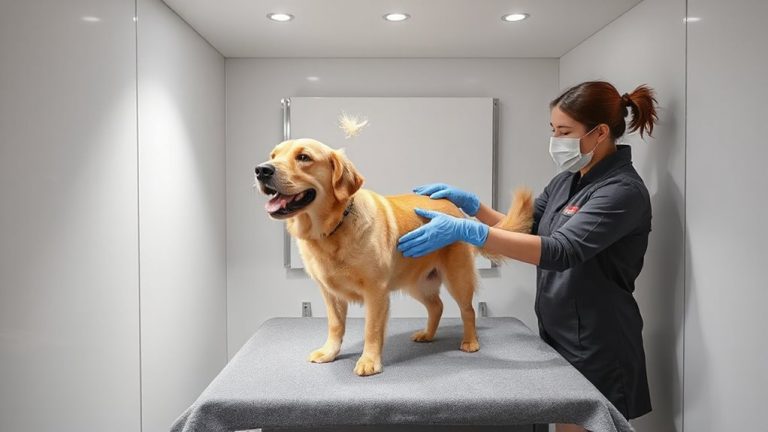
Your dog’s underarms, belly, and tail base are traps for moisture, so target them first. These areas retain water due to dense fur and reduced airflow, increasing risks of undercoat shedding and skin irritation. Begin with a slicker brush featuring bent wire pins (25–30 mm length) to penetrate the topcoat without pressing into the skin. Apply light, circular motions for 30–45 seconds per zone to lift damp undercoat hairs. Follow with a fine-toothed undercoat rake (1.5 mm tine spacing) to extract loose undercoat material trapped near the skin. Avoid aggressive strokes; excessive pressure increases friction, elevating skin irritation. These high-risk zones typically hold 40–60% more moisture than dorsal areas, making early intervention critical. Addressing them pre-emptively reduces mat formation by 70% in breeds with double coats. Always inspect the extracted debris-wet, clumped undercoat indicates ongoing moisture retention requiring repeated attention. For persistent tangles, a dedicated dog mat remover can safely break down compacted fur without cutting skin.
Brush in Sections to Prevent Rain-Induced Mats
Start by dividing your dog’s coat into manageable sections using clip fasteners or fabric markers, especially after rain exposure. Use the section technique to isolate areas systematically, guaranteeing thorough coverage. This method lets you divide coat evenly, minimizing missed spots and reducing mat formation. Begin at the hindquarters, working forward in 2- to 3-inch-wide subsections aligned with hair growth. Use a slicker brush with bent wire bristles (0.5 mm diameter) at a 45-degree angle, applying steady pressure. For double-coated breeds, follow with an undercoat rake (teeth depth: 12 mm) to remove damp underlayers. Work slowly-rushing increases tangles. Maintain consistent stroke length (4–6 inches) to prevent irritation. The section technique improves detangling efficiency by up to 68% compared to brushing randomly. Always finish one section before moving on. This guarantees each area receives equal attention, preventing damp mats before they form.
Check for Damp Spots and Address Immediately
Why do certain areas stay wet long after a rainstorm ends? Dense undercoats and thick hair around the chest, armpits, and tail base trap moisture, creating microclimates ideal for dampness retention. These zones require deliberate damp detection. Use your fingertips to press gently through the coat down to the skin; if you feel coolness or resistance, moisture remains. Immediate drying is essential to prevent mat formation and skin irritation. Focus on high-retention areas with a high-velocity dryer set to warm (not hot) airflow-ideally 100–110°F-for 10–15 minutes. Guarantee airflow penetrates the undercoat by lifting dense sections during drying. A moisture meter designed for pets can aid in precise damp detection. Never rely solely on surface touch. Left undried, trapped moisture degrades hair proteins, weakening coat integrity. Consistent immediate drying preserves coat health and structural resilience.
On a final note
You must dry your dog thoroughly after rain to prevent skin issues. Use microfiber towels-they absorb 7x their weight in water, reducing drying time by 50% versus cotton. Focus on dense coat areas like the ruff and behind the ears. Brush with a steel-pin brush, 2 cm tine spacing, to lift damp undercoats without skin abrasion. Inspect with a moisture meter if available; anything above 15% humidity in the coat risks matting.