Hedgehog Humidity: Ideal 40-60% RH Range & How to Monitor It
Keep humidity between 40% and 60% RH to support your hedgehog’s skin, quill health, and respiratory function. Low humidity causes dry skin and brittle quills; high humidity promotes mold and respiratory infections. Use a calibrated digital hygrometer at mid-cage level for accurate ±3% RH monitoring. Increase dry levels with a cool-mist humidifier or moisture-retaining bedding like coconut fiber. Reduce excess moisture with mesh ventilation, airflow from a nearby fan, or pet-safe desiccants. Stable conditions mirror their natural habitat and prevent long-term health issues-optimal balance reveals deeper benefits with consistent management.
Notable Insights
- Maintain humidity between 40% and 60% RH to support healthy skin, quills, and respiratory function.
- Use a calibrated digital hygrometer placed at mid-cage level for accurate, real-time humidity monitoring.
- Low humidity below 40% can cause dry skin, flakiness, and increase infection susceptibility in hedgehogs.
- High humidity above 60% promotes mold, bacteria, and fungal growth, raising risks of respiratory illness.
- Adjust humidity using cool-mist humidifiers, moisture-retaining bedding, ventilation, or desiccants as needed.
Why Humidity Affects Your Hedgehog
Comfort matters for your hedgehog, and humidity plays a critical role in maintaining it. Low humidity causes dry skin, leading to flakiness, itching, and discomfort. Dry skin compromises the epidermal barrier, increasing susceptibility to irritation and infection. You’ll notice your hedgehog scratching more or exhibiting brittle quills. Relative humidity below 30% exacerbates these conditions markedly. High humidity, conversely, fosters bacterial and fungal growth, elevating risks of respiratory issues. Excess moisture encourages pathogen proliferation in bedding and enclosures. Respiratory issues manifest as wheezing, nasal discharge, or labored breathing. Ideal ambient conditions prevent these extremes. The respiratory tract relies on balanced moisture to trap and expel particulates. Too little moisture dries mucous membranes; too much impairs ciliary function. You must monitor levels accurately using a calibrated hygrometer. Environmental stability directly influences physiological health. Preventive control reduces veterinary incidents.
Keep Humidity Between 40% and 60
Maintaining the right humidity range is essential for your hedgehog’s health, and keeping levels between 40% and 60% RH delivers ideal physiological function. This is the ideal range for preventing respiratory stress and supporting proper skin hydration. Outside this window, your hedgehog risks dry skin or respiratory infections. Humidity balance within the habitat guarantees mucus membranes stay functional and quilling proceeds without irritation. Low humidity below 40% causes shedding and discomfort; above 60%, mold growth and dampness threaten air quality. The ideal range mirrors natural environments where hedgehogs thrive. Use climate-appropriate bedding and ventilation to maintain stability. Avoid moisture-trapping materials. Consistent conditions support metabolic rates and immune response. You’ll notice fewer health issues when staying in this range. This range isn’t arbitrary-it’s based on observed biological performance. Keep conditions steady to guarantee long-term wellness and minimize environmental stress on your pet.
Check Your Hedgehog’s Habitat With a Hygrometer
While environmental stability is critical for your hedgehog’s well-being, you can’t manage what you don’t measure-so using a hygrometer is essential. A digital hygrometer provides accurate, real-time humidity readings, ideally within ±3% RH. Hygrometer calibration guarantees long-term reliability; many models support recalibration using a salt test for precision. Without proper calibration, readings can drift, leading to incorrect habitat adjustments. Placement accuracy is equally crucial-position the device at mid-cage level, away from direct airflow, heat sources, or walls. Avoid corners, which trap stagnant air and yield unrepresentative data. Mount it near your hedgehog’s primary activity zone, but out of reach of paw interference. Single-sensor models are cost-effective, but dual-sensor units with remote displays improve monitoring convenience. Consistent measurement allows timely intervention. Reliable data prevents respiratory issues and skin dryness, supporting health. Use a hygrometer daily to maintain the 40–60% humidity target. For species-specific conditions, consider best hygrometers for reptiles as they often feature high accuracy and durable designs suitable for controlled environments.
Increase Humidity in a Dry Cage
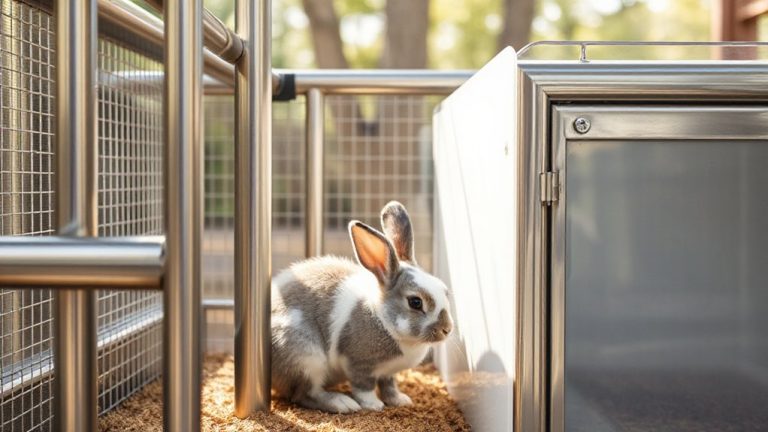
If your hygrometer shows readings below 40% humidity, you’ll need to act-dry air stresses your hedgehog’s respiratory system and can lead to flaky skin and discomfort. To safely increase humidity, use fog misting with a cool-mist humidifier twice daily for 5–10 minutes, delivering micro-droplets that disperse evenly without dampening surfaces excessively. Maintain levels between 40–60% to avoid mold risk. Pair this with moisture-retaining bedding, such as coconut fiber or fleece with absorbent underlays. Moist bedding helps stabilize humidity by slowly releasing water vapor. Replace bedding weekly to prevent bacterial growth. Guarantee proper cage ventilation-enclosures with mesh tops or side vents allow airflow while retaining humidity. Monitor changes with a calibrated hygrometer placed at mid-cage height. Avoid over-saturation. Fog misting combined with regulated moist bedding offers precise, effective humidity control within safe physiological limits for your hedgehog.
Reduce Humidity in a Wet Enclosure
How do you prevent excess moisture from turning your hedgehog’s habitat into a breeding ground for mold and bacteria? Use effective ventilation solutions to maintain airflow without causing drafts. Mesh-sided enclosures or adding vented panels promotes air exchange, reducing humidity buildup. Avoid plastic bins with solid walls unless modified for airflow. Place a small fan nearby-never aimed directly at the cage-to circulate air. For moisture absorption, use desiccants like silica gel packs or specially designed pet-safe humidity absorbers. Place them strategically under the enclosure or in a ventilated pouch inside the habitat. Change or recharge them weekly to maintain efficiency. Monitor humidity using a calibrated digital hygrometer; ideal levels are 40–60%. Exceeding 70% consistently risks respiratory issues and skin infections. Combine ventilation solutions with consistent moisture absorption to keep your hedgehog’s environment safe, dry, and within ideal health parameters.
On a final note
Proper humidity is essential for your hedgehog’s health. Maintain levels between 40% and 60% to prevent respiratory issues and dry skin. Use a calibrated digital hygrometer placed inside the enclosure for accurate readings. If humidity drops below 40%, add a humidifier or moisture-retaining substrate. If above 60%, improve ventilation or use a dehumidifier. Consistency maintains ideal physiological function.