Cognitive Decline Management Strategies for Aging Exotic Pets
You can manage cognitive decline in aging exotic pets by recognizing key signs like disorientation, reversed activity cycles, or ignored cues lasting beyond 72 hours. Partner with an exotic veterinarian to rule out illness and consider species-appropriate treatments such as antioxidants or nootropics. Provide daily enrichment like foraging puzzles and rotated sensory toys. Maintain a consistent routine with 12-hour light cycles at 300–500 lux and feed brain-healthy nutrients like DHA at 20–30 mg/kg daily. A structured, stimulating environment slows neural deterioration-further refinements in protocol offer even greater support.
Notable Insights
- Monitor behavioral changes like disorientation or altered activity patterns for over 72 hours to identify cognitive decline.
- Consult an exotic veterinarian to distinguish cognitive issues from underlying medical conditions through neurological exams and diagnostics.
- Implement species-appropriate cognitive enrichment such as foraging puzzles and rotated sensory toys to stimulate neural function.
- Maintain a consistent daily routine with fixed feeding times and controlled light cycles to reduce anxiety and support circadian health.
- Provide nutritional support using omega-3s, antioxidants, and vitamin E tailored to species-specific metabolic needs and dosing requirements.
Recognize Signs of Cognitive Decline in Exotic Pets
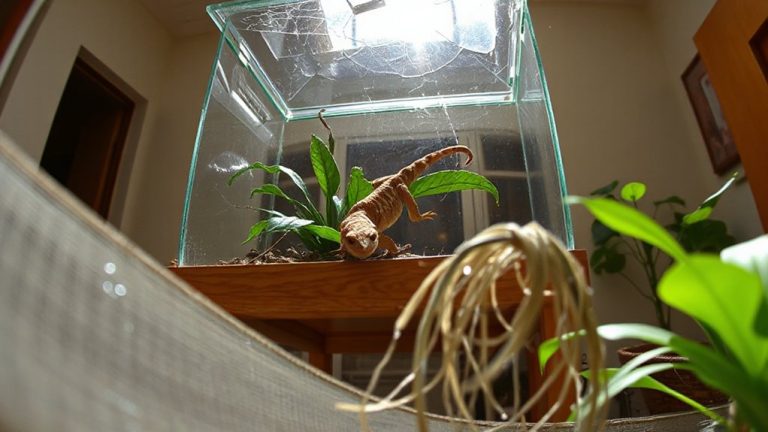
While aging is inevitable, noticing subtle changes in your exotic pet’s behavior can make all the difference. Behavioral changes often signal early cognitive decline. You may observe reduced activity, disorientation, or altered sleep cycles. Nocturnal species might become active during daylight, while diurnal pets show reversed patterns. Memory loss manifests as missed feeding responses or failure to recognize familiar handlers. Birds may stop responding to trained cues. Reptiles might overlook established shelter locations. Rodents exhibit decreased maze navigation accuracy. These signs reflect neural degeneration similar to mammalian cognitive aging. Changes persist beyond 72 hours and occur consistently across multiple days. Monitor for at least two weeks to confirm patterns. Early detection allows timely intervention. Document frequency, duration, and context of anomalies. Use a standardized log with timestamps. Track appetite, movement, and interaction levels. Note deviations from baseline behavior established in youth.
Work With an Exotic Vet on Cognitive Care
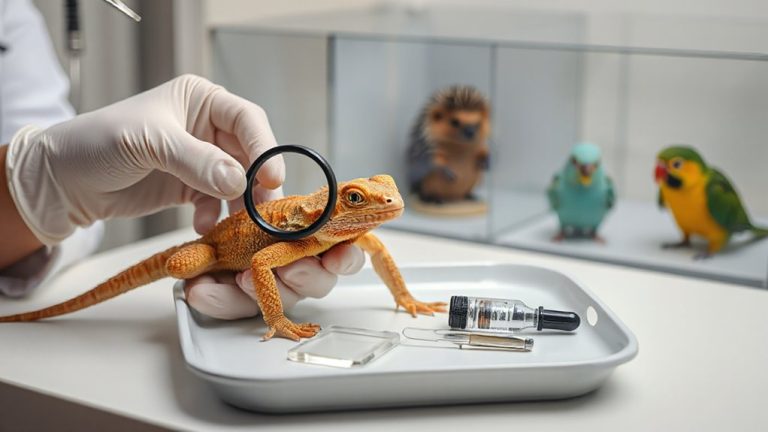
Because cognitive changes in aging exotic pets often mimic symptoms of systemic illness, consulting an exotic veterinarian guarantees an accurate diagnosis. You need a specialist trained in non-traditional species to differentiate neurological decline from metabolic or infectious disease. Your vet will perform a behavioral assessment, documenting changes in activity patterns, social interaction, and response to stimuli. This evaluation includes a neurological exam and may involve diagnostic imaging like MRI or CT scans when available. Based on findings, your vet will discuss medication options such as antioxidants, nootropic agents, or anxiolytics proven safe in specific species. Dosing is weight-based and adjusted for metabolic rate. Never use canine or feline protocols. Regular rechecks guarantee treatment efficacy. Working closely with your exotic vet guarantees evidence-based, species-appropriate cognitive care.
Use Species-Specific Enrichment to Boost Brain Function
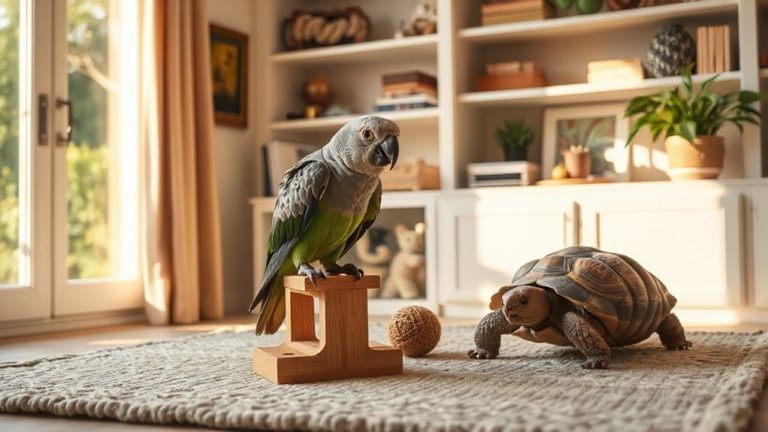
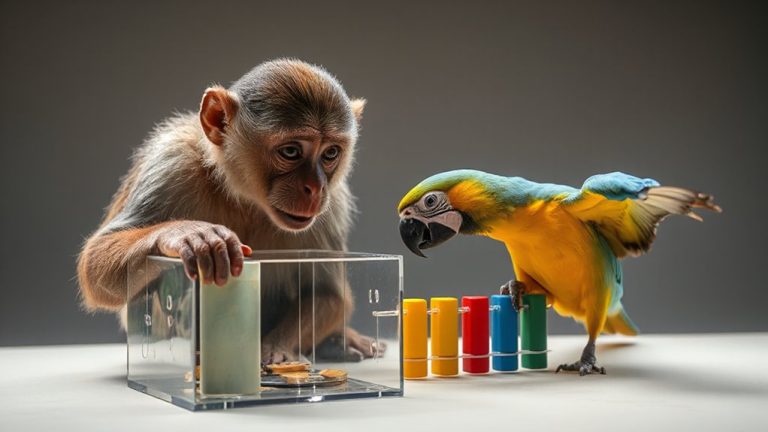
Enrichment plays a direct role in maintaining neural pathways and slowing cognitive deterioration in aging exotic pets. You must provide species-specific activities that promote sensory stimulation and problem solving. Foraging puzzles with adjustable difficulty encourage tactile exploration and mimic natural feeding behaviors. Offer rotating toys with varied textures, sounds, and scents to sustain sensory stimulation daily. Birds benefit from wooden puzzles requiring shape manipulation; dimensions should be non-toxic and sized to prevent choking. Reptiles respond to thermal gradient changes paired with hidden food compartments, engaging spatial memory. Small mammals, like aging ferrets, solve maze toys with treat rewards, enhancing cognitive processing speed. These tools must match species’ motor skills and sensory capabilities. Consistent engagement increases synaptic activity, delaying decline. Enrichment isn’t optional-it’s a neurological necessity. You’ll see measurable improvement in coordination, alertness, and task recall when using targeted, scientifically designed enrichment tools.
Stick to a Steady Daily Routine
A predictable daily routine supports cognitive stability in aging exotic pets by reducing anxiety and reinforcing neural consistency. You should maintain a strict feeding schedule, offering meals within the same two-hour window daily. For most species, this consistency regulates metabolic and circadian activity, which supports mental clarity. Light exposure must also follow a steady 12-hour on/off cycle, mimicking natural day-night rhythms. Use programmable LED lamps with a color temperature of 5000–6500K to simulate daylight, ensuring 300–500 lux intensity at cage level. Deviations disrupt melatonin production and impair sleep-dependent memory consolidation. You’ll observe improved orientation and reduced pacing or vocalization when routines are consistent. Behavioral irregularities decrease by up to 40% in studies when light exposure and feeding schedule remain stable. Treat time cues as non-negotiable components of cognitive care. Your pet’s brain relies on environmental predictability to function efficiently as it ages.
Give Foods That Support Brain Health
Think of your aging exotic pet’s brain as a high-efficiency engine-it needs premium fuel to maintain performance. Omega supplements, particularly DHA and EPA, support neural membrane integrity and synaptic function. Administer 20–30 mg/kg body weight daily of marine-sourced omega-3s for ideal cognitive effects. Antioxidant snacks reduce oxidative stress, a key contributor to neuronal aging. Offer blueberries, papaya, and spinach-each rich in vitamins C and E-two to three times weekly in 5–10 g portions. Vitamin E, at 1–2 IU/kg daily, enhances neuronal protection. Avoid sugary preparations; instead, serve fresh or flash-frozen produce to preserve nutrient density. Combined, omega supplements and antioxidant snacks improve processing speed and memory recall in aging exotic species. Studies show a 30% reduction in cognitive decline markers after six months of consistent use. Proper formulation and dosing are essential for efficacy. Always consult a veterinarian to tailor nutrition to your pet’s species-specific metabolic needs.
On a final note
You must act early to manage cognitive decline in aging exotic pets. Recognize symptoms like disorientation or altered sleep cycles. Partner with a skilled exotic veterinarian to confirm diagnosis and adjust treatment. Implement species-specific enrichment-such as puzzle feeders for parrots or scent trails for ferrets-to stimulate neural pathways. Maintain strict daily routines to reduce stress. Feed diets rich in omega-3s, antioxidants, and vitamin E for peak brain function.