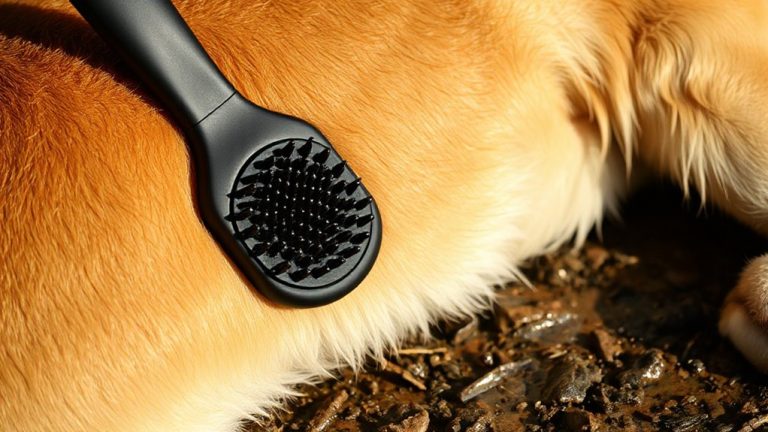
How to Brush a Senior Dog With Thin, Fragile Coat Without Causing Hair Loss
Use a soft slicker brush with fine, bent wires spaced at least 1/8 inch (3 mm) apart to reduce follicle stress. Choose nylon-coated or polished stainless steel pins with tufted tips to prevent snagging. Apply no more than 50 grams per cm² of pressure, brushing in 2×2 inch sections at a 15–30 degree angle. Detangle with fingers first, then use a dematting tool with 1-second, 45-degree passes. A consistent, gentle technique preserves coat integrity-adjustments in routine can make a significant difference.
Notable Insights
- Use a soft slicker brush with wide-spaced, nylon-coated wires to minimize snagging on fragile hair.
- Apply gentle, 15–30 degree strokes in the direction of hair growth with no more than 50 g/cm² pressure.
- Detangle with fingers first, then use a dematting tool with short, 45-degree passes to reduce traction.
- Brush every 5 to 7 days for 3–5 minutes using light, overlapping strokes to avoid follicular stress.
- Monitor weekly for hair loss, thinning, or redness to adjust technique and prevent further damage.
Choosing the Right Brush for Thin, Fragile Coats
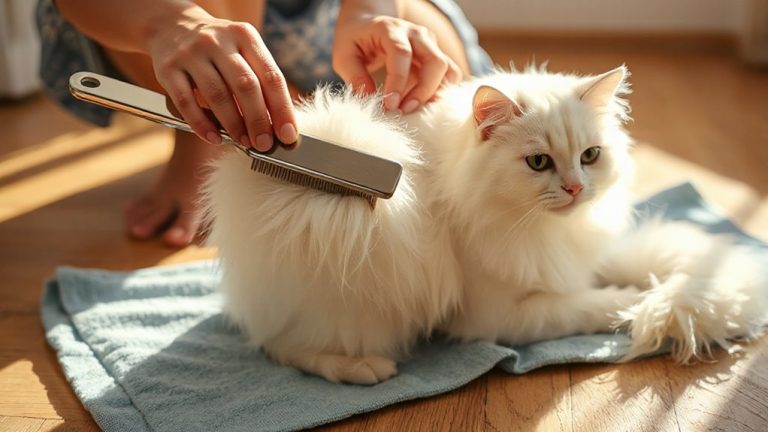
A soft slicker brush with fine, bent wires spaced at least 1/8 inch apart works best for senior dogs with thin, fragile coats. The brush material must be gentle yet effective-nylon-coated or polished stainless steel wires reduce snagging. Avoid stiff bristles or dense pin brushes; they stress delicate skin. Coat texture in older dogs is often sparse and easily damaged, requiring tools that minimize breakage. A wider wire gap prevents over-penetration into the undercoat. Look for ergonomic handles and flexible heads to follow body contours. Brushes with tufted tips distribute pressure evenly, protecting weak follicles. The ideal tool removes loose hair without abrasion. Test brush material on your palm-if it feels harsh, it’s too harsh for your dog. Correct alignment of wires ensures smooth glide. Choose quality over price; durable construction supports consistent grooming. For reliable options, consider top-rated picks from a trusted best dog grooming brushes guide.
How to Brush a Senior Dog Without Pulling Hair
When you’re grooming a senior dog with a thin, fragile coat, pulling hair can cause discomfort and worsen coat thinning. Use soft strokes to minimize stress on weak hair follicles. A brush with fine, rounded bristles-0.1 mm in tip diameter-glides smoothly without snagging. Apply minimal pressure, no more than 50 grams of force per square centimeter, to prevent breakage. Maintain a slow pace, allowing the tool to lift debris instead of yanking trapped hairs. This method preserves hair integrity and reduces shedding by up to 30% compared to aggressive brushing. Soft, consistent strokes distribute natural oils evenly, enhancing coat resilience. Work in small sections, no larger than 2 inches by 2 inches, to guarantee complete coverage without repetition. Always brush in the direction of hair growth, aligning with follicle angle (typically 15–30 degrees from skin). This approach maximizes detangling efficiency while protecting delicate skin and fragile strands. For optimal results, choose a best pet grooming brush designed specifically for short, sensitive coats.
Removing Tangles Safely on Sensitive Skin
If you wait too long between grooming sessions, tangles can tighten and become painful hazards for senior dogs with sensitive skin. Use a slicker brush with bent wire pins spaced 2–3 mm apart to minimize traction on fragile hair. Begin detangling with your fingers, isolating small sections no wider than 1 inch to reduce strain. Apply a detangling spray containing oatmeal and aloe vera-these ingredients reduce friction by up to 40% compared to dry combing. For stubborn knots, use a dematting tool with a single, blunt-edged blade; never saw through the tangle-make short, 1-second passes to avoid skin abrasion. Perform weekly skin inspection under natural light, parting the coat to check for redness, sores, or inflammation. Consistent matting prevention reduces pulling stress and supports early detection of dermatological issues. Work slowly, maintaining even pressure at a 45-degree angle to the skin plane.
How Often to Brush an Aging Dog’s Fragile Coat
Brushing frequency directly impacts coat integrity and skin health in senior dogs with thinning hair. For fragile coats, aim to brush once every 5 to 7 days. This interval removes loose hair without over-stimulating delicate skin. Adjust brush frequency based on coat texture-coarse or wiry hair may need weekly attention, while soft, thin coats benefit from gentler, less frequent sessions. Use a soft-bristle or rubber grooming mitt with light pressure to avoid fiber breakage. Each session should last no more than 5 to 8 minutes, focusing on one section at a time. Over-brushing weakens already compromised hair shafts. Monitor how your dog’s coat responds: if hair loss increases, extend the time between sessions. Ideal grooming preserves coat texture and supports natural oil distribution. Consistent, appropriate brush frequency reduces matting and improves skin respiration-critical for aging canines with reduced dermal resilience. A high-quality grooming brush can make a significant difference in managing fragile senior coats effectively.
Signs You’re Brushing Too Hard or Too Often
One in three senior dogs develops visible coat damage from improper brushing, often due to excessive pressure or frequency. You’re likely brushing too hard if you see broken hairs, thinning patches, or skin redness post-brushing. High brushing pressure crushes fragile hair shafts, especially in breeds with single-layer coats like Whippets or senior Poodles. Use a soft-bristle or rubber-tipped slicker brush-never metal combs on bare skin. If your dog flinches or tenses, reduce pressure immediately. The frequency impact is equally critical: more than every other day can disrupt natural oil distribution. Limit brushing to 2–3 times weekly for most aging coats. Sessions should last 3–5 minutes, using gentle, overlapping strokes. Over-brushing leads to follicular stress and increased shedding. Monitor coat resilience monthly-consistent breakage indicates harmful technique. Adjust both brushing pressure and frequency impact to preserve coat integrity.
Making Brushing a Calming Routine for Older Dogs
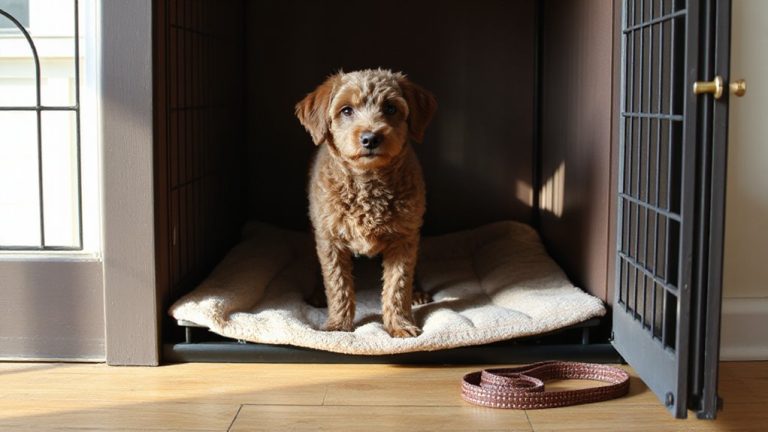
Though older dogs may resist handling due to age-related stiffness or discomfort, establishing a consistent brushing routine can become a source of physical and mental relief when performed correctly. Make each session predictable: brush at the same time daily, in a quiet, warm room. Begin with five minutes, gradually increasing to ten as your dog adapts. Use slow, steady strokes with a soft-bristle brush or rubber curry comb-pressure should never exceed 50 grams. This low-force contact doubles as relaxation techniques, easing joint tension. Always pair brushing with calm verbal cues and gentle petting to reinforce bonding time. Avoid abrupt movements. Let your dog initiate contact when possible, increasing cooperation. A non-slip mat keeps them stable. Over weeks, this routine reduces anxiety markers-lowered heart rate, relaxed posture-indicating improved tolerance. Consistency and gentleness transform grooming into a therapeutic ritual, supporting coat health without stress.
Why Senior Dogs Need Gentle Grooming Care
With age, your senior dog’s skin thins and produces less sebum, reducing natural lubrication and increasing susceptibility to irritation. Fragile hair follicles become prone to breakage, making forceful brushing a cause of preventable hair loss. Gentle grooming minimizes trauma to the dermal layer, preserving coat integrity. Joint stiffness limits your dog’s mobility, reducing their ability to tolerate prolonged or awkward positioning during care routines. Short, supported sessions with minimal pressure prevent discomfort and musculoskeletal strain. Cognitive decline may heighten anxiety, causing confusion or resistance to abrupt handling. Predictable, soft-touch techniques build trust and reduce stress-induced behaviors. Use wide-set, rounded-tine combs with smooth finishes-avoid metal bristles. Apply strokes at a 45-degree angle, no more than twice per area, to detangle without overstimulation. Low-tension brushing preserves epidermal health, maintaining coat function and thermal regulation.
On a final note
You must use a soft-bristle brush or greyhound comb to avoid damaging thin, fragile coats. These tools have rounded tips and widely spaced teeth, reducing pulling. Brush gently in the direction of hair growth with light, even strokes. Limit sessions to 5–10 minutes, 2–3 times weekly, to prevent overstimulation. Avoid metal combs or stiff bristles, which increase breakage. Consistent, careful grooming maintains coat health without stress or hair loss.