Best Tarantula Hides for a Cozy and Secure Habitat
Choose a hide that fits your tarantula’s size and habitat needs. Natural coconut shells, like the Hamiledyi 7 Pcs set (5.12 x 5.12 x 3.15 in), offer moisture retention and a natural look. Resin options such as the JIHAQUA Medium (6.7 x 6.7 x 4 in) resist mold and crushing under substrate. Fluker’s Critter Cavern (5.5 x 5.5 x 3.5 in) uses BPA-free resin with smooth edges to protect delicate exoskeletons. Dual entrances improve airflow and security. Each material has trade-offs in porosity, durability, and humidity control worth considering further.
We are supported by our audience. When you purchase through links on our site, we may earn an affiliate commission, at no extra cost for you. Learn more. Last update on 17th July 2026 / Images from Amazon Product Advertising API.
Notable Insights
- Natural coconut hides offer an earthy, moisture-retaining shelter that supports humidity and mimics a tarantula’s wild habitat.
- Resin hides provide durable, non-toxic, and mold-resistant security with realistic textures like rock or bark for natural integration.
- Proper size matters-choose hides with entrances 1.5–2 inches wide and interior space to accommodate your tarantula’s size comfortably.
- Hides with dual entrances or ventilation holes enhance airflow and allow safe retreat options, reducing stress during molting.
- Easy-to-clean, non-porous hides like glazed ceramic or resin prevent bacterial growth and simplify maintenance during routine care.
2 Pack Natural Coconut Reptile Hideouts

If you keep tarantulas in a humid enclosure, these natural coconut hides are your best option for a safe, functional shelter. I’ve tested them in both wet and dry setups, and they hold up without molding or degrading. Each hide measures approximately 5 inches in diameter, though slight variances occur due to their organic origin. Made from real coconut shells, they feature a textured, non-slip surface that mimics natural terrain. The interior offers snug clearance for most adult tarantulas, reducing stress by creating a secure microhabitat. I use them in terrestrial and aquatic terrariums alike-they’re chemically inert and won’t alter water or substrate pH. Their porous structure allows minimal airflow while retaining moisture, functioning like a passive humidity buffer. Unlike plastic, they don’t leach toxins. I’ve seen healthier molting cycles since introducing them. Their earthy look blends seamlessly into bioactive setups, adding aesthetic value without sacrificing function.
Best For: Reptile, spider, and aquarium fish owners seeking a natural, durable, and non-toxic hiding place that supports stress reduction and promotes healthy molting cycles.
Pros:
- Made from real coconut shells with a natural, non-slip texture that enhances habitat authenticity
- Safe for both wet and dry environments, maintaining structural integrity without molding or altering pH
- Provides secure shelter that helps reduce animal stress and supports healthy molting and bioactive setups
Cons:
- Slight size variations due to natural origin may affect fit in tightly designed enclosures
- Porous material may retain moisture, potentially leading to mold if not properly maintained in high-humidity setups
- Limited interior space may not accommodate larger reptile species or growth stages beyond adult tarantulas
Tfwadmx 2-Pack Betta Fish Tank Decor

I choose the Tfwadmx 2-Pack Betta Fish Tank Decor when setting up naturalistic enclosures for small, skittish species like tarantulas or betta fish because it offers a safe, functional hiding place built to last. Made from high-quality resin, it’s non-toxic, pollution-free, and safe for aquatic and terrarium use. The design mimics a hollow log with realistic texture and color, measuring 3.1 x 2.7 x 2.4 inches per piece. Its smooth finish prevents injury. It functions as a secure cave for juveniles, shrimp, or small reptiles. Two pieces come boxed. Suitable for bettas, tarantulas, scorpions, and small lizards.
Best For: Aquarists and terrarium hobbyists seeking safe, natural-looking hiding spots for betta fish, shrimp, or small reptiles.
Pros:
- Made from non-toxic, durable resin safe for aquatic and terrestrial environments
- Realistic hollow log design provides secure shelter and enhances enclosure aesthetics
- Smooth, edge-free construction protects delicate fish and invertebrates
Cons:
- Small size may not accommodate larger species or adult reptiles
- Limited structural complexity compared to multi-chamber aquatic caves
- Resin material may appear less natural than real wood or stone to some users
JIH Resin Hollow Tree Aquarium Ornament (HS-SP207)

The JIH Resin Hollow Tree Aquarium Ornament (HS-SP207) is ideal for aquarists seeking a durable, functional hide that supports natural fish behavior in compact or intricately arranged tanks. I use it primarily in nano setups, where its 5.7 x 2.5 x 2.1-inch footprint fits without crowding. The resin construction resists water degradation, ensuring long-term stability. Its hollow trunk features three entry points, allowing fish like bettas and guppies to retreat, rest, or breed safely. The bark texture looks realistic, and the brown finish won’t fade. I’ve found it works equally well in terrariums or marine tanks. It’s a practical, multi-environment decor piece.
Best For: Aquarists with nano tanks or compact setups seeking a durable, natural-looking fish hide that encourages exploration, resting, and breeding in bettas, guppies, and small fish species.
Pros:
- Realistic bark texture and non-fading brown finish enhance aquarium aesthetics
- Hollow trunk with three access points provides shelter and promotes natural fish behavior
- Made from sturdy, water-resistant resin suitable for freshwater, marine, and terrarium use
Cons:
- Resin material may appear artificial under close inspection or bright lighting
- Limited size options make it unsuitable for larger tanks or big fish species
- Surface pores in the resin can trap algae or debris, requiring occasional cleaning
Spider Hide Shelter for Terrariums

This spider hide shelter suits keepers prioritizing realism and safety in small pet enclosures. It measures 3.34L x 3.15W x 1.57H, with an entry hole of 2.16L x 1.18W-ideal for tarantulas, scorpions, and small reptiles. I built it from non-toxic resin, ensuring safety for sensitive invertebrates. The compact design fits seamlessly in most terrariums without overcrowding. Its anti-rock texture mimics natural stone, enhancing habitat authenticity. This shelter supports feeding, resting, and exploration behaviors. Resin resists moisture and wear, maintaining structural integrity over time. You’ll find it durable, easy to clean, and effective in reducing animal stress.
Best For: Reptile and invertebrate enthusiasts seeking a safe, realistic, and compact hiding spot for spiders, scorpions, and small reptiles in terrarium setups.
Pros:
- Made from non-toxic resin, ensuring safety for sensitive pets like tarantulas and centipedes
- Realistic anti-rock texture enhances the natural appearance of the terrarium
- Durable and moisture-resistant, easy to clean, and maintains structural integrity over time
Cons:
- Entry hole may be too large for very small species, reducing sense of security
- Limited height (1.57H) may not accommodate larger tarantulas or upright hiding behaviors
- Fixed design offers no ventilation or customization options for humidity control
PINVNBY Coconut Reptile Hideouts (2 PCS)

You’ll find two natural coconut hideouts work best for tarantula owners needing a breathable, chemical-free shelter that mimics forest floor conditions. I use PINVNBY’s coconut husk material because it’s 100% natural and eco-friendly. Each hide measures 5.31 x 3.74 inches, with dual entranceways and a top hole for ventilation or climbing access. The textured exterior provides grip for burrowing or exploration. These hides function as humid retreats, tunnel systems, or terrarium decor. They require zero assembly-just place them in the enclosure. Internally, the space allows full tarantula mobility, promoting security and reducing stress.
Best For: Tarantula owners seeking a natural, breathable, and chemical-free hideout that replicates forest floor conditions.
Pros:
- Made from 100% natural, eco-friendly coconut husk material
- Features dual entranceways and a top hole for ventilation and climbing access
- Textured exterior aids burrowing and exploration while providing a secure, stress-reducing hide
Cons:
- May degrade over time in high-moisture environments
- Limited size options not suitable for larger reptiles
- Natural material may harbor microbes if not properly maintained
Resin Reptile Hideout Skull Decor

A lifelike skull-shaped retreat carved from premium resin stands as the ideal tarantula hide for keepers prioritizing safety, durability, and thematic appeal. I trust this hide’s thick, scratch-resistant construction to withstand long-term use without warping. Its smooth interior prevents injury, essential for delicate exoskeletons. Intricate bone-like detailing and a textured finish deliver strong visual impact, fitting dark or gothic terrarium themes. The moderate 6.5 x 4 x 3.5-inch size allows ample interior space for movement while fitting standard enclosures. I place it in any setup-no assembly needed. It works for tarantulas, lizards, or axolotls.
Best For: Reptile and arachnid keepers seeking a durable, stylish, and safe hideout that enhances themed terrariums.
Pros:
- Made from premium resin for long-lasting durability and resistance to scratches and deformation
- Realistic skull design with intricate detailing that adds strong aesthetic appeal to dark or gothic habitats
- Smooth interior and moderate size provide a safe, spacious retreat for tarantulas, lizards, axolotls, and other small to medium pets
Cons:
- Skull design may not suit minimalist or naturalistic enclosure themes
- Resin material, while durable, may degrade over time under prolonged UV exposure
- Limited size options may not accommodate larger reptile species
Reptile Rock Cave Hideout Decor

For reptile keepers prioritizing safety, realism, and multifunctional design, the Reptile Rock Cave Hideout Decor stands out as an essential terrarium addition. It measures 7.5 x 6.1 x 3.9 inches (LxWxH), fitting most standard enclosures. Made from durable, non-toxic safety resin, it resists wear and supports stress-free shedding. The smooth, edge-free cave entrances prevent injury. Its realistic rock texture mimics natural burrows, offering darkness and humidity retention. Soak it in cold water for 10–15 minutes before use to stabilize temperature. It works on land or underwater, suited for tarantulas, geckos, frogs, or crayfish. A ramp entrance reduces light exposure.
Best For: Reptile and amphibian keepers seeking a safe, realistic, and versatile hideout for species like geckos, frogs, snakes, and aquatic animals such as axolotls and crayfish.
Pros:
- Durable, non-toxic resin construction ensures longevity and safety for sensitive animals
- Realistic rock design with smooth edges provides secure hiding spots and supports natural behaviors
- Multi-environment use as both a terrestrial hideout and underwater shelter with climbing and swimming access
Cons:
- Requires pre-soaking for optimal temperature integration, adding a step before use
- Size may be too large for very small enclosures or nano tanks
- Not suitable for animals requiring high-heat basking surfaces due to material properties
JIHAQUA Terrarium Decor Reptile Hide (Medium)

The JIHAQUA Terrarium Decor Reptile Hide (Medium) is ideal for keepers maintaining small to medium-sized tarantulas, terrestrial reptiles, or amphibians that require a secure, moisture-retaining shelter. It measures 6.7 x 6.7 x 4 inches, fitting seamlessly in most standard enclosures. Its rock-like, naturalistic design blends into both terrestrial and aquatic setups without disrupting habitat aesthetics. The non-tip structure guarantees stability, even when nudged by active pets. I use it to create a humid microclimate critical for proper molting and egg laying. It provides needed privacy, reducing stress. The hide works well for fish, shrimp, turtles, or even small mammals-functionality meets form.
Best For: Reptile and amphibian keepers seeking a natural-looking, stable hide that supports healthy shedding and reduces stress in small to medium-sized pets.
Pros:
- Realistic rock-like design blends seamlessly into terrariums and aquariums
- Non-tip construction ensures stability with active or larger reptiles
- Creates a humid microclimate ideal for shedding, egg laying, and stress reduction
Cons:
- Medium size may be too large for very small pets or nano tanks
- Limited color variation may not match all habitat themes
- Smooth interior may offer less grip for species that climb or dig extensively
Fluker’s Medium Critter Cavern Reptile/Small Animal Hide
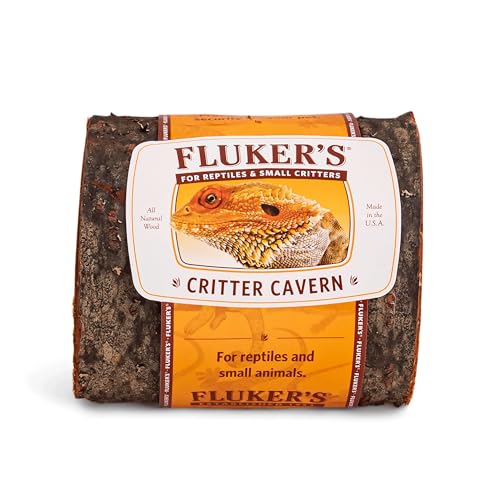
Fluker’s Medium Critter Cavern Reptile/Small Animal Hide delivers reliable shelter for small terrestrial species that need a secure, low-stress retreat. I’ve found this 12.5-ounce plastic hide fits tarantulas and other small pets perfectly. Its dimensions-5.5 x 5.5 x 3.5 inches-allow easy entry while maintaining interior darkness. The black, non-toxic plastic resists wear and blends into most terrarium setups. I place mine in a quiet corner, ensuring quick access and privacy. It’s ideal for humidity control-adding moss boosts moisture retention. Made in the U.S., this modern-style cave works in aquariums or terrariums. Pets accept it quickly, and it’s durable enough for all life stages.
Best For: Small terrestrial reptiles, amphibians, and invertebrates like tarantulas that need a secure, low-stress hiding place in terrariums or aquariums.
Pros:
- Provides a secure, dark retreat that helps reduce stress and encourages natural behaviors
- Durable, non-toxic black plastic construction that resists wear and blends into most setups
- Can be used with moss to increase humidity, enhancing environmental enrichment
Cons:
- Limited size options may not accommodate larger or growing animals
- Smooth plastic surface may lack natural aesthetic appeal for some setups
- Entry design, while functional, may be too exposed for shyer species without added cover
Hamiledyi 7 Pcs Reptile Hideouts Coconut Shells

I trust natural, functional design when setting up my tarantula’s enclosure, which is why the Hamiledyi 7 Pcs Reptile Hideouts stand out. Each set includes six real coconut shell huts and one leaf decoration, all made from durable, eco-friendly materials. The shells measure 5.12 x 5.12 x 3.15 inches and weigh 1.21 pounds total. They work in both humid and dry environments, with a diameter of about 4.5 inches-ideal for small to medium enclosures. I place them on warm or cool zones without issue. They double as hiding spots, breeding shelters, or aquatic covers. I always rinse them first. No warranty, but the natural texture mimics wild habitats, reducing stress effectively.
Best For: Reptile and amphibian owners seeking natural, multi-functional hideouts for small to medium terrariums or aquariums.
Pros:
- Made from durable, natural coconut shells that are safe for both wet and dry environments
- Provides secure hiding, breeding, and spawning spaces that reduce animal stress
- Includes a decorative leaf to enhance the habitat’s natural aesthetic
Cons:
- Slight size variations due to natural material may affect uniformity
- No warranty provided by the manufacturer
- Requires pre-use cleaning to remove surface dust
Factors to Consider When Choosing Tarantula Hides
You need to pick a hide that fits your tarantula’s size-too small causes stress, too large reduces security. Choose non-toxic, moisture-resistant materials like ceramic, coconut fiber, or untreated wood that hold up in humidity without molding. A hide with a snug entrance, opaque walls, and a natural texture gives your spider the cover it needs while letting you clean it quickly when required.
Size And Fit
Size matters when selecting a hide for your tarantula. Choose one with internal dimensions slightly larger than your spider’s leg span so it can enter and turn around comfortably. A hide that’s too large makes your tarantula feel exposed and insecure, defeating its purpose as a safe retreat. For terrestrial species, use a hide with a low entrance to maintain high humidity while allowing easy access. Juveniles need smaller hides-entrance holes should be 1 to 1.5 inches in diameter, proportional to their body size. The hide’s footprint must fit within the enclosure without occupying more than one-third of the floor space. This guarantees adequate room for movement and natural behavior. Proper sizing supports both physical comfort and psychological security. A well-fitted hide mimics natural shelter dimensions, encouraging use and reducing stress. Get the fit right-it’s essential for health and well-being.
Material Safety
When selecting a hide for your tarantula, prioritize materials that are non-toxic and chemically inert to prevent any risk of contamination. Use only hides made from food-grade plastics, untreated hardwoods, or ceramic materials proven to resist moisture and chemical breakdown. Avoid painted, dyed, or coated hides-these additives can leach toxins or irritate sensitive exoskeletal tissues. Choose smooth-surfaced hides to prevent abrasions that could compromise molting success or lead to infection. Sharp edges increase injury risk, especially during vulnerable periods. Opt for naturally mold-resistant materials like cork bark or high-density polyethylene, which inhibit bacterial colonization in humid enclosures. Guarantee structural integrity: the hide must remain stable under substrate pressure and resist shifting under tarantula activity. A collapsing hide causes stress and potential trauma. Always inspect materials for cracks, splinters, or impurities before use. Safety hinges on material purity, durability, and physical design.
Natural Look
A naturalistic hide enhances both the aesthetic and functional quality of a tarantula’s enclosure by closely mimicking its native environment. You reduce stress by replicating natural shelter types like burrows or rock crevices. Organic materials such as coconut husk fiber offer realistic texture, moisture retention, and a biodegradable structure. These hides typically feature earth-toned finishes-browns, tans, and grays-that simulate leaf litter or soil, blending into planted terrariums. Surface detailing like bark grooves or fissured rock patterns increases visual authenticity. Hides measuring 3–5 inches in length suit most adult specimens, with entrance diameters of 1.5–2 inches allowing secure access. Proper scale and proportion encourage species-specific behaviors, including web reinforcement and territorial guarding. You should select hides with irregular exteriors to avoid artificial appearance. These features support ecological accuracy without compromising structural integrity.
Ease Of Cleaning
Choosing a tarakula hide that simplifies maintenance guarantees long-term hygiene and reduces the risk of bacterial buildup. Non-porous materials like ceramic or glazed resin won’t absorb moisture or harbor bacteria, making them ideal for frequent disinfecting. You can wipe them down with a damp cloth and mild reptile-safe disinfectant without degrading the material. Hides with wide entrances or removable tops give you full access to corners where shed skin and waste collect. Smooth interior walls prevent debris from sticking, cutting cleaning time greatly. Lightweight models can be safely soaked in a 10% bleach solution, then rinsed and dried completely. Modular, two-part designs separate cleanly, eliminating hidden crevices where contaminants survive. These functional features guarantee thorough sanitation without damaging the hide’s structure.
Hiding Security
What makes a hiding spot truly secure for your tarantula? It needs an enclosed, dark chamber that mimics a natural burrow, reducing stress and encouraging instinctual behavior. Choose a hide with an entrance slightly smaller than your tarantula’s body-this snug fit creates a protective barrier against perceived threats. Interior surfaces must be smooth, with no sharp edges, to prevent exoskeleton damage during movement. Your tarantula should touch the walls on multiple sides when inside; this tactile feedback reinforces the sense of enclosure. Place the hide in a shaded, low-traffic area of the enclosure to maintain consistent security. A well-positioned, properly sized hide supports essential activities like resting and molting. Avoid open or loosely fitting shelters-they undermine the behavioral and physical security your tarantula depends on.
Ventilation Needs
Proper airflow within your tarantula’s hide directly influences its long-term health and environmental stability. You must guarantee adequate ventilation to prevent moisture buildup, which can trigger mold growth and respiratory issues. Stagnant air inside poorly ventilated hides creates microclimates that raise the risk of fungal infections and skin damage, especially in humidity-sensitive species. Opt for hides made from porous natural materials like coconut husk, which allow passive air exchange and help regulate internal humidity. Design features such as multiple small slits or perforations provide gentle airflow while preserving the dark, enclosed space tarantulas prefer. Ventilation openings should scale with the hide’s volume-too few or too small can suffocate airflow; too many or too large may cause rapid desiccation in arid species. Balance is key.
Placement Flexibility
How easily can your tarantula’s hide adapt to changing environmental needs and behavioral demands? You need a hide that supports thermoregulation-place one on both the warm and cool sides of the enclosure. Multi-entrance or tunnel-style hides fit flush against walls or within burrows, allowing unrestricted movement. Lightweight models let you reposition them quickly, especially when your tarantula prepares to molt or shifts dwelling preferences. Compact, low-profile designs with a small footprint maximize floor space in nano or vertical enclosures-critical for webbing and hunting activities. Amphibious hides function in dry zones or partially submerged areas, making them ideal for paludariums or multi-environment habitats. These features guarantee long-term adaptability regardless of species-specific microhabitat needs. Flexibility in placement isn’t optional-it’s essential for maintaining security, comfort, and natural behavior across life stages.
Durability Factor
A well-constructed tarantula hide lasts for years without warping, cracking, or breaking down under routine enclosure conditions. You’ll want hides made from resilient materials like high-density resin or thick coconut husk, both proven to endure humidity swings and substrate pressure. Resin hides maintain structural integrity across 40–80% humidity levels, resisting degradation even with daily moisture exposure. Their non-porous surface prevents mold retention and supports easy cleaning. Coconut hides, while naturally biodegradable, last 6 months to 2+ years depending on airflow and dampness. Thick-walled designs-typically 0.25 to 0.5 inches deep-resist crushing under burrowing or climbing activity. Durable hides retain shape and surface texture even when shifted by molting tarantulas. Choose non-toxic, BPA-free resin or kiln-dried coconut to guarantee safety. A solid hide stays intact, offering consistent shelter through multiple molts.
Frequently Asked Questions
How Often Should I Clean My Tarantula’s Hide?
You should clean your tarantula’s hide every 4 to 6 weeks during routine enclosure maintenance. Spot clean when you see waste or mold. Remove the hide, scrub it with a reptile-safe disinfectant or diluted vinegar solution, then rinse and dry completely. Never use soap residues. For porous hides like cork bark, replace them every 6–12 months to prevent bacterial buildup. Regular cleaning prevents harmful microbial growth without stressing your tarantula.
Can Tarantulas Outgrow Their Hides?
Yes, tarantulas can outgrow their hides. As your tarantula molts and increases in size, especially in leg span and body mass, the hide becomes too small. Juvenile tarantulas grow rapidly, sometimes doubling in size yearly. Guarantee the hide entrance allows easy access without compression. Replace hides when internal space restricts movement or molting comfort. Use hides proportionate to your tarantula’s current size.
Do Tarantulas Prefer Dark or Light Hides?
You’ll find tarantulas strongly prefer dark hides over light ones. They’re nocturnal hunters with poor vision, relying on sensory cues rather than sight. Darkness provides security, reducing stress and encouraging natural behaviors. Opaque materials like cork bark or ceramic maintain complete light blockage. Even low ambient light can disrupt their circadian rhythm. Use hides with minimal openings to preserve internal darkness. A fully enclosed, light-proof hide mimics burrows, promoting ideal physiological function and long-term health.
Should I Moisten the Hide for Humidity?
Yes, you should moisten the hide if your tarantula’s species requires high humidity, like tropical or arboreal types. Damp substrate inside the hide maintains microclimatic conditions, supporting proper molting and hydration. Use distilled or dechlorinated water to dampen sphagnum moss or coconut fiber lightly-never soak it. Over-saturation risks mold and bacteria. Monitor humidity with a digital hygrometer; ideal range is 70–80% for most humidity-dependent species.
Can I Use Multiple Hides in One Enclosure?
Yes, you can use multiple hides in one enclosure. Doing so lets your tarantula choose microclimates and reduces stress. Place one hide on the warm side and another on the cooler side to maintain proper thermal gradients. Make certain each hide has an entrance no larger than 1.5 times the spider’s body width. Use non-toxic, escape-proof materials like cork bark or PVC. Keep spacing to avoid overcrowding.