Best RFID Cat Feeders That Keep Hungry Imposters Out
You need an RFID cat feeder that blocks intruders using 13.56 MHz technology. The PETLIBRO PLAF301 and SureFeed MPF001 lock access until a registered pet’s microchip or RFID tag is detected. These models support up to 32 pet profiles, ensuring multi-cat households maintain dietary control. A sealed, locking lid prevents food theft. Proprietary tags are required on some units. Advanced models offer app control, portion scheduling, and freshness seals-features that reveal deeper advantages in design and function.
We are supported by our audience. When you purchase through links on our site, we may earn an affiliate commission, at no extra cost for you. Learn more. Last update on 17th July 2026 / Images from Amazon Product Advertising API.
Notable Insights
- RFID cat feeders use 13.56 MHz technology to identify authorized pets and block food access for imposters.
- Locking lids open only for pets with registered RFID tags, preventing unauthorized feeding.
- PETLIBRO, SureFeed, and PawsPik models support microchip or collar-based RFID recognition for reliable identification.
- Systems store up to 32 pet IDs, ideal for multi-cat households needing individual access control.
- Airtight seals and portion control preserve food freshness while ensuring only approved cats eat.
PETLIBRO RFID Automatic Cat Feeder

The PETLIBRO RFID Automatic Cat Feeder is ideal for multi-cat households where precise, individualized feeding matters. It uses RFID collar tag sensing to identify each cat, opening the food bowl lid only for authorized pets. Only the included RFID tag works-no substitutes. I can program up to 10 meals daily, with portion control up to 48 units per meal. Dual-band Wi-Fi (2.4 GHz and 5 GHz) guarantees reliable app connectivity for remote scheduling and instant alerts. The RFID-controlled lid blocks food stealing, critical for diet or medication management. Pawsense technology tracks who ate what, when, and how much. A 3 L airtight container with five-layer freshness protection keeps kibble dry. Silicone gaskets, desiccant bag, and sealed rotor prevent moisture. The stainless steel bowl is removable for easy cleaning.
Best For: Multi-cat households requiring personalized feeding access, diet management, and real-time tracking for individual cats.
Pros:
- RFID technology ensures only authorized cats can access their designated meals, preventing food stealing
- Supports up to 10 daily meals with precise portion control and dual-band Wi-Fi for reliable app connectivity
- Comprehensive freshness protection and removable stainless steel bowl make it easy to maintain and keep food fresh
Cons:
- Only works with the included RFID collar tag, limiting flexibility for replacements or additional pets
- 3 L food capacity may require refilling more often for larger multi-cat households
- Advanced features rely on app connectivity, which may be inconvenient during Wi-Fi outages or technical issues
PETLIBRO RFID Cat Feeder Wi-Fi Programmable

You need this RFID cat feeder if you’re managing multiple cats with different diets or strict feeding schedules. I rely on its RFID collar tag sensor to recognize each cat uniquely, granting access only to authorized pets. It supports precise identification using included RFID tags, preventing food stealing. The Wi-Fi enabled app lets me monitor feeding habits, set portions, and adjust schedules remotely. Dual-band connectivity (2.4 GHz and 5 GHz) guarantees stable performance. I programmed custom meals for dietary needs, and the 3L container holds enough dry food for one cat up to two weeks. Battery backup maintains operations during power outages.
Best For: Pet owners managing multiple cats with different dietary needs or strict feeding schedules who want personalized, secure, and automated feeding with remote monitoring.
Pros:
- RFID collar tag sensor ensures only authorized cats can access the feeder, preventing food stealing
- Smart app integration with dual-band Wi-Fi allows remote feeding control, real-time tracking, and customizable meal plans
- Large 3L food capacity and battery backup ensure reliable, uninterrupted feeding even during power outages
Cons:
- Only compatible with dry food, limiting use for cats requiring wet or varied diets
- Requires each cat to wear an RFID collar tag, which may be uncomfortable or lost
- Higher price point compared to standard automatic feeders without RFID technology
SureFeed Microchip Pet Feeder (MPF001)
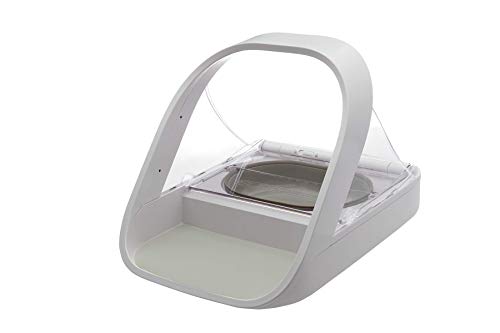
A smart choice for multi-pet homes, the SureFeed Microchip Pet Feeder (MPF001) guarantees only authorized pets access their meals. It reads your pet’s existing microchip-9-digit (Avid Secure), 10-digit (FDXA), or 15-digit (FDXB)-or uses an included RFID collar tag. The lid opens automatically when an approved pet approaches and closes after they leave. It prevents food stealing, supports portion control, and helps manage weight and prescription diets. A sealed lid with neoprene lip keeps food fresh. Holds 13.5 fl. oz. of wet or dry food. Stores up to 32 pet IDs. One-button setup makes programming simple. I recommend one feeder per pet. Backed by a three-year warranty and veterinarian recommended.
Best For: Pet owners in multi-pet households seeking to prevent food stealing, manage portion control, and ensure only authorized pets access their meals.
Pros:
- Automatically identifies pets via microchip or RFID tag for secure, personalized feeding
- Sealed lid with neoprene lip keeps 13.5 fl. oz. of wet or dry food fresh and moist
- Simple one-button setup, stores up to 32 pet IDs, and is veterinarian recommended
Cons:
- Requires microchip verification or RFID tag, which may involve a vet visit
- Limited capacity may not suit pets needing larger portions or frequent feeding
- Optimal performance recommended with one feeder per pet, increasing cost for multiple pets
PETLIBRO RFID Automatic Cat Feeder

Perfect for multi-cat homes where diet control is non-negotiable, the PETLIBRO RFID Automatic Cat Feeder locks onto your cat’s unique RFID collar tag to grant individualized access. It reads only the included RFID tag, ensuring precise pet recognition. Pawsense technology tracks each meal-time, duration, and portion-and syncs data to the Petlibro app for real-time monitoring. The feeder supports up to 10 meals daily, with portions adjustable up to 48 servings. A 3-liter airtight container uses silicone gaskets and a desiccant bag to preserve kibble freshness for up to 14 days. Dual-band Wi-Fi enables reliable remote control. The stainless steel bowl is fully removable for easy cleaning.
Best For: Cat owners in multi-cat households who need precise diet control, portion management, and individual feeding tracking for pets with specific dietary, weight, or medical needs.
Pros:
- RFID technology ensures only the designated cat can access food, preventing food stealing in multi-cat homes
- Pawsense tracking and app integration provide detailed feeding logs for real-time diet monitoring
- Airtight 3-liter container with moisture protection keeps kibble fresh for up to 14 days
Cons:
- Only compatible with the included RFID tag, limiting flexibility for additional cats without accessories
- Requires dual-band Wi-Fi for optimal connectivity, which may not be supported by all routers
- Limited to dry kibble; not suitable for wet or fresh food diets
PawsPik Automatic RFID Cat Feeder (16-Cup)
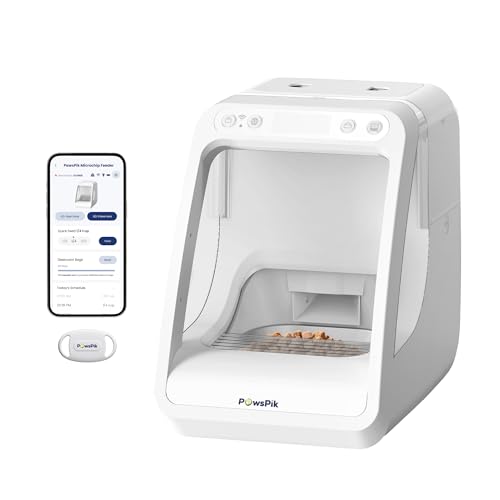
The PawsPik Automatic RFID Cat Feeder (16-Cup) is ideal for pet owners managing multi-cat households or enforcing strict dietary regimens. It uses ISO-compliant 15-digit microchips or PawsPik RFID tags to grant access only to authorized pets. Each feeder pairs with one pet, so multiple cats need separate units. The device supports Closed Mode for exclusive access and Open Mode, which works best when unapproved pets wear PawsPik tags. I can schedule up to 10 meals daily via the app and control portions precisely. It holds 16 cups of food and runs on batteries during outages, keeping feeding consistent.
Best For: Pet owners in multi-cat households or those needing precise dietary control for one pet with secure, individualized feeding access.
Pros:
- Utilizes RFID and microchip technology to ensure only authorized pets can access food
- Allows remote scheduling of up to 10 meals per day with precise portion control via app
- Includes battery backup to maintain feeding during power outages
Cons:
- Supports only one pet per feeder, requiring multiple units for multi-pet homes
- Open Mode performance depends on unauthorized pets wearing RFID tags
- Limited to ISO-standard microchips, potentially excluding some non-compliant pets
RFID Smart Pet Feeder with Dual Tags

You’re managing multiple pets, and mealtime chaos is real-this RFID smart pet feeder with dual tags stops food stealing by recognizing only registered collars. I rely on its built-in sensor and two included RFID tags to grant access exclusively to authorized pets. It offers four feeding modes: Free Mode, 3 meals, 4 meals, or Custom Mode with up to 12 programmable slots. The lid opens only at scheduled times, enforcing routine. It runs on a wall adapter or 3 AA batteries, ensuring uptime during outages. An LCD display guides setup and monitors status. I appreciate the voice recorder, which calls pets with a personalized prompt. The removable bowl handles wet or dry food and cleans easily. Its compact design fits tight spaces, and I can sync multiple units for larger households.
Best For: Pet owners in multi-pet households seeking controlled, personalized feeding routines to prevent food stealing and support individual dietary needs.
Pros:
- RFID access control with dual tags ensures only authorized pets can eat, ideal for multi-pet homes
- Flexible feeding schedules with up to 12 custom time slots support structured meal routines
- Power options (wall adapter or batteries) and voice recorder enhance convenience and reliability
Cons:
- Limited to two RFID tags, requiring additional purchases for households with more pets
- LCD interface may be challenging for users unfamiliar with tech-enabled pet devices
- Removable bowl, while easy to clean, may require frequent maintenance with wet food use
RFID Cat Feeder with Collar Sensor (Beige)

Because it uses RFID collar tags to restrict access, this feeder works best for multi-cat homes where portion control and dietary separation are essential. It supports up to three RFID tags-one included, extra tags sold separately (ASIN B0DS5DN4CB). The upgraded RFID sensor reads tags reliably, avoids interference, and operates silently. Keep it off metal surfaces for best performance. It doesn’t read microchips. Four feeding modes include Schedule (up to 4 meals/day), Custom (1–9 cycles, 1–10 minutes each), and Free Mode. The sealed bowl blocks dust and pests. An anti-pinch door reduces injury risk. Food flows smoothly thanks to a curved interior. Power via USB or 4 AA batteries guarantees uptime during outages.
Best For: Multi-cat households needing portion control and dietary separation with reliable, silent RFID-based access.
Pros:
- Uses RFID collar tags to prevent food stealing, supporting up to three cats (one tag included)
- Offers four feeding modes including schedule, custom, and free feeding for flexible meal management
- Dual power options (USB and AA batteries) ensure uninterrupted operation during outages
Cons:
- Additional RFID tags sold separately (ASIN B0DS5DN4CB), increasing total cost
- Does not work with microchips, limiting compatibility for some pet owners
- Performance affected if placed on metal surfaces, requiring careful placement
Automatic Pet Feeder with RFID Technology (White)

An automatic pet feeder with RFID technology in white suits homes managing multiple cats or pets on specialized diets. It uses Active RFID to block unauthorized pets, with two included collar tags. No microchip? No problem-it works without one. I rely on it to stop food stealing and manage prescription diets. You can program up to four meals daily via the LED interface. Each serving window lasts 5 to 30 minutes. It runs on USB or batteries, so power outages won’t disrupt feeding. The sealed lid keeps food fresh. It handles both dry and wet kibble. RFID authentication guarantees only the correct pet eats, preventing dietary mix-ups.
Best For: Pet owners in multi-pet households or those managing pets with prescription diets who need controlled, individualized feeding access.
Pros:
- RFID-enabled access ensures only authorized pets can feed, preventing food stealing and dietary mix-ups
- Supports both USB and battery power for uninterrupted operation during power outages
- Programmable for up to 4 meals per day with adjustable meal duration and a sealed lid to preserve food freshness
Cons:
- Requires each pet to wear an RFID collar tag, which may not be suitable for pets sensitive to collars
- Limited to 4 scheduled meals per day, which may not accommodate pets needing more frequent feedings
- No built-in camera or monitoring features for remote observation of feeding behavior
PETLIBRO RFID Cat Feeder Tag

Pet parents managing multi-cat households benefit most from the PETLIBRO RFID Cat Feeder Tag, especially when precise portion control and individual tracking are priorities. I rely on it to restrict feeder access exclusively to my cat. It works only with the PETLIBRO PLAF301 feeder and PLWF305 fountain. Each tag pairs with one feeder and one fountain simultaneously-no more. One feeder supports just one tag. It weighs 0.18oz, so it’s light and won’t bother my cat. The snap-release triggers at 6.6lbs of force. A QR code stores my contact info. It doesn’t read microchips.
Best For: Pet parents in multi-cat households who need precise portion control and individual tracking via RFID-enabled PETLIBRO devices.
Pros:
- Enables exclusive, controlled access to PETLIBRO PLAF301 feeder and PLWF305 fountain for accurate meal and hydration tracking per cat
- Lightweight design (0.18oz) with snap-release safety feature (activates at 6.6lbs of force) for comfort and safety
- Includes QR code for contact information storage, aiding in pet recovery if lost
Cons:
- Compatible only with specific PETLIBRO models (PLAF301 and PLWF305), limiting device flexibility
- Each feeder supports only one RFID tag, restricting multi-cat access even with additional tags
- Does not work with standard microchips, requiring reliance on the proprietary tag system
Anifam Microchip Cat Feeder with Stainless Bowls
You’ll get precise control over mealtime if your household includes multiple cats or if you need to keep dietary regimens strictly separated. I rely on the Anifam feeder’s RFID sensor to detect my cat’s unique microchip or included collar tag. He must stay near the infrared sensor until the tray rotates-this confirms registration. It silently switches to his designated stainless steel bowl (A or B), each holding 5oz (150ml). When he leaves, it reverts to the open tray (C). I use that for my unchipped cat. The dishwasher-safe bowls resist bacteria. A quiet motor drives rotation. It blocks dogs and enforces dietary separation with clinical precision-like a lock on kibble.
Best For: Multi-cat households or pet owners needing strict dietary separation and microchip-activated feeding access.
Pros:
- Ensures precise, individualized feeding with microchip or RFID tag recognition
- Includes dishwasher-safe stainless steel bowls for easy cleaning and hygiene
- Effectively blocks non-registered pets and dogs, maintaining diet control
Cons:
- Requires pet to remain still near sensor for tray rotation, which may confuse some animals
- Open tray design may allow unchipped pets access unless closely monitored
- Limited capacity with only 5oz per bowl, necessitating frequent refills for larger or multiple feedings
Factors to Consider When Choosing an RFID Cat Feeder
You need to check if your cat’s microchip works with the feeder’s RFID system-some models only read 15-digit FDX-B chips at 134.2 kHz. Look for flexible feeding schedules that support at least eight meals per day with precise portion control down to 1 gram increments. Consider food capacity, power options like battery backup, and whether the unit can identify multiple pets by storing 30 or more unique microchip IDs.
Rfid Technology Compatibility
When selecting an RFID cat feeder, compatibility with your cat’s identification method is critical for reliable operation. Most systems use collar-based RFID tags or read existing microchips, but not all support both. If your cat has a microchip, verify the feeder supports its frequency-common formats include 9-digit, 10-digit, or 15-digit ISO-compliant chips. Collar tags must be paired to the feeder; without one, access is denied even with a compatible microchip. Some feeders use proprietary tags, so replacements must come from the manufacturer, limiting flexibility. Guarantee the RFID sensor is shielded from metal and electromagnetic interference, as these disrupt signal reading. In multi-pet homes, confirm the system stores at least 32 unique IDs. Advanced models handle larger databases, guaranteeing each cat is recognized accurately without false releases or missed entries.
Feeding Schedule Flexibility
While precise meal timing supports ideal feline health, selecting an RFID cat feeder with robust scheduling capabilities guarantees consistent feeding routines tailored to individual needs. You can program up to 12 feeding times daily, guaranteeing accurate control over meal frequency. Multiple modes-scheduled, free-feed, and custom-let you choose meal durations from 1 to 10 minutes based on your cat’s eating pace. Portion control settings support up to 48 servings per meal, enabling precise dietary management across multiple feedings. This flexibility is critical for cats with medical conditions, weight goals, or unique feeding plans. You’ll adjust schedules remotely via smartphone apps, making real-time changes without touching the device. Wi-Fi connectivity guarantees immediate updates, even when you’re away. These features combined give you full command over feeding structure, supporting strict regimens while accommodating unexpected changes in daily routines.
Food Capacity And Freshness
A well-designed RFID cat feeder balances ample storage with effective freshness preservation to maintain food quality over time. You’ll find capacities ranging from 13.5 fluid ounces to 16 cups, enough for several days to two weeks of dry kibble for one cat. Larger models use airtight containers with silicone gaskets or built-in desiccant bags to limit air and moisture exposure. Some feature multi-layer freshness systems, including sealed lids, airtight rotors, and moisture-absorbing components that extend kibble shelf life. If you plan to serve both wet and dry food, choose a model with removable, easy-to-clean bowls and sealed lids that include moisture-retaining gaskets. These prevent spoilage and bacterial growth. Battery backup guarantees feeding schedules stay on track during outages, reducing unnecessary lid openings that compromise food freshness. Selecting the right capacity and seal quality directly impacts your cat’s meal quality and health.
Power Supply Options
For uninterrupted feeding schedules, power supply reliability is critical. You need a feeder that runs consistently, whether plugged in or not. Dual power options let you use an AC adapter or batteries, so the system keeps working during outages. Models with battery backup typically run for 6–12 hours on AA or USB-rechargeable cells, depending on usage. This fail-safe guarantees meals aren’t missed, even if the power fails overnight. Battery-powered units offer more placement flexibility, especially in areas without nearby outlets. However, you’ll need to replace or recharge batteries every few weeks under normal use. Performance drops with low-quality batteries or high feeding frequencies. Dual-power designs give you the best of both worlds: constant mains power with battery reliability as a backup. Choose based on your home setup and outage risks.
Multi Pet Household Support
Reliability in power keeps your cats fed during outages, but managing who eats is just as important in homes with multiple pets. Choose RFID feeders that support at least 2–3 pet profiles, so each cat has personalized access. Models must store multiple RFID tags or microchip registrations to identify individuals accurately. Look for a locking lid that only opens for authorized pets-this stops food stealing and maintains dietary control. Opt for units offering per-pet meal scheduling and portion control to manage weight or medical diets effectively. Advanced models include feeding logs that record who ate, how much, and when, letting you track intake precisely. These logs sync to apps in some feeders, giving real-time updates. A reliable system functions within 5 seconds of detection, using 13.56 MHz RFID for consistent reads. This setup acts like a secure door-only your pets get in.
Frequently Asked Questions
Can RFID Feeders Work With All Cat Microchip Types?
No, RFID feeders don’t work with all cat microchip types. Most use 134.2 kHz low-frequency tags, matching ISO 11784/85 standards. Your cat’s 15-digit microchip likely operates at this frequency and is compatible. However, older or non-ISO chips may fail to register. Always verify your feeder’s specs-some require proprietary RFID pendants instead of reading implanted chips directly. Check manufacturer guidelines to confirm supported chip formats before relying on it for access control.
Do These Feeders Require AC Power or Battery Backup?
These feeders require AC power for continuous operation but include battery backup for outages. You’ll plug the unit into a wall outlet using the included 5V DC adapter. The backup battery, typically 3–4 AA alkaline cells, keeps the RFID reader and motor functional for up to 24 hours during停电. Without AC, dispensing slows slightly. Battery use alone isn’t recommended long-term. Power loss won’t erase programmed chip data.
How Do I Reset an RFID Feeder to Factory Settings?
You reset an RFID feeder by pressing and holding the reset button for 10–15 seconds. Power stays on during the process. The LED flashes red and green, signaling factory settings are restoring. Once complete, the unit reboots automatically. You’ll need to re-pair all cat tags. Consult your model’s manual-reset procedures vary slightly. Most units use a pinhole button, requiring a paperclip. Water resistance and food compartment seals remain intact post-reset.
Are the RFID Tags Waterproof for Outdoor Use?
Yes, most RFID tags are waterproof and built for outdoor use. They typically feature IP67 or IP68 ratings, meaning they withstand immersion in water up to 1 meter for 30 minutes. The durable plastic housing resists rain, snow, and dust. While extreme temperatures may affect performance, normal outdoor conditions won’t damage them. Attach the tag securely to your cat’s collar, and it’ll reliably activate the feeder without degradation over time.
Can Multiple Cats Use the Same RFID Feeder Smoothly?
Yes, multiple cats use the same RFID feeder smoothly. Each cat wears a unique microchip or collar tag the feeder reads instantly. Most models support 10–30 pets, storing individual IDs in memory. The reader scans at 125 kHz, activating within 0.5 seconds. Sensors prevent jamming, letting cats eat one at a time. Feeders log meals, tracking intake per pet. Wide openings reduce crowding. Buffer zones stop false readings when cats linger.