Best Rabbit Litter That Keeps Cages Clean and Odor-Free
You need a litter that controls odor and simplifies cleanup. Kaytee Wood Pellets absorb moisture efficiently in a 4.9 L (300 cu in) bag, reducing ammonia. Carefresh White Paper Bedning is 99% dust-free, absorbs twice as much moisture as wood shavings, and controls odors up to 10 days. Vitakraft Fresh World handles 3 times its weight in liquid and suppresses ammonia for 14 days. Pair with the NEWTRY Stainless Steel Litter Box for ideal waste separation. Each choice balances absorption, safety, and maintenance-factors that define long-term cage hygiene.
We are supported by our audience. When you purchase through links on our site, we may earn an affiliate commission, at no extra cost for you. Learn more. Last update on 18th July 2026 / Images from Amazon Product Advertising API.
Notable Insights
- Choose high-absorbency litters like Kaytee Premium Potty Training Litter that absorb up to 10 times their weight in liquid for superior moisture control.
- Opt for odor-controlling, ammonia-suppressing litters such as Carefresh White or Vitakraft Fresh World that maintain freshness for up to 10–14 days.
- Select 99% dust-free, chemical-free paper or wood-based litters to protect respiratory health and reduce airborne irritants.
- Use dust-free, soft-textured litters with particles under 2 mm to prevent paw irritation and support footpad health.
- Avoid clay or clumping litters containing sodium bentonite; choose biodegradable, non-toxic options like recycled paper or untreated wood for safety.
Kaytee Wood Pellets Pet Litter (8 lb)

If you own one rabbit or manage a small colony, Kaytee Wood Pellets Pet Litter (8 lb) stands out as a top-choice absorbent bedding for rabbits and other small pets. It’s made from 100% natural wood, processed to remove dust and debris. This reduces respiratory risks and keeps cages cleaner. The pellets measure 4.9 L (300 cu in) per bag, offering high volume for waste absorption. They don’t cling to fur or paws, minimizing tracking. Suitable for guinea pigs, chinchillas, hamsters, and birds too. I find clean-up fast-simply scoop soiled areas. It controls odor effectively through natural wood properties.
Best For: Small pet owners seeking a natural, low-dust, and highly absorbent bedding option for rabbits, rodents, and birds.
Pros:
- Made from 100% natural wood, minimizing chemical exposure
- Specially processed to reduce dust and debris, supporting respiratory health
- Easy to scoop and clean, with minimal tracking due to non-clinging pellets
Cons:
- May not control odors as long as clumping or chemically enhanced litters
- Pellet size may be too large for very small animals like dwarf hamsters or mice
- Not flushable, requiring disposal as solid waste
Kaytee Clean & Cozy Paper Bedding

Kaytee Clean & Cozy Paper Bedding stands out as an ideal choice for rabbit owners seeking a safe, highly absorbent litter alternative. It absorbs up to 6 times its weight in liquid, keeping cages dry and minimizing ammonia buildup. The bedding is 99.9% dust-free, reducing respiratory risks. Made from soft, recycled paper, it’s free of harmful chemicals and meets FDA standards. It’s fragrance-free, so it won’t irritate sensitive noses or paws. I’ve found it effective in wire, plastic, and mesh-bottom cages. It works for rabbits, guinea pigs, and other small animals. Kaytee’s 150-year reputation guarantees consistent, reliable performance.
Best For: Rabbit owners seeking a safe, highly absorbent, and dust-free bedding that’s gentle on sensitive paws and noses while effectively controlling odors.
Pros:
- Absorbs up to 6 times its weight in liquid, keeping habitats dry and reducing ammonia buildup
- 99.9% dust-free and made without harmful chemicals, meeting FDA standards for safety
- Suitable for a variety of small animals including rabbits, guinea pigs, and rodents
Cons:
- May break down faster than some wood-based beddings in high-moisture environments
- Paper texture may be less preferred by animals that like to burrow deeply
- Slightly higher price point compared to basic wood shavings or clay litters
NEWTRY Stainless Steel Rabbit Litter Box
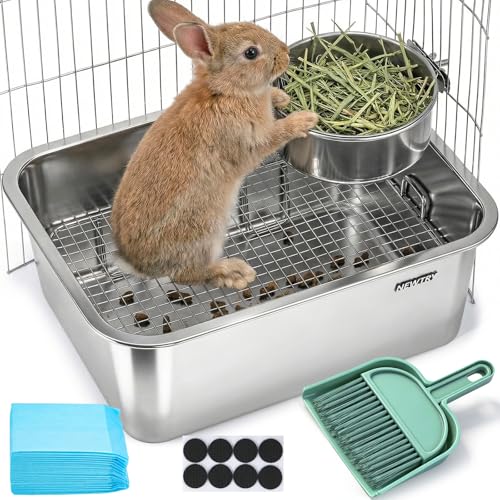
The NEWTRY Stainless Steel Rabbit Litter Box stands out as the best choice for small pet owners who prioritize durability, hygiene, and space efficiency. It’s built from 304 stainless steel, resisting rust and corrosion. The 2.56” high sifting grid has a handle for easy lifting and a 0.47” smooth polished surface that won’t hurt delicate paws. Feces and urine fall into the lower waste tray, keeping the top dry. I use wood shavings on top for odor control. An anti-slip mat prevents shifting. The hanging food bowl saves space. Cleaning takes minutes once a week with the included broom.
Best For: Small pet owners seeking a durable, hygienic, and low-maintenance litter solution for rabbits, guinea pigs, and similar pets.
Pros:
- Constructed from rust-resistant 304 stainless steel for long-term durability
- Features a high sifting grid with a smooth, paw-safe surface and easy-lift handle for efficient waste separation
- Includes useful accessories like an anti-slip mat, hanging food bowl, and cleaning broom for enhanced convenience
Cons:
- Stainless steel construction may be heavier than plastic alternatives, reducing portability
- May require specific litter types for optimal performance with the sifting grid
- Higher upfront cost compared to basic plastic litter boxes
Kaytee Premium Potty Training Critter Litter 8 lb

This rabbit litter suits owners seeking a reliable, low-maintenance solution for potty training small pets like rabbits, ferrets, and rats. I use Kaytee Premium Potty Training Critter Litter because it’s made of 100% bentonite clay, a non-toxic, natural mineral. It absorbs 10 times its weight in liquid on contact, locking in moisture and controlling odor effectively. The litter is 99% dust-free, making it safe for all life stages. I fill the pan 1.5–2 inches deep and replace it every 2–3 days. Full replacement weekly maintains hygiene. Weighing 7.92 pounds, it’s packaged for easy storage.
Best For: Small pet owners seeking a safe, low-maintenance litter to support potty training for rabbits, ferrets, and rats.
Pros:
- Made of 100% natural, non-toxic bentonite clay for safe use across all life stages
- Absorbs 10 times its weight in liquid with effective odor control and 99% dust-free formula
- Supports reduced cage cleaning by 30% or more with easy spot training and simple maintenance
Cons:
- May require frequent full replacement (weekly) to maintain optimal hygiene
- Packaged in China, which may concern some consumers regarding quality control or environmental impact
- Not specifically scented, which may be a drawback for users preferring fragrance-assisted odor masking
Vitakraft Fresh World Small Animal Bedding (16L)

When odor control and high absorbency matter most, Vitakraft Fresh World Small Animal Bedding stands out as the best choice for rabbit owners managing sensitive environments. It absorbs up to three times its weight in liquid, keeping cages dry. The bedding neutralizes ammonia odors for up to 14 days. Made from 100% recycled paper, it’s dust-free, chemical-free, and hypoallergenic-safe for delicate respiratory systems. Its soft texture cushions sensitive paws and reduces stress. I find it works well in litter boxes and cages. It’s compatible with rabbits, guinea pigs, hamsters, ferrets, and birds. Volume is 16 L (975 cu in). Gray in color. Eco-conscious production supports sustainable pet care.
Best For: Rabbit owners who prioritize high absorbency, long-lasting odor control, and a safe, eco-friendly bedding for sensitive animals.
Pros:
- Absorbs up to three times its weight in liquid and controls ammonia odors for up to 14 days
- Made from 100% recycled paper, dust-free, chemical-free, and hypoallergenic for animal safety
- Soft texture provides comfort for sensitive paws and helps reduce pet stress
Cons:
- Limited color options (only available in gray)
- May break down faster in high-moisture environments compared to some clumping beddings
- Not specifically designed for large animals, limiting use to small pets only
Oxbow Pure Comfort Small Animal Bedding (36L)
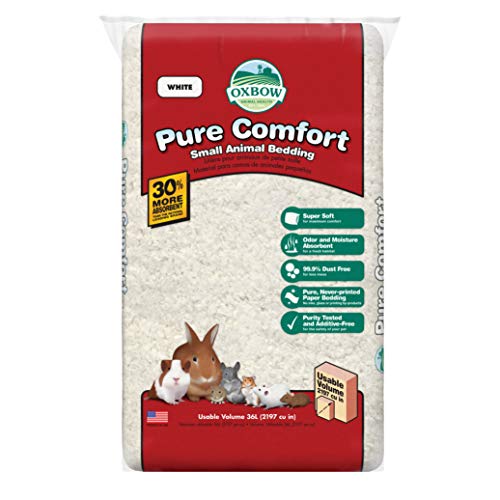
Choose Oxbow Pure Comfort Small Animal Bedding (36L) if you demand reliable odor control and a dust-free environment for sensitive respiratory systems. I rely on its high-absorption, never-printed paper to trap moisture and lock in odors. The bedding removes 99.9% of dust during processing, making it ideal for rabbits, guinea pigs, and ferrets with respiratory sensitivities. It’s chemical-free, undyed, and safe for daily use. I find cleanup fast, thanks to its non-clumping, lightweight design. The 36-liter volume offers long-term value across weekly cage rotations.
Best For: Small animal owners seeking a safe, low-dust, and highly absorbent bedding that effectively controls odor for rabbits, guinea pigs, hamsters, and ferrets.
Pros:
- Effectively absorbs moisture and neutralizes odors to maintain a fresh, hygienic habitat
- Processed to remove 99.9% of dust, making it ideal for animals with respiratory sensitivities
- Made from undyed, chemical-free, never-printed paper for maximum safety and comfort
Cons:
- Non-clumping texture may require more frequent full bedding changes compared to clumping alternatives
- Lightweight design can be easily scattered outside the cage by active animals
- Larger 36L volume may be excessive for owners with only one small pet
Small Pet Select Recycled Paper Bedding (20lb)

Small Pet Select Recycled Paper Bedding (20lb) works best for rabbit owners committed to sustainable, health-conscious habitat management. I rely on its 100% recycled paper composition because it’s biodegradable and compostable, reducing environmental impact. It absorbs nearly three times more liquid than clay litter, locking in moisture and neutralizing odors naturally-no chemicals or fragrances needed. The 99% dust-free formula protects respiratory health, especially in sensitive rabbits. It’s non-allergenic, making it safe for pets and people with allergies. I use it for rabbits, guinea pigs, and hamsters alike. Spot cleaning wet pellets keeps the habitat fresh with minimal effort.
Best For: Rabbit owners who prioritize eco-friendly, health-conscious pet care and seek a safe, sustainable, and low-maintenance bedding solution.
Pros:
- Made from 100% recycled paper, biodegradable and compostable for eco-conscious pet owners
- Highly absorbent, locking in moisture and naturally eliminating odors without chemicals or fragrances
- 99% dust-free and non-allergenic, promoting respiratory health for sensitive pets and allergy-prone individuals
Cons:
- May not clump like traditional clay litters, requiring more frequent spot cleaning for optimal hygiene
- Paper-based texture may be less preferred by pets accustomed to other bedding types
- Bulk packaging, while cost-effective, may be impractical for owners with limited storage space
Kaytee Lavender Paper Bedding for Small Pets

Kaytee Lavender Paper Bedding stands out as a top-tier choice for rabbit owners who prioritize odor control and paw safety. I’ve found it absorbs up to six times its weight in liquid-more than most paper or wood beddings-keeping cages dry. It’s 99% dust-free, which protects delicate respiratory systems. The bedding blends soft, chemically untreated paper with real, pet-safe lavender buds for natural, lasting scent control. I appreciate that it’s made in the USA and avoids harmful additives. Its high absorbency means less frequent changes. For comfort and cleanliness, it’s a reliable, technically sound option I trust.
Best For: Rabbit owners seeking highly absorbent, dust-free bedding with natural odor control and paw-safe comfort.
Pros:
- Absorbs up to 6 times its weight in liquid, keeping habitats dry longer
- 99% dust-free and made without harmful chemicals, ideal for sensitive respiratory systems
- Infused with real, pet-safe lavender buds for natural, long-lasting odor control
Cons:
- The lavender scent may be overpowering for some pets or owners
- Higher price point compared to basic paper or wood shavings
- Not ideal for pets that tend to ingest bedding materials
Kaytee Premium Potty Training Litter (4 lb)

This litter stands out for rabbit owners committed to simplifying cleanup without compromising safety or performance. I rely on Kaytee Premium Potty Training Litter because it’s made of non-toxic, 100% bentonite-a natural mineral safe for rabbits and other small animals. It absorbs 10 times its weight in water, locking in moisture instantly on contact. High absorption power controls odors effectively by trapping wetness and waste. When paired with potty training, it reduces cage cleaning frequency by over 30%. For best hygiene, I replace it every 2 to 3 days.
Best For: Rabbit owners seeking a safe, highly absorbent litter to simplify cleanup and support potty training.
Pros:
- Made of non-toxic, 100% natural bentonite, safe for rabbits and other small animals
- Absorbs 10 times its weight in water for superior moisture control and odor reduction
- Reduces cage cleaning frequency by over 30% when used with a potty training routine
Cons:
- Requires replacement every 2 to 3 days for optimal hygiene, increasing long-term use
- Dust may be present with some clay litters, potentially irritating sensitive animals
- Higher cost compared to basic paper or wood-based litters
Carefresh White Paper Pet Bedding (50 L)

I rely on Carefresh White Paper Pet Bedding (50 L) when I need a high-performance, low-dust litter that keeps my rabbit’s environment clean and comfortable. It’s made from natural paper fibers, 99% dust-free, and free of chemicals and synthetic dyes. The bedding is biodegradable and compostable, making it eco-friendly. It’s pillowy soft, safe for sensitive feet, and perfect for burrowing. It absorbs twice as much moisture as wood shavings, preventing damp spots. Its odor-control formula suppresses ammonia for up to 10 days. I use it as litter or habitat lining for rabbits, guinea pigs, and small pets.
Best For: Small pet owners seeking a soft, highly absorbent, and eco-friendly bedding option that ensures comfort and effective odor control.
Pros:
- Made from natural, 99% dust-free paper fibers that are safe for sensitive pets and free of harmful chemicals
- Highly absorbent-twice as effective as wood shavings-and provides long-lasting odor control for up to 10 days
- Biodegradable and compostable, ideal for burrowing, nesting, and use as bedding or litter for rabbits, guinea pigs, and other small animals
Cons:
- May break down faster than some wood-based beddings in very wet conditions
- Limited availability compared to more common bedding types
- Slightly higher cost per volume than traditional wood shavings
Factors to Consider When Choosing Rabbit Litter
You need a litter that stays dry fast and controls odor without harming your rabbit. Look for highly absorbent materials like recycled paper or compressed wood, which can soak up 2–3 times their weight in moisture while keeping ammonia levels low; low-dust formulas are critical, as fine particles can irritate your rabbit’s sensitive respiratory system. Make sure the litter is non-toxic and soft enough for delicate paws, avoiding cedar or pine, which release harmful phenols.
Absorbency And Dryness
Moisture control starts with absorbency. You need litter that absorbs up to 10 times its weight in liquid to keep your rabbit’s environment dry. High-absorbency materials lock in urine immediately, preventing surface dampness. This rapid uptake reduces humidity in the cage, which helps maintain long-term dryness between cleanings. A dry habitat isn’t just comfortable-it lowers the risk of bacterial growth and health issues like sore hocks or respiratory irritation. Effective litter forms a solid clump on contact, making spot-cleaning easier and extending the time between full changes. You’ll save time and improve hygiene with less frequent maintenance. Consistent dryness also supports overall cage sanitation by limiting moisture-dependent pathogens. Choose a litter engineered for maximum liquid retention and surface dryness. Performance depends on material density, capillary action, and particle size-all critical factors in sustaining a clean, healthy space for your rabbit.
Odor Control Effectiveness
While odor control begins the moment urine touches litter, its effectiveness depends on rapid absorption and chemical-free neutralization. You need a litter that stops ammonia smells fast and keeps air fresh. Top-performing litters neutralize odors for up to 14 days using natural, non-toxic methods. They absorb up to 6 times their weight in liquid, cutting bacterial growth that causes bad smells. Recycled paper and mineral-based clays have built-in odor control, so they don’t rely on artificial fragrances. These materials trap urine quickly, stopping it from breaking down into ammonia. Fast, on-contact absorption is key-it seals in moisture before smells start. Dust-free formulas remove over 99% of airborne particles, which helps keep the air cleaner and cuts down on irritation. This also supports better odor control by reducing the conditions that worsen smells. Choose litters that combine high absorbency with natural, effective odor suppression.
Dust Levels And Safety
Since rabbits have highly sensitive respiratory systems, choosing a litter with minimal dust is essential for maintaining long-term health. Even low levels of airborne particles can inflame delicate lung tissues. Dust-free or 99.9% dust-reduced litters markedly reduce this risk. These litters prevent chronic bronchitis and eye irritation, common in high-dust environments. Opt for processed paper or kiln-dried wood litters-they’re engineered to minimize particulate release. Dust levels depend on manufacturing methods like grinding, screening, and moisture control during processing. Visually inspect litter before use; visible dust indicates poor refinement. High-dust bedding accelerates respiratory damage, especially in rabbits with preexisting conditions. Prioritize litters labeled “low dust” or “dust-extracted,” verified by independent testing. Always consider particle size and humidity response when evaluating dust potential. Your rabbit’s breathing comfort depends on smart, informed litter selection. Safety starts with clean air.
Material Safety And Toxicity
When selecting rabbit litter, prioritize materials proven safe for daily contact and accidental ingestion. Choose litters made from non-toxic, natural materials like recycled paper or untreated wood. These are biodegradable and reduce risks of respiratory issues and skin irritation. Avoid aromatic oils, synthetic fragrances, and chemical additives-they release harmful volatile compounds when inhaled or ingested during grooming. Never use clay-based or clumping litters containing sodium bentonite; ingestion causes fatal gastrointestinal blockages. Opt for products labeled 99% dust-free to protect sensitive respiratory systems. Verify the litter contains no inks, dyes, or industrial by-products, which introduce allergens and toxins. Safe litters use minimal processing without compromising performance. Look for third-party certifications confirming absence of harmful substances. Your rabbit’s health depends on clean, inert materials that won’t react inside or outside the body. Always verify ingredient transparency before purchasing.
Comfort For Sensitive Paws
A soft, low-dust litter is essential for protecting your rabbit’s sensitive paws and overall well-being. You need bedding with a fine, smooth texture to prevent abrasions and support natural weight distribution. Materials like kiln-dried pine or dust-extracted paper pulp have particle sizes under 2 mm, reducing irritation on delicate footpads. Low dust means less than 2% airborne particulate by weight, minimizing respiratory stress that can lead to paw-shifting or hunched postures. Choose hypoallergenic, chemical-free litters to avoid skin reactions-sodium bentonite or synthetic fragrances increase sensitivity risks. A clump-free, consistently dry surface maintains uniform softness, allowing stable footing and encouraging normal grooming. Avoid coarse hemp or recycled newspaper with rough edges. Opt instead for engineered substrates that retain a plush, resilient feel after 48 hours of moisture exposure. You’ll see better paw alignment and fewer sores with properly cushioned litter.
Ease Of Cleaning And Maintenance
Though cleaning can’t be eliminated, choosing the right litter cuts your workload dramatically. Litter that absorbs up to 10 times its weight in liquid reduces full changes by 30% or more when paired with spot cleaning. A sifting grid design separates soiled material from clean bedding, letting you remove waste while reusing uncontaminated litter. This system slashes maintenance effort and extends bedding life. Dust-free formulas reduce airborne particles by 99% or more, improving air quality and making cleanup safer. Superior odor control keeps habitats fresh for up to 14 days, delaying full replacements. Litter that works with disposable liners or pads streamlines disposal-many setups need cleaning just once weekly. These features combine to save time, reduce waste, and maintain hygiene efficiently.
Frequently Asked Questions
How Often Should I Completely Change Rabbit Litter?
You should completely change your rabbit’s litter every 1–2 weeks. This frequency prevents ammonia buildup from urine, which can reach harmful concentrations above 5 ppm. High-absorbency litters like kiln-dried pine or paper-based types extend cleanliness. Remove soiled spots daily. Overlooked waste fosters bacteria growth, risking respiratory issues. A full change guarantees a sanitary base, maintains odor control, and supports your rabbit’s health through consistent hygiene management.
Can Rabbits Eat Their Litter Accidentally?
Yes, rabbits can accidentally ingest litter while eating or grooming. You must choose a non-toxic, digestible option to prevent intestinal blockages. Paper-based or aspen wood litters are safe; avoid clay, clumping, or aromatic wood types. Particles should be dust-free and less than 2 mm in size to minimize respiratory and digestive risks. Always monitor consumption-consistent eating of litter may signal dietary deficiency or stress requiring veterinary evaluation.
Is Scented Litter Safe for Rabbits?
No, scented litter isn’t safe for rabbits. Your rabbit’s respiratory system is extremely sensitive. Artificial fragrances in litter release volatile organic compounds (VOCs) that can irritate nasal passages and lungs. Long-term exposure may lead to chronic breathing problems. Rabbits also groom constantly, increasing ingestion risk. Unscented, low-dust paper or aspen-based litters are safer. They control odor naturally without harmful chemicals. Always prioritize respiratory health over convenience.
Can I Compost Used Rabbit Litter?
Yes, you can compost used rabbit litter if it’s made from biodegradable materials like paper, wood, or straw. Avoid litters with clay, silica, or synthetic additives-they don’t break down and can harm soil. Rabbit waste adds nitrogen; litter acts as a carbon source. Mix with brown materials at a 1:2 ratio. Maintain 120–160°F internal pile temperature to kill pathogens. Turn every 7–10 days. Finished compost should be dark, crumbly, and earthy-smelling after 8–12 weeks.
Do Rabbits Need Litter in Summer Too?
Yes, you need litter for your rabbit year-round, including summer. High humidity promotes bacterial growth and ammonia release from urine. A 2–3 inch layer of absorbent, pH-neutral litter controls moisture and reduces pathogen risks. You’ll prevent fly infestations and urine scald by containing waste. Opt for plant-based litters with >95% absorbency and low dust. Regular spot-cleaning remains essential to maintain hygiene and thermal comfort in warm conditions.